 Quick View
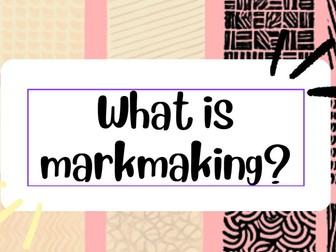
Mark making Lesson- complete with worksheet
What is Mark Making? - Art Lesson & Printable Worksheets
Introduce students to mark making with a hands-on art lesson designed to develop drawing skills, creativity, and understanding of the formal elements of art.
In this lesson, students explore what mark making is and why artists use it to create texture, detail, pattern, and depth within their artwork. Through discussion, visual examples, and practical activities, learners identify different mark-making techniques and investigate how line, texture, and pattern can enhance an image.
The lesson includes guided questioning, appropriate examples, independent drawing tasks, peer assessment opportunities, and printable worksheets that encourage students to experiment with a variety of marks and textures. Students will apply different techniques to complete and enhance images, helping them build confidence in observational drawing and creative expression.
The powerpoint is colour coded to suit what is expected of the class.
Pink for reading only i.e learning objectives and examples to use in there art
Yellow is for class discussions and/or class interaction
Purple is for the students personal work
Blue is for Assesment
White is any worksheets to be printed
Learning Objectives
Understand what mark making is and its purpose in art.
Identify formal elements including line, texture, and pattern.
Explore a range of mark-making techniques.
Use mark making to add detail, texture, and depth to artwork.
Evaluate artwork through peer assessment and discussion.
What’s Included
Complete lesson presentation
Introduction to mark making
Discussion of formal elements in art
Visual examples of mark-making techniques
Practical drawing activities
Printable worksheets
Peer assessment task
Plenary and knowledge check
Suitable For
Ks2 Art & Design
KS3 Art & Design
Beginning drawing and sketching units
Cover lessons and independent art activities
This resource provides an excellent foundation for developing drawing techniques while encouraging experimentation, observation, and creative thinking through structured and engaging activities.