EYFS Shape Unit – 4 Interactive Lessons (Online & In-Class Friendly)Quick View
hannahjaynebarker

EYFS Shape Unit – 4 Interactive Lessons (Online & In-Class Friendly)

(0)
Make teaching early shape concepts simple, engaging, and effective with this ready-to-use set of 4 interactive lessons, designed specifically for Nursery/EYFS learners. This resource supports children in developing a strong foundation in shape recognition, language, and early mathematical thinking through fun, interactive PowerPoints and practical activities that work both in the classroom and during online learning. What’s included: ✔ 4 fully planned interactive PowerPoint lessons ✔ Clear teaching sequence building from recognition to comparison ✔ Engaging, child-friendly visuals and activities ✔ Online-friendly tasks using simple, everyday objects ✔ Home learning activities for easy parent involvement Lesson Overview: Lesson 1: Recognising Shapes Children learn to identify and name common 2D shapes through a fun shape hunt and visual prompts. Lesson 2: Describing Shapes Children explore shape properties such as sides, corners, straight and curved edges using structured vocabulary and games. Lesson 3: Creating Shapes Children build shapes using everyday objects, developing understanding of how shapes are formed. Lesson 4: Comparing Shapes Children compare shapes by identifying similarities and differences, using simple mathematical language. Perfect for: Nursery / FS1 / EYFS classrooms Online or blended learning Teachers looking for low-prep, high-impact lessons Supporting early maths and language development
EYFS Maths: Comparing 2D Shapes (Same or Different? Interactive Lesson)Quick View
hannahjaynebarker

EYFS Maths: Comparing 2D Shapes (Same or Different? Interactive Lesson)

(0)
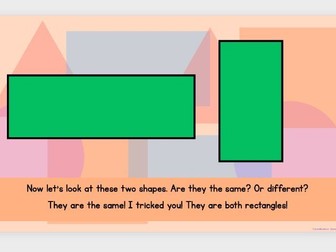
An interactive PowerPoint lesson that supports Nursery/EYFS children in comparing 2D shapes by identifying similarities and differences. Children explore key properties such as corners and sides, using structured sentence stems like “same because” and “different because” to develop early reasoning skills. Includes quick-response games, visual comparisons, and engaging discussion prompts. Perfect for building early mathematical thinking in a fun and accessible way.
EYFS Maths: Making 2D Shapes (Hands-On Shape Building Activity)Quick View
hannahjaynebarker

EYFS Maths: Making 2D Shapes (Hands-On Shape Building Activity)

(0)
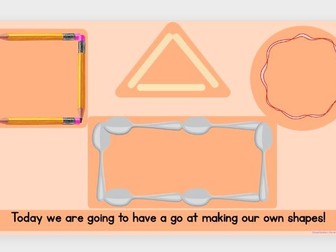
A practical and engaging interactive lesson where Nursery/EYFS children explore how shapes can be created using everyday objects. Children build familiar 2D shapes such as triangles, squares, and rectangles using items like sticks, toys, or household objects, helping them understand sides and corners in a hands-on way. Designed for both classroom and online learning, this lesson encourages creativity, problem-solving, and active participation.
EYFS Maths: Describing 2D Shapes (Shape Properties & Mystery Game)Quick View
hannahjaynebarker

EYFS Maths: Describing 2D Shapes (Shape Properties & Mystery Game)

(0)
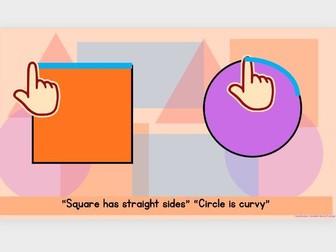
An interactive lesson designed to support Nursery/EYFS children in describing 2D shapes using simple mathematical language. Children are introduced to key shape properties including sides, corners, straight and curved edges through clear teaching slides and engaging activities. The lesson builds into a fun “Mystery Shape” game where children apply their new vocabulary to guess shapes. Ideal for developing early mathematical language in both in-person and online lessons.
EYFS Maths: Recognising 2D Shapes (Interactive Lesson & Shape Hunt)Quick View
hannahjaynebarker

EYFS Maths: Recognising 2D Shapes (Interactive Lesson & Shape Hunt)

(0)
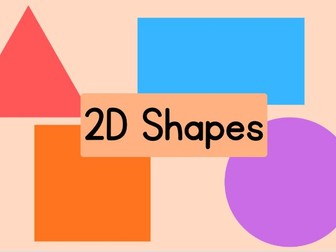
Description: A fun and engaging interactive PowerPoint designed to help Nursery/EYFS children recognise and name simple 2D shapes including circles, squares, triangles, and rectangles. This lesson includes quick-response activities, visual prompts, and an online-friendly shape hunt using everyday objects to reinforce learning in a meaningful way. Perfect for both classroom and remote learning, this low-prep lesson keeps young learners active and involved throughout.