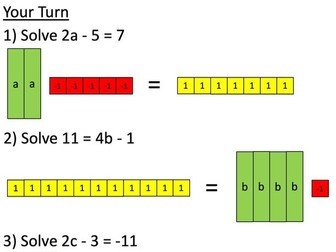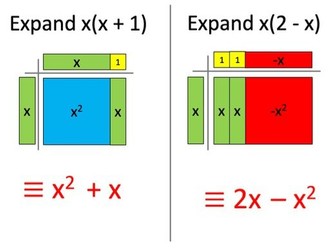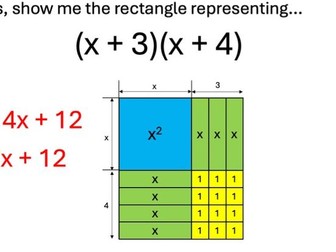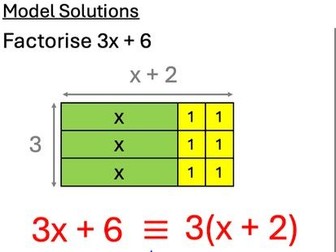
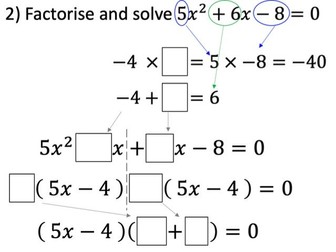
A sequence of lessons containing animated examples, tasks and answers on how to use algebra tiles with algebraic notation, collecting like terms, expanding single and double brackets, factorising and solving equations.
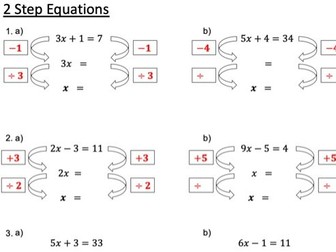
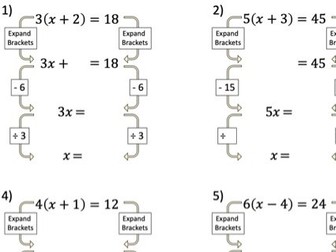
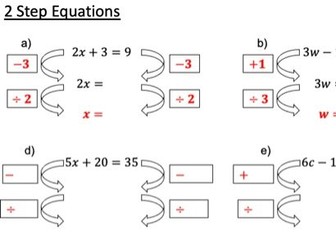
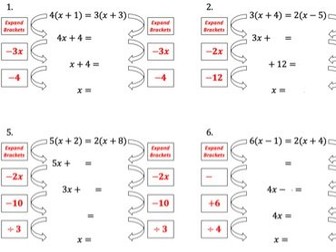
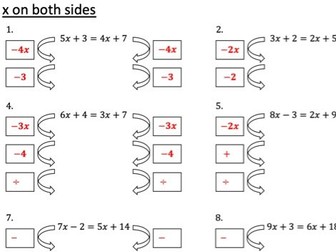
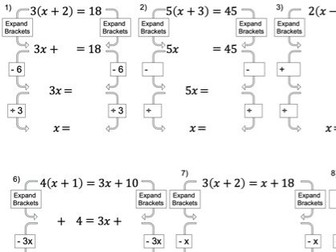
3 lessons on solving linear equations with algebra tiles.
Contains 1 step equations, simple 2 step equations and rational 2 step equations. All lessons include animated examples using the algebra tiles.
These were created to introduce solving equations to a mixed ability year 8 class.
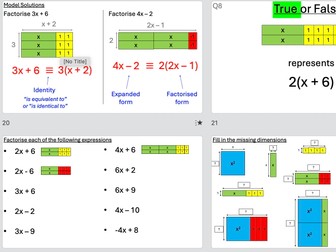
2 full lessons on factorising into single brackets using algebra tiles.
Includes starter task, animated examples and mini whiteboard questions.
Used to introduce factorising to year 8 mixed ability classes (who have previously used algebra tiles for expanding single brackets).
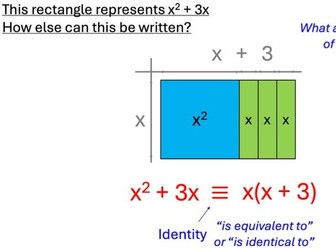
7 lessons containing animated examples to introduce algebra tiles.
Contains lessons on algebraic notation, collecting like terms, expanding single brackets (including brackets involving x^2 or negatives) and two sets of single brackets.
This was used for a mixed ability year 7 class.
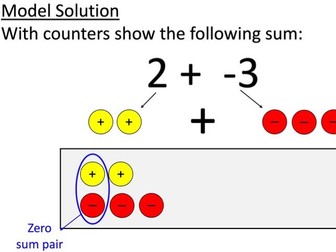
Animated examples modelling how to add and subtract negative numbers using double sided counters. I used this to introduce the topic to a mixed ability year 7 class.
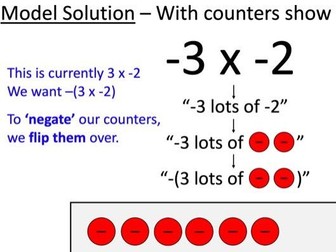
Powerpoints containing animated examples modelling how to use double sided counters to multiply and divide negative numbers. Both powerpoints start with an example using all positive numbers so students can get used to how they are using the counters before seeing the negatives. I used this to introduce the topic to a mixed ability year 7 class.
A sample of animated slides using algebra tiles.
Includes algebraic notation, expanding single and double brackets and factorising into a single bracket.
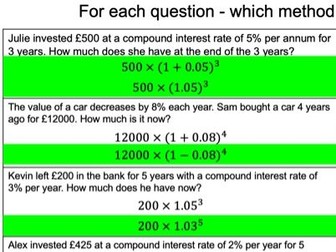
Spot the correct method activity to help address misconceptions for compound interest. Does not require a calculator.
This was made using all of the mistakes my year 8 class had made in the lesson before. Students do not need to solve the questions, they just need to say which methods would be correct for each question. As an extension students can also discuss why each answer was correct/incorrect.