A Lesson on Chapter 10 of Animal FarmQuick View
EleanorKT

A Lesson on Chapter 10 of Animal Farm

(0)
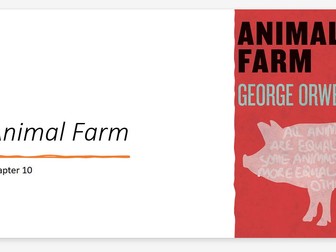
This lesson examines Chapter 10 of Animal Farm, focusing on how the animals’ society has changed over time and how the pigs have fully adopted human behaviors. Students will analyse Orwell’s use of symbolism, irony, and characterisation to explore themes of power, corruption, and the betrayal of ideals. The lesson encourages reflection on the novel’s political commentary and its relevance today.
A KS3 Lesson Introducing Students to the Character of Scrooge in A Christmas CarolQuick View
EleanorKT

A KS3 Lesson Introducing Students to the Character of Scrooge in A Christmas Carol

(0)
This lesson introduces KS3 students to Ebenezer Scrooge, exploring how Dickens presents him as a complex character. Students analyse key extracts, consider language and tone, and discuss Scrooge’s motivations, flaws, and social attitudes. The lesson encourages critical thinking, textual analysis, and creative engagement, laying the foundation for understanding his transformation throughout the novella.
A standalone Year 7 lesson on Writing Christmas PoemsQuick View
EleanorKT

A standalone Year 7 lesson on Writing Christmas Poems

(0)
Designed as a standalone lesson for the final weeks of term, this session encourages Year 7 students to engage with poetic language and structure while exploring the theme of Christmas. Through analysis of model poems and guided creative activities, students learn how to use figurative language, rhythm, and emotion to capture the spirit of the season. The lesson culminates in the creation of a personal Christmas poem that showcases each student’s individuality and voice.
A Lesson on Macbeth Act 3 Scene 3Quick View
EleanorKT

A Lesson on Macbeth Act 3 Scene 3

(0)
“This lesson focuses on Act 3, Scene 3 of Macbeth, where the murderers ambush Banquo and Fleance. Students will explore themes of ambition, fate, and betrayal, analysing how Macbeth’s growing paranoia and manipulation drive the plot forward. The scene’s tension and suspense highlight the consequences of unchecked ambition and moral corruption.”
A Lesson on Macbeth Act 5 Scenes 8 & 9Quick View
EleanorKT

A Lesson on Macbeth Act 5 Scenes 8 & 9

(0)
“This lesson focuses on Act 5, Scenes 8 and 9 of Macbeth, highlighting the final showdown between Macbeth and Macduff, the consequences of unchecked ambition, and the restoration of order. Students will examine key themes of fate, ambition, and revenge, as well as the resolution of character arcs and dramatic tension in the play’s climax.”
A Lesson on Jekyll & Hyde Chapter NineQuick View
EleanorKT

A Lesson on Jekyll & Hyde Chapter Nine

(0)
This lesson focuses on Dr Lanyon’s perspective in Chapter 9, where he recounts the shocking events surrounding Jekyll’s transformation into Hyde. Students will explore how Stevenson uses Lanyon’s narrative to create suspense, convey horror, and highlight themes of science, morality, and the dangers of unchecked curiosity. The lesson also examines Lanyon’s emotional and physical reaction to witnessing the supernatural, emphasising his role as a rational foil to Jekyll.
A Lesson on Act 2 Scene 1 of A Midsummer Night's DreamQuick View
EleanorKT

A Lesson on Act 2 Scene 1 of A Midsummer Night's Dream

(0)
This lesson explores Act 2, Scene 1, where the magical world of the fairies is introduced. Students will examine Oberon and Titania’s conflict, Puck’s mischievous nature, and Shakespeare’s use of language and imagery to create a sense of enchantment. The lesson highlights themes of love, power, and transformation in the play.
Two Lessons on Fezziwig and The Ghost of Christmas PresentQuick View
EleanorKT

Two Lessons on Fezziwig and The Ghost of Christmas Present

(0)
A two-lesson sequence designed to help students analyse key characters and themes from Charles Dickens’ A Christmas Carol. The first lesson focuses on Mr. Fezziwig, exploring his role in highlighting generosity, joy, and the importance of human connection. The second lesson examines the Ghost of Christmas Present, investigating how Dickens uses this character to comment on social responsibility, wealth, and empathy. Activities include close reading, character analysis, discussion, and creative tasks, encouraging students to understand Dickens’ message and develop interpretive skills.
Two Lessons on Persuasive Speeches Suitable for KS3Quick View
EleanorKT

Two Lessons on Persuasive Speeches Suitable for KS3

(0)
These two lessons guide KS3 learners through understanding and creating persuasive speeches. Students examine persuasive language, stylistic devices, and organizational strategies before drafting their own speeches on topics of personal or social interest. Emphasis is placed on audience engagement, clarity, and impact, with activities including peer feedback and oral presentation practice.
A Lesson on Robert Frost's Poem The Road not TakenQuick View
EleanorKT

A Lesson on Robert Frost's Poem The Road not Taken

(0)
This lesson introduces students to Robert Frost’s “The Road Not Taken”, guiding them through analysis of poetic techniques, including metaphor, rhyme, and rhythm. Learners explore how Frost conveys complex ideas about decision-making, reflection, and the human experience. The lesson encourages both critical thinking and creative engagement, helping students to articulate personal responses supported by textual evidence.
A Lesson on Using Language to Create Meaning Suitable for KS3Quick View
EleanorKT

A Lesson on Using Language to Create Meaning Suitable for KS3

(0)
A standalone lesson designed to help KS3 students explore how writers use language to convey meaning, mood, and tone. Students analyse a range of texts to identify techniques such as imagery, figurative language, sentence structure, and word choice, considering how these choices affect the reader’s response. Activities include close reading, annotation, discussion, and short writing tasks, enabling students to develop both analytical skills and creative responses to language.
A Lesson on John Masefield's Poem Sea FeverQuick View
EleanorKT

A Lesson on John Masefield's Poem Sea Fever

(0)
A complete lesson on John Masefield’s “Sea Fever”, designed to develop students’ understanding of poetic form, rhythm, and imagery. This session explores Masefield’s enduring portrayal of the sea as both a symbol of freedom and a reflection of human longing. Students analyse the poem’s structure, language, and sound patterns, discussing how these elements capture the beauty and restlessness of the natural world. Activities include close reading, group discussion, and analytical writing based on Masefield’s vivid seascape.
A Lesson on Lord Byron's Poem She Walks in BeautyQuick View
EleanorKT

A Lesson on Lord Byron's Poem She Walks in Beauty

(0)
A complete lesson on Lord Byron’s “She Walks in Beauty”, designed to develop students’ appreciation of Romantic poetry. This session examines Byron’s use of imagery, rhythm, and structure to convey admiration, idealised beauty, and emotional subtlety. Students engage in close reading, discussion, and analytical writing tasks to explore how language and form combine to create a lasting poetic effect.
A Lesson on Gillian Clarke's Poem The Habit of LightQuick View
EleanorKT

A Lesson on Gillian Clarke's Poem The Habit of Light

(0)
A detailed lesson on Gillian Clarke’s “The Habit of Light”, designed to help students explore the poem’s themes of memory, love, and the quiet power of everyday life. Through close analysis of language, imagery, and structure, students uncover how Clarke captures intimacy and reflection in her writing. Activities include discussion, annotation, and creative responses to develop both analytical and personal engagement with the poem.
A Lesson on Carol Ann Duffy's Poem Valentine for KS3 + KS4Quick View
EleanorKT

A Lesson on Carol Ann Duffy's Poem Valentine for KS3 + KS4

(0)
A complete lesson on Carol Ann Duffy’s poem “Valentine”, suitable for both KS3 and KS4 students. This session explores Duffy’s unconventional presentation of love, focusing on her use of metaphor, structure, and tone. Students analyse the poem’s language and imagery, discuss its challenge to traditional love poetry, and apply their understanding through creative and analytical writing tasks. Ideal for developing skills in interpretation, comparison, and personal response.
A Lesson on Kate Chopin's The Story of an HourQuick View
EleanorKT

A Lesson on Kate Chopin's The Story of an Hour

(0)
A complete lesson on Kate Chopin’s “The Story of an Hour”, designed to develop students’ analytical and interpretive skills. This session examines Chopin’s exploration of freedom, identity, and societal expectations, with a focus on narrative voice, irony, and symbolism. Students engage in close reading, discussion, and written analysis to deepen their understanding of the text’s themes and historical context.
A Lesson on Owen Sheers' Poem Mametz Wood (WJEC Eduqas GCSE English Literature)Quick View
EleanorKT

A Lesson on Owen Sheers' Poem Mametz Wood (WJEC Eduqas GCSE English Literature)

(0)
A detailed lesson on Owen Sheers’ poem “Mametz Wood”, designed for the WJEC Eduqas GCSE English Literature specification. This session guides students through the poem’s context, themes, language, and structure, exploring how Sheers presents the aftermath of war and the act of remembrance. Activities include close textual analysis, discussion of poetic techniques, and exam-style questions to consolidate understanding and prepare students for assessment.
KS3 Standalone Lesson on Getting Commas and Apostrophes Right DescriptionQuick View
EleanorKT

KS3 Standalone Lesson on Getting Commas and Apostrophes Right Description

(0)
This one-off grammar lesson for KS3 students helps to demystify two of the trickiest punctuation marks — commas and apostrophes. Students will explore common errors, practise applying key rules in context, and edit short pieces of writing to improve clarity and accuracy. By the end of the lesson, learners will have developed a stronger grasp of how punctuation shapes meaning and style, giving them greater confidence in their own written work.