A colourful collage of ‘famous first words’ - iconic opening lines from world literature.
Spice up your classroom and inspire students to explore literature and read beyond the scope of the syllabus. It is a great conversation starter and can also be incorporated in teaching creative writing and discussing effective story openings.
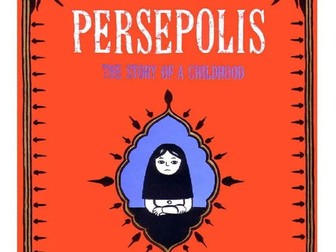
This comprehensive unit of study on Persepolis by Marjane Satrapi is designed to guide teachers through an engaging and thought-provoking exploration of the graphic novel. The presentation offers a detailed roadmap for teaching Persepolis in a classroom, complete with well-structured lessons that delve into the historical, cultural, and personal themes within the text.
Key highlights of the unit include:
Introduction to Graphic Novels and Autobiography: Students will explore what defines a graphic novel and how Persepolis merges these forms.
Historical and Cultural Context: Teachers can guide students through Iran’s history before and after the revolution, including the exploration of the “Women, Life, Freedom” movement.
Author’s Background: A detailed analysis of Marjane Satrapi’s life, including her exposure to political unrest in Iran, her experiences in Europe, and how these shaped Persepolis.
Themes and Symbolism: The unit covers critical themes like identity, social class, the impact of war, and the role of propaganda, all framed through personal experiences depicted in the novel.
Literary Techniques: The use of graphic novel techniques—such as panel analysis, visual storytelling, and symbolism—forms a key focus, helping students appreciate the unique ways Satrapi conveys complex narratives.
Global Issues: Students will identify and explore global issues such as politics, identity, and power, enhancing their understanding of how these themes are relevant to contemporary society.
This presentation equips teachers with a rich, flexible framework for exploring Persepolis through a variety of lenses, making it perfect for deepening students’ understanding of literature, history, and cultural studies. It includes a variety of discussion points, activities, and assessments to ensure students engage critically with the text and its broader implications.
Perfect for any teacher looking to introduce Persepolis in their classroom, this unit will inspire critical thinking, cross-disciplinary connections, and meaningful conversations about identity, culture, and the role of literature in societal change.
This detailed unit of study on Perfume by Patrick Süskind is designed to help teachers guide students through the complex narrative and themes of the novel. The unit is structured to encourage critical thinking, literary analysis, and engagement with the novel’s rich symbolism and philosophical undercurrents.
Key features of the unit include:
Hero’s Journey and Antiheroes: The unit starts by examining the concept of the “Hero’s Journey” and applies it to the protagonist, Grenouille. Students will discuss how his journey fits the traditional hero’s path, and whether he can be classified as an antihero.
Character Analysis: Through close reading and analysis of key passages, students explore Grenouille’s characterization as a “parasite” and the metaphorical use of the tick. They will critically engage with how Grenouille is portrayed and the significance of this dehumanization.
Grenouille’s Mentors: The novel’s themes of guidance and manipulation are explored through Grenouille’s relationships with his mentors. The impact of these relationships on his development is an essential part of the analysis.
The Craft of Perfumery: Students investigate the symbolism of scent and its role in the novel, comparing Grenouille’s creation of perfume with the marketing and promises made by modern perfume advertisements.
Intertextuality: The unit introduces the concept of intertextuality, encouraging students to identify connections between Perfume and other texts, songs, and films. This helps to deepen their understanding of how texts inform and shape one another.
Philosophical Themes: Lessons delve into Enlightenment ideas and their critique in Perfume. Students engage with key philosophical questions raised in the novel, such as human selfishness, the pursuit of knowledge, and moral progress.
Essay Practice: Throughout the unit, there are opportunities for students to practice writing essays on key topics, including the moral and philosophical implications of Grenouille’s actions, and the intertextual connections in Perfume.
This comprehensive unit offers a robust framework for teaching Perfume with a focus on character analysis, philosophical themes, and literary techniques. It encourages students to think critically about the nature of humanity, selfishness, and the pursuit of identity. Perfect for teachers looking to engage students in deeper analysis, this unit offers a variety of activities, assignments, and discussions that will deepen their appreciation of Süskind’s masterwork.
This comprehensive unit on Ad Analysis with a case study of the NRA’s campaign Freedom’s Safest Place offers an engaging and thought-provoking approach to understanding how advertisements persuade and manipulate audiences. The unit is designed to encourage students to critically evaluate the tactics and ethical considerations involved in advertising.
Key components of the unit include:
Introduction to Advertising: Students will explore the fundamentals of advertising, including its purpose to persuade, the audience it targets, and the devices used to create persuasive messages. They will also delve into concepts such as denotation and connotation, non-verbal communication, and intertextuality.
Rhetorical Devices and Emotional Branding: The unit covers various rhetorical devices and emotional branding strategies that advertisers use to connect with their target audience. Through case studies, students will examine how emotions such as fear, status, and self-image are leveraged in advertising.
Ethical Considerations: A crucial part of the unit is the debate over the ethical limitations of advertising, encouraging students to discuss whether certain ads should be allowed to air and under what conditions.
Case Study: NRA’s Freedom’s Safest Place Campaign: Students analyze the NRA’s controversial ad campaign, Freedom’s Safest Place. They will explore the political messaging behind the ad, its rhetorical techniques, and how it positions the NRA as a defender of American rights. This case study also includes lessons on identifying persuasive devices and evaluating the effectiveness of the ad.
Intertextuality and Copywriting: Lessons explore how intertextual references work within advertising and how different ad campaigns create meaning by drawing on familiar cultural references. Students will engage in copywriting exercises, where they create their own scripts in the style of real-world ads.
Comparative Analysis: Students will conduct a comparative analysis between different ads, such as the NRA’s campaign and the Sandy Hook Promise ad, assessing the persuasive techniques and emotional appeals used in each. This encourages students to understand the diverse ways ads address sensitive issues like gun violence.
Critical Thinking and Reflection: Throughout the unit, students are encouraged to write PEEL paragraphs, focusing on the techniques used in various ads and how those techniques persuade or manipulate audiences.
This unit provides a structured and in-depth exploration of advertising techniques, ethics, and political messaging. It is an ideal resource for teaching students how to critically evaluate the role of advertising in shaping public opinion and social issues. Perfect for those studying media, communication, or advertising, this unit promotes skills in analytical writing, critical thinking, and ethical discussion.
A set of slides introducing students to Greek theatre. The slides include an overview of the development of theatre in ancient Greece, an introduction to key terms and characteristics, and an overview of Greek gods and a humourous (in my opinion) set of slides to introduce students to the legend of Jason and the Golden Fleece. I used these slides as a beginning to a unit studing Medea.
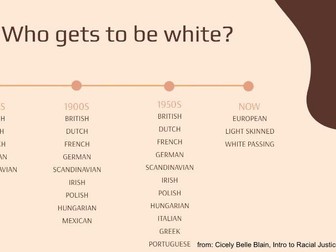
A presentation giving an overview of the way language can be racially biased. It includes a brief introduction to Foucault’s discourse theory and posits race as a socially constructed concept. The presentation also introduces the concept of hegemonic discourse and the importance of power structures in the creation of knowledge. Examples of racist and coded language as well as some visual examples are used to illustrate the (admittedly very theoretic) concepts and help students apply these to their experiences more directly.