Theme 1: The changing political environment, 1917–80
• The changing political climate from US entry into the First World War to Reagan’s election.
• The changing styles of presidential leadership across the period.
• The impact of American involvement in war on the general political environment and presidential government.
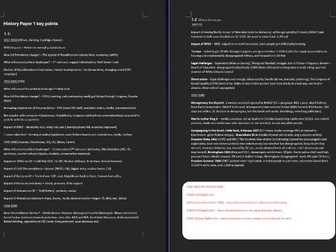
Detailed timeline of:
Theme 1: The changing political environment, 1917–80
• The changing political climate from US entry into the First World War to Reagan’s election.
• The changing styles of presidential leadership across the period.
• The impact of American involvement in war on the general political environment and presidential government.
Includes key points for final revision for:
Theme 1: The changing political environment, 1917–80
• The changing political climate from US entry into the First World War to Reagan’s election.
• The changing styles of presidential leadership across the period.
• The impact of American involvement in war on the general political environment and presidential government.
Theme 2: The quest for civil rights, 1917–80
• The struggle for minority rights in the years 1917–80, with particular reference to African-American civil rights.
• The changing nature and pattern of campaigning
• The impact of major federal civil rights legislation
• The influence of the African-American struggle on the search for non-African-American minority rights as well as the distinct reasons for campaigning by other minorities.
Theme 3: Society and culture in change, 1917–80
• The transformation of American society.
• Links with theme 2 regarding the experience of migrants and women.
• Overall patterns of change along with the different experience for women.
• The extent to which the USA was a migrant nation and the diversity of the immigrant experience.
• The extent to which popular culture and broadcast news both reflected and influenced society.
Theme 4: The changing quality of life, 1917–80
• The extent to which the quality of life in the USA in the years 1917–80 was affected by the economic environment and increasing aspiration.
• Patterns of economic change and their effects on living standards, both general and specific to different groups.
• The extent to which developments in leisure and travel affected the quality of life.

Theme 1: The changing political environment, 1917–80
• The changing political climate from US entry into the First World War to Reagan’s election.
• The changing styles of presidential leadership across the period.
• The impact of American involvement in war on the general political environment and presidential government.
Essays:
How far did the economy influence the political landscape of the USA in the years, 1917-1980
How accurate is it to say that the influence of FDR was the main reason for changes to the presidency in the years 1933-60?
How accurate is it to say that, in the years 1941-80, the impact of war and the Cold War brought about a decline in the confidence the nation had in the presidency?
Theme 2: The quest for civil rights, 1917–80
• The struggle for minority rights in the years 1917–80, with particular reference to African-American civil rights.
• The changing nature and pattern of campaigning
• The impact of major federal civil rights legislation
• The influence of the African-American struggle on the search for non-African-American minority rights as well as the distinct reasons for campaigning by other minorities.
Includes timelines of:
Theme 1: The changing political environment, 1917–80
• The changing political climate from US entry into the First World War to Reagan’s election.
• The changing styles of presidential leadership across the period.
• The impact of American involvement in war on the general political environment and presidential government.
Theme 2: The quest for civil rights, 1917–80
• The struggle for minority rights in the years 1917–80, with particular reference to African-American civil rights.
• The changing nature and pattern of campaigning
• The impact of major federal civil rights legislation
• The influence of the African-American struggle on the search for non-African-American minority rights as well as the distinct reasons for campaigning by other minorities.
Theme 3: Society and culture in change, 1917–80
• The transformation of American society.
• Links with theme 2 regarding the experience of migrants and women.
• Overall patterns of change along with the different experience for women.
• The extent to which the USA was a migrant nation and the diversity of the immigrant experience.
• The extent to which popular culture and broadcast news both reflected and influenced society.
Theme 4: The changing quality of life, 1917–80
• The extent to which the quality of life in the USA in the years 1917–80 was affected by the economic environment and increasing aspiration.
• Patterns of economic change and their effects on living standards, both general and specific to different groups.
• The extent to which developments in leisure and travel affected the quality of life.
Theme 2: The quest for civil rights, 1917–80
• The struggle for minority rights in the years 1917–80, with particular reference to African-American civil rights.
• The changing nature and pattern of campaigning
• The impact of major federal civil rights legislation
• The influence of the African-American struggle on the search for non-African-American minority rights as well as the distinct reasons for campaigning by other minorities.
Essays:
How accurate is it to say that it Was the actions of civil rights leaders that explain the increased success of the civil rights campaign in the years 1955-1968
How far had legal action advanced the position of black Americans between 1917-1955
How accurate is it to say that in the years 1960-80, the campaign for minority rights had limited success
How accurate is it to say that it was the actions of civil rights leaders that explain the increased success of the civil rights campaign in the years 1955-68
Edexcel A-level Economics A revision notes,
Year 2: Theme 3 and Theme 4
Business Behaviour & The Labour Market
CONTENTS
3.1 Business Growth
3.1.1 Size & Types of Firms
3.1.2 Business Growth
3.1.3 Demergers
3.2 Business Objectives
3.2.1 Business Objectives
3.3 Revenues, Costs & Profits
3.3.1 Revenue
3.3.2 Costs
3.3.3 Economies & Diseconomies of Scale
3.3.4 Normal Profits, Supernormal Profits & Losses
3.4 Market Structures
3.4.1 Effciency
3.4.2 Perfect Competition
3.4.3 Monopolistic Competition
3.4.4 Oligopoly
3.4.5 Monopoly
3.4.6 Monopsony
3.4.7 Contestability
3.5 Labour Market
3.5.1 Demand for Labour
3.5.2 Supply of Labour
3.5.3 Wage Determination in Competitive & Non-competitive Markets
3.6 Government Intervention
3.6.1 Government Intervention
3.6.2 The Impact of Government Intervention
A Global Perspective
CONTENTS
4.1 International Economics
4.1.1 Globalisation
4.1.2 Specialisation & Trade
4.1.3 Pattern of Trade
4.1.4 Terms of Trade
4.1.5 Trading Blocs & the World Trade Organisation (WTO)
4.1.6 Restrictions on Free Trade
4.1.7 Balance of Payments
4.1.8 Exchange Rates
4.1.9 International Competitiveness
4.2 Poverty & Inequality
4.2.1 Absolute & Relative Poverty
4.2.2 Inequality
4.3 Emerging & Developing Economies
4.3.1 Measures of Development
4.3.2 Factors Influencing Growth & Development
4.3.3 Strategies Influencing Growth & Development
4.4 The Financial Sector
4.4.1 Role of Financial Markets
4.4.2 Market Failure in the Financial Sector
4.4.3 Role of Central Banks
4.5 Role of the State in the Macroeconomy
4.5.1 Public Expenditure
4.5.2 Taxation
4.5.3 Public Sector Finances
4.5.4 Macroeconomic Policies in a Global Context
Component 4: Historical Investigation
What’s assessed:
Must not duplicate the content of options chosen for Components 1 and 2. 4,000 words independent
essay, 40 marks, 20% of A-level, marked by teachers, moderated by Edexcel.
Model Course Work
Grade: A*
Question: Historians have widely differed in their perceptions about the causes of the Cold War. To what extent can it be argued that the mistrust and power rivalry catalysed the inevitable Cold War?
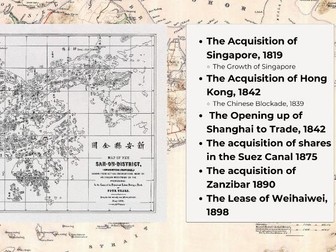
Educational presentation on the British Empire trading routes for students studying A-level history.
Includes:
The Acquisition of Singapore, 1819
The Growth of Singapore
The Acquisition of Hong Kong, 1842
The Chinese Blockade, 1839
The Opening up of Shanghai to Trade, 1842
The acquisition of shares in the Suez Canal 1875
The acquisition of Zanzibar 1890
The Lease of Weihaiwei, 1898
Includes exam questions.
PAPER 3: Themes in breadth with aspects in depth
Option 35.1: Britain: losing and gaining an empire, 1763–1914
A-level History
Option 2F.2: South Africa, 1948–94: from apartheid state to ‘rainbow nation’
Essay, including a timeline of events during the period of time.
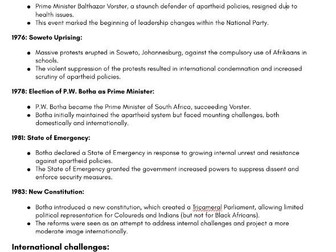
How far were domestic challenges in the years 1974-83 responsible for Botha’s reforming agenda?
A-Level Edexcel History South Africa notes
Includes detailed notes, alongside a timeline of events during the period of time.
Option 2F.2: South Africa, 1948–94: from apartheid state to ‘rainbow nation’
A-level History
Option 2F.2: South Africa, 1948–94: from apartheid state to ‘rainbow nation’
Essay
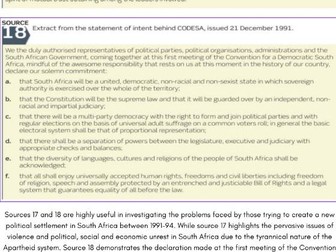
How far could the historian use Sources 17 and 18 together to investigate the problems facing those trying to create a new political settlement in South Africa in the years 1991-94?