Year 7 Art Techniques: 18 Creative Mark-Making, Printing, Painting & Mixed-Media IdeasQuick View
mwanasiti1

Year 7 Art Techniques: 18 Creative Mark-Making, Printing, Painting & Mixed-Media Ideas

(0)
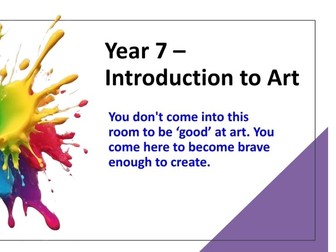
A colourful and highly visual Year 7 Art inspiration resource featuring 18 accessible art techniques designed to encourage experimentation, creativity and confidence. Each technique is presented with a clear visual example and a short, student-friendly explanation, making the resource ideal for KS3 Art lessons, sketchbook development, skills carousels, cover lessons, early finishers or independent experimentation. The emphasis throughout is on LOOK • TRY • EXPERIMENT • REFLECT, rather than simply copying a finished artwork. Students explore a wide variety of processes, including paper weaving and collage, cotton-bud printing, bubble painting, tape-resist painting, fruit printing, pulled-paint reflections, watercolour blending and washes, pattern doodling, natural-material mosaics, corn-cob printing, painting on fabric and experimental texture/splatter printing. The techniques help students investigate key visual-art concepts such as colour, texture, pattern, repetition, layering, mark-making, printing, water control, blending and mixed media. The strong photographic examples make the slides particularly useful for visual learners and for displaying on the board while students work. Included: 18 different art technique ideas High-quality visual inspiration for every technique Simple student-friendly instructions Painting, printing, collage, watercolour and mixed-media processes Accessible activities using many inexpensive or everyday materials PowerPoint format for easy classroom display Suitable for: Year 7 / KS3 Art, approximately ages 11–13. It could also be used with upper KS2 or adapted for older students as an experimental techniques bank. Great for: introductory Art units, technique samplers, sketchbook development, creative rotations, Art clubs, cover lessons and building students’ confidence with materials before a larger project.
Digital/Online Safety:Quick View
mwanasiti1

Digital/Online Safety:

(0)
A stand-alone digital safety project for lower secondary. Perfect for research, developing understanding the dangers of the o line world, through student-led investigation. Fund, but purposeful, especially in today’s worrying online access.
Respect in a changing world: case studies: History/IMYC/KS3 Holocaust/Civil rights/Māori/Space/JapanQuick View
mwanasiti1

Respect in a changing world: case studies: History/IMYC/KS3 Holocaust/Civil rights/Māori/Space/Japan

(0)
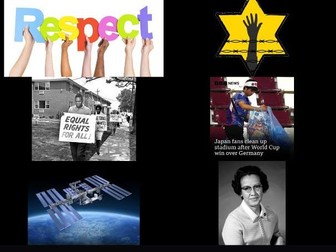
History: “Respect” Case Studies – General History/IMYC Respect Unit This fully editable PowerPoint resource explores the IMYC Big Idea of Respect through rich historical, cultural, ethical, and global case studies designed specifically for Lower Secondary learners (Years 8–9 / KS3 equivalent). Students are encouraged to think critically, question thoughtfully, and reflect deeply upon themes such as human dignity, civil rights, cultural identity, global citizenship, inequality, resilience, teamwork, and responsibility in the modern world. Perfect for IMYC, KS3 Humanities, Global Citizenship, PSHE/H&W, English links, tutor time, or interdisciplinary teaching. Included Topics: • The Holocaust and human dignity • Civil Rights movements and equality • Modern slavery and cobalt mining • Japanese cultural practices and shared responsibility • Olympic and Paralympic values • The International Space Station and global collaboration • Katherine Johnson and hidden voices of history • Māori culture, The Haka, and cultural respect • Local and global historical connections • Reflection, empathy, discussion, and critical thinking tasks throughout Learning Focus: • Critical thinking and enquiry • PEEL and analytical discussion • Global awareness and current affairs • Respect, empathy, and moral reflection • Collaboration and communication • Digital literacy and thoughtful discussion • IMYC Seven Needs of the Teenage Brain connections Features: ✔ Fully editable PowerPoint ✔ Discussion prompts and reflection tasks ✔ Embedded video links ✔ Rich visuals and engaging layouts ✔ Cross-curricular English, History, H&W, and Arts links ✔ Suitable for interactive whiteboards and class discussion ✔ Designed in an engaging, student-friendly style Ideal for teachers looking for meaningful, modern, discussion-rich learning that encourages students to connect history, society, culture, and global issues to their own lives and responsibilities as young global citizens.
Posters: Public Health Through History/Medieval Medicine Gallery-walk for interactive learningQuick View
mwanasiti1

Posters: Public Health Through History/Medieval Medicine Gallery-walk for interactive learning

(0)
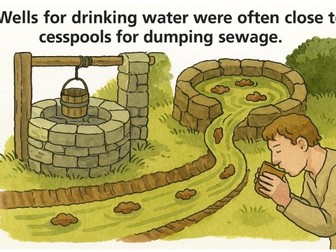
Public Health Through History & Society | KS3 / IMYC Humanities & PSHE Unit An engaging, visually rich, and thought-provoking KS3 / IMYC (fun!) poster collection exploring how public health, society, responsibility, and human behaviour are deeply connected across history and the modern world. Suitable for a gallery walk as part of Medieval Medicine teaching and learning.
Space: descriptive/persuasive writingQuick View
mwanasiti1

Space: descriptive/persuasive writing

(0)
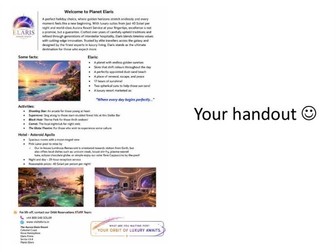
A resource that encourages students to think critically and use their imagination, while exploring AFOREST/persuasive, and descriptive writing, in a letter format. Visit Planet Elaris"
Fairytales with a twist: Happily Never AfterQuick View
mwanasiti1

Fairytales with a twist: Happily Never After

(0)
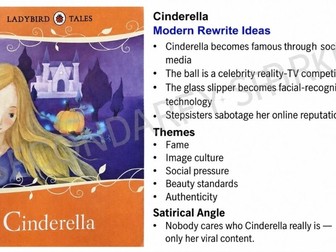
A resource that interconnects writing and the digital world. With online safety being a priority, this .ppt allows students to engage in deep, meaningful writing and English craft, whilst linking their learning wtih real-world, online safey. Fairytales with a message.
WWII Map - Allied/Axis force, invasion routes, countries, troop movementQuick View
mwanasiti1

WWII Map - Allied/Axis force, invasion routes, countries, troop movement

(0)
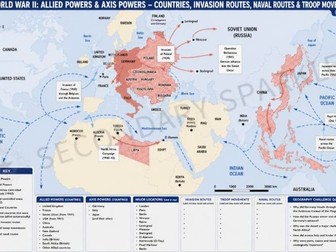
This map illustrates the global scale of World War II by showing the Allied and Axis powers, key invasion routes, naval routes, and major troop movements between 1939 and 1945. It highlights how geography influenced the conflict, with important locations across Europe, North Africa, and the Pacific marked to demonstrate strategic importance. Students can clearly see the expansion of Axis-controlled territory, the movement of forces across land and sea, and the significance of places such as Stalingrad, El Alamein, and Pearl Harbor. The map also encourages geographical thinking by exploring how oceans, deserts, climate, distance, and transport routes affected the progress and outcome of the war.