Summary Slides and past papers for
Unit 3: Business Finance focuses on how businesses manage money and make financial decisions. Students learn about costs, revenue, profit, break-even analysis, cash flow, and sources of finance. The unit helps students understand how financial information is used to plan, control spending, and support business growth.
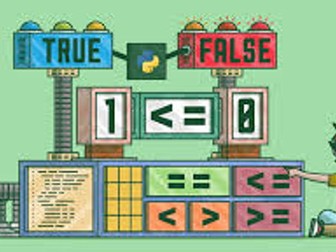
A Boolean Unit introduces students to the basics of Boolean logic, which is a way of thinking using true or false values, also known as 1s and 0s. Boolean logic is the foundation of how computers make decisions and carry out instructions.
In this unit, students learn about Boolean operators such as AND, OR, and NOT, and how they can be used to create simple logic statements. These logic statements are used in computer programming, digital circuits, and everyday decision-making processes.
Students explore how computers use Boolean logic to make choices in programs, filter search results, and control simple electronic systems.
Activities in the unit might include using truth tables to work out how logic gates work, solving logic puzzles and building logic statements, programming simple decision-making code using Boolean expressions, and understanding how logic gates function in digital circuits, such as AND, OR, and NOT.
By the end of the unit, students understand how Boolean logic helps computers think and how it is used in both software, such as coding, and hardware, such as circuits.
This unit supports the development of computational thinking, problem-solving skills, and logical reasoning.
Transforming Waste into Usefulness is an environmentally focused project that challenges participants to rethink how we deal with waste by finding creative, practical, and sustainable ways to repurpose discarded materials.
The project promotes environmental awareness, problem-solving, and innovation. It encourages participants to look at waste not as rubbish, but as a resource that can be reused, redesigned, or reinvented for a new purpose.
Participants begin by researching the types and volumes of waste produced in their daily lives, homes, schools, or communities. They then select specific items or materials—such as plastic, paper, fabric, cardboard, or food waste—and explore how these can be transformed into something useful or valuable.
Depending on the focus, they might create eco-friendly products, artwork, functional household items, compost for gardening, or educational campaigns promoting recycling and reuse. Throughout the process, participants reflect on the impact of consumer habits and the importance of reducing waste in the fight against climate change.
This project is suitable for all ages and works well in schools, community groups, or environmental clubs. It helps build creativity, responsibility, and an understanding of sustainability in everyday life.
From Plan to Plate – Project Description
“From Plan to Plate” is a practical, real-life project that takes participants through the full process of planning, budgeting, buying, preparing, and evaluating a meal.
The project develops essential life skills such as meal planning, financial awareness, nutrition, food preparation, and communication. It encourages independence, creativity, and reflection.
Participants will plan a meal based on specific criteria, such as healthiness, a cultural theme, or dietary needs. They will create a shopping list and stick to a defined budget. As part of the process, they will purchase ingredients mindfully, comparing prices and making cost-effective choices. They will then prepare and cook the meal, focusing on hygiene, safety, and presentation.
Once the meal is ready, they will serve and share it with peers, family, or a chosen audience. Finally, they will gather feedback on the meal’s taste, appearance, and value for money, and reflect on what went well and what they would improve next time.
This project is ideal for secondary school students, youth programmes, or life skills workshops. It promotes confidence, responsibility, and practical learning in a fun and engaging way.
For Edexcel’s International GCSE Global Citizenship course, Theme 1 on Politics and Governance explores the functioning of governance worldwide and its impact on citizens’ lives. This theme introduces students to different forms of governance, including democracies, dictatorships, and monarchies, examining how these systems operate across countries. It emphasizes the roles and responsibilities of government at local, national, and global levels, covering policy-making, law enforcement, and public service provision.
A key aspect of this theme is understanding human rights and responsibilities. Students learn about foundational documents like the Universal Declaration of Human Rights and other international treaties, gaining insights into individual rights as well as the responsibilities citizens hold, such as voting, obeying laws, and contributing to the community. This section underscores how citizen engagement reinforces democratic governance.
The theme also highlights the role of international organizations, such as the United Nations, NATO, WHO, and the European Union, each with distinct influences on international politics, trade, and security. Students examine the UN’s structure and functions, including peacekeeping missions and other efforts that support global governance.
Media and technology’s influence on politics is another focal point, showing how media shapes political views, influences public opinion, and holds governments accountable. Additionally, students explore the role of technology in governance, from e-government services to the political engagement facilitated through social media.
Global issues in politics and governance are also covered, particularly in terms of conflict and cooperation. Students analyze the causes of international conflicts, the efforts made to foster cooperation and peace, and the challenges such as corruption and lack of transparency that can hinder effective governance. They are encouraged to critically evaluate governance styles, compare democratic and non-democratic systems, and assess the impact of global political issues.
This theme ultimately aims to broaden students’ understanding of political systems and the significance of active, informed citizenship in shaping fair and effective governance worldwide.
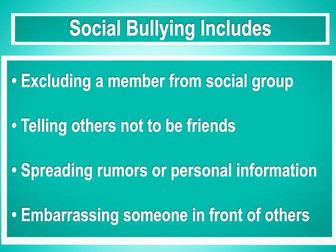
Social and Relational Bullying
“The invisible manipulation of social dynamics to hurt, exclude, or control someone, often leaving emotional scars deeper than physical wounds.”
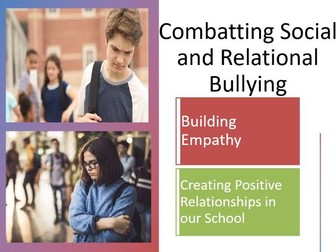
Combatting Social and Relational Bullying
“The invisible manipulation of social dynamics to hurt, exclude, or control someone, often leaving emotional scars deeper than physical wounds.
Recognize and identify bullying behaviours
Develop empathy and perspective-taking
Create a supportive School environment
Goal: Learn strategies to prevent bullying and foster an inclusive School.


 Quick View