The Jamie Drake Equation- diary of JamieQuick View
teez626

The Jamie Drake Equation- diary of Jamie

(0)
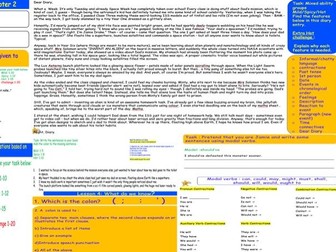
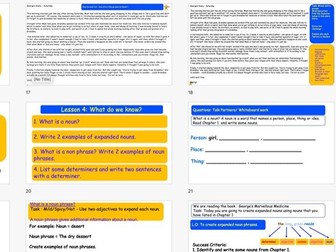
This comprehensive and fully editable 7-day teaching PowerPoint is a high-quality, curriculum-aligned unit culminating in a powerful long writing outcome: a diary entry written in role as Jamie, based on Chapter 2 of The Jamie Drake Equation by Christopher Edge. Designed for Year 5 or 6, this unit is carefully scaffolded to develop pupils’ reading, grammar, and composition skills through a sequence of engaging, adaptive, and pedagogically sound lessons. Each lesson has a clear success criteria, differentiated tasks (MILD, SPICY, HOT), and high-quality supporting resources, including vocabulary banks for all learners, with additional scaffolds for EAL and SEND pupils. The unit builds incrementally towards the final composition, allowing children to interweave knowledge and skills acquired across the week into their final piece. Key features include: • Talk-rich environment with structured talk partner activities to deepen understanding • Assessment for Learning (AfL) is used meaningfully throughout to identify prior knowledge and address misconceptions • Explicit modelling of writing and grammar, with a strong focus on writer’s voice and purpose • Progressive grammar objectives in context, including the use of colons and contractions • Adaptable lesson order, giving teachers flexibility to tailor the unit to their class needs • Pupil choice through tiered differentiation, boosting motivation and self-esteem Lesson Overview: • Lesson 1: Vocabulary Development To explore and understand key vocabulary from Chapter 2 • Lesson 2: Comprehension To retrieve and record information from Chapter 2 • Lesson 3: Grammar – Diary Features To identify the features of an effective diary entry using a model text • Lesson 4: Grammar in Context To use colons for clarity and effect in writing • Lesson 5: Grammar in Context To use contractions accurately in character voice- Jamie • Lesson 6: Planning for Writing To plan a diary entry in role, sequencing events and emotions • Lesson 7: Final Composition To write an engaging diary entry in the voice of Jamie This unit exemplifies best practice in writing instruction, with opportunities for high challenge and scaffolded support. Whether used as part of a wider -themed scheme or as a standalone English unit, this resource ensures pupils are inspired, supported, and equipped to produce high-quality, imaginative writing.
THE BOY WHO GREW DRAGONS-Diary of TomasQuick View
teez626

THE BOY WHO GREW DRAGONS-Diary of Tomas

(0)
This comprehensive and fully editable 7-day teaching PowerPoint is a high-quality, curriculum-aligned unit culminating in a powerful long writing outcome: a diary entry written in role as Tomas, based on Chapter 4 and 5 of THE BOY WHO GREW DRAGONS by Andy Shepherd. Designed for Year 2 or 3 this unit is carefully scaffolded to develop pupils’ reading, grammar, and composition skills through a sequence of engaging, adaptive, and pedagogically sound lessons. Each lesson has a clear success criteria, differentiated tasks (MILD, SPICY, HOT), and high-quality supporting resources, including vocabulary banks for all learners, with additional scaffolds for EAL and SEND pupils. The unit builds incrementally towards the final composition, allowing children to interweave knowledge and skills acquired across the week into their final piece. Key features include: • Talk-rich environment with structured talk partner activities to deepen understanding • Assessment for Learning (AfL) is used meaningfully throughout to identify prior knowledge and address misconceptions • Explicit modelling of writing and grammar, with a strong focus on writer’s voice and purpose • Progressive grammar objectives in context, including the use of colons and contractions • Adaptable lesson order, giving teachers flexibility to tailor the unit to their class needs • Pupil choice through tiered differentiation, boosting motivation and self-esteem Lesson Overview: • Lesson 1: Vocabulary Development To explore and understand key vocabulary from Chapter 1 • Lesson 2: Comprehension To retrieve and record information from Chapter 1 • Lesson 3: Grammar – Diary Features To identify the features of an effective diary entry using a model text • Lesson 4: Grammar in Context To use expanded nouns • Lesson 5: Grammar in Context To use contractions accurately in character voice • Lesson 6: Planning for Writing To plan a diary entry in role, sequencing events and emotions • Lesson 7: Final Composition To write an engaging diary entry in the voice of Tomas This unit exemplifies best practice in writing instruction, with opportunities for high challenge and scaffolded support. Whether used as part of a wider -themed scheme or as a standalone English unit, this resource ensures pupils are inspired, supported, and equipped to produce high-quality, imaginative writing.
Letters from a Lighthouse-diary entry of OliveQuick View
teez626

Letters from a Lighthouse-diary entry of Olive

(0)
This comprehensive and fully editable 7-day teaching PowerPoint is a high-quality, curriculum-aligned unit culminating in a powerful long writing outcome: a diary entry written in role as Olive, based on Chapter 1 of Letters from a Lighthouse by Emma Carroll. Designed for Year 5 or 6, this unit is carefully scaffolded to develop pupils’ reading, grammar, and composition skills through a sequence of engaging, adaptive, and pedagogically sound lessons. Each lesson has a clear success criteria, differentiated tasks (MILD, SPICY, HOT), and high-quality supporting resources, including vocabulary banks for all learners, with additional scaffolds for EAL and SEND pupils. The unit builds incrementally towards the final composition, allowing children to interweave knowledge and skills acquired across the week into their final piece. Key features include: • Talk-rich environment with structured talk partner activities to deepen understanding • Assessment for Learning (AfL) is used meaningfully throughout to identify prior knowledge and address misconceptions • Explicit modelling of writing and grammar, with a strong focus on writer’s voice and purpose • Progressive grammar objectives in context, including the use of colons and contractions • Adaptable lesson order, giving teachers flexibility to tailor the unit to their class needs • Pupil choice through tiered differentiation, boosting motivation and self-esteem Lesson Overview: • Lesson 1: Vocabulary Development To explore and understand key vocabulary from Chapter 1 • Lesson 2: Comprehension To retrieve and record information from Chapter 1 • Lesson 3: Grammar – Diary Features To identify the features of an effective diary entry using a model text • Lesson 4: Grammar in Context To use colons for clarity and effect in writing • Lesson 5: Grammar in Context To use contractions accurately in character voice- Olive • Lesson 6: Planning for Writing To plan a diary entry in role, sequencing events and emotions • Lesson 7: Final Composition To write an engaging diary entry in the voice of Olive This unit exemplifies best practice in writing instruction, with opportunities for high challenge and scaffolded support. Whether used as part of a wider -themed scheme or as a standalone English unit, this resource ensures pupils are inspired, supported, and equipped to produce high-quality, imaginative writing.
The Lion, the Witch and the Wardrobe - diary -LucyQuick View
teez626

The Lion, the Witch and the Wardrobe - diary -Lucy

(0)
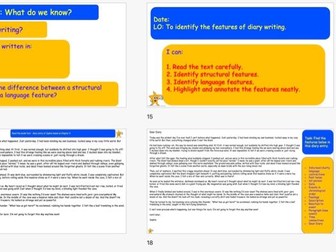
This comprehensive, fully editable 8-day (65-slide) Teaching PowerPoint is a complete unit of work that culminates in a high-quality long writing outcome: a diary entry from Lucy’s perspective based on Chapter 1 of The Lion, the Witch and the Wardrobe by C.S.Lewis. Every element has been designed to reflect the principles of outstanding teaching, ensuring high engagement, purposeful learning, and visible progress. Each lesson is meticulously sequenced, building incrementally toward the final diary entry. Whether focused on comprehension or grammar, every session connects clearly to the end goal, giving pupils a real sense of purpose and direction in their learning. Clear Success Criteria & WAGOLL: Ensure learners know what success looks like with “What A Good One Looks Like” examples and explicit success criteria for every step. Assessment for Learning (AfL): Thoughtfully embedded AfL questions allow you to gauge prior knowledge, address misconceptions, and adapt teaching in real time. High-Impact Differentiation: Each lesson features differentiated tasks (MILD, SPICY, HOT), enabling pupils to choose a level that challenges them appropriately and boosts confidence—particularly effective for fostering independence and self-esteem. Inclusive and Supportive: Vocabulary banks are provided to scaffold all learners, with targeted support for EAL and SEND pupils to ensure everyone can access and succeed in the writing process. Collaborative Learning: Regular use of talk partners and structured discussion tasks promote deeper thinking and oral rehearsal, strengthening pupils’ ideas before writing. Built for Progression: Pupils are empowered to draw upon their work from Days 1–6 when completing their final diary entry, ensuring that prior learning is applied meaningfully and cumulatively. Lesson Overview: Lesson 1: Comprehension – Make a prediction from the front cover Lesson 2: Comprehension – Predict from the blurb Lesson 3: Comprehension – Retrieve information from Chapter 1 Lesson 4: Grammar – Identify features of a diary entry Lesson 5: Grammar – Use contractions effectively Lesson 6: Grammar – Use modal verbs to express possibility and intention Lesson 7: Planning – Order events chronologically Lesson 8: Writing – Write a detailed, emotive diary entry as Lucy
Beowulf-diary entry based on Michael MorpurgoQuick View
teez626

Beowulf-diary entry based on Michael Morpurgo

(0)
This comprehensive and fully editable 7-day teaching PowerPoint is a high-quality, curriculum-aligned unit culminating in a powerful long writing outcome: a diary entry written in role as Beowulf, based on pages 123–134 of Beowulf by Michael Morpurgo. Designed for Year 5 or Year 6, this unit is carefully scaffolded to develop pupils’ reading, grammar, and composition skills through a sequence of engaging, adaptive, and pedagogically sound lessons. Each lesson has a clear success criteria, differentiated tasks (MILD, SPICY, HOT), and high-quality supporting resources, including vocabulary banks for all learners, with additional scaffolds for EAL and SEND pupils. The unit builds incrementally towards the final composition, allowing children to interweave knowledge and skills acquired across the week into their final piece. Key features include: • Talk-rich environment with structured talk partner activities to deepen understanding • Assessment for Learning (AfL) is used meaningfully throughout to identify prior knowledge and address misconceptions • Explicit modelling of writing and grammar, with a strong focus on writer’s voice and purpose • Progressive grammar objectives in context, including the use of colons and contractions • Adaptable lesson order, giving teachers flexibility to tailor the unit to their class needs • Pupil choice through tiered differentiation, boosting motivation and self-esteem Lesson Overview: • Lesson 1: Vocabulary Development To explore and understand key vocabulary from Pg 123–134 • Lesson 2: Comprehension To retrieve and interpret information from the text • Lesson 3: Grammar – Diary Features To identify the features of an effective diary entry using a model text • Lesson 4: Grammar in Context To use colons for clarity and effect in writing • Lesson 5: Grammar in Context To use contractions accurately in character voice • Lesson 6: Planning for Writing To plan a diary entry in role, sequencing events and emotions • Lesson 7: Final Composition To write an engaging, characterful diary entry in the voice of Beowulf
George's Marvellous Medicine-diary of GeorgeQuick View
teez626

George's Marvellous Medicine-diary of George

(0)
This comprehensive and fully editable 7-day teaching PowerPoint is a high-quality, curriculum-aligned unit culminating in a powerful long writing outcome: a diary entry written in role as George, based on Chapter 1 of George’s Marvellous Medicine by Roald Dahl. Designed for Year 2 or 3 this unit is carefully scaffolded to develop pupils’ reading, grammar, and composition skills through a sequence of engaging, adaptive, and pedagogically sound lessons. Each lesson has a clear success criteria, differentiated tasks (MILD, SPICY, HOT), and high-quality supporting resources, including vocabulary banks for all learners, with additional scaffolds for EAL and SEND pupils. The unit builds incrementally towards the final composition, allowing children to interweave knowledge and skills acquired across the week into their final piece. Key features include: • Talk-rich environment with structured talk partner activities to deepen understanding • Assessment for Learning (AfL) is used meaningfully throughout to identify prior knowledge and address misconceptions • Explicit modelling of writing and grammar, with a strong focus on writer’s voice and purpose • Progressive grammar objectives in context, including the use of colons and contractions • Adaptable lesson order, giving teachers flexibility to tailor the unit to their class needs • Pupil choice through tiered differentiation, boosting motivation and self-esteem Lesson Overview: • Lesson 1: Vocabulary Development To explore and understand key vocabulary from Chapter 1 • Lesson 2: Comprehension To retrieve and record information from Chapter 1 • Lesson 3: Grammar – Diary Features To identify the features of an effective diary entry using a model text • Lesson 4: Grammar in Context To use expanded nouns • Lesson 5: Grammar in Context To use contractions accurately in character voice • Lesson 6: Planning for Writing To plan a diary entry in role, sequencing events and emotions • Lesson 7: Final Composition To write an engaging diary entry in the voice of George This unit exemplifies best practice in writing instruction, with opportunities for high challenge and scaffolded support. Whether used as part of a wider -themed scheme or as a standalone English unit, this resource ensures pupils are inspired, supported, and equipped to produce high-quality, imaginative writing.
Macbeth- diary entry of Macbeth based on BBC BitesizeQuick View
teez626

Macbeth- diary entry of Macbeth based on BBC Bitesize

(0)
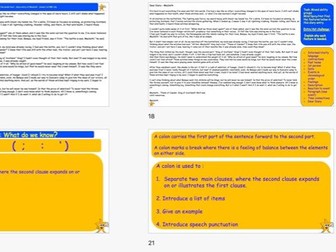
This comprehensive and fully editable 7-day teaching PowerPoint is a high-quality, curriculum-aligned unit culminating in a powerful long writing outcome: a diary entry written in role as Macbeth, based on Scene 1 of Macbeth- BBC Bitesize-KS2. Designed for Year 6, this unit is carefully scaffolded to develop pupils’ reading, grammar, and composition skills through a sequence of engaging, adaptive, and pedagogically sound lessons. Each lesson has a clear success criteria, differentiated tasks (MILD, SPICY, HOT), and high-quality supporting resources, including vocabulary banks for all learners, with additional scaffolds for EAL and SEND pupils. The unit builds incrementally towards the final composition, allowing children to interweave knowledge and skills acquired across the week into their final piece. Key features include: • Talk-rich environment with structured talk partner activities to deepen understanding • Assessment for Learning (AfL) is used meaningfully throughout to identify prior knowledge and address misconceptions • Explicit modelling of writing and grammar, with a strong focus on writer’s voice and purpose • Progressive grammar objectives in context, including the use of colons and contractions • Adaptable lesson order, giving teachers flexibility to tailor the unit to their class needs • Pupil choice through tiered differentiation, boosting motivation and self-esteem Lesson Overview: • Lesson 1: Vocabulary Development To explore and understand key vocabulary based on Scene 1 • Lesson 2: Comprehension To retrieve and record information from Scene 1 • Lesson 3: Grammar – Diary Features To identify the features of an effective diary entry using a model text • Lesson 4: Grammar in Context To use colons for clarity and effect in writing • Lesson 5: Grammar in Context To use contractions accurately in character voice • Lesson 6: Planning for Writing To plan a diary entry in role, sequencing events and emotions • Lesson 7: Final Composition To write an engaging diary entry in the voice of Macbeth This unit exemplifies best practice in writing instruction, with opportunities for high challenge and scaffolded support. Whether used as part of a wider Macbeth-themed scheme or as a standalone English unit, this resource ensures pupils are inspired, supported, and equipped to produce high-quality, imaginative writing.
The BFG-diary entry of Sophie- Chapter 4Quick View
teez626

The BFG-diary entry of Sophie- Chapter 4

(0)
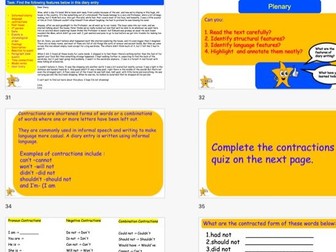
This comprehensive and fully editable 7-day teaching PowerPoint is a high-quality, curriculum-aligned unit culminating in a powerful long writing outcome: a diary entry written in role as Sophie, based on Chapter 4 of The BFG by Roald Dahl. Designed for Year 4, 5 or Year 6, this unit is carefully scaffolded to develop pupils’ reading, grammar, and composition skills through a sequence of engaging, adaptive, and pedagogically sound lessons. Each lesson has a clear success criteria, differentiated tasks (MILD, SPICY, HOT), and high-quality supporting resources, including vocabulary banks for all learners, with additional scaffolds for EAL and SEND pupils. The unit builds incrementally towards the final composition, allowing children to interweave knowledge and skills acquired across the week into their final piece. Key features include: • Talk-rich environment with structured talk partner activities to deepen understanding • Assessment for Learning (AfL) is used meaningfully throughout to identify prior knowledge and address misconceptions • Explicit modelling of writing and grammar, with a strong focus on writer’s voice and purpose • Progressive grammar objectives in context, including the use of colons and contractions • Adaptable lesson order, giving teachers flexibility to tailor the unit to their class needs • Pupil choice through tiered differentiation, boosting motivation and self-esteem Lesson Overview: • Lesson 1: Vocabulary Development To explore and understand key vocabulary from Chapter 4 • Lesson 2: Comprehension To retrieve and record information from Chapter 4 • Lesson 3: Grammar – Diary Features To identify the features of an effective diary entry using a model text • Lesson 4: Grammar in Context To use colons for clarity and effect in writing • Lesson 5: Grammar in Context To use contractions accurately in character voice • Lesson 6: Planning for Writing To plan a diary entry in role, sequencing events and emotions • Lesson 7: Final Composition To write an engaging diary entry in the voice of Sophie This unit exemplifies best practice in writing instruction, with opportunities for high challenge and scaffolded support. Whether used as part of a wider -themed scheme or as a standalone English unit, this resource ensures pupils are inspired, supported, and equipped to produce high-quality, imaginative writing.
WHEN THE SKY FALLS by Phil Earle -diary entry of JosephQuick View
teez626

WHEN THE SKY FALLS by Phil Earle -diary entry of Joseph

(0)
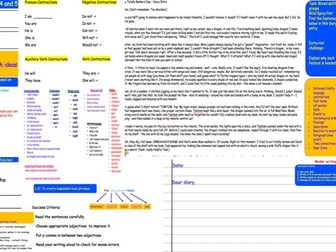
This is a 7-day editable Teaching PowerPoint complete with success criteria and differentiated/adapted resources that lead to a long writing task – a diary entry of Joseph based on Chapter 2 of the book by Phil Earle The lessons include talk tasks, vocabulary and meanings (Chapter 2) a MODEL text as well as grammar based on the book and it is pitched at National Curriculum levels for Years 5 or 6. See a breakdown of teaching materials below. All the lessons follow in sequence and each lesson whether comprehension or grammar builds up to the long writing task. This set of lessons is structured based on the best pedagogical approaches to use in the classroom such as AFL questions to gather what learners already know, the use of talk partners to share learning, allowing learners to choose their task from MILD, SPICY and HOT (this works wonders for their self-esteem) The tasks are differentiated and progressive. The PowerPoint allows you to teach and model the writing. The learners can use their work from Day 1 to Day 6 and interweave it into the Long Write. Lessons include a word bank to support EAL/SEN learners and a word bank for all children for the long write. Lesson 1: Vocabulary: To understand words and their meanings. (Chapter 2) Lesson 2 : Comprehension: To answer retrieval questions. (Chapter 2) Lesson 3: Grammar: To identify features of a diary entry (Joseph– Chapter 2 ) Lesson 4: Grammar/Writing: To use colons. Lesson 5 : Grammar/Writing: To use contractions. Lesson 6: Planning: To plan a diary entry (Joseph- based on events of Chapter 2 ) Lesson 7 : Composition: To write a diary entry (Joseph – based on Chapter 2)
Arthur and the Golden Rope by Joe Todd Stanton-character description of ArthurQuick View
teez626

Arthur and the Golden Rope by Joe Todd Stanton-character description of Arthur

(0)
This is a 13day editable DIFFERENTIATED TEACHING POWERPOINT complete with success criteria for each lesson, talk tasks, learner tasks as well as accompanying resources to teach character description -Arthur and is based on the book, Arthur and the GOLDEN ROPE. The lessons include comprehension and grammar based on the book and is pitched at National Curriculum levels for Y3, 4 and 5. All the lessons follow in sequence and each lesson whether comprehension or grammar builds up to the long writing task, which is to write a character description of Arthur. Thereafter, the last two lessons is to innovate and plan and write a new character for the story. The learners can use their work from Day 1 to Day 9 and interweave it into the Long Write. Lessons 11/12 and 13: INDEPENDENT WRITE where children innovate and create a new character in the place of Arthur. Most lessons include a word bank to support EAL/SEN learners.This set of lessons is structured based on the best pedagogical approaches to use in the classroom such as AFL questions to gather what learners already know, the use of talk partners to share learning, allowing learners to choose their task from MILD, SPICY and HOT (this works wonders for their self-esteem) The tasks are progressive and can be modelled on the PowerPoint itself. Lesson 1: To use common nouns and adjectives (describe Arthur) Lesson 2 : Comprehension: L.O: To raise a range of questions. (about Arthur) Lesson 3: Comprehension: LO: To answer questions. (about Arthur) Lesson 4: Grammar: To use adverbs (about Arthur) Lesson 5 : Grammar: LO: To use a range of adjectives or expanded nouns to describe a character. (Role on the wall) Lesson 6 - Grammar: To use inverted commas. Lesson 7: Grammar: To use figurative language (create similes describing Arthur) Lesson 8: Planning: To plan a character description (about Arthur) Lesson 9: Speaking and Listening: To participate in roleplay and ask questions ( about Arthur) Lesson 10: Composition: To write a character description (about Arthur) Lesson 11: Editing: To edit and evaluate my writing. Lesson 12: Planning: To plan a character description. (new character) Lesson 13: Composition: To write a character description. (new character) For other resources for the book, Arthur and the Golden Rope, please see : Arthur and the Golden Rope- Joe Todd Stanton -Prediction based on the front cover https://www.tes.com/teaching-resource/arthur-and-the-golden-rope-joe-todd-stanton-prediction-based-on-front-cover-13101897 Arthur and the Golden Rope by Joe Todd Stanton- comprehension questions based on first half of the story https://www.tes.com/teaching-resource/arthur-and-the-golden-rope-by-joe-todd-stanton-comprehension-questions-based-on-first-half-of-story-13101911 Arthur and the Golden Rope by Joe Todd Stanton- diary entry of Arthur https://www.tes.com/teaching-resource/arthur-and-the-golden-rope-by-joe-todd-stanton-diary-entry-of-arthur-based-on-first-half-of-story-13101900
Marcy and the Riddle of the Sphinx by Joe Todd Stanton-a diary entry of MarcyQuick View
teez626

Marcy and the Riddle of the Sphinx by Joe Todd Stanton-a diary entry of Marcy

(0)
This is a 7-day editable Teaching PowerPoint complete with success criteria and differentiated/adapted resources that lead to a long writing task – a diary entry of Marcy based on the events of the book, Marcy and the Riddle of the Sphinx by Joe Todd Stanton. The lessons include talk tasks, vocabulary and meanings as well as grammar based on the book and it is pitched at National Curriculum levels for Years 3,4, 5 or 6. See a breakdown of teaching materials below. All the lessons follow in sequence and each lesson whether comprehension or grammar builds up to the long writing task. This set of lessons is structured based on the best pedagogical approaches to use in the classroom such as AFL questions to gather what learners already know, the use of talk partners to share learning, allowing learners to choose their task from MILD, SPICY and HOT (this works wonders for their self-esteem) The tasks are differentiated and progressive. The PowerPoint allows you to teach and model the writing. The learners can use their work from Day 1 to Day 6 and interweave it into the Long Write. Lessons include a word bank to support EAL/SEN learners and a word bank for all children for the long write. Lesson 1: Vocabulary: To understand words and their meanings. Lesson 2 : Comprehension: To answer retrieval questions. ( Lesson 3: Grammar: To identify features of a diary entry (Marcy) Lesson 4: Grammar/Writing: To use colons. Lesson 5: Grammar/Writing: To use contractions. Lesson 6: Planning: To plan a diary entry (Marcy- based on events of the book) Lesson 7 : Composition: To write a diary entry (Marcy – based on the book)
The Iron Man by Ted Hughes prediction based on the front coverQuick View
teez626

The Iron Man by Ted Hughes prediction based on the front cover

(0)
This is a 2 day DIFFERENTIATED English plan/ TEACHING POWERPOINT complete with success criteria’s for the task and differentiated scaffolds for a prediction based on the front cover and blurb of the book: The Iron Man by Ted Hughes The learning objective is making a PREDICTION based on the clues given on the FRONT COVER. The teaching input and questions guide children to making predictions and to give reasons for their prediction, teaching them to pay attention to all the clues given on the front cover. The lesson also includes a grammar focus of nouns and adjectives. The teaching powerpoint allows you to model answers on the different task pages. It includes a word bank to support EAL/SEN learners. This lesson gives guidance on the best pedagogical approaches to use in the classroom such as AFL questions to gather what learners’ already know, the use of talk partners to share learning, allowing learners to choose their own task (this works wonders for their self esteem), differentiated tasks that are progressive from MILD to Spicy, Spicy to Hot and from HOT to Extra HOT and assessment at the end of the lesson against the success criteria to assess learning and inform future planning.
The Iron Man by Ted Hughes-diary entry of Hogarth: Chapter 2Quick View
teez626

The Iron Man by Ted Hughes-diary entry of Hogarth: Chapter 2

(0)
This is a 7-day editable Teaching PowerPoint complete with success criteria and differentiated/adapted resources that lead to a long writing task – a diary entry of Hogarth based on Chapter 2 of the book Iron Man by Ted Hughes. The lessons include talk tasks, vocabulary and meanings (Chapter 2) as well as grammar based on the book, and it is pitched at National Curriculum levels for Years 3,4 or 5. See a breakdown of teaching materials below. All the lessons follow in sequence and each lesson whether comprehension or grammar builds up to the long writing task. This set of lessons is structured based on the best pedagogical approaches to use in the classroom such as AFL questions to gather what learners already know, the use of talk partners to share learning, allowing learners to choose their task from MILD, SPICY and HOT (this works wonders for their self-esteem) The tasks are differentiated and progressive. The PowerPoint allows you to teach and model the writing. The learners can use their work from Day 1 to Day 6 and interweave it into the Long Write. Lessons include a word bank to support EAL/SEN learners and a word bank for all children for the long write. Lesson 1: Vocabulary: To understand words and their meanings. (Chapter 2) Lesson 2 : Comprehension: To answer retrieval questions. (Chapter 2) Lesson 3: Grammar: To identify features of a diary entry (Hogarth– Chapter 2 ) Lesson 4: Grammar/Writing: To use colons. Lesson 5 : Grammar/Writing: To use contractions. Lesson 6: Planning: To plan a diary entry (Liam- based on events of Chapter 2 ) Lesson 7 : Composition: To write a diary entry (Hogarth – based on Chapter 2)
Varjak Paw -diary entry of Varjak based on Chapter 2Quick View
teez626

Varjak Paw -diary entry of Varjak based on Chapter 2

(0)
This is a 7-day editable Teaching PowerPoint complete with success criteria and differentiated/adapted resources that lead to a long writing task – a diary entry of Varjak based on Chapter 2 of the book by SF Said. The lessons include talk tasks, vocabulary and meanings (Chapter 2) as well as grammar based on the book and it is pitched at National Curriculum levels for Years 3,4 or 5. See a breakdown of teaching materials below. All the lessons follow in sequence and each lesson whether comprehension or grammar builds up to the long writing task. This set of lessons is structured based on the best pedagogical approaches to use in the classroom such as AFL questions to gather what learners already know, the use of talk partners to share learning, allowing learners to choose their task from MILD, SPICY and HOT (this works wonders for their self-esteem) The tasks are differentiated and progressive. The PowerPoint allows you to teach and model the writing. The learners can use their work from Day 1 to Day 6 and interweave it into the Long Write. Lessons include a word bank to support EAL/SEN learners and a word bank for all children for the long write. Lesson 1: Vocabulary: To understand words and their meanings. (Chapter 2) Lesson 2 : Comprehension: To answer retrieval questions. (Chapter 2) Lesson 3: Grammar: To identify features of a diary entry (Varjak– Chapter 2 ) Lesson 4: Grammar/Writing: To use colons. Lesson 5 : Grammar/Writing: To use contractions. Lesson 6: Planning: To plan a diary entry (Liam- based on events of Chapter 2 ) Lesson 7 : Composition: To write a diary entry (Varjak – based on Chapter 2)
Carrie's War by Nina Bawden- prediction based on front cover and blurbQuick View
teez626

Carrie's War by Nina Bawden- prediction based on front cover and blurb

(0)
This is a 2-day DIFFERENTIATED English plan/ TEACHING POWERPOINT complete with success criteria for the task and differentiated scaffolds for a prediction based on the front cover and blurb of the book: Carrie’s War by Nina Bawden. The learning objective is making a PREDICTION based on the clues given on the FRONT COVER. The teaching input and questions guide children to make predictions and give reasons for their predictions, teaching them to pay attention to all the clues on the front cover. The lesson also includes a grammar focus on nouns and adjectives. The teaching PowerPoint allows you to model answers on the different task pages. It includes a word bank to support EAL/SEN learners. This lesson gives guidance on the best pedagogical approaches to use in the classroom such as AFL questions to gather what learners already know, the use of talk partners to share learning, and allowing learners to choose their tasks (this works wonders for their self-esteem), differentiated tasks that are progressive from MILD to Spicy, Spicy to Hot and from HOT to Extra HOT and assessment at the end of the lesson against the success criteria to assess learning and inform future planning.
The Firework Maker's Daughter by Philip Pullman-diary entry of LilaQuick View
teez626

The Firework Maker's Daughter by Philip Pullman-diary entry of Lila

(0)
This is a 7-day editable Teaching PowerPoint complete with success criteria and differentiated/adapted resources that lead to a long writing task – a diary entry of Lila from the book, The Firework Maker’s Daughter based on Chapter 1 of the book by Philip Pullman. The lessons include talk tasks, vocabulary and meanings (Chapter 1) as well as grammar based on the book and it is pitched at National Curriculum levels for Years 3,4, 5 or 6. See a breakdown of teaching materials below. All the lessons follow in sequence and each lesson whether comprehension or grammar builds up to the long writing task. This set of lessons is structured based on the best pedagogical approaches to use in the classroom such as AFL questions to gather what learners already know, the use of talk partners to share learning, allowing learners to choose their task from MILD, SPICY and HOT (this works wonders for their self-esteem) The tasks are differentiated and progressive. The PowerPoint allows you to teach and model the writing. The learners can use their work from Day 1 to Day 6 and interweave it into the Long Write. Lessons include a word bank to support EAL/SEN learners and a word bank for all children for the long write. Lesson 1: Vocabulary: To understand words and their meanings. (Chapter 1) Lesson 2 : Comprehension: To answer retrieval questions. (Chapter 1) Lesson 3: Grammar: To identify features of a diary entry (Lila– Chapter 1 ) Lesson 4: Grammar/Writing: To use colons. Lesson 5: Grammar/Writing: To use contractions. Lesson 6: Planning: To plan a diary entry (Lila- based on events of Chapter 1 ) Lesson 7 : Composition: To write a diary entry (Lila – based on Chapter 1)
Maths 6 times tables packQuick View
teez626

Maths 6 times tables pack

(0)
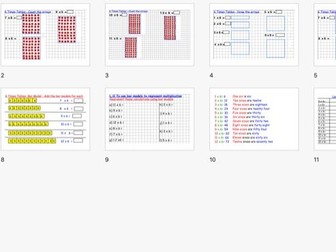
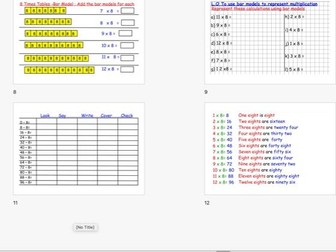
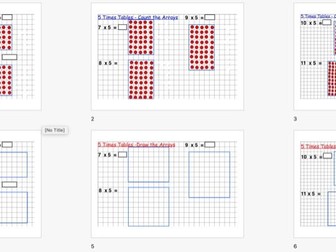
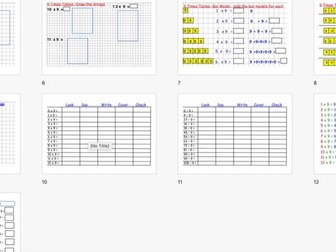
This is a 6 times table pack/powerpoint to teach children their 6 times tables using arrays and bar models. It also includes a timed test after the children have learnt these through the concrete, pictorial and abstract way of learning. You can model each stage on the interactive whiteboard through the powerpoint presentation.
Arthur and the Golden Rope by Joe Todd Stanton- diary entry of Arthur based on first half of storyQuick View
teez626

Arthur and the Golden Rope by Joe Todd Stanton- diary entry of Arthur based on first half of story

(0)
This is a 5-day (44-page) editable Teaching PowerPoint complete with success criteria and differentiated/adapted resources that lead to a long writing task – Arthur’s diary entry based on the story’s first half. The lessons include talk tasks, a WAGGOL, AFL questions and all resources needed. All the lessons follow in sequence and each lesson whether comprehension or grammar builds up to the long writing task. This set of lessons is structured based on the best pedagogical approaches to use in the classroom such as AFL questions to gather what learners already know, the use of talk partners to share learning, allowing learners to choose their task from MILD, SPICY and HOT (this works wonders for their self-esteem) The tasks are differentiated and progressive. The PowerPoint allows you to teach and model the writing. The learners can use their work from Day 1 to Day 6 and interweave it into the Long Write. Lessons include a word bank to support EAL/SEN learners and a word bank for all children for the long write. Lesson 1: Grammar: To identify features of a diary entry (The boy – based on the entire story) Lesson 2: Grammar/Writing: To use colons Lesson 3: Grammar: To use contractions. Lesson 4: Planning: To plan a diary entry Lesson 5 : Composition: To write a diary entry Bonus lessons: Reading Comprehension lessons 1 and 2 based on the entire book Vocabulary
The Legend of Podkin One-Ear by Kieran Larwood-diary entry of PodkinQuick View
teez626

The Legend of Podkin One-Ear by Kieran Larwood-diary entry of Podkin

(0)
This is a 7-day editable Teaching PowerPoint complete with success criteria and differentiated/adapted resources that lead to a long writing task – a diary entry of Podkin based on Chapter 3 of the book The Legend of Podkin One-Ear by Kieran Larwood. The lessons include talk tasks, vocabulary, and meanings (Chapter 3) as well as grammar based on the book, and it is pitched at National Curriculum levels for Years 3,4 or 5. See a breakdown of teaching materials below. All the lessons follow in sequence and each lesson whether comprehension or grammar builds up to the long writing task. This set of lessons is structured based on the best pedagogical approaches to use in the classroom such as AFL questions to gather what learners already know, the use of talk partners to share learning, allowing learners to choose their task from MILD, SPICY and HOT (this works wonders for their self-esteem) The tasks are differentiated and progressive. The PowerPoint allows you to teach and model the writing. The learners can use their work from Day 1 to Day 6 and interweave it into the Long Write. Lessons include a word bank to support EAL/SEN learners and a word bank for all children for the long write. Lesson 1: Vocabulary: To understand words and their meanings. (Chapter 3) Lesson 2 : Comprehension: To answer retrieval questions. (Chapter 3) Lesson 3: Grammar: To identify features of a diary entry (Podkin– Chapter 3 ) Lesson 4: Grammar/Writing: To use colons. Lesson 5 : Grammar/Writing: To use contractions. Lesson 6: Planning: To plan a diary entry (Podkin- based on events of Chapter 3 ) Lesson 7 : Composition: To write a diary entry (Podkin – based on Chapter 3)
Varjak Paw by SF Said - a diary entry of Varjak based on Chapter 1Quick View
teez626

Varjak Paw by SF Said - a diary entry of Varjak based on Chapter 1

(0)
This is a 7-day editable Teaching PowerPoint complete with success criteria and differentiated/adapted resources that lead to a long writing task – a diary entry of Varjak based on Chapter 1 of the book by SF Said. The lessons include talk tasks, vocabulary and meanings (Chapter 1) as well as grammar based on the book and it is pitched at National Curriculum levels for Year 3,4 or 5. See a breakdown of teaching materials below. All the lessons follow in sequence and each lesson whether comprehension or grammar builds up to the long writing task. This set of lessons is structured based on the best pedagogical approaches to use in the classroom such as AFL questions to gather what learners already know, the use of talk partners to share learning, allowing learners to choose their own task from MILD, SPICY and HOT (this works wonders for their self-esteem) The tasks are differentiated and progressive. The PowerPoint allows you to teach and model the writing. The learners can use their work from Day 1 to Day 6 and interweave it into the Long Write. Lessons include a word bank to support EAL/SEN learners and a word bank for all children for the long write. Lesson 1: Vocabulary: To understand words and their meanings. (Chapter 1) Lesson 2 : Comprehension: To answer retrieval questions. (Chapter 1) Lesson 3: Grammar: To identify features of a diary entry (Varjak– Chapter 1 ) Lesson 4: Grammar/Writing: To use colons. Lesson 5 : Grammar/Writing: To use contractions. Lesson 6: Planning: To plan a diary entry (Liam- based on events of Chapter 1 ) Lesson 7 : Composition : To write a diary entry (Liam – based on Chapter 1)