T Level Health, Core B core science concepts. Template adapted from Canva.
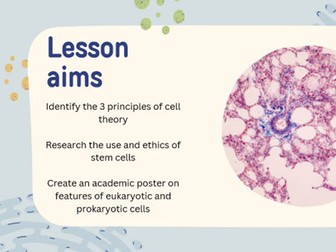
B1.1 The 3 principles of cell theory:
• all living things are made up of one or more cells
• cells are the most basic unit of structure and function in all living things
• all cells are created by pre-existing cells
B1.2 The different types of cells that make up living organisms:
• eukaryotic cells (for example plant, yeast, algae and animals)
• prokaryotic cells (for example bacteria)
A bundle including complete lessons and worksheets for learnimg aim D: Develop a treatment plan for service users with physiological
disorders to meet their needs
PowerPoint content derived from the BTEC book and internet resources, and PowerPoint templates adapted from Canva.
Spec:
D1 Care methods and strategies
• Assessment of care needs, e.g. primary, secondary or tertiary care.
• Reviewing care needs, e.g. making changes as required.
• Validity and reliability of the sources of information on possible treatments.
D2 Treatment planning processes
• Cycle of planning.
• Individual needs, including culture, gender, age, religion, disability.
• Purpose and aim of care for individual.
• Outcomes to be achieved.
• Actions to be taken.
• Overcoming potential barriers.
• Professional responsibilities.
• Advantages and disadvantages of different types of treatment, e.g. benefit to service
users, cost to health and social care services.
• Scheduling, including times and locations where treatment will take place.
• Timescales for achievement.
A bundle including complete lessons and worksheets for learnimg aim C: Effects of ageing .
PowerPoint content derived from the BTEC book and internet resources, and PowerPoint templates adapted from Canva.
Spec:
C Effects of ageing
C1 The physical changes of ageing
• Cardiovascular disease – age can increase the risks of cardiovascular disease. This can be
exacerbated by lifestyle choices.
• The degeneration of the nervous tissue.
• Osteoarthritis.
• Degeneration of the sense organs.
• The reduced absorption of nutrients.
• Dementia, to include Alzheimer’s disease.
• Effects of illnesses that are common in ageing.
C2 The psychological changes of ageing
• Effects on confidence and self-esteem.
• Effects of social change:
o role changes
o loss of a partner
o loss of friends
o increase in leisure time.
• Financial concerns.
• Effects of culture religion and beliefs.
• Social disengagement theory.
• Activity theory.
C3 The societal effects of an ageing population
• Health and social care provision for the aged.
• Economic effects of an ageing population.
PowerPoint content derived from the BTEC book and internet resources, and PowerPoint templates adapted from Canva.
A4 Energy in the body
• Transformation of energy (chemical, heat, sound, electrical, light).
• Energy metabolism – role of energy in the body, anabolism and catabolism (aerobic and
anaerobic respiration).
• Basal metabolic rate.
B1 Homeostatic mechanisms
• Definition of homeostasis.
• Internal environment.
• The concept of negative feedback as a regulatory mechanism.
• Body temperature – production of heat by the body, loss of heat by the body, roles of
hypothalamus and autonomic nervous system (role of arterioles and sweat glands),
effects of shivering, implications of surface area to volume ratios, fever.
• Blood glucose levels – roles of pancreas, liver, insulin, glucagon.
• Fluid balance – water intake/output/loss, role of kidneys and renal system.
• Failure of homeostatic mechanisms – hypothermia, dehydration.
PowerPoint content derived from the BTEC book and internet resources, and PowerPoint templates adapted from Canva.
A The structure and organisation of the human body
A1 How cells work
• The function and structure of cells, including membrane, nucleus, ribosomes, rough and
smooth endoplasmic reticulum, mitochondria, centrioles, lysosomes and Golgi apparatus.
A2 Characteristics of tissues
The function, structure and location of:
• epithelial – simple (cuboidal, columnar, squamous, ciliated), compound (simple,
keratinised)
• connective – blood, cartilage, bone, areolar, adipose
• muscle – striated, non-striated, cardiac
• nervous – neurones, neuroglia.
A3 The structure and function of body organs
• Location, structure and function of heart, lungs, brain, stomach, liver, pancreas,
duodenum, ileum, colon, kidneys, bladder, ovaries/testes, uterus, skin.
PowerPoint content derived from the BTEC book and internet resources, and PowerPoint templates adapted from Canva.
B2 The structure, function and main disorders of the cardio-vascular system
• The structure and function of the cardiovascular system, heart structure, cardiac cycle,
heart rate (including regulation), stroke volume, blood pressure.
• Blood vessels – arteries, arterioles, capillaries, venules, veins.
• Pulmonary and systemic circulation.
• The structure and function of the blood.
• Disorders of the cardiovascular system – CHD, stroke, anaemia, hypertension.
PowerPoint content derived from the BTEC book and internet resources, and PowerPoint templates adapted from Canva.
A5 Human genetics
• Principles of Mendelian inheritance.
• Genetic variation, to include: genetic and chromosome disorders, Downs syndrome,
phenylketonuria (PKU), sickle cell disease, cystic fibrosis, Huntington’s chorea.
• Diagnostic testing for genetic and chromosome disorders, to include amniocentesis
and chorionic villus sampling.
PowerPoint content derived from the BTEC book and internet resources, and PowerPoint templates adapted from Canva.
B3 The structure, function and main disorders of the respiratory system
The structure and function of the respiratory system:
• the role of air passages in nose
• the structure and functions of trachea, bronchi, lungs, bronchial tree, alveoli
• the role of ciliated epithelial tissue
• respiratory muscles – intercostal muscles, diaphragm
• ventilation (including regulation), gaseous exchange, diffusion
• disorders of the respiratory system – smoking related, asthma, chronic obstructive
pulmonary disease (COPD), pneumonia.
PowerPoint content derived from the BTEC book and internet resources, and PowerPoint templates adapted from Canva.
B4 The structure, function and main disorders of the skeletal system
• The structure of the skeletal system: axial skeleton, appendicular skeleton, types of bone
(long bones, short bones, flat bones, irregular bones, sesamoid bones).
• The function of the skeletal system: support, protection, attachment for skeletal muscle,
source of blood cell production, store of minerals, structure and function of ligaments and
cartilage.
• The location of major bones – cranium, parietal, temporal, occipital, mandible clavicle,
ribs, sternum, humerus, radius, ulna, scapula, ilium, pubis, ischium, carpals, metacarpals,
phalanges, femur, patella, tibia, fibula, tarsals, metatarsals, vertebral column, vertebrae.
• The classifications of joints – fibrous joints, cartilaginous joints, synovial joints.
• Synovial joint structure.
• Movement allowed at each joint, to include flexion, extension, circumduction, adduction,
abduction, gliding.
• Disorders of the skeletal system, to include fractures osteoarthritis, osteoporosis,
increase in people with rickets.
A bundle including complete lessons and worksheets for learnimg aim A: Investigate the causes and effects of physiological disorders
PowerPoint content derived from the BTEC book and internet resources, and PowerPoint templates adapted from Canva.
Spec:
Learning aim A: Investigate the causes and effects of physiological disorders
A1 Types of physiological disorders and effects on body systems and functions
• Endocrine system disorders, e.g. diabetes, hypo and hyperthyroidism.
• Nervous system disorders, e.g. Parkinson’s disease, Alzheimer’s disease.
• Musculo-skeletal system disorders, e.g. rheumatoid arthritis, osteoporosis.
• Respiratory system disorders, e.g. asthma, chronic obstructive pulmonary disease (COPD).
• Circulatory system disorders, e.g. coronary heart disease, leukaemia.
• Cancer, e.g. bowel, prostate.
• Impact of disorders on service users’ physical, mental, social and emotional health.
A2 Causes of physiological disorders
• Inherited traits, e.g. sickle cell anaemia.
• Lifestyle choices, e.g. smoking cigarettes, drug misuse.
• Diet, e.g. obesity, dietary deficiency.
• Environment, e.g. housing conditions, air pollution.
A3 Signs and symptoms of physiological disorders
• Observable signs of physiological disorders, e.g. rash, swelling.
• Symptoms experienced by the individual, e.g. pain, disorientation.
A bundle including complete lessons and worksheets for learnimg aim B: Examine the investigation and diagnosis of physiological
disorders
PowerPoint content derived from the BTEC book and internet resources, and PowerPoint templates adapted from Canva.
Spec:
B1 Investigative procedures for physiological disorders
• General measurements that may be undertaken, e.g. blood pressure, body temperature.
• Investigations as appropriate for each individual, e.g. medical history, blood tests.
B2 Diagnostic procedures for physiological disorders
• Procedures based on specific signs and symptoms, e.g. lumbar puncture, biopsy.
• Importance of recognising non-specific or confusing symptoms, e.g. myalgic
encephalomyelitis (ME).
A bundle including complete lessons and worksheets for learnimg aim B: Factors affecting human growth and development
PowerPoint content derived from the BTEC book and internet resources, and PowerPoint templates adapted from Canva.
Spec:
B1 The nature/nurture debate related to factors
• Development across the lifespan is a result of genetic or inherited factors – Gesell’s
maturation theory.
• Development across the lifespan is a result of environmental factors – Bandura’s social
learning theory.
• Both factors may play a part – stress-diathesis model.
B2 Genetic factors that affect development
• Genetic predispositions/disorders to particular conditions – cystic fibrosis, brittle bone
disease, phenylketonuria (PKU), Huntington’s disease, Klinefelter’s syndrome, Down’s
syndrome, colour blindness, Duchenne muscular dystrophy, susceptibility to diseases such
as cancer, high blood cholesterol and diabetes.
• Biological factors that affect development – foetal alcohol syndrome, effects of maternal
infections and lifestyle/diet during pregnancy, congenital defects.
B3 Environmental factors that affect development
• Exposure to pollution – respiratory disorders, cardiovascular problems, allergies.
• Poor housing conditions – respiratory disorders, cardio vascular problems, hypothermia,
and anxiety and depression.
• Access to health and social care services – availability of transport, opening hours of
services, ability to understand the needs and requirements of particular services.
B4 Social factors that affect development
• Family dysfunction – parental divorce or separation, sibling rivalry, parenting style.
• Bullying – effects of bullying on self-esteem, self-harm, suicide.
• Effects of culture, religion and belief – beliefs that may prevent medical intervention,
dietary restrictions.
B5 Economic factors that affect development
• Income and expenditure.
• Employment status.
• Education.
• Lifestyle.
A bundle including complete lessons and worksheets for learnimg aim A: Human growth and development through the life stages.
PowerPoint content derived from the BTEC book and internet resources, and PowerPoint templates adapted from Canva.
Spec:
A Human growth and development through the life stages
A1 Physical development across the life stages
• Growth and development are different concepts:
o principles of growth – growth is variable across different parts of the body and is
measured using height, weight and dimensions
o principles of development – development follows an orderly sequence and is the
acquisition of skills and abilities.
• In infancy (0–2 years), the individual develops gross and fine motor skills:
o the development of gross motor skills
o the development of fine motor skills
o milestones set for the development of the infant – sitting up, standing, cruising,
walking.
• In early childhood (3–8 years), the individual further develops gross and fine motor skills:
o riding a tricycle, running forwards and backwards, walking on a line, hopping on one
foot, hops, skips and jumps confidently
o turns pages of a book, buttons and unbuttons clothing, writes own name, joins up
writing.
• In adolescence (9–18 years), the changes surrounding puberty:
o development of primary and secondary sexual characteristics
o the role of hormones in sexual maturity.
• In early adulthood (19–45 years), the individual reaches physical maturity:
o physical strength peaks, pregnancy and lactation occur
o perimenopause – oestrogen levels decrease, causing the ovaries to stop producing
an egg each month. The reduction in oestrogen causes physical and emotional
symptoms, to include hot flushes, night sweats, mood swings, loss of libido and
vaginal dryness.
• In middle adulthood (46–65 years), the female enters menopause:
o causes and effects of female menopause and the role of hormones in this
o effects of the ageing process in middle adulthood.
• In later adulthood (65+ years), there are many effects of ageing:
o health and intellectual abilities can deteriorate.
A bundle including complete lessons and worksheets for learnimg aim C: Examine treatment and support for service users with
physiological disorders
PowerPoint content derived from the BTEC book and internet resources, and PowerPoint templates adapted from Canva.
Spec:
C1 Provision of treatment and support
• Medication, e.g. anti-inflammatory drugs.
• Surgery, e.g. surgical procedures for cancer.
• Rehabilitation programmes, e.g. physiotherapy.
• Complementary therapies, e.g. aromatherapy, acupuncture.
• Advice on lifestyle changes, e.g. smoking cessation.
C2 Types of carers and care settings
• Carers:
o professional carers, e.g. GPs, nurses
o informal carers, e.g. friends, family
o private and voluntary carers, e.g. Age UK, private care agencies.
• Care settings:
o service user’s own home
o residential care home
o GP surgery or health centre
o hospital care
o rehabilitation settings.
T Level Health, Core B core science concepts. Template adapted from Canva.
B1.18 The definition of an antigen and an antibody:
• antigen - a substance that is recognised by the immune system as self or non-self and stimulates an
immune response
• antibody - a blood protein produced in response to, and counteracting, a specific antigen
B1.19 The link between antigens and the initiation of the body’s response to invasion by a foreign
substance:
• antigens as chemical markers found on the surface of cells
• ability of the body to recognise self and non-self-antigens
• recognition of non-self-antigen leading to the initiation of an immune response
T Level Health, Core B core science concepts. Template adapted from Canva.
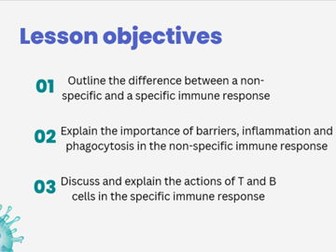
B1.20 The role of non-specific and specific defences to protect the body against invasion from a foreign
substance:
• non-specific defences:
o use of physical and chemical barriers
o inflammation
o phagocytosis
• specific defences:
o actions of T-cells
o actions of B-cells
B1.21 The differences between cell-mediated immunity and antibody-mediated immunity including:
• cell-mediated response is associated with T-lymphocytes destroying pathogens (causative agents)
without producing antibodies
• antibody-mediated response is associated with B-lymphocytes destroying pathogens (causative
agents) by producing antibodies against it
T Level Health, Core B core science concepts. Template adapted from Canva.
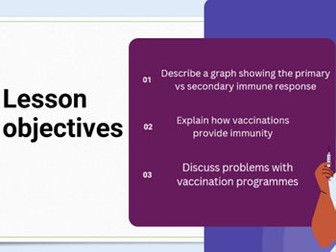
B1.22 The role of T and B memory cells in the secondary immune response:
• they trigger a stronger and more rapid immune response after encountering the same antigen
• role of vaccinations in relation to T and B memory cells
1 PowerPoint covering cancer theory, for T Level Health Core B further science concepts. Templates adapted from Canva. All content is adapted from my own knowledge, Google images, and T Level Health textbook.
Cancer
B2.30 The difference between benign and malignant tumours:
• benign – a tumour that is not cancerous, it will not invade nearby tissue or spread around the body
• malignant – a tumour that is cancerous, it can invade nearby tissue and spread around the body
Research project idea for:
B2.31 The development, impact and management of cancer:
• different types of cancer and how common treatments relieve symptoms:
o invasive breast cancer:
▪ breast conserving surgery and mastectomy
▪ monoclonal antibody therapy
▪ chemotherapy
▪ radiotherapy
▪ talking therapies
o thyroid cancer:
▪ thyroidectomy
▪ radioactive iodine treatment
▪ talking therapies
o non-Hodgkin lymphoma:
▪ monoclonal antibody therapy
▪ chemotherapy
▪ radiotherapy
▪ talking therapies
o acute myeloid leukaemia:
▪ chemotherapy
▪ bone marrow or stem cell transplants
▪ talking therapies
o germ cell testicular cancer:
▪ surgical removal of affected testicle
▪ talking therapies
• causes of the condition:
o failure of cell cycle leading to cancer
o role of mutation in the development of cancer
o risk factors for different types of cancers
• impact on systems within the body and on physical and mental health
6 Powerpoints covering The Reproductive System for T Level Health, Core B further science concepts. Includes word documents containing card sort activities. PowerPoints contain independent tasks, exam tips and images credited to the T Level Health text book. Templates adapted from Canva. All content is adapted from my own knowledge, Google images, and T Level Health textbook.
Reproductive system
B2.26 The role of the components in performing the functions of reproductive systems:
• the components of the female reproductive system:
o ovaries
o fallopian tube
o uterus
o cervix
o vagina
• the components of the male reproductive system:
o penis
o urethra
o scrotum
o testes
o vas deferens
o seminal vesicles
o prostate
• the functions of the relevant components within the male and female reproductive systems:
o provides a mechanism for the survival of the species by producing offspring through the
combination of eggs and sperm
o the female reproductive system has 2 functions – to produce egg cells and to protect and
nourish an offspring until birth
o the male reproductive system has one function - to produce and deposit sperm
B2.27 The role of hormones in the reproductive systems:
• menstrual cycle regulation:
o function of specific hormones:
▪ oestrogen
▪ progesterone
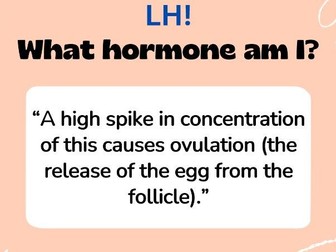
▪ FSH
▪ luteinising hormone (LH)
o role of negative feedback mechanisms
• the growth and development of female/male reproductive characteristics
B2.28 The development, impact and management of endometriosis:
• causes of the condition
• impact on systems within the body and on physical and mental health
• how common treatments relieve symptoms or cure the condition:
o pain relief medication
o hormone based treatments
o surgery, to include laparoscopy and hysterectomy
B2.29 The process of in vitro fertilisation (IVF) in the treatment of infertility:
• the main stages of IVF treatment:
o suppression of the natural menstrual cycle
o stimulating the ovaries to produce more eggs
o monitoring of progress
o egg collection
o egg fertilisation
o embryo transfer
• the role of hormones within main stages of IVF treatment:
o FSH
• factors affecting the number of embryos transferred:
o age
o IVF cycle
o quality of embryos
3 Powerpoints covering The Integumentary System for T Level Health, Core B further science concepts. Includes 1 Powerpoint on exam technique for 12 mark questions. Templates adapted from Canva. All content is adapted from my own knowledge, Google images, and T Level Health textbook.
Integumentary system
B2.23 The role of the components in performing the functions of the integumentary system:
• components of the integumentary system:
o skin
o hair
o nails
o exocrine glands
• functions of relevant components of the integumentary system:
o vitamin D synthesis
o protection
o cutaneous sensation
o excretion
B2.24 The components and processes involved in temperature regulation:
• the role of the hypothalamus, sweat glands, arterioles and hair erector muscles
• the effect of sweating and shivering on body temperature
• the effect of vasoconstriction and vasodilation on body temperature
B2.25 The development, impact and management of atopic eczema:
• causes of the condition
• impact on systems within the body and on physical and mental health
• how common treatments relieve symptoms:
o emollients
o topical corticosteroids
o dietary changes
o environmental changes (for example avoiding pollen, allergens, dust)
o behavioural changes (for example avoiding scratching and certain fabrics, soaps and
detergents)
5 Powerpoints covering The Renal System for T Level Health, Core B further science concepts. Includes 2 Powerpoints on exam technique for 12 mark questions (one independent version for students to follow). Templates adapted from Canva. All content is adapted from my own knowledge, Google images, and T Level Health textbook.
Renal system
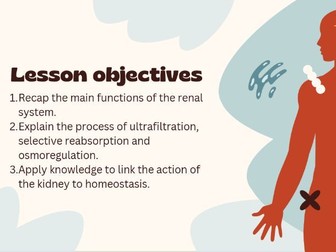
B2.20 The role of the components in performing the functions of the renal system:
• components of the renal system:
o kidney
o nephron:
▪ Bowman’s capsule
▪ glomerulus
▪ proximal convoluted tubule
▪ loop of Henle
▪ distal convoluted tubule
▪ collecting duct
o ureter
o bladder
o urethra
• functions of the renal system:
o removal of waste products from the body
o process of urine production
B2.21 The mechanism of osmoregulation:
• the process of water reabsorption within the nephron via osmosis
• the role of water potential
B2.22 The development, impact and management of chronic kidney disease (CKD):
• causes of the disease
• impact on systems within the body and on physical and mental health
• how common treatments relieve symptoms or cure the disease:
o lifestyle changes to promote self-care and better health
o dialysis
o transplant


 Quick View