I don’t know about you, but I am always looking for fun ways to get kids reading music and playing instruments in music centers. And activities they can do independently? Even better! These simple matching games are a fun music center or group activity for students to do-- especially during the end of the school year!
Students match the ice cream scoop to the ice cream cone in order to reunite the notes on the staff and the solfa patterns. There are also 3 different recording sheets, and lots of different ideas for uses!
Includes do re mi patterns on the staff.
Includes:
30 Matching sets (color)
30 matching sets (black and white)
Ideas for teachers
Printable directions
3 recording sheets
*Note: These are based on MOVABLE DO
Looking to keep your students engaged during the warm months at the end of the year while keeping them working on music? These color by note worksheets are the perfect way to get your students identifying rhythms while having fun. Plus, they are great for sub plans, busy days, assessments, or after testing activities.
The students enjoy some (quiet!) color time, and you are able to quickly assess who is able to identify rhythms.
These could be really great for sub plans as well! They are especially great for non-music substitutes, because it doesn’t require much knowledge about music.
This set includes 10 coloring by note worksheets. Each one includes a different set of ocean themed coloring pages.
This set includes quarter notes, eighth notes, and quarter rests. (crotchets, quavers, rests)
Some of the worksheets include just quarter and eighth, and some include quarter, eighth, and rest.
Includes:
10 color by note activity sheets
10 color by note activity sheets in stick notation
Answer keys
*Note: These do include the American names for the rhythms.
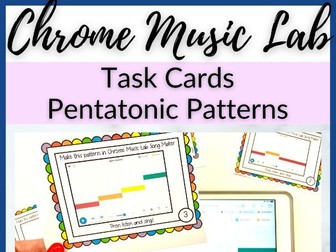
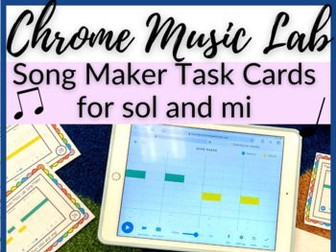
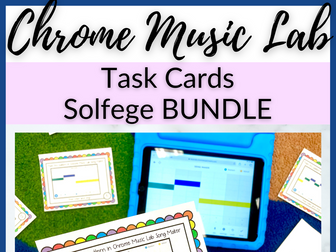
Digital music making and digital composition is a skill the students enjoy AND a skill that is useful in the future of music technology. Get kids started with Chrome Music Lab! Chrome Music Lab Song Maker is a free website in which students can create their own music. With these task cards, students can practice creating solfa patterns on Chrome Music Lab! Perfect way to incorporate STEAM music lessons and introduce Chrome Music Lab.
These are perfect for preparing or practicing a solfege concept. You can use them as an accommodation for students who need more help, because you do not need to be able to read music.
Use for centers, differentiation, STEAM days, early finishers, teaching music on a cart, and more!
These task cards include 31 cards in which students will create the pattern on the card. Then they can sing or play the pattern on instruments like Boomwhackers (the colors match Song Maker), xylophones, or glockenspiels. It also includes 5 task cards where students can create their own patterns and write them down.
In these task cards, students will make do re mi patterns on Chrome Music Lab.
Includes:
Teacher tips
QR code to scan and go straight to Song Lab
31 Patterns to create and play online
5 Cards for students to create their own patterns
Note: These are based on movable do
Looking for a fun and simple activity to get your students moving AND writing rhythms? This write the room activity is an active way to practice writing rhythms in elementary music class-- and active activities are a must in the Spring time! This set includes St. Patrick’s Day themed Write the Room cards, perfect for March, right before Spring Break, or even quiet music lessons for testing!
To use: Hide cards around the room and have students find them and write them on the recording sheet. You can do 5 or 10 questions. (Bonus-- have students play the patterns on instruments after they find them!)
Includes a St. Patrick’s Day themed write the room set with icons such as leprechaun, pot of gold, shamrock, Irish dancers, and more.
Rhythms included in this set: crotchets and quavers (quarter and eighth notes)
Comes with many recording sheet options:
5 question with icons
5 questions without icons
10 question with icons
10 questions without icons
All in color + black and white
Includes:
10 cards in color
10 cards, black and white
10 cards in color (stick notation)
10 cards, black and white (stick notation)
Recording sheets
Answer keys
Looking for a fun and simple activity to get your students moving AND writing notes on the staff? This write the room activity is an active way to practice writing solfege patterns in elementary music class. This set includes Lunar New Year themed write the room cards-- perfect as an active reading and writing lesson.
Hide cards around the room and have students find them and write them on the recording sheet. You can do 5 or 10 questions.
The icons on the cards match the icons on the recording sheets. This set includes Lunar New Year (Chinese New Year) icons such as dragons, coins, fans, lanterns, etc.
This set includes pentatonic (do re mi sol la) patterns.
3 ways to play:
Hide the notes on the staff and have students identify the notes by writing what they are (sol mi sol mi, etc).
Hide the patterns and have students write the notes on the staff.
Hide the notes on the staff and have students copy them.
Comes with many recording sheet options:
5 question with icons (blank + with staff)
5 questions without icons (blank + with staff)
10 question with icons (blank + with staff)
10 questions without icons (blank + with staff)
All in color + black and white
Includes:
10 notes on staff cards in color
10 notes on staff cards, black and white
10 solfa pattern cards in color
10 solfa pattern cards, black and white
Recording sheets
Answer keys
NOTE: These include movable do solfege, not fixed do.
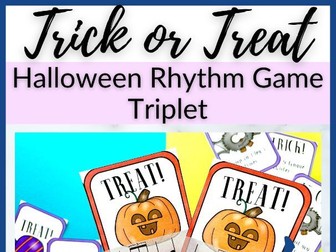
Need to practice rhythm AND get the wiggles out this Halloween? Try Trick or Treat! This is a silly rhythm game that your students can do during elementary music centers. They will love the silly “tricks”, and you’ll love that they are practicing rhythms.
To play Trick or Treat:
Students take turn pulling out a card from a bucket (eyes closed!)
Read a rhythm = get a treat
If you get a trick card, you will either have a challenge or have to put treats back.
Most treats at the end is the winner!
Tricks include saying tongue twisters, putting treats back, and even challenges like hopping on one leg, holding your breath, doing push ups, and more.
Your students have never been this engaged while reading rhythms.
This game never ends because after you’ve gone through the rhythms, you can mix them up and continue playing.
I also like to listen and use it as an informal assessment.
This set includes quarter notes, eighth notes, quarter rests, half notes, sixteenth notes, titika (eighth 2 sixteenth), and tikati (2 sixteenth, 1 eighth) (crotchets, quavers, minims, semiquavers, titika (quaver 2 semiquavers), and tikati (2 semiquavers, 1 quaver)
This file includes a whole set of titika (eighth 2 sixteenth) AND a whole set of tikati (2 sixteenth, 1 eighth). You can keep them separate or mix and match.
Each set includes:
Directions
40 rhythm cards
8 treats (you’ll want to copy multiple pages!)
24 Trick cards
Everything in stick notation
Everything in color and black + white
Need to practice rhythm AND get the wiggles out this Halloween? Try Trick or Treat! This is a silly rhythm game that your students can do during elementary music centers. They will love the silly “tricks”, and you’ll love that they are practicing rhythms.
To play Trick or Treat:
Students take turn pulling out a card from a bucket (eyes closed!)
Read a rhythm = get a treat
If you get a trick card, you will either have a challenge or have to put treats back.
Most treats at the end is the winner!
Tricks include saying tongue twisters, putting treats back, and even challenges like hopping on one leg, holding your breath, doing push ups, and more.
Your students have never been this engaged while reading rhythms.
This game never ends because after you’ve gone through the rhythms, you can mix them up and continue playing.
I also like to listen and use it as an informal assessment.
This set includes quarter notes, eighth notes, quarter rests, half notes, sixteenth notes, dotted half notes, dotted quarter notes (crotchet, quavers, minims, semiquavers, dotted minims, dotted crotchets)
This set includes:
Directions
40 rhythm cards
8 treats (you’ll want to copy multiple pages!)
24 Trick cards
Everything in stick notation
Everything in color and black + white
Need to practice rhythm AND get the wiggles out this Halloween? Try Trick or Treat! This is a silly rhythm game that your students can do during elementary music centers. They will love the silly “tricks”, and you’ll love that they are practicing rhythms.
To play Trick or Treat:
Students take turn pulling out a card from a bucket (eyes closed!)
Read a rhythm = get a treat
If you get a trick card, you will either have a challenge or have to put treats back.
Most treats at the end is the winner!
Tricks include saying tongue twisters, putting treats back, and even challenges like hopping on one leg, holding your breath, doing push ups, and more.
Your students have never been this engaged while reading rhythms.
This game never ends because after you’ve gone through the rhythms, you can mix them up and continue playing.
I also like to listen and use it as an informal assessment.
This set includes quarter notes, eighth notes, quarter rests, half notes, sixteenth notes (crotchets, crotchet rests, quavers, minims, semiquavers)
This set includes:
Directions
40 rhythm cards
8 treats (you’ll want to copy multiple pages!)
24 Trick cards
Everything in stick notation
Everything in color and black + white
Need to practice rhythm AND get the wiggles out this Halloween? Try Trick or Treat! This is a silly rhythm game that your students can do during elementary music centers. They will love the silly “tricks”, and you’ll love that they are practicing rhythms.
To play Trick or Treat:
Students take turn pulling out a card from a bucket (eyes closed!)
Read a rhythm = get a treat
If you get a trick card, you will either have a challenge or have to put treats back.
Most treats at the end is the winner!
Tricks include saying tongue twisters, putting treats back, and even challenges like hopping on one leg, holding your breath, doing push ups, and more.
Your students have never been this engaged while reading rhythms.
This game never ends because after you’ve gone through the rhythms, you can mix them up and continue playing.
I also like to listen and use it as an informal assessment.
This set includes quarter notes, eighth notes, quarter rests, half notes, triplet (crotchet, quavers, crotchet rests, minims, triplets)
This set includes:
Directions
40 rhythm cards
8 treats (you’ll want to copy multiple pages!)
24 Trick cards
Everything in stick notation
Everything in color and black + white
Need to practice rhythm AND get the wiggles out this Halloween? Try Trick or Treat! This is a silly rhythm game that your students can do during elementary music centers. They will love the silly “tricks”, and you’ll love that they are practicing rhythms.
To play Trick or Treat:
Students take turn pulling out a card from a bucket (eyes closed!)
Read a rhythm = get a treat
If you get a trick card, you will either have a challenge or have to put treats back.
Most treats at the end is the winner!
Tricks include saying tongue twisters, putting treats back, and even challenges like hopping on one leg, holding your breath, doing push ups, and more.
Your students have never been this engaged while reading rhythms.
This game never ends because after you’ve gone through the rhythms, you can mix them up and continue playing.
I also like to listen and use it as an informal assessment.
This set includes quarter notes, eighth notes, quarter rests, half notes, sixteenth notes, syncopa (eighth quarter eighth) (crotchets, quavers, crotchet rests, minims, semiquavers, syncopa (quaver crotchet quaver))
This set includes:
Directions
40 rhythm cards
8 treats (you’ll want to copy multiple pages!)
24 Trick cards
Everything in stick notation
Everything in color and black + white
Need to practice rhythm AND get the wiggles out this Halloween? Try Trick or Treat! This is a silly rhythm game that your students can do during elementary music centers. They will love the silly “tricks”, and you’ll love that they are practicing rhythms.
To play Trick or Treat:
Students take turn pulling out a card from a bucket (eyes closed!)
Read a rhythm = get a treat
If you get a trick card, you will either have a challenge or have to put treats back.
Most treats at the end is the winner!
Tricks include saying tongue twisters, putting treats back, and even challenges like hopping on one leg, holding your breath, doing push ups, and more.
Your students have never been this engaged while reading rhythms.
This game never ends because after you’ve gone through the rhythms, you can mix them up and continue playing.
Rhythms included:
Quarter + eighth (crotchet and quaver)
Quarter rest (crotchet rests)
Half note (minims)
Barred sixteenth notes (semiquavers)
Dotted notes (dotted crotchet and dotted minims)
Triplets
Tikati +titika
Syncopa
I also like to listen and use it as an informal assessment.
Each set includes:
Directions
40 rhythm cards
8 treats (you’ll want to copy multiple pages!)
24 Trick cards
Everything in stick notation
Everything in color and black + white
Need to practice rhythm AND get the wiggles out this Halloween? Try Trick or Treat! This is a silly rhythm game that your students can do during elementary music centers. They will love the silly “tricks”, and you’ll love that they are practicing rhythms.
To play Trick or Treat:
Students take turn pulling out a card from a bucket (eyes closed!)
Read a rhythm = get a treat
If you get a trick card, you will either have a challenge or have to put treats back.
Most treats at the end is the winner!
Tricks include saying tongue twisters, putting treats back, and even challenges like hopping on one leg, holding your breath, doing push ups, and more.
Your students have never been this engaged while reading rhythms.
This game never ends because after you’ve gone through the rhythms, you can mix them up and continue playing.
I also like to listen and use it as an informal assessment.
This set includes quarter notes, eighth notes, quarter rests (crotchets, crotchets rests, quavers)
This set includes:
Directions
40 rhythm cards
8 treats (you’ll want to copy multiple pages!)
24 Trick cards
Everything in stick notation
Everything in color and black + white
Need to practice rhythm AND get the wiggles out this Halloween? Try Trick or Treat! This is a silly rhythm game that your students can do during elementary music centers. They will love the silly “tricks”, and you’ll love that they are practicing rhythms.
To play Trick or Treat:
Students take turn pulling out a card from a bucket (eyes closed!)
Read a rhythm = get a treat
If you get a trick card, you will either have a challenge or have to put treats back.
Most treats at the end is the winner!
Tricks include saying tongue twisters, putting treats back, and even challenges like hopping on one leg, holding your breath, doing push ups, and more.
Your students have never been this engaged while reading rhythms.
This game never ends because after you’ve gone through the rhythms, you can mix them up and continue playing.
I also like to listen and use it as an informal assessment.
This set includes quarter notes, eighth notes, quarter rests, half notes, half rests (minim, crotchet, quaver, crotchet rests)
This set includes:
Directions
40 rhythm cards
8 treats (you’ll want to copy multiple pages!)
24 Trick cards
Everything in stick notation
Everything in color and black + white
I always love to hear about other people’s best lessons and games. Mine? Kaboom. This is the game that students BEG me to play. We play Kaboom for every concept, including treble clef. This is such a fun game to practice treble clef notes in centers, for early finishers, teaching on a cart, and even during quiet music lessons. You could even leave it for a substitute as a sub plan for a non music sub.
How to play Kaboom!
Students take turns pulling out a card from a bucket or pile
Student identifies the instrument OR names the instrument family.
If they are correct, they keep it. If they get it wrong, they put it back.
If a student gets kaboom, that student puts all of their cards back.
This means the game never ends, because eventually they get a Kaboom and put the cards back.
*Note: I have students close their eyes when they pull out a card so that they don’t cheat.
You can also listen and use it as an informal assessment for elementary music.
Includes versions with just the instruments (students can name the instruments), and versions with the instrument names on the cards (students can name the instrument families).
It also includes answer keys, which you can put into a folder to have students check their answers.
Includes:
Directions
24 Instrument cards in color
24 Instrument cards in black and white
Instrument cards with instrument names on them
12 Kaboom cards
Answer keys
I always love to hear about other people’s best lessons and games. Mine? Kaboom. This is the game that students BEG me to play. We play Kaboom for every concept, including treble clef. This is such a fun game to practice treble clef notes in centers, for early finishers, teaching on a cart, and even during quiet music lessons. You could even leave it for a substitute as a sub plan for a non music sub.
How to play Kaboom!
Students take turns pulling out a card from a bucket or pile
Student reads the card or plays the pattern
If they are correct, they keep it. If they get it wrong, they put it back.
If a student gets kaboom, that student puts all of their cards back.
This means the game never ends, because eventually they get a Kaboom and put the cards back.
*Note: I have students close their eyes when they pull out a card so that they don’t cheat.
You can also listen and use it as an informal assessment for elementary music.
Includes natural, sharp, and flat cards. It also includes an answer key, which you can put into a folder to have students check their answers.
Includes:
Directions
12 treble clef cards (from middle C to high G)
12 sharp cards
12 flat cards
9 Kaboom cards
Answer key
Note: The answer key uses the American note names (A, B, etc), however the cards only have the notes on the staff, and can be used for absolute pitch as well.
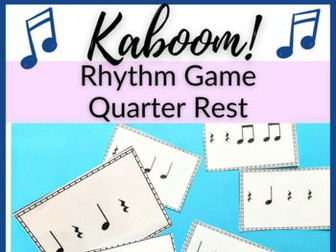
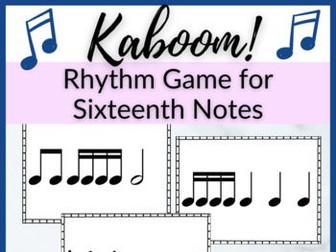
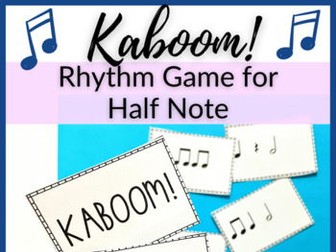
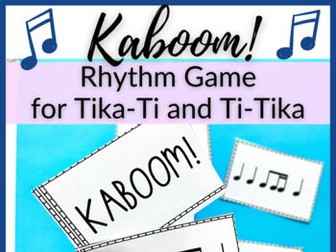
If you love easy centers games, you’ll love using Kaboom for your elementary music classroom. This is the most highly requested small group activity for my students. We use Kaboom to practice different concepts in elementary music like rhythm, solfege, treble clef, recorder, ukulele, meter, and more.
This set is all about play BAG patterns on the recorder, though it can be used with xylophones, pianos, or any other melodic instrument.
To play:
Students take turn pulling out a card and read it
If they read it right, they keep the card. If they don’t it goes back in.
If you draw a “kaboom”, you put all of your cards back.
Most cards at the end is the winner
This is a print and go product.
Use Kaboom for:
Centers
Assessment (listen to students reading)
Sub plans
Teaching in the teachers’ classrooms
Includes:
Directions
60 (yes, 60!) B-A-G pattern cards
15 Kaboom cards
You’re teaching solfa, and students are learning. But they need more help-- and you need more activities to keep them engaged in practicing. You need the Solfege Parade Game. In this game, students compose and sing different solfege patterns. Use for centers in your elementary music classroom.
To play:
Students take turns pulling out a card. They add the card to their parade. Each turn, sing or play your whole parade.
Watch out for the 4 different unexpected cards-- they make you put cards back, put all cards back, or rearrange your pattern
The person with the longest parade at the end of time is the winner!
Everything comes in 4 versions with help (the first letter of the solfa underneath) or no help, color and black and white.
It also includes all of the cards in a full page size so that you can use them as flashcards!
Includes sol mi
Includes:
30 large parade solfege flashcards
30 small parade solfege flashcards for game
4 unexpected cards (put marching band members back, put balloons back, put all cards back, rearrange your parade)
Everything with help + without help
Everything in color + black and white
Let’s be friends!
Blog: Becca’s Music Room
Instagram
Youtube
Happy teaching!
This is based on movable do solfege
You’re teaching solfa, and students are learning. But they need more help-- and you need more activities to keep them engaged in practicing. You need the Solfege Parade Game. In this game, students compose and sing different solfege patterns. Use for centers in your elementary music classroom.
To play:
Students take turns pulling out a card. They add the card to their parade. Each turn, sing or play your whole parade.
Watch out for the 4 different unexpected cards-- they make you put cards back, put all cards back, or rearrange your pattern
The person with the longest parade at the end of time is the winner!
Everything comes in 4 versions with help (the first letter of the solfa underneath) or no help, color and black and white.
It also includes all of the cards in a full page size so that you can use them as flashcards!
Each set includes:
30 large parade solfege flashcards
30 small parade solfege flashcards for game
4 unexpected cards (put marching band members back, put balloons back, put all cards back, rearrange your parade)
Everything with help + without help
Everything in color + black and white
Included sets:
Sol mi
Sol mi la
Sol mi la do
Sol mi la do re (pentatonic)
Do re mi
This is based on movable do solfege
You’re teaching solfa, and students are learning. But they need more help-- and you need more activities to keep them engaged in practicing. You need the Solfege Parade Game. In this game, students compose and sing different solfege patterns. Use for centers in your elementary music classroom.
To play:
Students take turns pulling out a card. They add the card to their parade. Each turn, sing or play your whole parade.
Watch out for the 4 different unexpected cards-- they make you put cards back, put all cards back, or rearrange your pattern
The person with the longest parade at the end of time is the winner!
Everything comes in 4 versions with help (the first letter of the solfa underneath) or no help, color and black and white.
It also includes all of the cards in a full page size so that you can use them as flashcards!
Includes do re mi
Includes:
30 large parade solfege flashcards
30 small parade solfege flashcards for game
4 unexpected cards (put marching band members back, put balloons back, put all cards back, rearrange your parade)
Everything with help + without help
Everything in color + black and white
This is based on movable do solfege
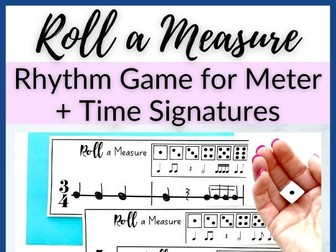
Yes, it IS possible to practice writing rhythms in different time signatures AND have fun! This Roll a Measure game is a fun, interactive way to get kids writing rhythms in correct meters-- especially during centers. Use for third grade, fourth grade, and fifth grade elementary music lessons.
To use:
Print task cards, and laminate if desired.
Students roll a die. The number tells them what rhythm to add to their measure— but they cannot go over!
More options:
Do this as a game! Have students take turns rolling. First one to finish their measures is the winner.
Have students write measures on their recording sheets (page 5)
Laminate and use Expo markers for this.
Use for centers!
Leave as a fun sub plan!
This product comes with 5 different rhythm sets, so there is a set that you can use with any level. Each set comes in 3 different meters-- 3/4, 4/4, and 5/4. That’s 15 different meter cards that you can use!
All cards are also available in stick notation.
Rhythms (British)
Crotchets, quavers, crotchet rests
Crotchets, quavers, crotchet rests, minims
Crotchets, quavers, crotchet rests, minims, semiquavers
Crotchets, quavers, crotchet rests, minims, semiquavers, dotted minims
Crotchets, quavers, crotchet rests, minims, dotted crotchets, single quavers
Rhythms (American)
Quarter notes, eighth notes, quarter rests
Quarter notes, eighth notes, quarter rests, half notes
Quarter notes, eighth notes, quarter rests, half notes, sixteenth notes
Quarter notes, eighth notes, quarter rests, half notes, sixteenth notes, dotted half notes
Quarter notes, eighth notes, quarter rests, half notes, dotted quarter, single eighths
Includes:
15 rhythm cards
Recording sheet
Everything is regular notation + stick notation
Looking for an easy and fun jazz lesson for your elementary music class? In this printable activity and bulletin board set, students will learn about the music of jazz. This lesson is perfect for Black History Month in February, Jazz Month in April, or anytime!
This 50 page printable lesson includes information about jazz, jazz instruments, famous jazz songs and musicians, listening activities, coloring pages, a foldable book, and more.
This product includes printable posters to use as a bulletin board with a title and 13 pages (3 posters, vocabulary words, reading page, quick facts, famous songs, important figures, types of jazz, and instruments of jazz ). This comes in color and black and white. It includes a title that says “and all that jazz”.
This product also includes printable activities. There are 3 printable activities about the instruments of jazz, 3 listening sheets, 4 writing pages/comprehension pages, and a foldable booklet for the instruments of jazz. 3 of the posters can be used as coloring pages!
This lesson was not created as substitute plans, but it would be the perfect addition to a music substitute binder. It can even be done by a non-music sub, because all they need to do is play the song and let the kids work!
Writing and drawing activities are differentiated so that you can use them with younger students who are new to writing, or upper grades.
This pairs perfectly with my What a Wonderful World Jazz Lesson on Google Slides for Elementary Music. Click here to purchase!
Includes:
13 page bulletin board or poster set (color and black and white, with title)
3 printable activities
3 Listening activities
4 writing pages
1 foldable booklets