Food Science Bundle: The Science of Fats — Emulsification, Aeration & Shortening (Levels 1–3)Quick View
deonandderise

Food Science Bundle: The Science of Fats — Emulsification, Aeration & Shortening (Levels 1–3)

(0)
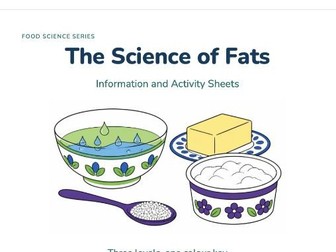
Transform your Food Technology lessons with this comprehensive, multi-tiered resource pack exploring key lipid properties: Emulsification, Aeration (Creaming Method), and Shortening. Designed for Ages 14–18 (NCEA Levels 1–3 / GCSE & A-Level), it features vibrant infographics, student practicals, commercial briefs, and complete teacher answer keys. What’s Inside: Module 1: Emulsification L1 (Foundations): Oil/water separation, lecithin emulsifiers & mayonnaise mechanics. Practical: Jar Shake Test. L2 (Intermediate): Molecular structures, emulsion stability & milk homogenisation. Lab: The Breaking Point. L3 (Advanced): Surfactants, interfacial tension & culinary foams. Industry Brief: Sauce Coalescence. Module 2: Aeration (Creaming) L1 (Foundations): Sugar crystal air entrapment & whipping foams. Practical: The Float Test. L2 (Intermediate): Fat plasticity, sucrose structure & temperature control (18–20°C). Lab: Temperature Trial. L3 (Advanced): Beta-prime crystals, shorteners & high-ratio cakes. Industry Brief: Cake Mix Formulation. Module 3: Shortening L1 (Foundations): How fats inhibit gluten formation for tender pastry. Practical: Waterproof Dough. L2 (Intermediate): Flour hydration & melting points in biscuit spread. Lab: The Melting Point. L3 (Advanced): Fat ratios, water content & interesterification. Industry Brief: Commercial Tart Shell. Assessment & Teacher Resources: Quick Quizzes: 10-mark assessment sheets for each level. Teacher Answer Keys: Complete solutions and marking criteria for all labs & quizzes.
The Science of Carbohydrates (Level 1–3 Complete Pack) - Global Curriculum AlignmentQuick View
deonandderise

The Science of Carbohydrates (Level 1–3 Complete Pack) - Global Curriculum Alignment

(0)
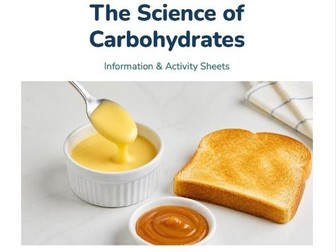
The Science of Carbohydrates (Global Curriculum Alignment) New Zealand NCEA Food Technology & Home Economics Level One Foundations (Ages 14–15 / Years 10–11): Covers starch granule swelling and gelatinisation, thermal sugar browning, and toast dextrinisation. Level Two Intermediate (Ages 16–17 / Years 11–12): Focuses on linear amylose vs. branched amylopectin, viscosity and opacity spread tests, sugar boiling stages (115°C soft ball, 150°C hard crack, 160°C–170°C caramelisation), and pyrodextrins. Level Three Advanced (Ages 17–18 / Years 12–13): Aligns with advanced processing, covering retrogradation, syneresis weeping, modified starches, sugar seed crystal interference, Degree of Polymerisation (DP), and maltodextrin encapsulation. UK GCSE & A-Level (AQA, OCR, Eduqas) GCSE Food Preparation & Nutrition (Key Stage 4): Directly satisfies key food science specifications for gelatinisation, caramelisation, and dextrinisation. A-Level Food Science & Nutrition (Key Stage 5): Covers advanced carbohydrate chemistry, starch retrogradation, sugar crystallization control, and spray-drying encapsulation. Australian Curriculum & State Senior Syllabi (NSW Stage 6, QCE, VCE) Years 9–10 Design & Technologies: Teaches basic starch and sugar transformations in everyday cooking. Senior Secondary Food Technology (Years 11–12): Provides quantitative spread tests, viscosity measurements, and industrial formulation briefs (commercial pie fillings, stable glazes, pre-workout drinks). International Frameworks (Cambridge IGCSE & IB) Cambridge IGCSE Food & Nutrition (0648): Aligns with carbohydrate functional properties and sugar temperature ladders. IB Design Technology & Applied Sciences: Matches laboratory testing protocols, including the Viscosity Trial, Spread Tests, and Cold Water Test.