AS Biology - Proteins (International)Quick View
jbruk1

AS Biology - Proteins (International)

(0)
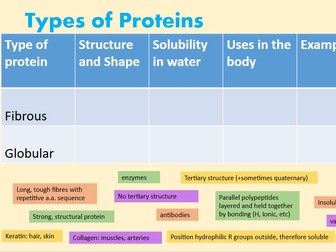
Describes the basic structure of an amino acid (structures of specific amino acids are not required) and the formation of polypeptides and proteins (as amino acid monomers linked by peptide bonds in condensation reactions); the significance of a protein’s primary structure in determining its three-dimensional structure and properties (globular and fibrous proteins and types of bonds involved in three-dimensional structure).
AS Biology - Water (international)Quick View
jbruk1

AS Biology - Water (international)

(0)
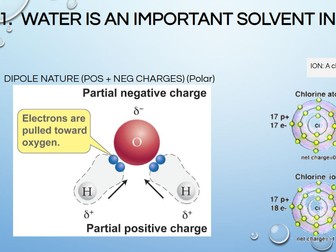
How water is an important solvent for transport due to its dipole nature and formation of hydrogen bonds. How water has a high heat capacity.
AS Biology Lipids (international)Quick View
jbruk1

AS Biology Lipids (international)

(0)
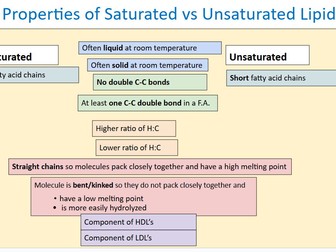
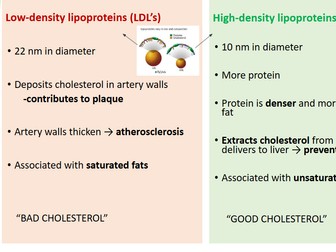
Different functions of lipids. Forming and breaking ester bonds in triglycerides . Differences between saturated and unsaturated fatty acids and how different structures of fatty acids affect their properties. Includes some past paper examples.
AS Biology - Organic Chem Intro + CarbohydratesQuick View
jbruk1

AS Biology - Organic Chem Intro + Carbohydrates

(0)
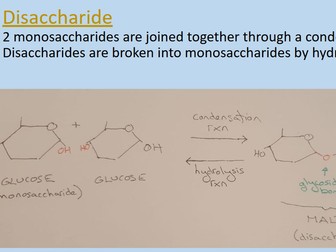
Introduction to organic chemistry. Differences in structures of monosaccharides, disaccharides and plysaccharides. Forming and breaking glycosidic bonds using hydrolysis and condensation reactions. Differences between amylose and amylopectin.
AS Biology - Risk and Correlation (international)Quick View
jbruk1

AS Biology - Risk and Correlation (international)

(0)
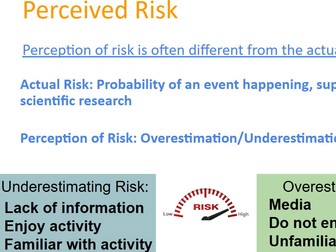
Differences between relative and perceived risk, shows how correlation does not mean causation, the value of using longitudinal or twin studies in epidemiology. Proper study design including differences between validity and reliability.