Sticker chartsQuick View
rop0381

Sticker charts

(0)
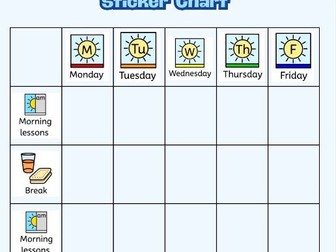
These bright and engaging sticker charts are designed to support positive behaviour, routines and motivation across all key stages. Featuring Monday to Friday layouts with sections for different parts of the day, they are perfect for tracking behaviour, rewards, targets and daily routines. Available in calming blue, yellow and pink themes, the charts suit a range of classroom styles and student preferences. Ideal for EYFS, KS1, KS2 and lower KS3, they are easy to print, laminate and reuse with stickers, stamps or whiteboard pens. A simple and effective resource for encouraging positive habits, independence and classroom engagement.
Five pillars of Islam worksheetQuick View
rop0381

Five pillars of Islam worksheet

(0)
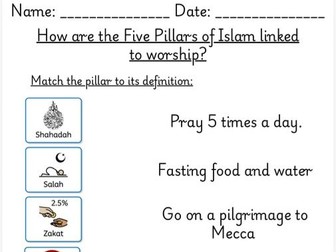
This engaging KS1 resource helps children learn about the Five Pillars of Islam through fun and interactive activities. Using simple widgets, pupils match each pillar to its meaning, helping to build understanding of key Islamic beliefs and practices in an age-appropriate way. The activity also encourages children to think independently by choosing which pillar they feel is most important and explaining their reasons. This supports discussion, reflection and speaking and listening skills alongside Religious Education learning. Perfect for KS1 classrooms, homeschooling or RE lessons, this resource is easy to use and designed to keep young learners engaged. A great introduction to Islam that promotes understanding, respect and thoughtful learning through interactive tasks and discussion opportunities.
Design your own prayer matQuick View
rop0381

Design your own prayer mat

(0)
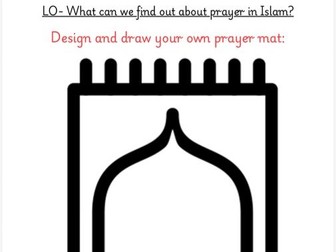
This engaging KS1 Religious Education worksheet helps children explore prayer in Islam through creative and interactive activities. Pupils design and draw their own prayer mat while learning about the importance of Salah in Muslim worship. The resource also includes a fun true or false sticky knowledge activity to reinforce understanding of key facts about prayer in Islam. Perfect for introducing Islamic beliefs and practices in an age-appropriate way, this worksheet encourages creativity, discussion and reflection while supporting RE learning objectives. Ideal for KS1 classrooms, homeschooling or independent activities. A simple and meaningful resource designed to build understanding, respect and confidence when learning about Islam and Muslim prayer practices.
Comparing queens worksheetQuick View
rop0381

Comparing queens worksheet

(0)
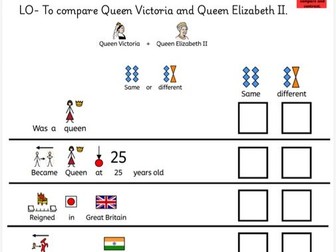
Here’s a clear KS1 worksheet description you can use, written for a teacher pack or planning document: Comparing Queen Elizabeth II and Queen Victoria – KS1 Worksheet This worksheet helps children learn about two significant British monarchs, Queen Elizabeth II and Queen Victoria, by identifying similarities and differences in their lives and reigns. Children are given a series of simple statements about both queens (for example: “lived in a palace”, “ruled for a very long time”, “had children”, “had photographs taken”). Pupils must read each statement and tick whether it applies to both queens (Same) or only one queen (Different). The task supports understanding of chronology, monarchy, and key historical facts in an accessible KS1 format. Learning Objective To recognise similarities and differences between two British monarchs. Task Read each statement carefully. Decide if it is Same (applies to both queens) or Different (applies to only one queen). Tick the correct box. Skills Developed Historical understanding Comparison skills Reading comprehension Early chronology awareness Extension Sheet For greater challenge, pupils are asked to write one key fact about each queen and explain why each monarch is significant in British history. Task Write one important fact about Queen Victoria. Write one important fact about Queen Elizabeth II. Say why each queen is important or remembered. Example prompts (support): What did she achieve during her reign? How did she change Britain? Why do people still learn about her today? If you want, I can also turn this into a printable worksheet layout with statements and tick boxes or add a word bank for SEND/KS1 support.
Rhyming worksheet- KS1Quick View
rop0381

Rhyming worksheet- KS1

(0)
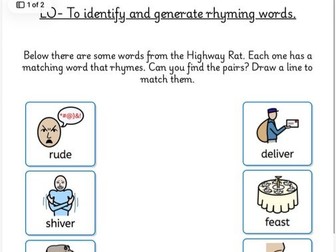
This fun and engaging KS1 rhyming worksheet helps children identify and generate rhyming words through interactive activities. Pupils match pairs of rhyming words and then challenge themselves to think of additional words that rhyme, helping to build phonics knowledge, vocabulary and spelling skills. Designed to support early reading and writing development, this resource encourages children to recognise word patterns and sounds in a simple and enjoyable way. Perfect for literacy lessons, phonics groups, independent work or homeschooling. Suitable for KS1 learners, the worksheet is easy to print and use, making it a great addition to English and phonics activities. A creative resource that supports confidence, listening skills and language development through fun rhyming tasks.
Highway Rat- Punctuation worksheetQuick View
rop0381

Highway Rat- Punctuation worksheet

(0)
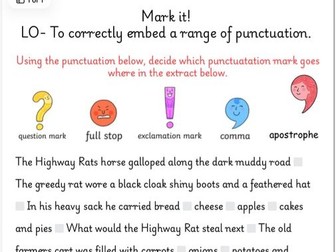
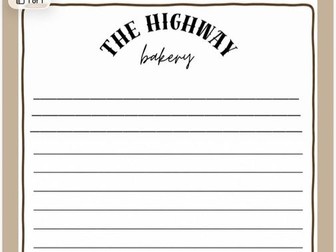
Punctuation Worksheet – KS1 & Lower KS2 English Activity This fun and engaging punctuation worksheet helps children practise using a range of punctuation marks within a simple and interactive text. Pupils read the extract and decide where each punctuation mark should go, helping to develop sentence structure, grammar and proofreading skills. Designed for KS1 and lower KS2 learners, the activity supports children in recognising and applying punctuation independently while building confidence in writing. Ideal for English lessons, SPaG activities, homework, interventions or independent learning. Easy to print and use, this worksheet provides a practical and enjoyable way to reinforce key punctuation objectives in a meaningful context. A great resource for improving accuracy, editing skills and understanding of basic grammar through hands-on learning tasks.
People who help us- Sorting activityQuick View
rop0381

People who help us- Sorting activity

(0)
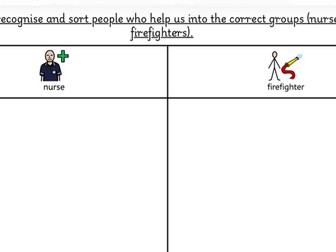
People Who Help Us Sorting Activity – Nurses and Firefighters (KS1) This engaging KS1 worksheet is designed to help pupils recognise and sort people who help us into the correct groups: nurses and firefighters. It supports early understanding of important community roles in a simple and accessible way. Children are encouraged to identify key features of each role and sort images or information accordingly, developing their ability to categorise and make connections. The activity promotes discussion about how these people help us in everyday life and why their jobs are important. Skills developed: Recognising different community roles Sorting and categorising Speaking and listening through discussion Understanding the role of people who help us What’s included: Clear sorting activity focused on nurses and firefighters Child-friendly layout Space for pupils to complete independently or with support Ideal for: KS1 PSHE or topic lessons Early Years and Year 1 learning Independent or guided activities Introduction to “People Who Help Us” topics A simple and effective resource to help young learners understand and appreciate key roles within their community.
Comparing nurses- Florence Nightingale and Mary SeacoleQuick View
rop0381

Comparing nurses- Florence Nightingale and Mary Seacole

(0)
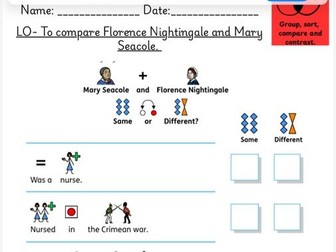
Comparing Florence Nightingale and Mary Seacole – KS1 Worksheet This KS1 worksheet is designed to support pupils in comparing two significant historical figures: Florence Nightingale and Mary Seacole. It helps children develop an understanding of their contributions to nursing while building early comparison and writing skills. Pupils are encouraged to identify similarities and differences between the two nurses using structured sentence prompts. The activity also supports children in explaining why each individual is important, helping to develop their understanding of historical significance in a simple and accessible way. The worksheet promotes the use of conjunctions (e.g. “but”, “and”) to compare ideas and supports pupils in forming clear, simple sentences. Skills developed: Comparing similarities and differences Understanding historical significance Use of simple sentences and conjunctions Knowledge of important historical figures What’s included: Sentence scaffold for comparing both individuals Writing task on why each nurse is significant Clear, child-friendly layout Ideal for: KS1 History lessons “Significant Individuals” topic Independent or guided work Assessment or consolidation tasks A clear and engaging resource to help young learners explore the impact of Florence Nightingale and Mary Seacole on nursing today.
RE- Easter assessmentQuick View
rop0381

RE- Easter assessment

(0)
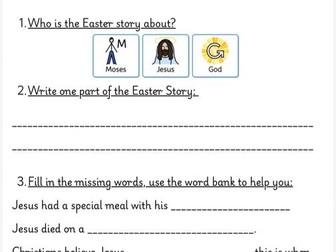
Easter Assessment – KS1 (RE Focus) This KS1 Easter assessment is designed to support teachers in evaluating pupils’ understanding of the Christian Easter story in a clear and accessible way. It provides a range of questions that allow children to demonstrate their knowledge of key events and religious vocabulary linked to Easter. Pupils are asked to recall important parts of the story, including who it is about, key events such as the Last Supper, the crucifixion, and the empty tomb, as well as sequencing the events in the correct order. The assessment also encourages children to explain their understanding through simple written responses. In addition, the worksheet explores basic religious concepts by asking pupils to identify sinful actions and explain the meaning of key terms such as “crucified,” helping to deepen their understanding of Christian beliefs. Skills assessed: Knowledge of the Easter story Sequencing key events Understanding of basic Christian beliefs Use of simple sentences to explain ideas Religious vocabulary What’s included: Structured question sheet Story sequencing activity Short written response questions Clear, child-friendly layout Ideal for: KS1 Religious Education lessons End of topic assessment Evidence for teacher assessment Independent or supported work A simple and effective way to assess pupils’ understanding of Easter within a KS1 RE curriculum.
Mrs Armitage storyboardQuick View
rop0381

Mrs Armitage storyboard

(0)
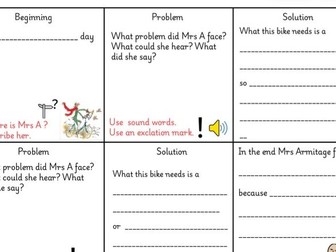
Mrs Armitage on Wheels Storyboard Worksheet This engaging storyboard worksheet is designed to support students in retelling and understanding Mrs Armitage on Wheels. It encourages learners to sequence key events from the story while developing their comprehension and creative thinking skills. Pupils can draw and/or write in each box to show what happens at different points in the story, making it ideal for reinforcing narrative structure (beginning, middle, end). The activity also supports speaking and listening when used as part of group discussion or storytelling. This resource also encourages children to deepen their writing by including: Cause and effect (explaining why things happen) Adjectives to add detail and description Onomatopoeia to bring the story to life (e.g. “zoom”, “clang”) Conjunctions to extend sentences (e.g. “and”, “because”, “so”) Perfect for KS1 and lower KS2, this resource can be used as an independent task, guided activity, or assessment tool. What’s included: Clear storyboard template with multiple frames Space for illustrations and captions Simple, child-friendly layout Ideal for: Literacy lessons Guided reading follow-up Story sequencing activities Creative writing support A fun and effective way to bring storytelling to life in the classroom!
Easter story- sorting happy and sad eventsQuick View
rop0381

Easter story- sorting happy and sad events

(0)
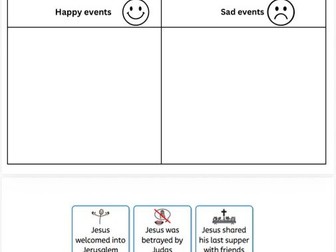
Sorting Happy and Sad Events of Easter (KS1) This engaging KS1 resource helps children explore the Easter story by sorting key events into happy and sad categories. Pupils will read or look at simple descriptions and pictures from the Easter story and decide how people might have felt at different moments. Based on the events of Easter, this activity supports children in understanding the emotions within the story of Jesus Christ, including the sadness of the crucifixion and the joy of the resurrection. Children will sort the cards into happy or sad groups, encouraging discussion about feelings, empathy, and why these events are important to Christians. Perfect for: KS1 RE lessons Easter topic work Group or independent activities Discussion about emotions and storytelling What’s included: Event sorting cards Happy and sad sorting mats Clear, child-friendly language Printable classroom resource A simple and meaningful activity to help young learners understand the emotions and significance of the Easter story
Sonic gentle hands social storyQuick View
rop0381

Sonic gentle hands social story

(0)
Sonic – Gentle Hands Social Story Help children learn about kind and safe behaviour with this engaging Sonic-inspired Gentle Hands Social Story. This resource supports young learners in understanding how to use their hands safely when playing with others and managing big emotions. Using a familiar character inspired by Sonic the Hedgehog, the story models positive behaviour such as keeping hands to ourselves, giving gentle high-fives, and making safe choices during play. It encourages children to pause, think, and choose kind actions when they feel excited or overwhelmed. This social story is ideal for supporting behaviour expectations, emotional regulation, and positive social interactions in the classroom. Perfect for: EYFS and KS1 classrooms SEN / SEND support Autism-friendly teaching approaches Behaviour support and PSHE lessons Social skills groups What’s included: Printable social story pages Simple, clear sentences for early readers Visual-friendly layout to support understanding Great for circle time, behaviour reminders, individual support, or calm-down areas.
Great Fire of London Poem PlanQuick View
rop0381

Great Fire of London Poem Plan

(0)
This engaging and child-friendly planning sheet supports KS1 children in planning their own poem about the Great Fire of London. It is designed to help pupils organise their ideas before writing, with clear prompts that encourage creativity while keeping the task accessible. Children are guided to include adjectives to describe the fire, buildings and feelings, similes to help make comparisons, adverbs to explain how things happened, and sound words to bring the poem to life. Prompts also encourage children to think about the senses, what people might have seen, heard, smelt and felt during the Great Fire. The simple layout supports early writers by reducing cognitive load and building confidence. It is suitable for whole-class teaching, small group work, or independent learning. Ideal for Year 1 and Year 2 English or history lessons, this resource links literacy with topic work on the Great Fire of London and works well alongside class texts, performances, or assemblies. It is also suitable for SEND learners, with space for drawings, keywords and short phrases. Includes: • Adjectives to describe fire, buildings and emotions • Simile prompts to support comparison • Adverbs to explain how actions happen • Sound words to add impact and excitement • Space for drawings, key words and ideas A practical and engaging resource to help young children plan a vivid and imaginative poem while developing key writing skills through a meaningful historical topic.
Colourful semantics- Level 2Quick View
rop0381

Colourful semantics- Level 2

(0)
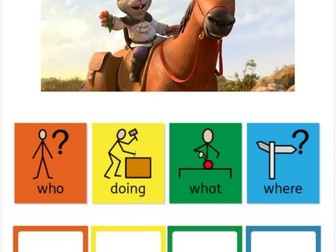
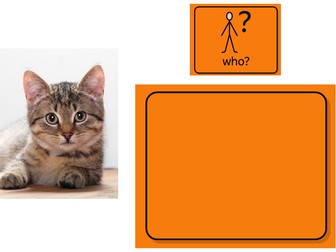
Level 2 Semantics, Who and Is Doing SEND Resource (Laminated, Ready to Use) This Level 2 Semantics Who and Is Doing resource is designed to support SEND pupils in developing their understanding of simple sentence structure. It focuses on identifying who is involved and what they are doing, helping children move from single-word recognition to early action-based sentences. The resource includes 20 clear pictures, each supported by corresponding Widgit symbols, making it highly accessible for children with speech, language and communication needs. Pupils are encouraged to identify the person and the action shown, supporting both receptive and expressive language development. This resource is already lamination-ready, making it durable and practical for repeated use in the classroom, intervention sessions, or one-to-one work. It can be used for matching, pointing, naming actions, or building simple sentences such as “The boy is running,” depending on the child’s developmental level. Suitable for EYFS and KS1 SEND learners, including children working at pre-key stage or early developmental levels, this resource supports structured progression within the Level 2 Semantics framework. Includes: • Level 2 Semantics focus on Who and Is Doing • 20 clear pictures with matching Widgit symbols • Visual support for identifying people and actions • Laminated format for repeated use • Suitable for one-to-one, small group or intervention work A clear, practical SEND resource to support early sentence building and help children confidently understand and use who and what is happening within communication.
Colourful semantics Level 1- WhoQuick View
rop0381

Colourful semantics Level 1- Who

(0)
Level 1 Semantics, Who? SEND Resource (Laminated, Ready to Use) This Level 1 Semantics Who? resource is designed to support SEND pupils in developing early understanding of who is involved in an action. It focuses on recognising and identifying people through clear visuals and simple language. The resource includes 20 clear pictures, each with corresponding Widgit symbols, making it accessible for children with speech, language and communication needs. It is ideal for introducing and reinforcing the concept of who in a sentence, supporting early comprehension and expressive language. This resource is already lamination-ready, making it durable for repeated use in the classroom, intervention sessions, or one-to-one support. It can be used for matching activities, pointing, naming, or simple sentence building, depending on the needs of the child. Suitable for EYFS and KS1 SEND learners, including children working at early developmental levels or pre-key stage, this resource supports structured language development in a clear and visual way. Includes: • Level 1 Semantics focus on Who? • 20 clear pictures with matching Widgit symbols • Visual support for identifying people • Laminated format for repeated use • Suitable for one-to-one, small group or intervention work A practical, accessible SEND resource to support early language skills and build confidence in understanding and using who within communication.
Toileting social storyQuick View
rop0381

Toileting social story

(0)
This gentle social story has been created to support children who find pooing on the toilet difficult or worrying. It uses clear, reassuring language and a simple structure to help children understand what happens when we need to do a poo, and why using the toilet is safe, normal, and okay. The story breaks the process down into small, manageable steps, helping to reduce anxiety and build confidence over time. It focuses on reassurance, routine, and positive language, making it suitable for children with SEND, those who are toilet training, or children who need extra emotional support around toileting. This social story is designed to be read regularly, either at school or at home, and can be used as part of a consistent toileting routine. What’s included: • A child friendly social story about pooing on the toilet • Simple, clear sentences with a calm and reassuring tone • Step by step explanation to support understanding • Suitable for SEN and early years style support Perfect for: • Supporting children with toilet training • Children with SEND or additional needs • Reducing anxiety around using the toilet • Home and school consistency A supportive, respectful resource designed to help children feel calm, confident, and proud as they learn to use the toilet.
The Great Fire of London description sheetQuick View
rop0381

The Great Fire of London description sheet

(0)
Help children bring history to life with this engaging Great Fire of London description sheet, designed especially for Key Stage 1. Using a stimulus picture of burning London, children are encouraged to explore the scene through their senses and describe what they can see, smell, hear, and feel. This resource supports early descriptive writing and helps pupils develop vocabulary while deepening their understanding of this significant historical event. It is ideal for use during history or English lessons and works well as a guided activity, independent task, or assessment piece. The simple layout and clear prompts make it accessible for young learners, supporting sentence formation and imaginative thinking without overwhelming them. What’s included: • A printable description sheet with sensory prompts • Sections for see, smell, hear, and feel • Child friendly wording suitable for KS1 Perfect for: • The Great Fire of London topic • Developing descriptive and sensory writing • Cross curricular history and English lessons • Encouraging empathy and imagination An easy to use resource that helps children step into the past and describe the Great Fire of London in a meaningful and engaging way.
Homework certificateQuick View
rop0381

Homework certificate

(0)
Celebrate and encourage positive homework habits with this bright and child friendly Homework Certificate, perfect for Key Stage 1 pupils. This certificate is ideal for rewarding effort, consistency, or a positive attitude towards homework, helping children feel proud of their achievements. Designed with young learners in mind, it uses clear language and a simple layout so children can easily understand why they are being rewarded. It works well for whole class use, individual praise, homework clubs, or as part of a reward system to boost motivation and confidence. What’s included: • A printable Homework Certificate suitable for KS1 • Child friendly wording and design • Space to write the child’s name, reason for the award, date, and teacher signature Perfect for: • Encouraging regular homework completion • Celebrating effort rather than outcome • Building confidence and a positive attitude to learning at home Simply print and use, or laminate for repeated use. A lovely, low effort way to make homework feel special and valued in your classroom.
Materials Investigation Worksheet – Manipulating and ExploringQuick View
rop0381

Materials Investigation Worksheet – Manipulating and Exploring

(0)
These two-page worksheets help KS1 children explore and manipulate different materials while developing their scientific thinking. Pupils test a variety of materials, record their observations using ticks or crosses, and explain why the materials behaved in a certain way, supporting both practical investigation and reasoning skills. The worksheets are designed to be clear, visual, and child friendly, making them accessible for young learners. By working scientifically across two pages, children have space to record multiple experiments, reflect on results, and build confidence in explaining their observations. What’s included: • Two printable worksheets for manipulating and exploring materials • Tick or cross system to record observations • Space for children to explain why materials reacted as they did • Clear, accessible layout suitable for KS1 Perfect for: • KS1 science lessons focused on working scientifically • Developing observation, prediction, and reasoning skills • Encouraging discussion and evidence-based explanations • Providing structured, hands-on learning experiences A practical, low-prep resource that turns simple material exploration into a structured, engaging scientific investigation for KS1 pupils.