WJEC GCSE History Unit 4 (New Spec 2026) - NEA Hypothesis Builder & PlannerQuick View
mattykellyrm

WJEC GCSE History Unit 4 (New Spec 2026) - NEA Hypothesis Builder & Planner

(0)
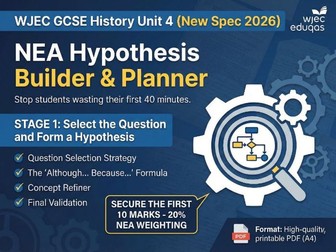
This structured, 2-page planning tool is designed specifically for Stage 1 (Select the question and form a hypothesis) of the new WJEC / Eduqas GCSE History Unit 4 Non-Examination Assessment (NEA), teaching from 2026. With the new “Made for Wales” specification increasing the NEA weighting to 20%, students need a robust strategy to secure the first 10 marks available in Stage 1. This resource provides a fail-safe framework for students to select the right question and draft a high-level hypothesis in under 40 minutes. This resource includes: Question Selection Strategy: A checklist to ensure students choose a question they can actually answer (checking for Themes and Item availability). The “Although… Because…” Formula: A sentence-starter framework that forces students to write a complex, balanced hypothesis (hitting high-level AO4 criteria) rather than a simple statement. Concept Refiner: A unique checklist that ensures their hypothesis explicitly links to the required historical concepts (Cause & Consequence, Continuity & Change, Similarity & Difference, Significance & Impact) as per the new specification guidance. Final Validation: A “pre-flight” check to ensure the hypothesis is testable and under 50 words before they move to Stage 2. Perfect for: Teachers preparing for the new 2026 Specification (Award 2028). Saving planning time for the new “A Changing Society” unit. Ensuring mixed-ability classes produce a structured start to their historical enquiry. Format: High-quality, printable PDF (A4).
WJEC History Unit 2 On-Screen NEA GuideQuick View
mattykellyrm

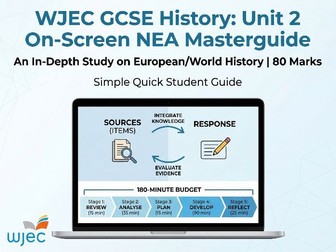
WJEC History Unit 2 On-Screen NEA Guide

(0)
A clear, 1-page visual workflow map for the new WJEC GCSE History Unit 2 on-screen NEA. Guides students through all 5 stages of the digital assessment. Take the panic out of the new digital exams! Designed specifically for the new “Made for Wales” WJEC GCSE History specification (First teaching 2026 / First award 2028), this single-page guide translates the complex Unit 2 requirements into a simple, visual checklist. What’s included: A clear breakdown of Stages 1 to 5 (from forming a hypothesis to critical reflection). Stripped of confusing exam-board jargon so 15-year-olds can actually understand it. Perfect to print and stick in the front of exercise books or use as a desktop mat during mock e-assessments. Ensure your students know exactly what they are doing during their 3-hour screen time.
WJEC History AO Student Rubric DecoderQuick View
mattykellyrm

WJEC History AO Student Rubric Decoder

(0)
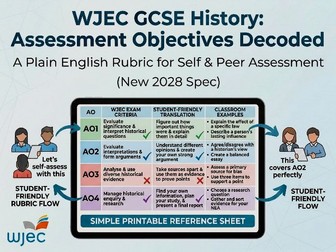
Translate WJEC GCSE History Assessment Objectives (AO1-AO4) into student-friendly language. This plain English rubric makes exam criteria easy to grasp. Stop fighting with the mark scheme! This 1-page reference sheet takes the abstract WJEC Assessment Objectives for the new 2028 specification and translates them into actionable, “student-speak” instructions. Why you need this: AO1 to AO4 decoded: Tells students exactly what “evaluate the significance” or “analyse interpretations” actually means they have to write. Perfect for peer-assessment, self-assessment, or as a permanent fixture on your classroom wall. Demystifies the grading process so students know exactly how to hit the top bands across all units.
WJEC History Cynefin Connection GridQuick View
mattykellyrm

WJEC History Cynefin Connection Grid

(0)
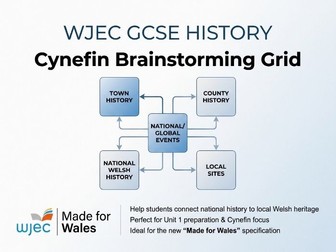
Integrate Cynefin into WJEC GCSE History! This brainstorming grid helps students seamlessly link national historical events to local Welsh sites. Master the new “Made for Wales” focus! The new WJEC History specification places a heavy emphasis on Cynefin—connecting broader historical narratives to local Welsh identity and heritage. This highly useful brainstorming template gives students a structured way to find those crucial local links. Includes: A visual mapping grid to connect national/global events to town, county, or national Welsh history. Prompts to help students evaluate the historical significance of local sites. Ideal for Unit 1 preparation and establishing a strong sense of place in your history classroom.
History Unit 4 100-Year Rule ChecklistQuick View
mattykellyrm

History Unit 4 100-Year Rule Checklist

(0)
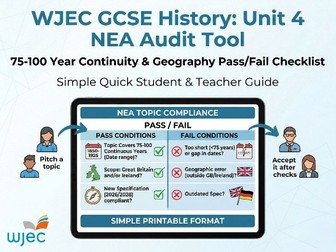
Ensure your students’ WJEC GCSE History Unit 4 NEA topics meet the strict 75-100 year continuity rule with this simple, printable pass/fail checklist. Don’t lose marks to technicalities! The new WJEC GCSE History specification (2026/2028) introduces a very strict requirement for the Unit 4 “Changing Society” NEA: topics must cover a continuous period of c.75 to c.100 years. This straightforward, highly effective audit tool takes the guesswork out of topic selection. Features: Quick pass/fail checklist for students to use when pitching their NEA topics. Ensures compliance with the geographic rules (Great Britain and/or Ireland). Saves teachers hours of checking dates and helps avoid moderation penalties.