How Can Vultures Eat Rotten Meat? KS2 LessonQuick View
threeyzmonkeys

How Can Vultures Eat Rotten Meat? KS2 Lesson

(0)
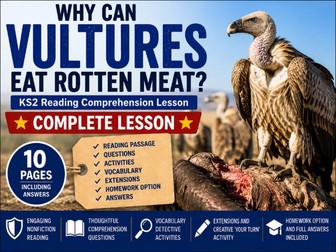
A complete, ready-to-use KS2 reading comprehension lesson exploring how vultures can eat rotten meat without becoming sick. Includes reading, vocabulary, activities and full answers. How can vultures eat decaying animals full of dangerous microorganisms — and why are these unusual birds so important to humans? Everything needed for the lesson is included, with a Finished Early? extension and extra challenge for faster pupils, plus an optional homework activity for teachers who want to extend the learning beyond the lesson. This engaging nonfiction lesson uses the extraordinary biology of vultures to develop reading comprehension, vocabulary, inference and independent thinking skills. Pupils discover how vultures are adapted to eating carrion, including their extremely acidic digestive systems and unusual gut bacteria. They also explore the important ecological role vultures play and what happened when vulture populations collapsed in India. The complete lesson includes: • Before You Read prediction activities • An engaging nonfiction reading passage • 10 reading comprehension questions • Vocabulary Detective context activities • A creative Your Turn activity • Finished Early? extension activities and an extra challenge • A separate optional homework activity • Full suggested answers Both PDF and editable Word versions are included, so the resource can be printed immediately or adapted to suit your class. Designed for upper primary / KS2 pupils, particularly Years 5–6. It may also be useful for lower secondary pupils who need accessible nonfiction reading practice. Suitable for a complete reading lesson, comprehension practice, literacy work, cross-curricular science, cover lessons, homework or independent study. 10 pages including answers. No additional resources required.
Why Is Ketchup Called Ketchup? KS2 LessonQuick View
threeyzmonkeys

Why Is Ketchup Called Ketchup? KS2 Lesson

(0)
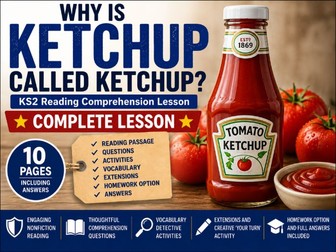
A complete, ready-to-use KS2 reading comprehension lesson exploring the surprising history of ketchup. Includes reading, vocabulary, activities and full answers. Why is ketchup called ketchup — and how did a salty Asian sauce eventually become the sweet red tomato sauce we know today? Everything needed for the lesson is included, with a Finished Early? extension and extra challenge for faster pupils, plus an optional homework activity for teachers who want to extend the learning beyond the lesson. This engaging nonfiction lesson uses the surprising history of an everyday food to develop reading comprehension, vocabulary, inference and independent thinking skills. Pupils discover the possible Asian origins of the word ketchup, early British ketchups made from ingredients such as mushrooms and oysters, the development of tomato ketchup, and how Heinz helped create the style of ketchup familiar today. The complete lesson includes: • Before You Read prediction activities • An engaging nonfiction reading passage • 10 reading comprehension questions • Vocabulary Detective context activities • A creative Your Turn activity • Finished Early? extension activities and an extra challenge • A separate optional homework activity • Full suggested answers Both PDF and editable Word versions are included, so the resource can be printed immediately or adapted to suit your class. Designed for upper primary / KS2 pupils, particularly Years 5–6. It may also be useful for lower secondary pupils who need accessible nonfiction reading practice. Suitable for a complete reading lesson, comprehension practice, literacy work, cover lessons, homework or independent study. 10 pages including answers. No additional resources required.
Why Do We Wear Neckties? KS2 LessonQuick View
threeyzmonkeys

Why Do We Wear Neckties? KS2 Lesson

(0)
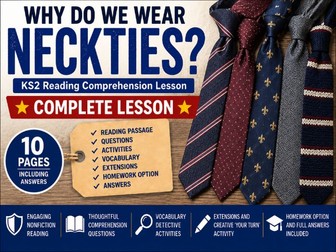
A complete, ready-to-use KS2 reading comprehension lesson exploring the surprising history of the necktie. Includes reading, vocabulary, activities and full answers. Why do millions of people wear a strip of cloth tied around their neck — and what does it have to do with soldiers from Croatia hundreds of years ago? Everything needed for the lesson is included, with a Finished Early? extension and extra challenge for faster pupils, plus an optional homework activity for teachers who want to extend the learning beyond the lesson. This engaging nonfiction lesson uses the unusual history of an everyday item of clothing to develop reading comprehension, vocabulary, inference and independent thinking skills. Pupils explore how neckwear developed over time, including the Croatian soldiers whose distinctive neckwear helped inspire the cravat, the changing fashions that followed, and the development of the modern necktie. The complete lesson includes: • Before You Read prediction activities • An engaging nonfiction reading passage • 10 reading comprehension questions • Vocabulary Detective context activities • A creative Your Turn activity • Finished Early? extension activities and an extra challenge • A separate optional homework activity • Full suggested answers Both PDF and editable Word versions are included, so the resource can be printed immediately or adapted to suit your class. Designed for upper primary / KS2 pupils, particularly Years 5–6. It may also be useful for lower secondary pupils who need accessible nonfiction reading practice. Suitable for a complete reading lesson, comprehension practice, literacy work, cover lessons, homework or independent study. 10 pages including answers. No additional resources required.
Why Was Sliced Bread Invented? KS2 LessonQuick View
threeyzmonkeys

Why Was Sliced Bread Invented? KS2 Lesson

(0)
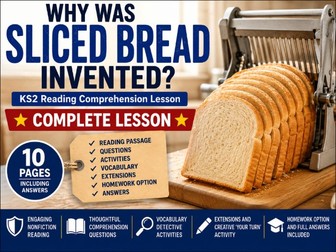
A complete, ready-to-use KS2 reading comprehension lesson exploring the surprising history of sliced bread. Includes reading, vocabulary, activities, homework and full answers. Why was sliced bread invented — and why did people initially think it was a terrible idea? Everything needed for the lesson is included, with a Finished Early? extension and extra challenge for faster pupils, plus an optional homework activity for teachers who want to extend the learning beyond the lesson. This engaging nonfiction lesson uses an unusual real-world history topic to develop reading comprehension, vocabulary, inference and independent thinking skills. Pupils discover the story of Otto Rohwedder and the invention of commercially sliced bread, from his early attempts and the destruction of his workshop to the success of the Chillicothe Baking Company and the spread of sliced bread across America. The complete lesson includes: • Before You Read prediction activities • An engaging nonfiction reading passage • 10 reading comprehension questions • Vocabulary Detective context activities • A creative Your Turn activity • Finished Early? extension activities and an extra challenge • A separate homework activity • Full suggested answers Both PDF and editable Word versions are included, so the resource can be printed immediately or adapted to suit your class. Designed for upper primary / KS2 pupils, particularly Years 5–6. It may also be useful for lower secondary pupils who need accessible nonfiction reading practice. Suitable for a complete reading lesson, comprehension practice, literacy work, cover lessons, homework or independent study. 10 pages including answers. No additional resources required.
5 KS2 Reading Comprehension Lessons | Non-Fiction BundleQuick View
threeyzmonkeys

5 KS2 Reading Comprehension Lessons | Non-Fiction Bundle

5 Resources
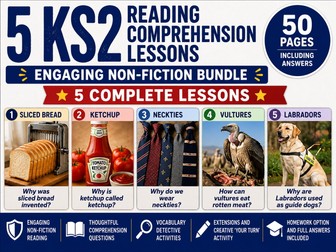
Five complete, ready-to-use KS2 reading comprehension lessons featuring unusual and engaging non-fiction topics. Each lesson includes reading, comprehension questions, vocabulary work, extension activities, optional homework and full answers. Why was sliced bread invented? Why is ketchup called ketchup? Why do we wear neckties? How can vultures eat rotten meat? And why are Labradors used as guide dogs? This bundle contains five complete reading comprehension lessons designed to develop pupils’ reading comprehension, vocabulary, inference and independent thinking through interesting real-world topics. The bundle includes: • Why Was Sliced Bread Invented? • Why Is Ketchup Called Ketchup? • Why Do We Wear Neckties? • How Can Vultures Eat Rotten Meat? • Why Are Labradors Used as Guide Dogs? Each lesson includes: • An engaging non-fiction reading passage • 10 reading comprehension questions • Vocabulary Detective activities • A creative Your Turn activity • Finished Early? extension activities and an extra challenge • An optional homework activity • Full suggested answers Both PDF and editable Word versions are included, allowing teachers to print the resources immediately or adapt them for their own class. Designed primarily for upper KS2 / Years 5–6, the resources may also be useful for lower secondary pupils who need accessible non-fiction reading practice. Suitable for complete reading lessons, guided reading, literacy work, cover lessons, homework or independent study. Five unusual questions. Five complete lessons. Everything needed to teach them.
Why Are Labradors Used as Guide Dogs? KS2 LessonQuick View
threeyzmonkeys

Why Are Labradors Used as Guide Dogs? KS2 Lesson

(0)
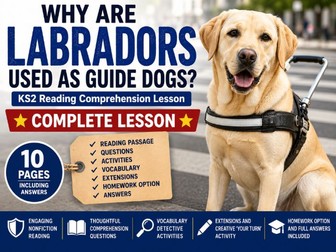
A complete, ready-to-use KS2 reading comprehension lesson exploring why Labradors make such successful guide dogs. Includes reading, vocabulary, activities and full answers. Why are Labradors so commonly used as guide dogs — and why must a well-trained guide dog sometimes refuse to obey its owner? Everything needed for the lesson is included, with a Finished Early? extension and extra challenge for faster pupils, plus an optional homework activity for teachers who want to extend the learning beyond the lesson. This engaging nonfiction lesson uses the fascinating history and abilities of guide dogs to develop reading comprehension, vocabulary, inference and independent thinking skills. Pupils discover the history of modern guide dogs, from early training schools in Germany to Morris Frank and Buddy in the United States. They explore why Labradors are particularly well suited to guide-dog work, including their temperament, intelligence, trainability and practical size, and learn about the remarkable skill known as intelligent disobedience. The complete lesson includes: • Before You Read prediction activities • An engaging nonfiction reading passage • 10 reading comprehension questions • Vocabulary Detective context activities • A creative Your Turn activity • Finished Early? extension activities and an extra challenge • A separate optional homework activity • Full suggested answers Both PDF and editable Word versions are included, so the resource can be printed immediately or adapted to suit your class. Designed for upper primary / KS2 pupils, particularly Years 5–6. It may also be useful for lower secondary pupils who need accessible nonfiction reading practice. Suitable for a complete reading lesson, comprehension practice, literacy work, cross-curricular science, cover lessons, homework or independent study. 10 pages including answers. No additional resources required.