A lesson inspired by the opening scene of The Woman in Black (warning, it’s a little creepy!). Students will consider how the focus shifts throughout the opening and how this could be emulated in narrative writing. Includes all media, retrieval tasks, scaffolded planning worksheet, model answer and printable success criteria checklist. Perfect for Y10/Y11 revision.
Build confident analysis of connotative language with this focused and accessible resource, designed for KS3 and KS4 and ideal preparation for AQA English Language Paper 1, Question 2 and 4 and Paper 2, Question 3.
Students are guided through scaffolded tasks that develop their ability to identify and explore connotations in words and phrases, helping them move from basic understanding to clear, exam-ready analysis. The resource then applies these skills to a short extract from a past paper source, before supporting students in writing a structured, exam-style response.
Perfect for lessons, revision, or intervention, this resource supports students in mastering a key skill needed for success in Paper 2 without overwhelming them.
This introductory lesson to the AQA Power and Conflict anthology is ideal for Year 9 and Year 10 students beginning GCSE English, or for Year 11 as a focused refresher.
The lesson clearly breaks down the poetry exam, helping students understand what is expected and how marks are awarded, before introducing the key concept of theme. Students explore what themes are, why they matter, and how to approach themes that have appeared in previous AQA exam questions, encouraging unique, critical, and flexible responses rather than memorised ideas.
Through guided discussion and short, focused tasks, students build confidence in thinking thematically, laying strong foundations for anthology study and successful exam preparation.
This revision lesson focuses on ‘The Émigrée’ and ‘Kamikaze’ from the AQA Power and Conflict anthology, comparing how both poems present inner conflict.
The lesson supports students in building a secure understanding of each poem by decoding key vocabulary, exploring tone and shifts in perspective, and examining how internal struggles are shaped by memory, identity, duty, and emotion. Structured, scaffolded tasks guide students through the comparison, helping them develop clear and thoughtful interpretations.
To consolidate learning, students use a scaffolded planning sheet before completing an exam-style comparative response, making this resource ideal for revision, exam preparation, or extended practice. It provides a thorough yet accessible overview while keeping students focused on the skills needed for success in the AQA exam.
This revision lesson explores ‘Bayonet Charge’ and ‘The Charge of the Light Brigade’ from the AQA Power and Conflict anthology, with a focus on the presentation of war.
Students are guided through a clear overview of each poem, including context, themes, language, structure, and form, with particular attention to ideas of war, conflict, and power. Instead of providing fixed comparisons, the lesson includes scaffolded activities and short check-for-understanding tasks that encourage students to generate, justify, and refine their own comparisons between the poems.
Designed for effective exam preparation, this resource supports students in building confidence with independent comparative thinking, making it ideal for revision lessons, group work, or exam skills practice while still providing a thorough overview of both poems.
This revision lesson provides a clear and accessible overview of ‘Exposure’ and ‘The Prelude’, with a sharp focus on comparison and the theme of the power of nature, as required for the AQA English Literature Power and Conflict anthology.
The lesson breaks both poems down step by step, drawing meaningful comparisons between how nature is presented as powerful, overwhelming, and uncontrollable. Frequent, short tasks are embedded throughout to check understanding, reinforce key points, and support students in making confident comparative links.
Ideal for exam preparation, revision sessions, or recap lessons, this resource offers a full overview of both poems while keeping students actively engaged and focused on the skills needed to succeed in the exam.
ThESE printable worksheets offer a guided analysis of ‘Exposure’, designed to support students in independent annotation while encouraging deeper and more critical exploration of the poem.
Clear, structured questions lead students through key aspects of the poem, focusing on language, imagery, structure, and tone, while prompting them to think carefully about meaning and effect. The worksheet supports students in moving beyond surface-level comments, helping them develop more thoughtful and analytical responses.
Ideal for classwork, homework, or revision, this resource builds confidence in independent analysis while reinforcing the skills needed for success in the AQA Power and Conflict anthology.
This bundle of three Power and Conflict poetry comparison lessons is designed to teach six poems across three focused lessons, approaching the anthology through a comparative lens from the outset.
Each lesson explores a different pairing of poems, guiding students to make meaningful links between themes of power, war, conflict, and nature. The lessons break poems down clearly while encouraging students to compare ideas, methods, and perspectives, helping them build confidence in comparative thinking for the AQA exam.
With structured tasks and opportunities for discussion and written practice, this bundle provides an efficient yet thorough overview of key poems, making it ideal for revision, condensed teaching, or curriculum coverage while keeping a strong focus on exam success.
A House of Games inspired A Christmas Carol quiz, perfect for Year 10 and Year 11. Designed as an engaging end-of-term treat that still delivers meaningful learning, this quiz revises all five staves, key context, essential quotes, and important literary terminology.
The rounds mirror the style of the popular TV show House of Games, giving students a familiar, competitive format that boosts engagement and recall. Questions link Dickens’ ideas to recognisable modern references—such as shoes, celebrities, and well-known brands—to support memory and help students form strong, lasting associations.
Whether used as a class challenge, team competition, or whole-cohort activity, this quiz keeps revision lively while ensuring students revisit the knowledge they need for success in the exam. A fun, interactive way to celebrate the end of the year without sacrificing valuable content.
This lesson guides students through the key features of all five transactional writing forms they may be asked to produce for AQA English Language Paper 2 Question 5. Each form is broken down with concise explanations and occasional examples. It is advised that students to take notes throughout, compare features, and build their own reference bank as they learn. The lesson concludes with an interactive whiteboard quiz designed to check understanding, reinforce key distinctions between the forms, and ensure students feel confident identifying and applying the appropriate conventions in an exam-style task.
This three-lesson PowerPoint takes students step by step through the AQA English Language Paper 2 (2018) ‘Surfing’ paper, fully updated to match the new 2025 AQA question format. Each lesson gradually reveals the exam questions, provides clear teacher guidance, and includes high-quality model answers to demonstrate exactly what strong responses look like. Teacher-led modelling on the board supports students through each stage of the process, while a student-friendly mark scheme enables simple and effective peer or self-assessment.
Every lesson opens with a quick, engaging literature recall task covering An Inspector Calls, Macbeth, A Christmas Carol, and Power and Conflict poetry. These starter activities are easy to swap, adapt, or remove depending on the texts your class studies.
Designed for clarity and ease of use, this resource supports students in understanding the demands of Paper 2, developing confidence with the updated question wording, and producing high-quality responses that mirror real exam expectations. Perfect for whole-class teaching, intervention sessions, or revision.
Lesson for GCSE unseen poetry analysing poem titles. Designed for Year 10/11, the resource teaches students how to draw out connotations, themes, tone, and potential meanings before reading the poem.
Includes:
Clear guidance and examples
Quick practice tasks using a range of titles
Stretch questions for higher-level inference
A short iPad/ laptop application task
Teacher notes for easy delivery
By the end, students will confidently use title analysis to make predictions and build stronger, more insightful responses in unseen poetry tasks—perfect for lessons, interventions, or revision.
This engaging GCSE English Literature lesson guides students through a comparison of Poppies and My Last Duchess, focusing on how both poets present loss of power, particularly from a female perspective. Designed for the AQA Power and Conflict anthology, the lesson helps students develop the analytical and comparative skills needed for the comparison question.
Lesson Overview:
Quick recap starter to refresh key ideas, context, and themes from both poems
Interactive whiteboard quiz exploring writer’s methods - imagery, structure, tone, and narrative voice - encouraging whole-class participation and deeper thinking
Focused analysis tasks examining how female power is restricted, undermined, or lost in each poem
Comparative writing activity where students identify and explain key similarities and differences in the poets’ presentations of power
By the end of the lesson, students will be able to confidently compare how Weir and Browning use poetic methods to present female loss of power, preparing them effectively for the AQA comparison question.
A complete lesson for English Language Paper 2 Question 5 using asking students to explain their opinion of autumn. It includes an interactive whiteboard quiz, a Grade 9 model answer, clear explanation of the assessment objectives, and guided planning steps. The lesson engages students, shows them what top-level writing looks like, and prepares them to write their own essay effectively.
This Year 11 lesson is designed to prepare students for AQA English Language Paper 2, Question 4, with a strong focus on analysing tone. It has also proven effective in helping students discuss tone across other language questions and even within their GCSE Literature responses.
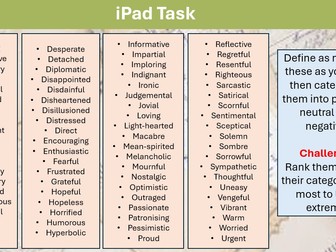
The lesson begins by explaining why tone matters and how it shapes meaning, influences reader response, and reveals a writer’s attitude. Students then complete a research task using iPads or laptops, where they explore a wide range of tonal vocabulary and categorise examples into positive, negative, and neutral. This helps build both confidence and precision in their analytical language.
The session concludes with an interactive whiteboard activity, using quotations from past AQA English Language Paper 2 extracts. Students must identify the tone of each quotation, justify their choices, and discuss how tone contributes to the writer’s viewpoint. This ensures they can apply their new understanding directly to real exam-style material.
This comprehensive 20-lesson revision PowerPoint provides everything you need for the final intensive run-up to the AQA English Language and Literature exams with Year 11. Designed originally for a low-ability set, the lessons are highly scaffolded, fully guided, and packed with accessible, confidence-building activities.
The resource includes:
7 lessons on AQA English Language Paper 1 and Paper 2
4 lessons on the Power and Conflict anthology
2 lessons on Unseen Poetry
7 lessons on key English Literature texts: Romeo and Juliet, An Inspector Calls, and A Christmas Carol
Each lesson follows a multimedia, highly supportive approach, featuring:
Retrieval practice and quick-fire recall tasks
Interactive whiteboard quizzes
Teacher modelling and worked examples
High-quality student model answers
Opportunities for peer and self-assessment
Clear teaching of key terminology
Plot, context, theme, and quotation revision
Thought-building prompts and structured writing scaffolds
Every session ends with a printable revision resource that students can take away, consolidate independently, or use for last-minute study. All required worksheets and handouts are included directly in the PowerPoint; simply print and teach.
This resource provides a clear, streamlined, and time-efficient route through all major content areas, ensuring students are fully prepared for every paper in the AQA English Language and English Literature exams, even with limited revision time. Perfect for whole-class teaching, intervention groups, or intensive revision timetables.
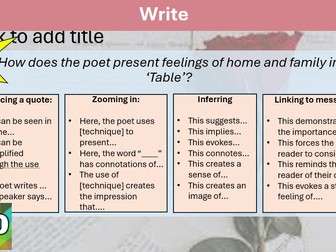
Lesson 1: Unseen Poetry 24-Mark Question – Table by Robert Hull (AQA, June 2025)
Overview
A fully guided lesson designed to help students confidently approach the 24-mark unseen poetry question in the AQA exam. Using the June 2025 set poem Table by Robert Hull, this lesson breaks down the process step by step, providing the perfect balance of support and challenge.
Key Features
Guided walk-through of how to approach the question.
Scaffolded tasks to explore meaning, language, structure and effect.
Clear modelling of how to plan and structure a 24-mark response.
Strategies to build independence and exam technique.
What’s included
✔ Complete PowerPoint lesson
✔ Structured activities with built-in scaffolding
✔ Exam-style question and writing guidance
Why this resource?
Saves planning time with a ready-to-use lesson.
Builds confidence for a challenging exam question.
Suitable for whole-class teaching, cover or focused revision.
Engages students with a supportive, step-by-step approach.
Lesson 2: Unseen Poetry 8-Mark Comparison – Table and Like a Beacon (AQA, June 2025)
Overview
This focused lesson supports students in tackling the shorter, 8-mark unseen poetry comparison. Using Table by Robert Hull and Like a Beacon by Grace Nichols from the June 2025 AQA exam, the lesson models a clear approach to comparing poems under timed conditions.
Key Features
Step-by-step guidance on how to compare ideas and methods.
A model comparison paragraph for students to annotate and evaluate.
Scaffolding to support students in crafting their own response.
Practical exam strategies to maximise marks in limited time.
What’s included
✔ Complete PowerPoint lesson
✔ High-quality model response for annotation
✔ Comparison activities with clear success criteria
✔ Exam-style practice question
**Why this resource?
Provides targeted preparation for the 8-mark question.
Includes a model answer to help students understand exam expectations.
Encourages active engagement through annotation tasks.
Flexible for revision, homework, cover or classroom teaching.
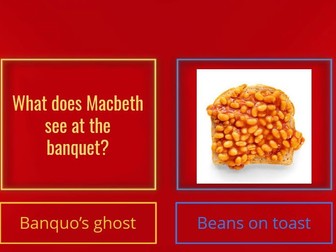
A fun, five-round quiz with questions all linking to Macbeth. Questions relate to plot, characters, literary techniques, quotations, context and more, appealing to a range of abilities. All rules and answers are displayed.
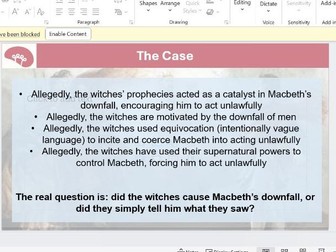
This fun and interactive lesson invites students to take part in a mock trial exploring a key question from Macbeth:
Are the witches responsible for Macbeth’s tragic downfall?
Students will be introduced to the task, then supported as they work in teams to gather textual evidence, build arguments, and prepare their case - either defending or prosecuting the witches. The activity encourages close reading, critical thinking and lively debate, making it a highly engaging way to explore character, motivation, and blame in Shakespeare’s play.
Perfect for KS3 or KS4, this lesson includes clear guidance, structured tasks, and opportunities for performance, group discussion, and persuasive writing.
This is an overview of everything on both AQA GCSE English Literature and Language, with information on assessment objectives and how to revise.
The texts on the Literature side are: A Christmas Carol, Macbeth and An Inspector Calls. These can be editted to fit the texts you teach.
A simplified revision timetable, covering all of the important skills needed to succeed in all questions on both papers. This is a 5-week timetable which asks students to revise twice a week, with space to add extra sessions if desired.