This resource explores all 10 chapters where students cold read. Each lesson will have a pre-reading task, chapter summary worksheet with:
Big ideas
Key quotes
Predicitions/questions
Summary
Context link
As well as this, there are gap fills, comprehension questions per lesson and post-reading activities. Every lesson has a different plenary.
This is highly engaging, convenient for planning and useful for students!
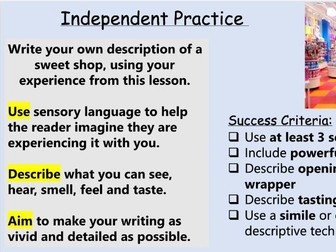
Aimed for Year 7. Each lesson teaches a skill of writing then has the opportunity to bring it all together to complete a ‘big write’.
Carefully planned a sequences, with the final lesson being a ‘bring it all together’ final write.
Lesson 1 - Sensory Language
Lesson 2 - Linking place to mood
Lesson 3 - Introduction to tone
Lesson 4 - Final write
Effective and careful planning - a great time saver!
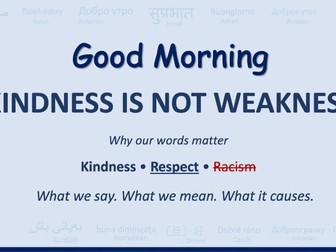
A thought-provoking assembly and tutor-time resource designed to encourage meaningful discussions around kindness, belonging, respect and the impact of racist language.
Through a series of engaging slides, discussion prompts and reflection opportunities, students explore how language affects others, why belonging matters, and the difference between intention and impact. The resource promotes empathy, inclusion and personal responsibility while encouraging students to reflect on their own actions and behaviour.
Included:
Fully editable PowerPoint presentation
Assembly script and discussion prompts
Reflection opportunities throughout
Visual and engaging slide design
Suitable for tutor time or whole-school assemblies
Themes Covered:
Kindness and respect
Belonging and inclusion
Diversity and community
The impact of language
Racism and discrimination
Intention vs impact
Personal responsibility
Creating a positive school culture
Perfect For:
Secondary school assemblies
Tutor time sessions
PSHE lessons
Personal Development curriculum
Equality and Diversity education
Anti-racism awareness
Behaviour and culture initiatives
Learning Outcomes
Students will:
Understand what belonging means
Reflect on how language affects others
Recognise examples of racist language and behaviour
Understand the difference between intention and impact
Consider how they can contribute to a respectful and inclusive community
Why Teachers Like It:
Sensitive and age-appropriate approach
Encourages discussion rather than lecturing
Minimal preparation required
Suitable for a wide range of year groups
Supports whole-school values and behaviour expectations
Can be delivered as an assembly or adapted for classroom use
A powerful and engaging resource that helps students reflect on the importance of respect, inclusion and kindness, while promoting a school culture where everyone feels valued and able to belong.
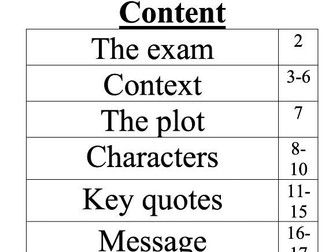
23 page revision document that works through:
The exam
Context
The plot
Characters
Key quotes
Message
Key themes
Exam questions and practice
After each section, there are tasks for students to complete. I have been using this for 3 years and students find it to be the most helpful form of revision.
A comprehensive GCSE English Literature revision and exam-preparation booklet designed to help students master poetry comparison skills for the AQA Power & Conflict anthology.
This step-by-step resource breaks down the comparison process into manageable stages, guiding students from selecting an appropriate comparison poem through to writing a full comparative response. With model answers, annotation tasks and structured planning activities, students develop confidence in analysing and comparing poems independently.
Included:
Printable revision booklet
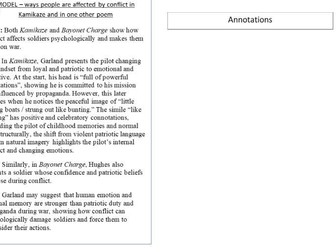
Model comparative paragraph
Guided poem selection activities
Annotation and evidence analysis tasks
“What, How, Why” analytical framework
Writer’s methods and structure prompts
Context and intention exploration
Independent comparative writing task
Exam-style practice question
Perfect For:
GCSE English Literature
AQA Power & Conflict Poetry
Year 10 and Year 11
Revision lessons
Intervention groups
Homework and independent study
Walking-talking mocks
Skills Developed:
Comparative analysis
Poetry interpretation
Contextual understanding
Writer’s methods analysis
Structural analysis
Analytical writing
Exam technique
Independent essay planning
Why Teachers Like It:
Clear, scaffolded approach to poetry comparison
Reduces student overwhelm by breaking the process into stages
Suitable for a range of abilities
Encourages deeper analytical thinking
Ready to print and use immediately
Ideal for revision and exam preparation
This resource is particularly effective for students who struggle with choosing comparison poems or developing meaningful links between texts. The structured approach helps students build confidence and produce more sophisticated comparative responses.
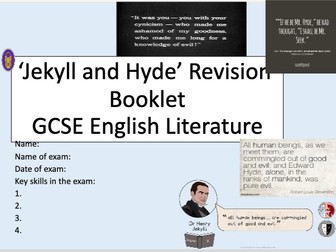
A fully resourced GCSE English Literature revision lesson for The Strange Case of Dr Jekyll and Mr Hyde, complete with a printable student revision booklet.
Designed to support students in the lead-up to examinations, this resource revisits key plot events, characters, themes and exam skills through a range of engaging retrieval and revision activities. The accompanying booklet provides students with a valuable revision resource that can be used both in lessons and independently at home.
Included:
Fully editable PowerPoint lesson
Printable revision booklet
Retrieval starter activities
Plot revision and sequencing tasks
Character revision activities
Exam preparation tasks
Independent and guided revision opportunities
Perfect For:
GCSE English Literature
AQA English Literature
Year 10 and Year 11 revision
Intervention sessions
Walking-talking mocks
Revision lessons before examinations
Skills Developed:
Knowledge retrieval
Plot recall and sequencing
Character understanding
Exam confidence
Revision strategies
Analytical thinking
Why Teachers Like It:
Minimal preparation required
Ready-to-print student booklet
Suitable for mixed-ability classes
Encourages active revision rather than passive note-taking
Can be delivered as a standalone revision lesson or incorporated into a wider revision programme
A practical and engaging revision resource designed to help students consolidate their knowledge of the novella and prepare effectively for GCSE examinations.
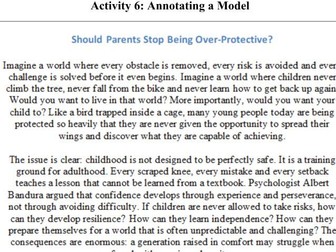
A comprehensive Question 5, Paper 2, revision resource. This could be used to guide learning in lessons or home learning.
It works through:
what makes an effective response (links to mark scheme)
planning
extended metaphor
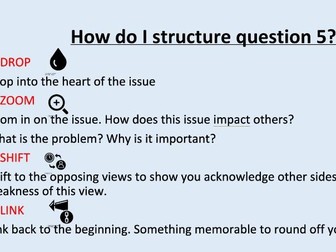
structure (drop, zoom, shift and link)
sentence starter guide
high grade models
persuasive techniques for a high grade
A simple but highly effective resource designed to help students move beyond basic point-evidence-explanation responses and develop more detailed, analytical paragraphs.
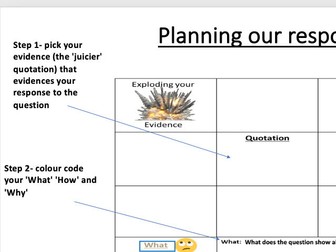
Using a structured “Quote Explosion” approach, students learn how to break down quotations and explore multiple layers of meaning through a clear What–How–Why framework. This resource encourages students to think critically about writer’s methods, effects on the reader, and deeper interpretations.
Included:
Structured quote explosion template
Colour-coded What–How–Why planning activities
Teacher modelling (“We Do”) section
Scaffolded analytical writing support
Visual planning framework for paragraph construction
Ideal For:
GCSE English Literature
GCSE English Language
KS3 analytical writing
Intervention groups
Revision sessions
Improving paragraph development
Skills Developed:
Analytical thinking
Language analysis
Writer’s methods
Reader response
Evidence selection
Extended paragraph writing
Examination technique
This resource is particularly effective for lower-attaining students who need support developing their explanations, as well as middle and higher-attaining students who need to deepen their analysis and explore multiple interpretations.
Fully editable and ready to use in the classroom.
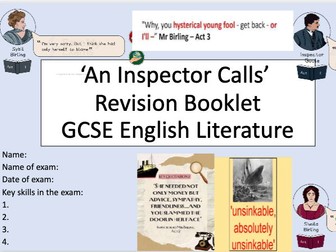
A fully resourced GCSE English Literature revision lesson for An Inspector Calls, complete with a printable revision booklet designed to consolidate knowledge and strengthen exam preparation.
This engaging revision lesson revisits the key characters, themes, context and plot of Priestley’s play through a variety of retrieval and revision activities. The accompanying booklet provides students with a structured revision resource that can be used during lessons, for homework, or as part of independent exam preparation.
Included:
Fully editable PowerPoint lesson
Printable revision booklet
Retrieval and recall activities
Character revision tasks
Theme-focused revision exercises
Context consolidation activities
Exam skills and analytical writing practice
Independent revision opportunities
Perfect For:
GCSE English Literature
AQA English Literature
Year 10 and Year 11 revision
Pre-mock and pre-exam preparation
Intervention sessions
Revision workshops and booster lessons
Topics Covered:
The Birling Family
Inspector Goole
Social Responsibility
Class and Power
Capitalism vs Socialism
Generational Conflict
Gender Expectations
Priestley’s Messages and Intentions
Context and Historical Background
Skills Developed:
Knowledge retrieval
Character analysis
Theme exploration
Contextual understanding
Exam technique
Analytical writing
Revision and recall strategies
Why Teachers Like It:
Ready-to-teach with minimal preparation
Includes a high-quality printable booklet
Encourages active revision and discussion
Suitable for mixed-ability GCSE classes
Can be used as a standalone revision lesson or as part of a wider revision programme
Helps students make connections between characters, themes and context
A practical and engaging revision resource designed to help students build confidence, consolidate knowledge and maximise their success in GCSE English Literature examinations.
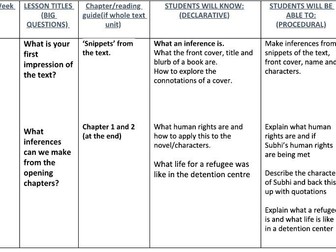
**A fully resourced unit of work based on The Bone Sparrow by Zana Fraillon, designed for Key Stage 3 English students.
**
This scheme explores key themes including identity, belonging, displacement, friendship, family, storytelling, nature, protest, and hope. The lessons develop both reading and writing skills while encouraging students to engage critically with the experiences of refugees and asylum seekers.
**Included Resources
*** 20+ fully editable PowerPoint lessons
Reading comprehension activities
Retrieval and inference tasks
Comparative analysis activities
Language analysis lessons
Quotation embedding practice
Character and relationship exploration
Symbolism and motif lessons
Perspective and viewpoint activities
Progress checks and assessment opportunities
Improvement and feedback lessons
Poetry links and supplementary resources
Lesson Coverage
**Students will explore:
**
Making predictions and inferences
Character development
Relationships and conflict
The power of storytelling
Symbolism and motifs
Nature and protest
Language analysis
Tension and climax
Themes and writer’s intentions
Extended analytical writing
Suitable For
Year 7 English
KS3 English
Mixed ability classes
Curriculum units on contemporary fiction
Refugee and identity-themed study
**Learning Outcomes
**
By the end of the unit, students will be able to:
Analyse how writers use language and structure
Support ideas with embedded quotations
Explore themes and character development
Write analytical paragraphs with evidence
Develop empathy and understanding of diverse experiences
All resources are fully editable and can be adapted to suit your own curriculum and students’ needs.
This unit has been successfully taught in a secondary school setting and includes mulitple assessment points and improvement lessons.
10 lessons which explore how to structure an effective response to English Language Paper 2 question 5.
It teaches:
Planning
Sentence structure
Drop, zoom, shift and link
Models and opportunity for my turn
Extended metaphor
End of scheme assessment… responding to an exam question
Whole Class Feedback lesson


 Quick View