AQA A-level Psychology Social Influence ConformityQuick View
TheHomeEdCorner

AQA A-level Psychology Social Influence Conformity

(0)
This fully editable lesson is designed for the AQA A-Level Specification and focuses on : Distinguish between Compliance, Identification, and Internalisation. Evaluate Informational and Normative social influence. Analyse Asch’s Research and variables affecting conformity. Critically assess Zimbardo’s study into social roles. The lesson provides real-world applications, case studies, and interactive activities to enhance students’ understanding of social conformity.
KS2/KS3 - How to Play Chess Guide - Lesson 9Quick View
TheHomeEdCorner

KS2/KS3 - How to Play Chess Guide - Lesson 9

(0)
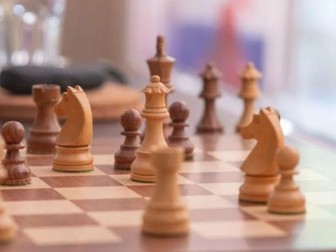
Chess Lesson 9 - Tactics: The Power of the Fork: Unlocking the most dangerous move in chess By the end of this lesson, you will be able to: Master the Fork: Identify when one piece attacks two targets. Think Like a Knight: Use your most ‘jumpy’ piece to win material. Spot Motifs: See patterns like aligned Kings and Rooks. Defend Correctily: Learn how to escape a fork with minimal loss. Pattern Recognition: Predict tactical opportunities before they happen.
KS2/KS3 - How to Play Chess Guide - Lesson 10Quick View
TheHomeEdCorner

KS2/KS3 - How to Play Chess Guide - Lesson 10

(0)
Chess Lesson 10 - Tactics: Pins and Skewers: Mastering the Art of Linear Attacks Today we are looking at linear tactics to dominate the board! Review the power of the fork. Identify the difference between a Pin and a Skewer. Understand the two types of pins: Absolute and Relative. Learn how to exploit a pinned piece using pawns. Calculate one move ahead to win material.
KS2/KS3 - How to Play Chess Guide - Lesson 8Quick View
TheHomeEdCorner

KS2/KS3 - How to Play Chess Guide - Lesson 8

(0)
Chess Lesson 8 - The Middlegame: Strategy and Planning: Beyond the opening: How to build a winning plan in Chess By the end of this lesson, you will be able to: Identify when the Opening ends and the Middlegame begins. Assess Piece Activity to see which pieces are doing the most work. Spot weak squares and hanging pieces in your opponent’s position. Understand how to use Trades and Space to your advantage. Balance your study time using the 40% Middlegame rule.
KS2/KS3 - How to Play Chess Guide - Lesson 7Quick View
TheHomeEdCorner

KS2/KS3 - How to Play Chess Guide - Lesson 7

(0)
Chess Lesson 7 - Opening Principles: Control the Centre: Launching Your Chess Army to Victory In today’s lesson, we are going to learn: How to tell the difference between a winning checkmate and a frustrating stalemate. Why the four central squares are the most important part of the board. The Golden Principles for the first few moves (The Opening). How to protect your King and mobilise your army quickly.
How to Play Chess - Lessons 1-10Quick View
TheHomeEdCorner

How to Play Chess - Lessons 1-10

9 Resources
This bundle provides the first 10 lessons out of 20 on ‘How to Play Chess’. The lessons are detailed and over 40 slides each. Grab a brilliant discount.
KS2/KS3 - How to Play Chess Guide - Lesson 6Quick View
TheHomeEdCorner

KS2/KS3 - How to Play Chess Guide - Lesson 6

(0)
Chess Lesson 6 - Winning the Game: Checkmate and Draws How to finish a battle and what happens if nobody wins! Today we are going to master the end of the game! Learn exactly what Checkmate is and how to achieve it. Discover the three ways to escape check (MIC). Understand why some games end as a Draw (or Stalemate). Learn how to defend against the sneaky Scholar’s Mate. Practice ethical play and how to offer a draw politely.
L1  GCSE Media Studies Portrayal of Different People Across MediaQuick View
TheHomeEdCorner

L1 GCSE Media Studies Portrayal of Different People Across Media

(0)
GCSE Media Studies - Lesson 1 - Portrayal of Different People Across Media This lesson explores the complicated concept of portraying different people across media with this Media Studies Lesson. This lesson helps students understand the nature of portraying different types of people in a range of media formats. Revision and Practice Powerpoint - Home-education/Home Learning/KS3/KS4/GCSE
KS2/KS3 - How to Play Chess Guide - Lesson 4Quick View
TheHomeEdCorner

KS2/KS3 - How to Play Chess Guide - Lesson 4

(0)
Chess Lesson 4 - Special Pawn Moves: Mastering Promotion and the Secret En Passant Rule Understand how pawns transform when they reach the end of the board. Learn the ‘En Passant’ rule for capturing pawns in passing. Discover the power of ‘Passed Pawns’ in the late game. Use the ‘Square Rule’ to see if a King can catch a runaway pawn.
KS2/KS3 - How to Play Chess Guide - Lesson 5Quick View
TheHomeEdCorner

KS2/KS3 - How to Play Chess Guide - Lesson 5

(0)
Chess Lesson 5 - Castling and King Safety: Protecting the Most Important Piece on the Board Understand how to perform the special move called ‘Castling’. Learn the strict rules that allow us to castle legally. Identify the difference between Kingside and Queenside castling. Recognise why moving the King to safety is a top priority in the opening.
KS2/KS3 - How to Play Chess Guide - Lesson 2Quick View
TheHomeEdCorner

KS2/KS3 - How to Play Chess Guide - Lesson 2

(0)
Lesson 2 - Pawn Power and Minor Piece Movement By the end of this lesson, we will be able to: Identify pieces and locate squares using ranks and files. Move and capture correctly with Pawns, Knights, and Bishops. Understand why Knights and Bishops are called Minor Pieces. Protect our army by spotting hanging pieces. Control the centre of the board to dominate the game.
KS2/KS3 - How to Play Chess Guide - Lesson 3Quick View
TheHomeEdCorner

KS2/KS3 - How to Play Chess Guide - Lesson 3

(0)
Chess Lesson 3 - The Heavy Hitters: Rooks and Queens By the end of this lesson, you will be able to: Identify and move the Rook and Queen correctly. Understand why these are called Major Pieces. Recognise the different values of all chess pieces. Understand the difference between Check and a capture. Plan routes to launch long-range attacks.
KS2/KS3 - How to Play Chess Guide - Lesson 1Quick View
TheHomeEdCorner

KS2/KS3 - How to Play Chess Guide - Lesson 1

(0)
Lesson 1 - Welcome to the Chessboard Today we are going to lay the foundations for your chess journey! Understand the layout and coordinates of the 64-square grid. Identify every piece and learn their special values. Master the correct way to set up the board for battle. Learn the ‘Golden Rules’ of sportsmanship and touch-move. Set your personal goals for this 20-lesson course.
GCSE 9-1 Maths Foundation Revision - Grade 4/5 Non-Calculator MasteryQuick View
TheHomeEdCorner

GCSE 9-1 Maths Foundation Revision - Grade 4/5 Non-Calculator Mastery

(0)
Strategy for Non-Calculator Maths Papers First Impressions Count You have 90 minutes to earn 80 marks. That is roughly one minute per mark, plus checking time. Key Skills to Master Estimation: Rounding to 1 significant figure to check answers. Fraction Arithmetic: Common denominators and ‘keep-change-flip’. Mental Methods: Efficient multiplication (grid or column) and division. Revision and Practice Powerpoint - Home-education/Home Learning/KS3/KS4/GCSE
GCSE 9-1 Maths Foundation Revision - Grade 4/5 Calculator MasteryQuick View
TheHomeEdCorner

GCSE 9-1 Maths Foundation Revision - Grade 4/5 Calculator Mastery

(0)
Strategy for Calculator Maths Papers By the end of this session, you will be able to: Use the Fraction and S↔D keys for exact calculations. Input and solve problems using Powers and Roots. Navigate Standard Form and Scientific Notation with ease. Manage complex layouts using the Bracket and Square Root buttons. Understand how to handle Rounding and Error Intervals on a calculator paper. Revision and Practice Powerpoint - Home-education/Home Learning/KS3/KS4/GCSE
KS2/Year6 Maths SATs Survival MeasurementQuick View
TheHomeEdCorner

KS2/Year6 Maths SATs Survival Measurement

(0)
By the end of this lesson, you will be able to: Convert between metric and imperial units. Calculate perimeter of composite shapes. Find area of rectangles, triangles, and parallelograms. Calculate volume of cubes and cuboids. Solve multi-step problems involving time and money.
KS2/Year6 Maths SATs Survival Ratio Proportion and AlgebraQuick View
TheHomeEdCorner

KS2/Year6 Maths SATs Survival Ratio Proportion and Algebra

(0)
In this lesson, we will: Recap Fractions, Decimals, and Percentages (FDP). Understand and represent ratio using bar models. Solve proportion problems using the unitary method. Use algebra to find missing values and formulae. Identify rules for number sequences (the nth term).
KS2/Year6 Maths SATs Survival Shape PropertiesQuick View
TheHomeEdCorner

KS2/Year6 Maths SATs Survival Shape Properties

(0)
By the end of this lesson, you will be able to: Classify 2D and 3D shapes based on their properties. Calculate missing angles on lines, around points, and in shapes. Understand the parts of a circle. Visualise translations and reflections on a coordinate grid. Use geometric reasoning to solve multi-step problems.
KS2/Year6 Maths SATs Survival Statistics and ReasoningQuick View
TheHomeEdCorner

KS2/Year6 Maths SATs Survival Statistics and Reasoning

(0)
By the end of this lesson, you will be able to: Read and interpret pie charts, line graphs, and bar charts. Calculate the mean as an average. Spot distractor information in worded problems. Apply exam techniques like showing working out and managing time. Tackle a ‘Mixed Bag’ of SATs questions with confidence!