Easter Chemistry Quiz Game - Year 10/11/12 students - powerpoint quizQuick View
DrEllie15

Easter Chemistry Quiz Game - Year 10/11/12 students - powerpoint quiz

(0)
This is a fun and engaging Easter Chemistry quiz game which I designed for and used with my Year 10 and 11 chemistry classes as an end of term Easter activity (they loved it!). Playing the quiz game, distributing resources, reading the instructions and scoring to decide the winner takes approximately 1 hour so would be perfect in a 1 hour lesson (but can be shortened if needed). Bundle Includes: A 27 slide powerpoint ‘Easter Chemistry Quiz Game’ which the teacher moves through as the students write down their answers. There are 4 rounds as detailed below: Easter Trivia (approx 5 minutes) Chemistry Quiz (approx 5 minutes to answer general chemistry questions appropriate to this age group) Periodic Table Bingo (a fun bingo game I designed to test students knowledge of the elements and build their team working skills) (approx 10 minutes) **Also included is a bingo board for each team. Easter Emoji game (approx 5 minutes for students to work out the Easter-themed phrase from the emojis) Quick tiebreaker if needed - Easter egg decoration Also includes… A Microsoft word document containing 5 different bingo boards for use in the Periodic Table Bingo Round. To be printed and each team to receive a board. A Microsoft word document containing an answer sheet for each team to use throughout the quiz and then score at the end. To be printed and distributed one per team.
Natural polymers and DNA lesson powerpointQuick View
DrEllie15

Natural polymers and DNA lesson powerpoint

(1)
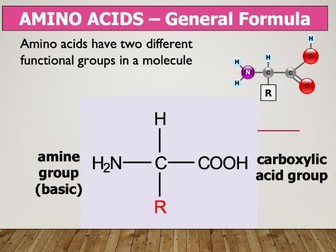
Includes a 23 slide lesson powerpoint on Natural Polymers and DNA Explains: the monomers of starch, cellulose, protein how these condensation polymers are made the structure of DNA ***Includes a plenary task of exam questions on polymers for the students to consolidate their learning. Mark scheme answers embedded into slides.
NPK fertilisers lesson powerpoint and worksheetQuick View
DrEllie15

NPK fertilisers lesson powerpoint and worksheet

(0)
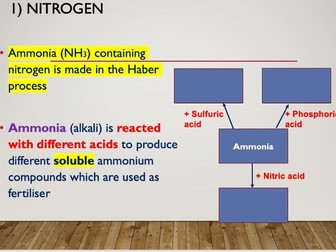
**A detailed 17 slide powerpoint to help students about NPK fertilisers **and how nitrogen, phosphorus and potassium are obtained for fertilisers as well as the similarities and differences between industrial vs. lab production of fertiliser compounds. There are also lots of exam questions embedded into the slides for students to consolidate their learning and develop their exam technique. Mark scheme answers are included. (Worksheet included for students to complete)
Molar gas volumes KS4 lesson powerpointQuick View
DrEllie15

Molar gas volumes KS4 lesson powerpoint

(0)
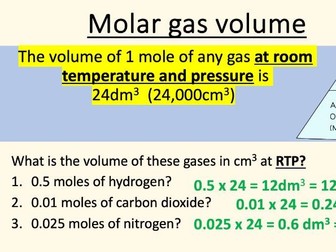
**A detailed 20 slide powerpoint resource designed for use in a 1 hour chemistry lesson on molar gas volume and gas volume calculations. ** Includes: Explanation of the molar gas volume LOTS of example questions to get students comfortable with converting moles into volume and vice versa Calculations of gas volume using mass and Mr Calculations of gas volumes from a balanced equation Further plenary / homework questions for students to practise what they have learnt. Answers included.
Reactions of alkenes KS4 pptQuick View
DrEllie15

Reactions of alkenes KS4 ppt

(0)
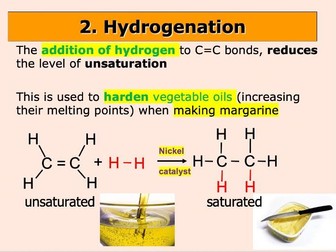
A detailed 19 slide powerpoint resource on Reactions of alkenes (hydration, halogenation and hydrogenation as well as combustion), typically to be used in a 1 hour KS4 chemistry lesson in the Organic Chemistry topic. Also includes past exam questions with mark scheme answers for students to consolidate their learning and develop their exam technique.
Hydrogen fuel cellsQuick View
DrEllie15

Hydrogen fuel cells

(0)
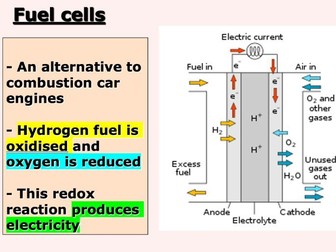
**An 18 slide powerpoint resource on Hydrogen Fuel Cells. ** Contains an explanation of how a hydrogen fuel cell works, half equations, advantages and disadvantages of hydrogen fuel cells. Also contains a 3 page student worksheet resource containing lots of past exam questions for students to develop their exam technique. Answers are embedded into powerpoint slides.
Collision theory lesson powerpoint KS4Quick View
DrEllie15

Collision theory lesson powerpoint KS4

(0)
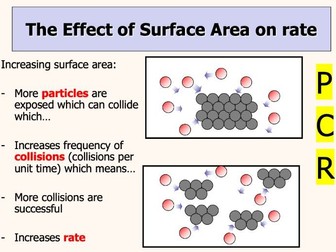
A 22 slide powerpoint resource designed for use in a 1 hour chemistry lesson teaching students about collision theory. Includes detailed explanations of: What collision theory is and activation energy How factors affect rate including surface area, concentration, pressure, temperature and catalysts Includes lots of past exam questions with mark scheme answers for students to complete within the lesson and develop their exam technique.
Reactions of alcohols lesson powerpointQuick View
DrEllie15

Reactions of alcohols lesson powerpoint

(0)
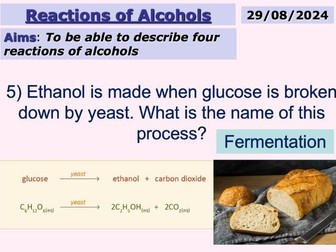
**A 23 slide powerpoint on ‘Reactions of Alcohols’ intended for use in a 1 hour Organic Chemistry lesson. ** Includes: A miniwhiteboard activity to recall prior organic chemistry knowledge Descriptions of the reactions of alcohols: *1. With sodium With water Undergoing combustion With an oxidising agent* Includes past exam questions with mark scheme answers and practice writing balanced combustion equations for students to consolidate their learning.
Electronic structure powerpoint KS3Quick View
DrEllie15

Electronic structure powerpoint KS3

(0)
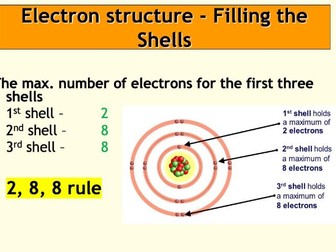
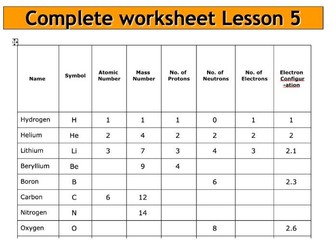
A 22 slide powerpoint designed for a typical KS3 chemistry 1 hour lesson on Electronic Structure. The lesson powerpoint includes: A mini whiteboard quiz to recap atomic structure An explanation of electron filling and how to draw and write the electron configuration of elements Lots of questions to practise the above Option to include flame testing as part of lesson as teacher demonstration Worksheet on Atomic Structure questions to consolidate knowledge - can be used as homework or revision
Addition polymerisation powerpoint - KS4Quick View
DrEllie15

Addition polymerisation powerpoint - KS4

(0)
A detailed 19 slide powerpoint resource on Addition Polymerisation , typically to be used in a 1 hour KS4 chemistry lesson in the Organic Chemistry topic. Also includes past exam questions with mark scheme answers for students to consolidate their learning and develop their exam technique.
Reversible reactions and equilibrium lessonQuick View
DrEllie15

Reversible reactions and equilibrium lesson

(0)
**A 17 slide powerpoint introducing chemistry students to reversible reactions and the concept of dynamic equilibrium. ** Includes examples of reversible and irreversible reactions alongside a demo/video, as well as lots of past exam questions and mark scheme answers to consolidate learning and an activity for students to get involved in to demonstrate equilibrium. Worksheet contains 1st page of notes / questions for students to complete. 2nd and 3rd pages can be printed and given to students to complete an activity to demonstrate equilibrium.
Rates of reaction past exam questionsQuick View
DrEllie15

Rates of reaction past exam questions

(0)
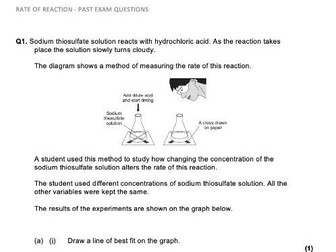
An 8 page worksheet of past exam questions on Rates of Reaction followed by a mark scheme. Intended for use as a homework / revision task ahead of a topic test on Rates. Could also be used as an assessment.
Addition polymerisation lesson powerpoint and worksheetQuick View
DrEllie15

Addition polymerisation lesson powerpoint and worksheet

(0)
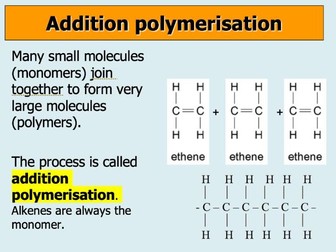
A 19 slide powerpoint on ‘Addition polymerisation’ intended for use in a 1 hour Organic Chemistry lesson. Also includes a lesson worksheet for students to practise naming and drawing polymers from their monomers. Includes: Explanation of what a monomer and polymer means Demonstration for students to do in classroom to help them visualise how monomers join together to make one long chain polymer Step by step flowchart for students to follow to draw the polymer repeating unit Difference in structure and properties of LDPE vs HDPE Exam questions with mark scheme answers to consolidate students’ learning
Titration calculations lesson powerpointQuick View
DrEllie15

Titration calculations lesson powerpoint

(0)
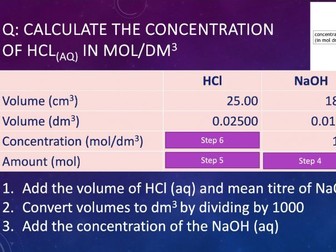
A detailed 20 slide powerpoint resource designed for use in a 1 hour KS4 chemistry lesson introducing titrations and how to complete titration calculations (follow up lesson would be required practical). ** Includes: - An introduction to titrations including an RSC video / teacher demo and intro to the equipment used - A methodical step by step explanation for how to complete titration calculations to determine the concentration of an acid / alkali -* Lots of worked examples*** to go through with students or get them to complete independently in books as they get more confident - Past exam questions to consolidate their learning with mark scheme answers to self-assess
KS3 Atoms forming ions powerpointQuick View
DrEllie15

KS3 Atoms forming ions powerpoint

(0)
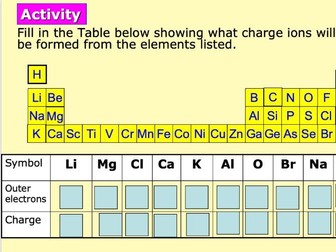
A detailed powerpoint typically used in a 1 hour KS3 chemistry lesson to introduce formation of ions from atoms. Includes lots of examples and questions for students to practise showing formation of ions from metals and non metals including drawing dot and cross diagrams.
Polymers, Composites and Ceramics KS4 pptQuick View
DrEllie15

Polymers, Composites and Ceramics KS4 ppt

(0)
A 23 slide powerpoint on Polymers, Composites and Ceramics including detailed explanations on the various types of materials, how they are made and their properties and uses. Also includes lots of past paper questions for students to consolidate their learning and develop their exam technique (mark scheme embedded into powerpoint.)
Reactions of acids KS3 pptQuick View
DrEllie15

Reactions of acids KS3 ppt

(0)
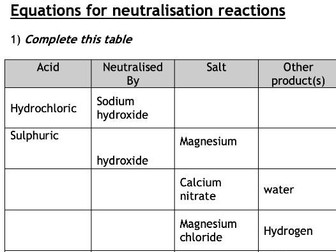
A detailed 19 slide powerpoint typically used in a 1 hour KS3 chemistry lesson to introduce students to the reactions of acids with: Alkalis Bases Carbonates Metals Use of mnemonics to help students remember (AAWS, BAWS, CAWS+COD, MASH). Lots of examples and questions as well as an additional worksheet for students to practise working out the products of these reactions. Challenge questions for students to think about chemical formulae of these products. Includes powerpoint, handout for students, question worksheet and answers
Fractional distillation of crude oil ppt - KS4Quick View
DrEllie15

Fractional distillation of crude oil ppt - KS4

(0)
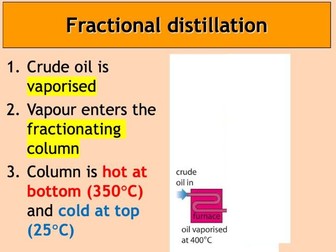
A detailed 30 slide powerpoint resource on Fractional Distillation of Crude Oil, typically to be used in a 1 hour KS4 chemistry lesson in the Organic Chemistry topic. Also includes a worksheet resource for students to make notes on the process of fractional distillation as well as past exam questions with mark scheme answers for students to consolidate their learning and develop their exam technique.
Reactions of Group 1 metals powerpointQuick View
DrEllie15

Reactions of Group 1 metals powerpoint

(0)
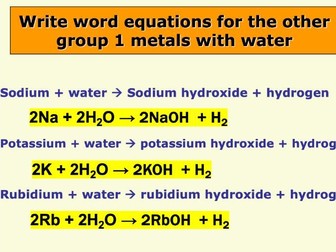
A detailed 18 slide powerpoint on the Reactions of Group 1 Metals with water, oxygen and chlorine. Includes word and balanced chemical equations for students to practise independently and then self-assess. Suggested to be done with a teacher demonstration of the reactions for students to note down their observations. Includes past exam questions with answers which could be done as homework (worksheet provided) or as part of the lesson for students to develop their exam technique.
Development of the periodic table pptQuick View
DrEllie15

Development of the periodic table ppt

(0)
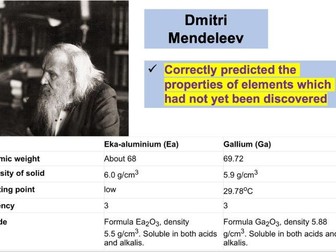
A detailed 19 slide powerpoint designed for a typical KS3 chemistry 1 hour lesson on The Development of the Periodic Table. The lesson powerpoint gives a detailed explanation of how Dalton, Newlands and then Mendeleev developed the periodic table and why Mendeleev’s table was so widely accepted. The resource also includes a worksheet for students to answer and then peer assess past exam questions on this content.
Giant covalent structures KS3 powerpointQuick View
DrEllie15

Giant covalent structures KS3 powerpoint

(0)
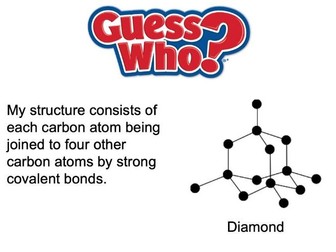
A detailed 26 slide powerpoint on giant covalent structures typically to be used in a 1 hour KS3 chemistry lesson. Includes explanations on the structure, bonding and properties of diamond, graphite, graphene and silicon dioxide. Includes 2 lesson worksheets for students to make notes and answer past exam questions. Finishes with an engaging ‘Guess who’ activity for students to consolidate their learning. This resource would be typically used across a 1 hour lesson.