Elements of Music: A closer look at pitchQuick View
mrs_paton_music

Elements of Music: A closer look at pitch

(0)
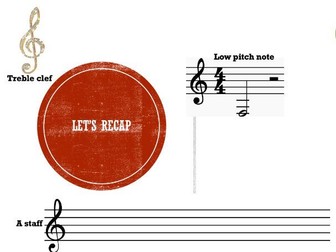
Slides detailing the features of pitch in clear, simple language. Suitable for KS3, KS4, KS5 and EAL students. Includes: simple definition of pitch, how we measure pitch, how we write pitch (using clefs and staff notation), 1 slide on identifying high / low sounds, 1 slide on identifying high / low sounding instruments, 1 slide with listening examples. Final slide has 10 questions for students to answer, based on information from the previous slides.
Orchestral String FamilyQuick View
mrs_paton_music

Orchestral String Family

(0)
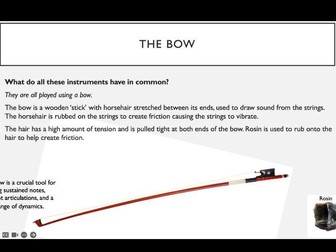
Teaching slides describing the main features of the orchestral string family: violin, viola, cello, double bass and harp. Uses simple and clear language. Includes a slide about the bow, a slide listing a variety of string playing techniques (pizzicato, col legno, tremolo etc) and an additional slide at the end with 12 quiz-style questions.
What Interval Is This?Quick View
mrs_paton_music

What Interval Is This?

(0)
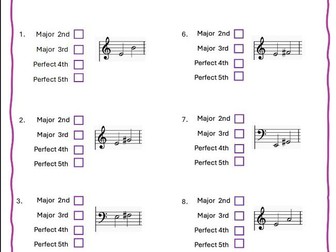
Identify melodic intervals (Beginner / Intermediate level) Identify Major 2nd, Major 3rd, Perfect 4th or Perfect 5th by listening and/or reading. All intervals are ascending. All intervals start on the Tonic E. Treble and bass clef. Audio Included. Suitable for GCSE / AS / A level exam preparation.
Melodic Dictation.1Quick View
mrs_paton_music

Melodic Dictation.1

(0)
Melodic dictation: complete the treble clef melodies. Audio included. 10 different melodies to complete, all 4/4 or 3/4 time. Variety of keys (major and minor up to 3 sharps /flats) Differentiated worksheets for different abilities: Complete the melodies (rhythm given) Complete the melodies and rhythm (on a blank stave) Original score included for live playing / checking answers. Suitable for GCSE / AS / A Level exam training and for instrumental students practicing aural skills.
Modulation - Which key has the music modulated to?Quick View
mrs_paton_music

Modulation - Which key has the music modulated to?

(0)
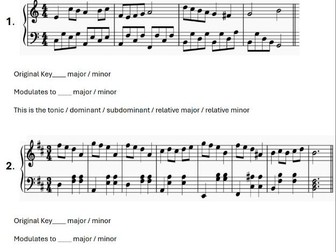
Modulation activity Differentiated for 3 difficulty levels. Students examine the grand staff notation and identify the original key followed by the new key which the music modulates to. Further challenge sheet includes naming chords. Keys used are up to 3 sharps or 3 flats. Suitable for GCSE / AS / A Level students and students working on practical music theory (Grade 3+).
Label the treble clef notes: Lines and SpacesQuick View
mrs_paton_music

Label the treble clef notes: Lines and Spaces

(0)
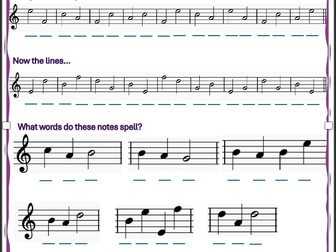
Label the treble clef notes - identify notes on all lines and spaces (E4-F5) Decode and spell out the words written in treble clef notation. Suitable for beginner instrumentalists or anyone learning to read treble clef.
How Many?Quick View
mrs_paton_music

How Many?

(0)
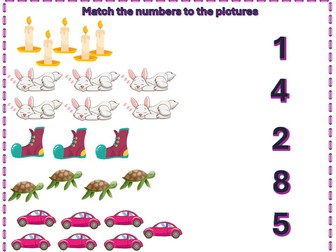
How many ? Count to 10 Match the numbers to the pictures How many? Add the totals