AQA Geography - urban decline in Central Business Districts (CBDs)Quick View
MsWillowDT

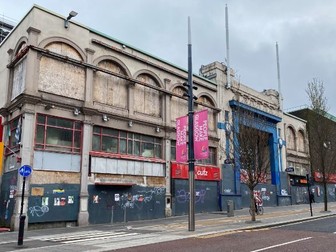
AQA Geography - urban decline in Central Business Districts (CBDs)

(0)
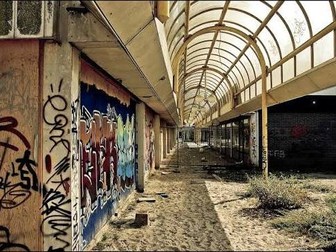
This PowerPoint lesson explores urban decline in Central Business Districts (CBDs) and the strategies cities use to regenerate them. Pupils recap the causes of CBD decline—including loss of primary industry, changing retail habits, and suburbanisation—before analysing the social, environmental, and economic impacts of decline in UK cities. The lesson includes structured activities where students categorise and rank these impacts, justify their reasoning, and build chains of cause-and-effect thinking, helping them develop evaluative geographical skills. The resource then moves toward solutions used by cities to regenerate CBDs, encouraging pupils to evaluate how urban areas “fight back” through redevelopment, regeneration strategies, and changes in urban planning. The activities mirror the analytical and evaluative skills required in GCSE Geography specifications (particularly AQA’s “Urban Issues and Challenges” topic), where students must explain causes of urban change, assess impacts on cities, and evaluate the effectiveness of regeneration strategies. This makes the lesson suitable for Key Stage 4 geography revision, urban studies units, or exam-skills practice focused on urban regeneration. Resources and worksheets included

What Happens After Year 11?Quick View
MsWillowDT

What Happens After Year 11?

(0)
Post-16 Pathways Explained: What Happens After Year 11? Description (for educational resources website): This clear and engaging PowerPoint lesson helps students understand their Post-16 education and training options after Year 11. It explains the legal requirement to remain in education or training until age 18 and introduces key pathways including A Levels, BTEC/T Levels, apprenticeships, and vocational college courses. Pupils also learn the difference between Level 2 and Level 3 qualifications, what college life is like, and how the application process works. The lesson includes knowledge checks and structured explanations designed to make an often confusing stage of education simple and accessible for learners. The resource also includes an accompanying worksheet that guides pupils through planning their own potential pathway, exploring future careers, and reflecting on which post-16 route may suit them best. With built-in recall tasks, understanding checks, and a structured demonstration activity, this resource works well for PSHE, careers education, tutor time, or GCSE/ducation development topics where progression and life opportunities are explored.
KS3 DT - Designing a Christmas Card.Quick View
MsWillowDT

KS3 DT - Designing a Christmas Card.

(0)
Linking to a CAD skills based lesson, this resource asks pupils to use knowledge of design software (in this case, Photopea, but applicable to any design software) to generate a Christmas Card. A fast, easy lesson that can be used close to Christmas, when normal lessons are expected to continue but you are ready for the break. DT teachers, please explore my other resources, they are effective and used by hundreds of other teachers across the UK. Please note that images in this resource are not mine and I do not claim ownership of them
AQA GCSE Geography - CBD and Urban Decline.Quick View
MsWillowDT

AQA GCSE Geography - CBD and Urban Decline.

(0)
NOTE - THE IMAGES IN THIS PURCHASE ARE NOT MY OWN AND I DO NOT CLAIM ANY OWNERSHIP OF THEM. This purchase focuses on CBDs and urban decline. The presentation uses Kingston upon Hull as a case study because of the dramatic changes that it has undertaken in the last century, with rapid change in the last 25 years. The purchase includes an in depth powerpoint with ohased, colour coded success criteria, a donut diagram, an information task on CBD decline and an urban decline scaffold sheet. An in depth, high quality lesson that can be used as a standalone lesson, cover work, or part of a wider unit of work. Buy it! You won’t be sorry
AQA GCSE Geography - Emergency AidQuick View
MsWillowDT

AQA GCSE Geography - Emergency Aid

(0)
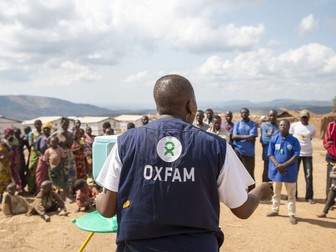
A comprehensive PowerPoint that allows pupils to develop an in depth understanding of the advantages of emergency aid and why it works. The presentation uses the ebola outbreak of 2014 as its case study, and Oxfams response to it. The presentation begins with key vocabulary, uses informative YouTube clips as sources material, followed by increase challenge questions. A powerful resource that is highly effective in the teaching of Emergency Aid as outlined in the course specification
AQA GCSE Geography - Long Term AidQuick View
MsWillowDT

AQA GCSE Geography - Long Term Aid

(0)
THE IMAGES IN THIS PRESENTATION ARE NOT MINE, I DO NOT CLAIM THAT THEY ARE. ALL OTHER CONTENT IS MINE. A comprehensive PowerPoint that focuses on Long Term Aid, using Goat Aid and water Aid as case studies. The powerpoint includes key vocabulary and increase challenge questions. Supporting documents are included: Exam Question Scaffold, Goat Aid fact sheet, Water Aid fact sheet, Info powerpoint about both Water Aid and Goat Aid. A very successful resource that can be used as a whole lesson, or as cover work
AQA GCSE Geography - Trade, Aid, and Inequality: The Global Balancing ActQuick View
MsWillowDT

AQA GCSE Geography - Trade, Aid, and Inequality: The Global Balancing Act

(0)
THE IMAGES USED IN THIS RESOURCE ARE SOURCED FROM THE INTERNET, I DO NOT CLAIM OWNERSHIP OF THEM. ALL OTHER CONTENT IS MINE. Trade, Aid, and Inequality: The Global Balancing Act This PowerPoint brings the international trade and development series to life with a focus on the human side of global economics. Students explore how aid, investment, and trade relationships can either close or widen the gap between rich and poor nations. The lesson examines the effectiveness of foreign aid, the role of multinational corporations, and the challenges developing countries face in achieving fair growth. Filled with striking visuals, accessible explanations, and discussion prompts, this resource helps GCSE and KS4 learners connect global trade theory to real-world issues of poverty, sustainability, and justice. The bundle includes a comprehensive PowerPoint, a question sheet (two versions, with and without answers) that relate to the video link, and a scaffold question sheet
AQA GCSE Geography - International Trade and DevelopmentQuick View
MsWillowDT

AQA GCSE Geography - International Trade and Development

(0)
THE IMAGES USED IN THIS RESOURCE ARE SOURCED FROM THE INTERNET, I DO NOT CLAIM OWNERSHIP OF THEM. ALL OTHER CONTENT IS MINE. AQA GCSE Geography - International Trade and Development This PowerPoint introduces students to the fundamentals of international trade and global development. It explains key concepts such as imports, exports, trade balance, and the role of global organisations in shaping world economies. The lesson explores how trade influences living standards, economic growth, and inequality between countries. Designed for classroom use, it includes engaging visuals, clear explanations, and structured tasks to support student understanding. Perfect for GCSE or introductory-level economics and geography lessons. The bundle includes a comprehensive PowerPoint, scaffold sheet for describing trade and a ategorisation sheet.
AQA GCSE Geography - Global Trade: The Real-World Impacts of DevelopmentQuick View
MsWillowDT

AQA GCSE Geography - Global Trade: The Real-World Impacts of Development

(0)
THE IMAGES USED IN THIS RESOURCE ARE SOURCED FROM THE INTERNET, I DO NOT CLAIM OWNERSHIP OF THEM. ALL OTHER CONTENT IS MINE. Global Trade: The Real-World Impacts of Development This PowerPoint dives deep into the complex world of global trade and development, showing students exactly how economics shapes our interconnected world. It unpacks concepts such as tariffs, trade blocs, and fair trade, while analysing the winners and losers of globalisation. Through case studies and real-world examples, learners explore how trade policies affect jobs, inequality, and sustainability in developing and developed nations alike. Packed with visuals, discussion prompts, and student-friendly explanations, this resource makes global economics accessible and engaging for GCSE and KS4 learners. The bundle includes a comprehensive PowerPoint, aGhana question sheet, a scaffold question sheet and an NIC/trade sheet.
AQA English Literature - An Inspector Calls BundleQuick View
MsWillowDT

AQA English Literature - An Inspector Calls Bundle

(0)
THE IMAGES USED IN THIS RESOURCE ARE SOURCED FROM THE INTERNET, I DO NOT CLAIM OWNERSHIP OF THEM. ALL OTHER CONTENT IS MINE. This complete An Inspector Calls teaching bundle gives you everything you need to guide your students confidently through the entire play, lesson by lesson. Each of the twelve lessons comes with a beautifully structured PowerPoint and an accompanying worksheet, designed to build knowledge, encourage engagement, and develop analytical skills. The sequence follows the play in full chronological order — from the opening dinner scene to Priestley’s powerful final message — so every key theme, character, and technique is explored in depth. All materials are classroom-ready, visually engaging, and written in accessible language to support learners of all abilities. Whether you’re introducing the play for the first time or refreshing your existing scheme, this bundle delivers a complete, polished, and time-saving solution for teaching one of the most compelling texts in the GCSE English Literature course. The bundle structure is: Lesson 1 – Introduction to An Inspector Calls • PowerPoint • Worksheet Lesson 2 – The Birling Family • PowerPoint • Worksheet Lesson 3 – Arrival of the Inspector • PowerPoint • Worksheet Lesson 4 – Sheila’s Development • PowerPoint • Worksheet Lesson 5 – Gerald’s Involvement • PowerPoint • Worksheet Lesson 6 – Mrs Birling and Social Responsibility • PowerPoint • Worksheet Lesson 7 – Eric’s Secrets and the Family Dynamic • PowerPoint • Worksheet Lesson 8 – Eva Smith’s Role and Absence • PowerPoint • Worksheet Lesson 9 – Themes: Responsibility and Guilt • PowerPoint • Worksheet Lesson 10 – Dramatic Techniques and Structure • PowerPoint • Worksheet Lesson 11 – Exploring Priestley’s Message • PowerPoint • Worksheet Lesson 12 – Revision and Assessment Preparation • PowerPoint • Worksheet
AQA GCSE Geography - Coca Cola, A multinational companyQuick View
MsWillowDT

AQA GCSE Geography - Coca Cola, A multinational company

(0)
THE IMAGES USED IN THIS RESOURCE ARE SOURCED FROM THE INTERNET, I DO NOT CLAIM OWNERSHIP OF THEM. ALL OTHER CONTENT IS MINE. This ready-to-teach PowerPoint lesson explores the impact of multinational companies through the case study of Coca-Cola in India. It guides students to understand and apply the concept of the multiplier effect, analyse social, economic, environmental, and political impacts, and evaluate whether global corporations bring more benefits or disadvantages to developing countries. Featuring structured “Must–Should–Could” differentiation, exam-style questions with mark schemes, interactive video tasks, and peer-assessment plenaries, this resource helps students build skills for 6-mark GCSE Geography evaluation questions while developing their understanding of how globalisation shapes emerging economies. This purchase includes the powerpoint, card sort, worksheet and scaffold support sheet Please investigate the rest of my resource
AQA GCSE Geography - Impacts of globalisation and MNCs in the UKQuick View
MsWillowDT

AQA GCSE Geography - Impacts of globalisation and MNCs in the UK

(0)
THE IMAGES USED IN THIS RESOURCE ARE SOURCED FROM THE INTERNET, I DO NOT CLAIM OWNERSHIP OF THEM. ALL OTHER CONTENT IS MINE. This engaging PowerPoint lesson examines the impacts of globalisation and multinational companies within the UK, using real-world examples such as TATA Steel in Scunthorpe to explore economic change, regional inequality, and internal migration. Students learn to describe UK population distribution, explain why people move to London and the South East, and investigate how MNCs affect jobs, communities, and industries. With scaffolded “Must–Should–Could” tasks, peer assessment activities, and exam-style questions, this resource helps learners build geographical understanding of the North–South divide and the challenges globalisation creates for different parts of the country. The purchase includes the powerpoint itself, a starter task, related newspaper article, helpsheet, sentence starters and a scaffold
AQA GCSE Geography - Multi National Companies - NikeQuick View
MsWillowDT

AQA GCSE Geography - Multi National Companies - Nike

(0)
This purchase includes a comprehensive PowerPoint, worksheet and all linked documets/maps. Lesson 4 – Nike: A Multinational Company (Part 1) This engaging presentation explores how Nike operates as a global brand and why multinational companies (MNCs) often base their manufacturing in newly industrialising countries (NICs) such as Vietnam. It introduces key terms like “MNC” and “NIC,” helping learners understand globalisation through the real-world example of Nike. Students examine where Nike’s products are made, why production is outsourced, and the impact this has on people, the economy, and the environment in host countries. The lesson blends map-based enquiry with case study analysis, guiding pupils to evaluate whether MNCs like Nike bring more benefits or harm to developing nations.
AQA GCSE Geography - (Lesson 2)Multinational Companies - Nike part 2Quick View
MsWillowDT

AQA GCSE Geography - (Lesson 2)Multinational Companies - Nike part 2

(0)
THE IMAGES USED IN THIS RESOURCE ARE SOURCED FROM THE INTERNET, I DO NOT CLAIM OWNERSHIP OF THEM. ALL OTHER CONTENT IS MINE. This lesson includes a comprehensive PowerPoint, linked worksheet, starter, YouTube link to the included video and a helper scaffold This PowerPoint explores Nike as a multinational company (MNC) and examines how global businesses like Nike impact the countries where they operate. It begins with a recap on what MNCs are and key facts about Nike’s operations, such as the number of countries it trades in and why Vietnam became its main production base. Pupils are asked to think about who works in Nike’s factories and why. The main activity involves comparing the advantages and disadvantages of MNCs for both the host country (like Vietnam) and the company itself, using specific examples from Nike. The lesson then introduces the concept of the “multiplier effect,” explaining how investment from companies such as Nike can create wider economic growth. Finally, pupils review what they’ve learned through short written and reflective tasks, including defining and evaluating the multiplier effect and summarising their understanding in a short “tweet.”
AQA GCSE DT - Timber Joining MethodsQuick View
MsWillowDT

AQA GCSE DT - Timber Joining Methods

(0)
THE IMAGES USED IN THIS RESOURCE ARE SOURCED FROM THE INTERNET, I DO NOT CLAIM OWNERSHIP OF THEM. ALL OTHER CONTENT IS MINE. A highly effective worksheet that allows Key Stage 4 pupils to fully investigate key elements of Design & Technology. This resource focuses on a variety of methods of how timber can be joined in construction methods. In this case, the main focus is Butt Joints, Mitre Joints and Half Lap Joints This resource can be used at the heart of a full lesson, or used as standalone cover work. Please take a moment to look at other resources that i am selling through TES, I can help you to enhance your teaching of DT with my high quality materials. I will be selling this worksheet alongside several others as a bundle, which is targeted towards individual year groups. More resources, less cost.
AQA GCSE DT - Using the SCAMPER method to develop design ideas.Quick View
MsWillowDT

AQA GCSE DT - Using the SCAMPER method to develop design ideas.

(0)
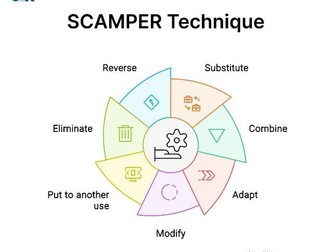
THE IMAGES USED IN THIS RESOURCE ARE SOURCED FROM THE INTERNET, I DO NOT CLAIM OWNERSHIP OF THEM. ALL OTHER CONTENT IS MINE. A highly effective worksheet that allows Key Stage 4 pupils to fully investigate key elements of Design & Technology. This resource focuses on using the SCAMPER (substitute, combine, adapt, modify, put to another use, eliminate, reveesemethod to develop different design concepts. This resource can be used at the heart of a full lesson, or used as standalone cover work. Please take a moment to look at other resources that i am selling through TES, I can help you to enhance your teaching of DT with my high quality materials. I will be selling this worksheet alongside several others as a bundle, which is targeted towards individual year groups. More resources, less cost.
AQA GCSE DT - The environment in DT, finite and non-finite resources.Quick View
MsWillowDT

AQA GCSE DT - The environment in DT, finite and non-finite resources.

(0)
THE IMAGES USED IN THIS RESOURCE ARE SOURCED FROM THE INTERNET, I DO NOT CLAIM OWNERSHIP OF THEM. ALL OTHER CONTENT IS MINE. A highly effective worksheet that allows Key Stage 4 pupils to fully investigate key elements of Design & Technology. This resource focuses on The Environment, Global Warming. Emissions, Finite and Non-Finite resources. This resource can be used at the heart of a full lesson, or used as standalone cover work. Please take a moment to look at other resources that i am selling through TES, I can help you to enhance your teaching of DT with my high quality materials. I will be selling this worksheet alongside several others as a bundle, which is targeted towards individual year groups. More resources, less cost.
AQA GCSE DT - Using VeneerQuick View
MsWillowDT

AQA GCSE DT - Using Veneer

(0)
THE IMAGES USED IN THIS RESOURCE ARE SOURCED FROM THE INTERNET, I DO NOT CLAIM OWNERSHIP OF THEM. ALL OTHER CONTENT IS MINE. A highly effective worksheet that allows Key Stage 4 pupils to fully investigate key elements of Design & Technology. This resource focuses on how and why veneers are used when working with timber. This resource can be used at the heart of a full lesson, or used as standalone cover work. Please take a moment to look at other resources that i am selling through TES, I can help you to enhance your teaching of DT with my high quality materials.
AQA GCSE DT - Year 9 DT Bundle - Excellent Value!Quick View
MsWillowDT

AQA GCSE DT - Year 9 DT Bundle - Excellent Value!

(0)
THE IMAGES USED IN THESE RESOURCES ARE SOURCED FROM THE INTERNET, I DO NOT CLAIM OWNERSHIP OF THEM. ALL OTHER CONTENT IS MINE. Please be aware that the individual sheets are already for sale on TES, this is a bundle that will save you cash by buying the full bundle. This is a highly effective worksheet bundle that allows year 9 pupils to fully investigate key elements of Design & Technology in preparation for GCSE. This bundle includes 27 full worksheets that teach pupils about the most challenging elements of AQA GCSE DT: KS3 DT - 2pt Perspective Drawing KS3 DT - Forces and Stresses KS3 DT - Levers and Linkages KS3 DT - People, Culture and Society KS3 DT - Physical and Working Properties of Materials KS3 DT - Production Techniques KS3 DT - Biomimicry KS3 DT - CAD CAM KS3 DT - Composite Materials KS3 DT - Electronics - Inputs and Outputs KS3 DT - Environmental Issues KS3 DT - Hand Stitching in Textiles KS3 DT - Isometric Drawing KS3 DT - Metals and Alloys KS3 DT - New and Emerging Technologies KS3 DT - One Point Perspective Part 1 KS3 DT - One Point Perspective Part 2 KS3 DT - Polymers KS3 DT - Rendering KS3 DT - Social and Moral Issues and Planned Obsolescence KS3 DT - Sources of Materials - Paper and Board KS3 DT - Sources of Materials - Thermoplastics KS3 DT - Sources of Materials Overview KS3 DT - Textiles Properties Part 1 KS3 DT - Textiles Properties Part 2 KS3 DT - Writing a Specification for a Chocolate Wrapper Design KS3 DT - Energy Storage Systems These resources can be used at the heart of a full lesson, or used as standalone cover work.
AQA GCSE DT - Named designers worksheet bundle.Quick View
MsWillowDT

AQA GCSE DT - Named designers worksheet bundle.

(0)
THE IMAGES USED IN THIS RESOURCE ARE SOURCED FROM THE INTERNET, I DO NOT CLAIM OWNERSHIP OF THEM. ALL OTHER CONTENT IS MINE. A highly effective bundle of five worksheets that allows Key Stage 4 pupils to fully investigate designers named in the course specification, using the ACCESS FM method in four sheets to analyse some of their most prominent works. KS3 DT - ACCESS FM Marcel Breuer - Wassily Chair KS3 DT - ACCESS FM Mary Quant KS3 DT - ACCESS FM Rennie Mackintosh - Argyle Chair KS3 DT - ACCESS FM William Morris KS3 DT - Harry Beck Thes resources can be used at the heart of a full lesson, or used as standalone cover work. Please take a moment to look at other resources that i am selling through TES, I can help you to enhance your teaching of DT with my high quality materials.
AQA GCSE Geography - Development IndicatorsQuick View
MsWillowDT

AQA GCSE Geography - Development Indicators

(0)
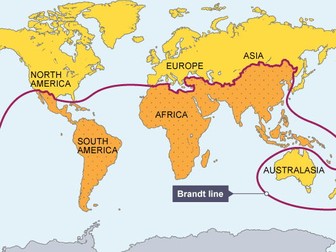
THE IMAGES USED IN THIS RESOURCE ARE SOURCED FROM THE INTERNET, I DO NOT CLAIM OWNERSHIP OF THEM. ALL OTHER CONTENT IS MINE. This resource is a powerpoint with accompanying card sort and worksheet. This lesson introduces pupils to the concept of development and how it is measured across the world. It explains what development means, explores economic and social indicators (such as wealth, healthcare, education, and equality), and helps pupils compare countries in the global North and South. Pupils learn how multiple indicators, including the Human Development Index (HDI), are used to assess quality of life, and they discuss why older models like the Brandt Line are no longer fully accurate today. I will be selling this worksheet alongside several others as a bundle, which is targeted towards individual year groups. More resources, less cost.