Coaching in Teaching: A CPD Course for Middle LeadersQuick View
binarybrilliance101

Coaching in Teaching: A CPD Course for Middle Leaders

(0)
Coaching in Teaching: A Complete CPD Course for Middle Leaders Empower your teachers and develop a coaching culture with this evidence-based professional development resource. Designed for middle leaders, this complete CPD course explores the principles, models, and practical tools needed to implement effective coaching in schools. Grounded in leading research - including Kraft et al. (2018), EEF (2021), and Knight (2018) - this course provides everything you need to train staff, lead coaching conversations, and embed reflective practice across your team. The pack includes: Detailed guidance on the GROW, OSKAR, and Cognitive Coaching models Research summaries with Harvard-style bibliography Practical strategies for feedback, goal setting, and monitoring impact Professional, printable design ready for inset or CPD delivery Perfect for Heads of Department, Year Leaders, mentors, and CPD coordinators, this resource saves planning time while promoting a culture of trust, collaboration, and professional growth. Transform your team’s professional learning - and see the impact in the classroom. instructional coaching middle leader CPD teacher coaching resource professional development leadership training coaching culture in schools
GCSE Computer Science - Units of DataQuick View
binarybrilliance101

GCSE Computer Science - Units of Data

(0)
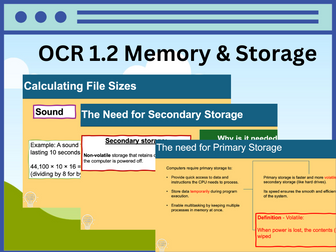
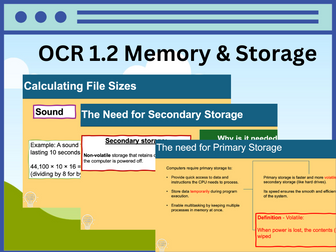
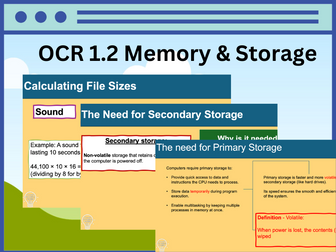
Covers OCR Unit 1.2.3 - Units of Data Storage Allows learners to: Understand why computers store data in binary format. Identify and define different units of data storage. Convert between different data storage units. Calculate file sizes for sound, image, and text files. Compare different storage devices and their capacities. Lesson slides and question worksheet + answers included
GCSE Computer Science - CPU ArchitectureQuick View
binarybrilliance101

GCSE Computer Science - CPU Architecture

(0)
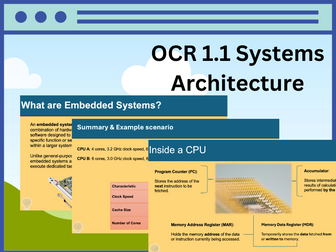
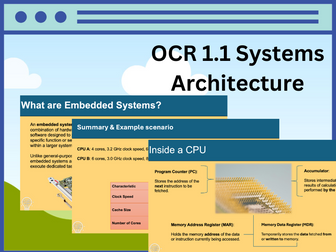
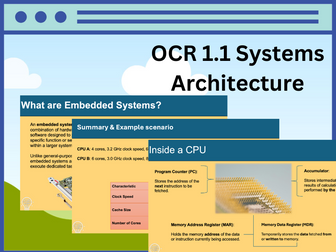
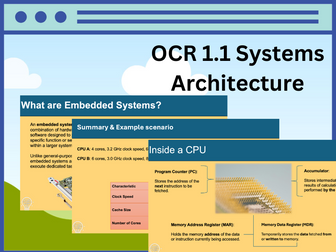
Covers OCR Unit 1.1.1 - Architecture of the CPU Allows learners to: Understand what occurs during the fetch, decode, and execute stages. Identify the roles of the ALU, Control Unit, Cache, and Registers during the cycle. Explain the purpose of specific registers and the distinction between storing data and addresses. Lesson slides and question worksheet + answers included
GCSE Computer Science - Primary StorageQuick View
binarybrilliance101

GCSE Computer Science - Primary Storage

(0)
Covers OCR Unit 1.2.1 - Primary Storage Allows learners to: Explain why primary storage is essential for a computer system. Identify the key differences between RAM and ROM. Understand the concept of virtual memory and explain how it works. Discuss the role of cache in improving system performance. Lesson slides and question worksheet + answers included
GCSE Computer Science - CPU PerformanceQuick View
binarybrilliance101

GCSE Computer Science - CPU Performance

(0)
Covers OCR Unit 1.1.2 - Performance of the CPU Allows learners to: Understand how the common characteristics of CPUs (clock speed, cache size, and number of cores) affect overall performance. Explore how changing these characteristics, individually or in combination, impacts system performance. Lesson slides and question worksheet + answers included
GCSE Computer Science - Secondary StorageQuick View
binarybrilliance101

GCSE Computer Science - Secondary Storage

(0)
Covers OCR Unit 1.2.2 - Secondary Storage Allows learners to: Understand why computers require secondary storage. Identify and classify secondary storage devices and media. Compare optical, magnetic, and solid-state storage in terms of their characteristics and applications. Lesson slides and question worksheet + answers included
GCSE Computer Science - Embedded SystemsQuick View
binarybrilliance101

GCSE Computer Science - Embedded Systems

(0)
Covers OCR Unit 1.1.3 - Embedded Systems Allows learners to: Understand what embedded systems are. Identify the typical characteristics of embedded systems. Recognise and describe examples of different embedded systems. **Lesson slides and question worksheet + answers included **
GCSE Computer Science Unit 1.1 Complete lessons and worksheetsQuick View
binarybrilliance101

GCSE Computer Science Unit 1.1 Complete lessons and worksheets

(0)
What’s included: Lesson slides and worksheets with answers for 1.1.1 Architecture of the CPU. 1.1.2 Factors that affect CPU performance. 1.1.3 Embedded systems. Complete unit 1.1 Systems Architecture of the OCR Computer Science GCSE. All lessons use a dyslexia friendly background colour and font to allow all students to engage. Lesson PPT’s have engaging animations and include worksheets for students and answers for teachers.
Binary to Decimal conversion lesson for KS3, Computer ScienceQuick View
binarybrilliance101

Binary to Decimal conversion lesson for KS3, Computer Science

(0)
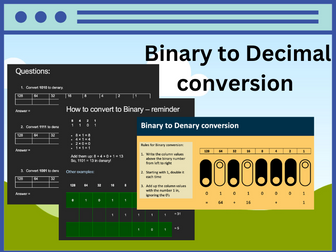
Contains: Lesson Powerpoint with engaing animations Auto marking question spreadseet (Excel) Alternative lesson worksheet (Word) & answers Binary to Denary/ Decimal conversion lesson aimed towards KS3. It uses a dyslexia friendly background colour and font to allow all students to engage. The auto marking spreadsheet has 26 questions (2 being examples) that lets your students know when their answers are correct or not! It is a locked spreadsheet so students cannot see the formulas that allow it to work. There is an alternative Word document containing 20 questions with a tbale to answer each question.