This detailed essay explores how various criminal justice systems promote desistance through the use of therapeutic jurisprudence frameworks, with a focus on countries within the EU and Commonwealth. It introduces key desistance theories—including age-graded theory, narrative-identity theory, and cognitive transformation theory—before examining how therapeutic jurisprudence supports rehabilitation. The essay is structured into clear sections, making it ideal for students studying criminology, criminal justice, or legal theory. Teachers can use this as an exemplar for essay structure, theory application, or comparative system analysis. A valuable resource for deepening understanding of desistance and reform-based justice approaches.
This comprehensive presentation offers an in-depth overview of the Key Stage 3 (KS3) Computing curriculum, tailored for teachers and trainee teachers looking to enhance their understanding of this vital subject. The resource is designed to bridge the gap between Key Stage 2 (KS2) and KS3, ensuring educators are well-equipped to guide students through the transition and set them up for success in GCSE-level computing.
Starting with a clear exploration of the KS2 Computing curriculum, the presentation covers the essential skills and concepts students need to grasp before advancing to KS3. By examining the foundations laid at KS2, teachers can better understand how these concepts feed into more complex ideas in KS3, ensuring continuity in students’ learning journeys.
The resource delves into the main concepts of KS3 Computing, including algorithms, programming, data representation, and the ethical implications of computing. It emphasizes the importance of building strong foundational knowledge in these areas to support students’ progression. As the presentation unfolds, it also highlights the advanced topics in KS3 that prepare students for the rigors of GCSE study, such as computer systems, networks, and computational thinking.
Practical and informative, this presentation provides educators with the tools to effectively support their students through this critical stage of learning. It equips teachers with strategies to ensure their students have a solid understanding of both the fundamental and advanced concepts required for successful GCSE outcomes.
Perfect for both new and experienced teachers, this resource offers a clear, structured guide to teaching KS3 Computing and making sure your students are ready for the next academic challenges in computing.
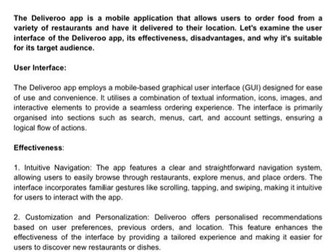
This four-page written resource provides a clear and structured analysis of the Deliveroo graphical user interface, focusing on its strengths and weaknesses. Designed to support students studying topics such as HCI, UI design, or system evaluation, the document models how to critically assess a real-world interface using relevant terminology and concepts. It offers a well-organized example that can be used to support lesson delivery, independent study, or exam preparation. Ideal for trainees, students, or teachers looking for quality written material to enhance understanding of GUI evaluation.
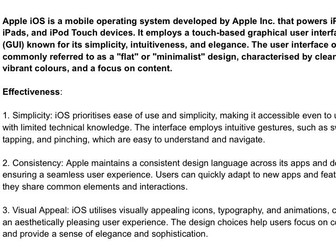
This two-page written resource offers a concise yet insightful analysis of the Apple iOS graphical user interface, evaluating its key strengths and weaknesses. Ideal for students exploring HCI, interface design, or system usability, the document uses relevant terminology to demonstrate how to critically assess a widely used operating system interface. This worked example is perfect for lesson support, revision, or as a model answer for coursework. It’s especially useful for helping learners understand how theoretical concepts apply to real-world technology in a clear, structured format.


 Quick View