Useful revision tool for students. Can also be used as an ongoing homework task during the initial teaching of the Anthology.
The grid provides an overview on the whole non-fiction section of the Edexcel iGCSE English Anthology, with space for students to find their own key quotations, and make their own notes on aspects of language use.
I have provided notes on the areas which students find more difficult to tackle, i.e. structural devices. This builds student confidence in writing about structure, using my notes.
For AQA GCSE English Literature.
A PowerPoint with the following:
an exam-style question (violence in ‘Romeo and Juliet’)
selected references and quotations from the play
teacher-modelled thesis statement
teacher-modelled conclusion
This resource would work well both in class, as a lead-in to timed essay practice, and as a remote learning task.
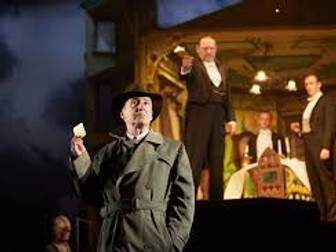
Aimed at encouraging Year 12 students to acquire the terminology they need to write about tragedies such as ‘A Streetcar Named Desire’. Also useful as a revision tool for Year 13 pupils.
This test could be administered in timed conditions, or done in pairs or small groups.
A good follow-up would be to fill in the features of tragedy grid, such as the one I will post on ‘A Streetcar Named Desire’. (Available for free on the TES Resources site.)
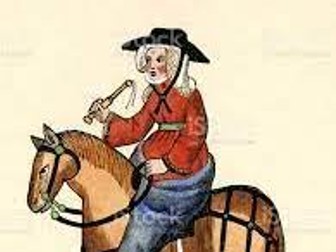
A range of extracts from ‘The Wife of Bath’s Tale’ with discussion prompts.
They could be used for group or paired work in the classroom, or perhaps as a series of short analytical homework tasks.
If you like this resource, check out my MODERN ENGLISH RE-TELLING OF THE TALE, which I am posting on the TES site.
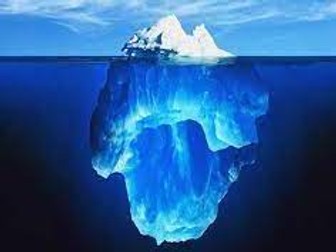
Useful visual representation of how to read texts in depth, identifying implicit meaning.
I have used this both as a poster for my classroom, and as a handout and PowerPoint slide.
This is based on Hemmingway’s idea of the text being like an iceberg, with its main meaning submerged beneath the surface.
It is very useful when teaching essay-writing skills to GCSE students, and high achieving Y9 groups. You can use it to help students to understand how to improve their work, particularly the nebulous idea of ‘depth’ in analytical writing.
Another way of using the diagram is to apply the concepts to exemplar essays or paragraphs, colour-coding the depth and detail of the answer. This really helps students to understand how to achieve at a higher level in English.
A Level discussion activity aimed at encouraging students to consider a range of genres, styles and tones.
Use this as a precursor to starting a prose study, or perhaps as a way of leading in to unseen prose preparation.
This could also be used as a jumping-off point for students’ own writing, such as the creative writing and re-creations elements of A Level English Language and Literature courses.
Of course, this could also be used to encourage students to read more widely. These titles will be available in most libraries, or perhaps online.
Detailed analysis of scene 3, to use as a model for A Level students in their study of the play. Most effective when used after class study of scenes 1 and 2, and some reading / awareness of critical perspectives on the play.
Can be set as a homework task (students annotate their texts), and as a model for their future note-making.
Also very useful for focus on critical terminology and vocabulary. Students can highlight / note down useful turns of phrase, etc., for use in future writing about the play.
I recommend using this alongside the EMC Study Guide to the play.
The aim of this lesson is to get students to focus on the context of the novel, and to understand how it relates to the story and Steinbeck’s aims and ideas. (See lesson outline for details.)
This works well as both an introduction to the novel (PowerPoint only), or as a revision tool, once the students have already studied the book.
A PowerPoint with a range of images that tell the story of America, from the Founding Fathers; the Declaration of Independence, the Roaring Twenties, and the Great Depression.
These images can be printed and enlarged (A3 size) and posted around the classroom. Groups of students then look at each image in turn, adding their thoughts / ideas / prior knowledge to each image. Class feedback, with teacher commentary on a select few (make sure you include the early images on the foundation of the American Dream, about which students tend to have less knowledge).
The second activity is a list of key quotations from the novel for students to analyse and discuss.
Included is an answer sheet, with my suggestions for each quotation. This could be useful to students as a revision tool, and they might also use these notes to add to their text annotations.
Aimed at iGCSE students who have read / watched the Simon Smith adaptation of the novel.
Focus: character analysis / interpreting key quotations.
Each grid provides students with the main character traits, and a key quotation. Students then have to fill in the rest of the grid to show how the writer shows each trait, and what can be deduced from the key quotation provided.
This resource comprises of the following photocopiable worksheets for students to use:
Character Study grid - blank
Character Study grid - Siobhan
Character Study grid - Ed
Character Study grid - Judy
Character Study grid - Christopher
For Edexcel A Level English Literature.
PowerPoints and worksheets on the following 5 poems:
‘An Easy Passage’
‘Chainsaw versus the Pampas Grass’
‘Eat Me’
‘The Gun’
‘Ode on a Grayson Perry Urn’
For more able pupils.
A plot summary of each Act, to display in the classroom when working through the play, during revision sessions, and to issue as revision resource.
A blank grid for students to fill in, which gives them an overview of the non-fiction texts from the Edexcel iGCSe Anthology.
Useful as you cover the texts in class (on-going homework task?), and as a revision resource when you have finished all the texts in class.


 Quick View