IB Biology: A1 Water; Worksheet 1 (1.1.1-1.1.4)Quick View
Curiosity_Lab

IB Biology: A1 Water; Worksheet 1 (1.1.1-1.1.4)

(0)
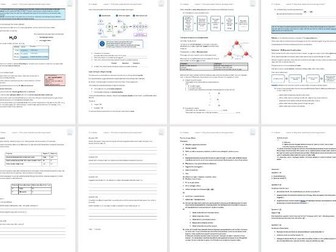
A comprehensive, student-friendly worksheet designed for the IB Biology first assessment 2025 syllabus, covering A1.1.1–A1.1.4: Water. Designed as an introduction to the IB Biology course, this resource begins with the foundational chemistry students need to understand the biological importance of water. Concepts are introduced progressively, allowing students to build connections between the molecular structure of water and its properties in living systems. The worksheet covers: A1.1.1 — Water as the medium for life Covalent bonding and valence electrons, including a student-friendly breakdown of the term covalent A1.1.2 — Polarity of water and hydrogen bonding Drawing and interpreting water molecules, partial charges and hydrogen bonds A1.1.3 — Cohesion, surface tension and transport of water under tension in xylem A1.1.4 — Adhesion and capillary action in soil and plant cell walls To conclude this resource includes a 20-minute IB-style application task to consolidate learning and develop exam skills. The resource is designed for approximately 50 minutes of classroom learning, followed by approximately 20 minutes of independent homework/application. Suitable for: IB Biology SL and HL students studying the shared A1.1 content.
IB Biology: Worksheet 2 A1: Water as a Solvent  (A1.1.5-A1.1.6) SL HLQuick View
Curiosity_Lab

IB Biology: Worksheet 2 A1: Water as a Solvent (A1.1.5-A1.1.6) SL HL

(0)
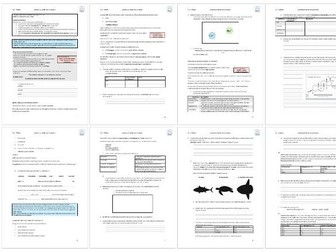
A comprehensive, student-friendly worksheet designed for the IB Biology syllabus, covering A1.1.5–A1.1.6: Water. This resource explores why water is essential as a solvent for life and how the physical properties of water influence organisms living in aquatic environments. Designed for students at the beginning of the IB Biology course, concepts are introduced through structured DARTs activities, biological examples, data analysis and unfamiliar applications, rather than extensive note-taking. Students explore: Water as a solvent and the meaning of solute, solvent and solution How the polarity of water allows ions and polar substances to dissolve Ion–dipole interactions and the orientation of water molecules around Na⁺ and Cl⁻ ions Hydrophilic and hydrophobic substances Solubility of biological molecules, including glucose, lipids and cholesterol The importance of aqueous environments for metabolism and transport Buoyancy and its effects on body support and size Viscosity, drag, streamlining and energy requirements for movement Thermal conductivity, heat loss and insulation Specific heat capacity and the thermal stability of aquatic environments Graphing and interpreting environmental temperature data Comparing adaptations of aquatic organisms using biological data The worksheet concludes with a consolidation activity in which students sequence cause-and-effect chains linking each physical property of water to its biological consequences. Students then apply their understanding in an extended data-based comparison of a black-throated loon and ringed seal. A separate 20-minute homework/application task uses the unfamiliar context of an Antarctic icefish, requiring students to transfer their knowledge of solvent properties, viscosity, buoyancy and specific heat capacity to a new biological situation. The resource is designed for approximately 50 minutes of classroom learning plus a 20-minute homework task and includes a complete teacher answer guide. Suitable for: IB Biology SL and HL students studying the shared A1.1 Water content.
Introduction to science- KindergartenQuick View
Curiosity_Lab

Introduction to science- Kindergarten

(0)
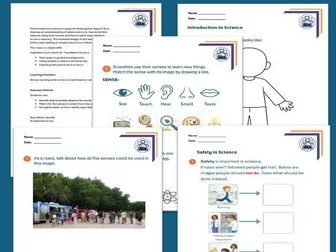
This introductory resource supports kindergarten (ages 4-6) to develop an understanding of what science is, how scientists observe using their senses and how to participate safely in science learning. The intended design of this worksheet is student’s first exposure before participating in simple practical activities. This resource aligns with: Australian Curriculum v9- Foundation Science Participate in guided investigations Using senses to observe and describe Exploring safe practices in science
Science Week 2026 Scavenger HuntQuick View
Curiosity_Lab

Science Week 2026 Scavenger Hunt

(0)
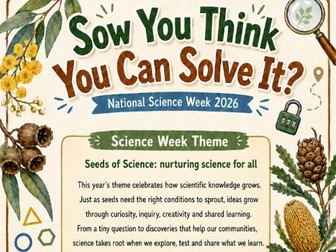
Sow You Think You Can Solve It? – Australian Seed Scavenger Hunt Celebrate National Science Week 2026: Seeds of Science – nurturing science for all with this engaging Australian seed-themed scavenger hunt. Students work their way through a sequence of 8 riddles, each leading them to a different Australian seed. Once they identify the correct seed, they answer three multiple-choice science questions to generate a 3-digit code. Students then use the code key to reveal a shape clue, which directs them to the location of their next riddle. To complete the challenge, students must collect all eight shapes in the correct order and crack the final sequence. The activity explores a range of fascinating Australian plants and seed adaptations. Designed as a fun, collaborative Science Week activity, this resource encourages students to use observation, problem-solving, scientific knowledge and teamwork rather than simply following a traditional scavenger hunt.