Conflict Resolution & I-Messages SEL Story + Activities | The Bench in the MiddlQuick View
Alina_Holovata

Conflict Resolution & I-Messages SEL Story + Activities | The Bench in the Middl

(0)
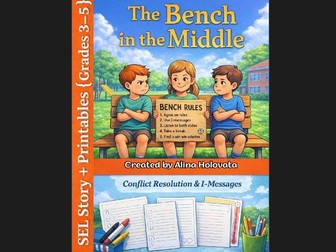
About this resource The Bench in the Middle is a realistic SEL story about a simple wooden bench in the middle of the playground that accidentally becomes the “conflict bench.” When a soccer game argument hurts two friends, a classmate named Mira helps them slow down, share their feelings with I-messages, and create new Bench Rules for everyone. This story-based resource helps students see themselves in everyday conflicts and gives them concrete tools to solve problems calmly: I-messages, listening to both sides, taking a pause, and looking for win-win solutions. It’s perfect for Grades 3–5 and can be used during SEL lessons, morning meetings, small-group counseling, or reading/ELA centers. What’s included All pages are in English and ready to print: Storybook – The Bench in the Middle Comprehension & Reading Activities Story Map SEL Reflection Sheet – The Bench in the Middle My Conflict Resolution Toolkit – Graphic Organizer Writing Prompt – A Conflict I Can Solve Calmly Role-Play Cards – The Bench in the Middl Bonus Activity – Bench Rules: Sort & Fix Bonus Activity – Feelings Thermometer: When to Pause? Coloring Pages Teacher Guide Skills and SEL focus Students will practice: identifying conflict situations and “clues” (body language, tone, silence), building empathy and perspective-taking, using I-messages instead of blame, listening to both sides and looking for win-win solutions, writing about real or imagined conflicts using structure and details, reflecting on their own emotional “thermometer” and when they need a pause. This resource is a great fit for: SEL lessons / advisory / morning meeting School counseling sessions Back-to-school expectations & playground rules Friendship units Conflict resolution / problem-solving themes Prep & printing Print in black and white – ink-friendly. You can: staple the story pages as a mini-book; use individual worksheets as stations; project pages for whole-class modeling; place coloring pages in your calm-down or SEL center. Recommended grade levels Best for: Grades 3–5 Also adaptable for: high 2nd grade (with support) 6th grade in need of concrete SEL tools and simpler reading.
Jealousy & Comparison SEL Story + ActivitiesQuick View
Alina_Holovata

Jealousy & Comparison SEL Story + Activities

(0)
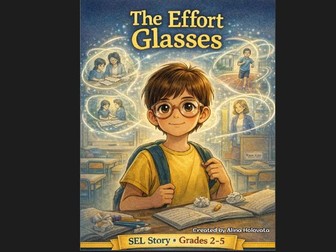
The Effort Glasses SEL Story + Printables | Jealousy & Comparison with Others, Gratitude, Personal Strengths Description: This resource includes a printable SEL story + ready-to-print worksheets that help students notice jealousy, stop unhelpful comparisons, and shift toward gratitude and personal strengths. In The Effort Glasses, Elias keeps comparing his work to others and feels that heavy “not-good-enough” feeling. When a caring teacher introduces a pair of “effort glasses,” Elias begins to see something he never noticed before: the practice, mistakes, and brave tries happening behind every “perfect” result. As he learns to name jealousy, reframe comparison, and focus on growth, Elias discovers what he can be proud of in himself. Perfect for classroom read-alouds, counseling lessons, morning meetings, and SEL small groups—this pack builds emotional awareness, a healthier mindset, and kinder self-talk. SEL Skills & Themes: Jealousy & Comparison with Others (recognizing triggers, reframing thoughts) Gratitude (noticing what’s going well, appreciating effort and support) Personal Strengths (identifying “I can” skills, building confidence) What’s Included: Printable storybook: The Effort Glasses Comprehension Questions (open-ended) Reading Check activities (mix of quick-response formats) Vocabulary practice Character Feelings & Body Clues reflection Gratitude page (what I have / who helps me / what I’m proud of) Personal Strengths mini-poster + student reflection page Goal-setting “Small Step” page Role-Play Cards (practice helpful self-talk and supportive responses) Teacher Guide (objectives, discussion prompts, lesson flow ideas) Coloring/early finisher pages Teacher-Friendly Uses: 30–45 minute SEL lesson or 2–3 day mini-unit Morning meeting + journal reflection Counseling office / behavior support plans Sub plans or calm corner follow-up work Grade Range: Grades 2–5 (also works well for older students who benefit from simple, direct SEL language) Why teachers love it: Students connect to Elias right away, discussions feel real (not scripted), and the printables make it easy to turn one story into meaningful SEL practice—without extra prep.
Self-regulation • Calm body • Breathing strategies My Magic Breath in My PocketQuick View
Alina_Holovata

Self-regulation • Calm body • Breathing strategies My Magic Breath in My Pocket

(0)
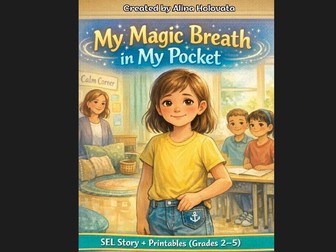
Self-regulation • Calm body • Breathing strategies My Magic Breath in My Pocket is an SEL story and printables pack that helps students notice their body clues, name big feelings, and use simple breathing strategies to feel steady again. When Sofia is called on to read aloud, her heart “gallops,” her hands get tight, and the words on the page start to float. With a caring teacher, a Calm Corner, and a “pocket breath” she can carry anywhere, Sofia learns to take one small brave step instead of letting nervous feelings be the boss. This resource weaves self-regulation, calm body tools, and explicit breathing practice into meaningful reading, writing, and discussion activities for Grades 2–5. What’s included Printable storybook – “My Magic Breath in My Pocket” Short, relatable SEL story about feeling nervous reading aloud, using the Calm Corner, and practicing a simple pocket breath (pause → in for 3 → out for 4). Comprehension Questions (12 open-ended) Focus on setting, body clues, big feelings, Calm Corner, pocket breath steps, and how Sofia changes from beginning to end. Reading Check page True/False, multiple choice, and sequence of events to quickly assess understanding. Story Map graphic organizer Characters, setting, problem, key events, solution, and theme/lesson. SEL Reflection Sheet – My Magic Breath in My Pocket Students choose a powerful moment, list Sofia’s body clues, think about adult support, and write about big feelings at school using a student-friendly format. My Calm Toolkit – Notice–Name–Do–Say–Next Time A step-by-step self-regulation framework that guides students to notice body clues, name a feeling, choose a calm strategy (pocket breath, Calm Corner, ask for help, small step), use kind self-talk, and make a simple “next time” plan. Writing Prompt – “My Pocket Breath Story” Narrative / reflective writing page with lines, word bank, and checklist so students can describe a real or imagined time they felt nervous and used a calm strategy. Role-Play Cards Four scenarios (being called on to read, Calm Corner coach, hearing a whisper, choosing a small step) to practice calm language, asking for a break, and trying again. Bonus activities “My Pocket Anchor” cut-and-write page “Pocket Breath Bookmark” to cut, color, and keep as a concrete reminder of the breathing steps and a small step goal. Coloring pages Line-art scenes of Sofia in class with her pocket anchor and sitting in the Calm Corner – perfect for calm centers, early finishers, or art + writing. Teacher Guide Detailed lesson objectives, SEL and ELA standards alignment, suggested pacing, step-by-step lesson plan, discussion questions, extension ideas, and assessment suggestions.
Impulse Control & Self-Regulation SEL Story + ActivitiesQuick View
Alina_Holovata

Impulse Control & Self-Regulation SEL Story + Activities

(0)
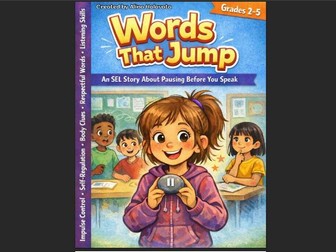
Words That Jump — Impulse Control & Blurting (STOP + One-Beat PAUSE) | SEL Story + Printables NO PREP – JUST PRINT AND GO! Help your students practice impulse control, listening without interrupting, and respectful classroom talk with this engaging SEL story + activity pack. In Words That Jump, Wendy’s ideas come fast—and sometimes her words jump out before she’s ready. Through relatable classroom moments (Morning Meeting, read-aloud, group work, lunch line), Wendy learns what an impulse is and how to use STOP + One-Beat PAUSE (Stop → Breathe → Observe → Proceed) to notice body clues, slow down, and choose better timing and kinder words. What this resource teaches (SEL + classroom skills) Students will learn to: understand what an impulse is and why blurting happens notice body clues before blurting/interruption (early warning signs) practice a simple STOP/PAUSE strategy + “One-Beat Pause” use respectful words to wait, take turns, and repair after interrupting build stronger Speaking & Listening habits during discussions SEL competencies supported: Self-Awareness, Self-Management, Social Awareness, Relationship Skills, Responsible Decision-Making. What’s Included Printable Storybook – Words That Jump (student pages with text + illustrations) Comprehension Questions (12 open-ended) Reading Check (True/False, Multiple Choice, Sequence) Story Map graphic organizer (with prompts) Feelings & SEL Vocabulary (word bank + practice) SEL Reflection Sheet (“My Words That Jump” + body clues + PAUSE plan + repair sentence) Writing Prompt: “Pause Power” (Letter to Wendy OR “What if?” rewrite) Role-Play Cards (4): “Practice the Pause” BONUS: “Pause Budget: Spend Your Words Wisely” (word coins decision activity) BONUS: “My Pause Remote” foldable (STOP/BREATHE/OBSERVE/PROCEED flaps) Coloring Pages (6) (line-art, no text) Teacher Guide (lesson flow, prompts, differentiation, extensions) Perfect for… students who blurt, interrupt, talk over others, or struggle with waiting their turn classroom community lessons, morning meeting, small groups, counseling/SEL blocks Grades 2–5 (upper elementary), including support for ADHD/impulsivity needs (great for practice, not punishment) Teacher Tip Pair this story with a small “pause object” (like a smooth stone) to make the strategy concrete—students love the Pause Pebble idea.
Resilience & Perseverance  SEL Story + Activities  The Oops GalleryQuick View
Alina_Holovata

Resilience & Perseverance SEL Story + Activities The Oops Gallery

(0)
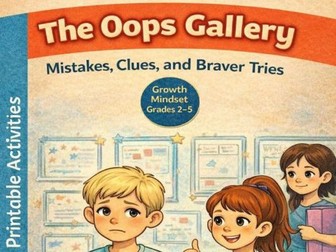
The Oops Gallery is an engaging SEL story + printables pack that helps students reframe mistakes as clues for learning. When Steve feels embarrassed about his “messy” first attempt, his class creates an Oops Gallery—a kind, supportive space where drafts and do-overs are celebrated. Students learn that mistakes aren’t the end… they’re part of the path. This resource is perfect for teaching growth mindset, perseverance, and healthy risk-taking in a kid-friendly, classroom-ready way for Grades 2–5. Skills students will practice Growth mindset language: mistakes → clues → next try Perseverance and resilience (trying again after “oops” moments) Self-reflection and positive self-talk Peer encouragement and respectful feedback Classroom community: creating a safe space to learn What’s included Printable SEL storybook: The Oops Gallery Comprehension Questions (open-ended) Reading Check page (varied formats) Vocabulary / Word Bank (growth mindset + feelings/learning words) Reflection Sheet: “My Learning Clues” (mistake → what I learned → next brave try) Role-Play Cards to practice supportive responses and “try-again” language Bonus Activities (low-prep, classroom-friendly extensions) Teacher Guide (suggested pacing, discussion prompts, and implementation ideas) Easy ways to use it Morning meeting / SEL block lesson Writing workshop: celebrating drafts and revisions Classroom community builder (back-to-school or midyear reset) After a tough assessment/project to normalize mistakes Small group counseling / intervention for perfectionism and fear of failure Teacher-friendly notes Print-and-go pages (great for centers, whole group, or independent work) Works well as a single lesson or a mini-unit