Cambridge iGCSE Economics - 4.1 Government Macroeconomic interventionQuick View
DrBruce

Cambridge iGCSE Economics - 4.1 Government Macroeconomic intervention

(0)
Save hours of planning with my purpose made premium teaching resources —designed by an experienced educator who understand what really works. All powerpoints are designed to fully cover the criteria within the up to date syllabus for the subject and help you engage students instantly while maintaining rigorous academic standards. Perfect for in-person, hybrid, or fully online learning, our resources are customizable, curriculum-aligned, and built to boost student confidence and results. Stop spending late nights creating materials from scratch and start focusing on what matters most — inspiring your students. This powerpoint is purposefully made for iGCSE Economics using the most recent Cambridge syllabus. It fully covers - 4.1 Government Macroeconomic intervention 4.1.1 Macroeconomic aims • the macroeconomic aims of government:– economic growth– full employment/low unemployment– stable prices/low inflation– balance of payments stability– redistribution of income– environmental sustainability • reasons behind the choice of aims and the criteria that governments may set for meeting each aim • possible conflicts between macroeconomic aims:– full employment and stable prices– economic growth and environmental sustainability– full employment and balance of payments stabiliy

Cambridge A Level Economics - 8.2  Equity and redistribution of income and wealthQuick View
DrBruce

Cambridge A Level Economics - 8.2 Equity and redistribution of income and wealth

(0)
Save hours of planning with my purpose made premium teaching resources —designed by an experienced educator who understand what really works. All powerpoints are designed to fully cover the criteria within the up to date syllabus for the subject and help you engage students instantly while maintaining rigorous academic standards. Perfect for in-person, hybrid, or fully online learning, our resources are customizable, curriculum-aligned, and built to boost student confidence and results. Stop spending late nights creating materials from scratch and start focusing on what matters most — inspiring your students. This powerpoint is purposefully made for A Level Economics using the most recent Cambridge syllabus. It fully covers - 8.2 Equity and redistribution of income and wealth 8.2.1 difference between equity and equality 8.2.2 difference between equity and efficiency 8.2.3 distinction between absolute poverty and relative poverty 8.2.4 the poverty trap 8.2.5 policies towards equity and equality, for example: • negative income tax • universal benefits and means-tested benefits • universal basic income
Cambridge A Level Economics - 11.1  Policies to correct disequilibrium in the balance of paymentsQuick View
DrBruce

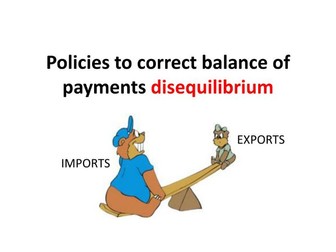
Cambridge A Level Economics - 11.1 Policies to correct disequilibrium in the balance of payments

(0)
Save hours of planning with my purpose made premium teaching resources —designed by an experienced educator who understand what really works. All powerpoints are designed to fully cover the criteria within the up to date syllabus for the subject and help you engage students instantly while maintaining rigorous academic standards. Perfect for in-person, hybrid, or fully online learning, our resources are customizable, curriculum-aligned, and built to boost student confidence and results. Stop spending late nights creating materials from scratch and start focusing on what matters most — inspiring your students. This powerpoint is purposefully made for A Level Economics using the most recent Cambridge syllabus. It fully covers - 11.1 Policies to correct disequilibrium in the balance of payments 11.1.1 components of the balance of payments accounts: current account, financial account and capital account 11.1.2 effect of fiscal, monetary, supply-side, protectionist and exchange rate policies on the balance of payments 11.1.3 difference between expenditure-switching and expenditure-reducing policies
Cambridge A Level Economics-10.3Effectiveness of policy options to meet all macroeconomic objectivesQuick View
DrBruce

Cambridge A Level Economics-10.3Effectiveness of policy options to meet all macroeconomic objectives

(0)
Save hours of planning with my purpose made premium teaching resources —designed by an experienced educator who understand what really works. All powerpoints are designed to fully cover the criteria within the up to date syllabus for the subject and help you engage students instantly while maintaining rigorous academic standards. Perfect for in-person, hybrid, or fully online learning, our resources are customizable, curriculum-aligned, and built to boost student confidence and results. Stop spending late nights creating materials from scratch and start focusing on what matters most — inspiring your students. This powerpoint is purposefully made for A Level Economics using the most recent Cambridge syllabus. It fully covers - 10.3 Effectiveness of policy options to meet all macroeconomic objectives 10.3.1 effectiveness of different policies in relation to different macroeconomic objectives: • fiscal policy including Laffer curve analysis • monetary policy • supply-side policy including market-based and interventionist policies • exchange rate policy • international trade policy 10.3.2 problems and conflicts arising from the outcome of these policies 10.3.3 existence of government failure in macroeconomic policies
Cambridge A Level Economics - 11.4 Characteristics of countries at different levels of developmentQuick View
DrBruce

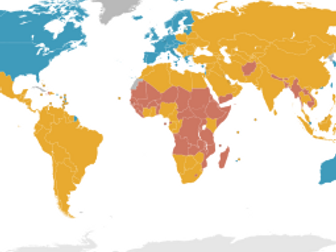
Cambridge A Level Economics - 11.4 Characteristics of countries at different levels of development

(0)
Save hours of planning with my purpose made premium teaching resources —designed by an experienced educator who understand what really works. All powerpoints are designed to fully cover the criteria within the up to date syllabus for the subject and help you engage students instantly while maintaining rigorous academic standards. Perfect for in-person, hybrid, or fully online learning, our resources are customizable, curriculum-aligned, and built to boost student confidence and results. Stop spending late nights creating materials from scratch and start focusing on what matters most — inspiring your students. This powerpoint is purposefully made for A Level Economics using the most recent Cambridge syllabus. It fully covers - 11.4 Characteristics of countries at different levels of development 11.4.1 population growth and structure: • measurement and causes of changes in birth rate, death rate, infant mortality and net migration • optimum population • level of urbanisation 11.4.2 income distribution: • calculation of Gini coefficient and Lorenz curve analysis 1.4.3 economic structure: • employment composition: primary, secondary and tertiary sectors • pattern of trade at different levels of development
Cambridge iGCSE Economics -4.2 Fiscal policyQuick View
DrBruce

Cambridge iGCSE Economics -4.2 Fiscal policy

(0)
Save hours of planning with my purpose made premium teaching resources —designed by an experienced educator who understand what really works. All powerpoints are designed to fully cover the criteria within the up to date syllabus for the subject and help you engage students instantly while maintaining rigorous academic standards. Perfect for in-person, hybrid, or fully online learning, our resources are customizable, curriculum-aligned, and built to boost student confidence and results. Stop spending late nights creating materials from scratch and start focusing on what matters most — inspiring your students. This powerpoint is purposefully made for iGCSE Economics using the most recent Cambridge syllabus. It fully covers - 4.2 Fiscal policy 4.2.1 Government budget • definitions of:– government budget– government budget deficit – government budget surplus • calculations of the size of a government budget deficit/surplus 4.2.2 Reasons for government spending • main areas of government spending and the reasons for and effects of spending in these areas 4.2.3 Taxation • reasons for taxation: raising revenue, discouraging consumption of demerit goods, reducing imports, redistributing income, influencing total demand, encouraging environmental sustainability • examples of the different classifications of tax: progressive, regressive, proportional; direct, indirect • impact of taxation on consumers, workers, producers/firms, the government and the economy 4.2.4 Definition of fiscal policy 4.2.5 Fiscal policy measures • changes in:– taxes– government spending 4.2.6 Effects of fiscal policy on government macroeconomic aims • how fiscal policy measures may enable a government to achieve its macroeconomic aims
Cambridge iGCSE Economics - 4.7 InflationQuick View
DrBruce

Cambridge iGCSE Economics - 4.7 Inflation

(0)
Save hours of planning with my purpose made premium teaching resources —designed by an experienced educator who understand what really works. All powerpoints are designed to fully cover the criteria within the up to date syllabus for the subject and help you engage students instantly while maintaining rigorous academic standards. Perfect for in-person, hybrid, or fully online learning, our resources are customizable, curriculum-aligned, and built to boost student confidence and results. Stop spending late nights creating materials from scratch and start focusing on what matters most — inspiring your students. This powerpoint is purposefully made for iGCSE Economics using the most recent Cambridge syllabus. It fully covers - 4.7 Inflation 4.7.1 Definitions of inflation and deflation 4.7.2 Measurement of inflation • measurement of inflation using the Consumer Prices Index (CPI) 4.7.3 Causes of inflation • demand-pull • cost-push 4.7.4 Consequences of inflation • how inflation affects savers, lenders and borrowers • consequences of inflation for consumers, workers, producers/firms and the economy 4.7.5 Policies to control inflation • the range of policies available to control inflation and their effectiveness
Cambridge iGCSE Economics - 5.2 PovertyQuick View
DrBruce

Cambridge iGCSE Economics - 5.2 Poverty

(0)
Save hours of planning with my purpose made premium teaching resources —designed by an experienced educator who understand what really works. All powerpoints are designed to fully cover the criteria within the up to date syllabus for the subject and help you engage students instantly while maintaining rigorous academic standards. Perfect for in-person, hybrid, or fully online learning, our resources are customizable, curriculum-aligned, and built to boost student confidence and results. Stop spending late nights creating materials from scratch and start focusing on what matters most — inspiring your students. This powerpoint is purposefully made for iGCSE Economics using the most recent Cambridge syllabus. It fully covers - 5.2 Poverty 5.2.1 Definitions of absolute and relative poverty • difference between absolute poverty and relative poverty 5.2.2 Causes of poverty • unemployment • low wages • illness • age • environmental factors 5.2.3 Policies to alleviate poverty and redistribute income • promoting economic growth • improved education • improved healthcare provision • more generous state benefits • progressive taxation • national minimum wage (NMW)
Cambridge iGCSE Economics - 5.1 Living standardsQuick View
DrBruce

Cambridge iGCSE Economics - 5.1 Living standards

(0)
Save hours of planning with my purpose made premium teaching resources —designed by an experienced educator who understand what really works. All powerpoints are designed to fully cover the criteria within the up to date syllabus for the subject and help you engage students instantly while maintaining rigorous academic standards. Perfect for in-person, hybrid, or fully online learning, our resources are customizable, curriculum-aligned, and built to boost student confidence and results. Stop spending late nights creating materials from scratch and start focusing on what matters most — inspiring your students. This powerpoint is purposefully made for iGCSE Economics using the most recent Cambridge syllabus. It fully covers - 5.1 Living standards 5.1.1 Indicators of living standards • real Gross Domestic Product (GDP) per head • Human Development Index (HDI) and its components • advantages and disadvantages of real GDP per head and HDI as indicators 5.1.2 Comparing living standards and income distribution • reasons for differences in living standards and income distribution within and between countries
Cambridge iGCSE Economics - 1.1 The nature of the basic economic problemQuick View
DrBruce

Cambridge iGCSE Economics - 1.1 The nature of the basic economic problem

(0)
Save hours of planning with my purpose made premium teaching resources —designed by an experienced educator who understand what really works. All powerpoints are designed to fully cover the criteria within the up to date syllabus for the subject and help you engage students instantly while maintaining rigorous academic standards. Perfect for in-person, hybrid, or fully online learning, our resources are customizable, curriculum-aligned, and built to boost student confidence and results. Stop spending late nights creating materials from scratch and start focusing on what matters most — inspiring your students. This powerpoint is purposefully made for iGCSE Economics using the most recent Cambridge syllabus. It fully covers - 1.1 The nature of the basic economic problem 1.1.1 Finite resources and infinite wants • definition of the basic economic problem • the concept of scarcity • examples of the basic economic problem in the context of:– consumers– workers– producers/firms– governments 1.1.2 Resource allocation decisions The three basic economic questions which determine resource allocation: • what to produce • how to produce • who to produce for 1.1.3 Economic goods and free goods • the difference between economic goods and free goods
Cambridge iGCSE Economics - 2.3 SupplyQuick View
DrBruce

Cambridge iGCSE Economics - 2.3 Supply

(0)
Save hours of planning with my purpose made premium teaching resources —designed by an experienced educator who understand what really works. All powerpoints are designed to fully cover the criteria within the up to date syllabus for the subject and help you engage students instantly while maintaining rigorous academic standards. Perfect for in-person, hybrid, or fully online learning, our resources are customizable, curriculum-aligned, and built to boost student confidence and results. Stop spending late nights creating materials from scratch and start focusing on what matters most — inspiring your students. This powerpoint is purposefully made for iGCSE Economics using the most recent Cambridge syllabus. It fully covers - 2.3 Supply 2.3.1 Individual and market supply • definition of supply • link between individual supply and market supply • drawing and interpretation of the supply diagram 2.3.2 Movements along a supply curve • causes of extensions and contractions in supply • diagrams that illustrate movements along a supply curve 2.3.3 Shifts of a supply curve • causes of decreases and increases in supply • diagrams that illustrate shifts of a supply curve
Cambridge iGCSE Economics - 3.5 Firms and productionQuick View
DrBruce

Cambridge iGCSE Economics - 3.5 Firms and production

(0)
Save hours of planning with my purpose made premium teaching resources —designed by an experienced educator who understand what really works. All powerpoints are designed to fully cover the criteria within the up to date syllabus for the subject and help you engage students instantly while maintaining rigorous academic standards. Perfect for in-person, hybrid, or fully online learning, our resources are customizable, curriculum-aligned, and built to boost student confidence and results. Stop spending late nights creating materials from scratch and start focusing on what matters most — inspiring your students. This powerpoint is purposefully made for iGCSE Economics using the most recent Cambridge syllabus. It fully covers - 3.5 Firms and production 3.5.1 Demand for factors of production • influences to include demand for the product, the price of different factors of production, their availability and their productivity 3.5.2 Labour-intensive and capital-intensive production • reasons for adopting the different forms of production • advantages and disadvantages of the different forms of production 3.5.3 Production and productivity • the difference between production and productivity • influences on production and productivity • effects of changes in investment on productivity
Cambridge iGCSE Economics - 3.7 Types of marketsQuick View
DrBruce

Cambridge iGCSE Economics - 3.7 Types of markets

(0)
Save hours of planning with my purpose made premium teaching resources —designed by an experienced educator who understand what really works. All powerpoints are designed to fully cover the criteria within the up to date syllabus for the subject and help you engage students instantly while maintaining rigorous academic standards. Perfect for in-person, hybrid, or fully online learning, our resources are customizable, curriculum-aligned, and built to boost student confidence and results. Stop spending late nights creating materials from scratch and start focusing on what matters most — inspiring your students. This powerpoint is purposefully made for iGCSE Economics using the most recent Cambridge syllabus. It fully covers - 3.7 Types of markets 3.7.1 Competitive markets • characteristics, advantages and disadvantages of competitive markets • effect of having a high number of firms on price, quality, choice, profit Note: diagrams / perfect or imperfect competition theory are not required. 3.7.2 Monopoly markets • characteristics, advantages and disadvantages of monopoly markets • effect of having only one firm on price, quality, choice, profit Note: diagrams are not required.
Cambridge iGCSE Economics - 4.3 Monetary policyQuick View
DrBruce

Cambridge iGCSE Economics - 4.3 Monetary policy

(0)
Save hours of planning with my purpose made premium teaching resources —designed by an experienced educator who understand what really works. All powerpoints are designed to fully cover the criteria within the up to date syllabus for the subject and help you engage students instantly while maintaining rigorous academic standards. Perfect for in-person, hybrid, or fully online learning, our resources are customizable, curriculum-aligned, and built to boost student confidence and results. Stop spending late nights creating materials from scratch and start focusing on what matters most — inspiring your students. This powerpoint is purposefully made for iGCSE Economics using the most recent Cambridge syllabus. It fully covers - 4.3 Monetary policy 4.3.1 Definitions of money supply and monetary policy 4.3.2 Monetary policy measures • changes in:– interest rate– money supply– foreign exchange rate 4.3.3 Effect of monetary policy on government macroeconomic aims • how monetary policy measures may enable a government to achieve its macroeconomic aims
Cambridge iGCSE Economics - 6.3 Foreign exchange ratesQuick View
DrBruce

Cambridge iGCSE Economics - 6.3 Foreign exchange rates

(0)
Save hours of planning with my purpose made premium teaching resources —designed by an experienced educator who understand what really works. All powerpoints are designed to fully cover the criteria within the up to date syllabus for the subject and help you engage students instantly while maintaining rigorous academic standards. Perfect for in-person, hybrid, or fully online learning, our resources are customizable, curriculum-aligned, and built to boost student confidence and results. Stop spending late nights creating materials from scratch and start focusing on what matters most — inspiring your students. This powerpoint is purposefully made for iGCSE Economics using the most recent Cambridge syllabus. It fully covers - 6.3 Foreign exchange rates 6.3.1 Definition of foreign exchange rate 6.3.2 Reasons for buying and selling foreign currencies • trade in goods and services • speculation • government intervention in currency markets • payment of profit, interest and dividends between countries • workers’ remittances • investment in capital goods between countries 6.3.3 Determination of foreign exchange rate in foreign exchange market • definitions of floating exchange rate, appreciation and depreciation • the demand for and supply of a currency • the determination of the equilibrium foreign exchange rate • causes of foreign exchange rate fluctuations– changes in demand for exports and imports– changes in the interest rate– speculation 6.3.4 Consequences of changes in foreign exchange rates • effects of changes in foreign exchange rates on prices and demand for exports and imports
Cambridge iGCSE Economics - 6.4  Current account of the balance of paymentsQuick View
DrBruce

Cambridge iGCSE Economics - 6.4 Current account of the balance of payments

(0)
Save hours of planning with my purpose made premium teaching resources —designed by an experienced educator who understand what really works. All powerpoints are designed to fully cover the criteria within the up to date syllabus for the subject and help you engage students instantly while maintaining rigorous academic standards. Perfect for in-person, hybrid, or fully online learning, our resources are customizable, curriculum-aligned, and built to boost student confidence and results. Stop spending late nights creating materials from scratch and start focusing on what matters most — inspiring your students. This powerpoint is purposefully made for iGCSE Economics using the most recent Cambridge syllabus. It fully covers - 6.4 Current account of the balance of payments 6.4.1 Structure of the current account of the balance of payments • components of the current account of the balance of payments:– trade in goods– trade in services– primary income– secondary income • calculation of deficits and surpluses on the current account of the balance of payments and its component sections 6.4.2 Causes of current account deficit and surplus • reasons for current account deficits and surpluses 6.4.3 Consequences of current account deficit and surplus • impact on GDP, employment, inflation and foreign exchange rate 6.4.4 Policies to achieve balance of payments stability • the range of policies available to achieve balance of payments stability and their effectiveness
Cambridge iGCSE Economics - 6.1  Specialisation and free tradeQuick View
DrBruce

Cambridge iGCSE Economics - 6.1 Specialisation and free trade

(0)
Save hours of planning with my purpose made premium teaching resources —designed by an experienced educator who understand what really works. All powerpoints are designed to fully cover the criteria within the up to date syllabus for the subject and help you engage students instantly while maintaining rigorous academic standards. Perfect for in-person, hybrid, or fully online learning, our resources are customizable, curriculum-aligned, and built to boost student confidence and results. Stop spending late nights creating materials from scratch and start focusing on what matters most — inspiring your students. This powerpoint is purposefully made for iGCSE Economics using the most recent Cambridge syllabus. It fully covers - 6.1 Specialisation and free trade 6.1.1 Specialisation by country • definition of specialisation by country • the basis for specialisation by country in terms of the best resource allocation and/or low-cost production • advantages and disadvantages of specialisation 6.1.2 Free trade • definition of free trade • advantages and disadvantages of free trade
Cambridge iGCSE Economics - 6.2 Globalisation and trade restrictionsQuick View
DrBruce

Cambridge iGCSE Economics - 6.2 Globalisation and trade restrictions

(0)
Save hours of planning with my purpose made premium teaching resources —designed by an experienced educator who understand what really works. All powerpoints are designed to fully cover the criteria within the up to date syllabus for the subject and help you engage students instantly while maintaining rigorous academic standards. Perfect for in-person, hybrid, or fully online learning, our resources are customizable, curriculum-aligned, and built to boost student confidence and results. Stop spending late nights creating materials from scratch and start focusing on what matters most — inspiring your students. This powerpoint is purposefully made for iGCSE Economics using the most recent Cambridge syllabus. It fully covers - 6.2 Globalisation and trade restrictions 6.2.1 Definition of globalisation 6.2.2 Causes and consequences of changes in globalisation • causes of changes in globalisation:– changes in trade restrictions– changes in transport costs– changes in communication costs– movement of multinational companies (MNCs) • effects of changes in globalisation on:– international trade– competition– the environment– migration– income distribution– economic development 6.2.3 Role of multinational companies (MNCs) • MNCs and their advantages and disadvantages to host countries and home countries 6.2.4 Types of trade restrictions / methods of protection • tariffs • import quotas • subsidies • embargoes 6.2.5 Reasons for trade restrictions • protect infant (sunrise) industries • protect declining (sunset) industries • protect strategic industries • avoid dumping • reduce a deficit on the current account of the balance of payments • raise tax revenue • restrict the import of demerit goods • promote environmental sustainability 6.2.6 Consequences of trade restrictions • impact of trade restrictions on the home country and its trading partners • advantages and disadvantages of restricting free trade
Cambridge iGCSE Economics - 5.3 PopulationQuick View
DrBruce

Cambridge iGCSE Economics - 5.3 Population

(0)
Save hours of planning with my purpose made premium teaching resources —designed by an experienced educator who understand what really works. All powerpoints are designed to fully cover the criteria within the up to date syllabus for the subject and help you engage students instantly while maintaining rigorous academic standards. Perfect for in-person, hybrid, or fully online learning, our resources are customizable, curriculum-aligned, and built to boost student confidence and results. Stop spending late nights creating materials from scratch and start focusing on what matters most — inspiring your students. This powerpoint is purposefully made for iGCSE Economics using the most recent Cambridge syllabus. It fully covers - 5.3 Population 5.3.1 Factors that affect population growth • definitions of:– birth rate– death rate– net migration, immigration and emigration • how birth rates, death rates and net migration can vary between countries • reasons why birth rates, death rates and net migration rates can vary between countries 5.3.2 The effects of changes in the size and structure of populations • the concept of an optimum population • the effects of increases and decreases in population size and changes in the age and gender distribution of population
Cambridge iGCSE Economics - 5.4 Differences in economic development between countriesQuick View
DrBruce

Cambridge iGCSE Economics - 5.4 Differences in economic development between countries

(0)
Save hours of planning with my purpose made premium teaching resources —designed by an experienced educator who understand what really works. All powerpoints are designed to fully cover the criteria within the up to date syllabus for the subject and help you engage students instantly while maintaining rigorous academic standards. Perfect for in-person, hybrid, or fully online learning, our resources are customizable, curriculum-aligned, and built to boost student confidence and results. Stop spending late nights creating materials from scratch and start focusing on what matters most — inspiring your students. This powerpoint is purposefully made for iGCSE Economics using the most recent Cambridge syllabus. It fully covers - 5.4 Differences in economic development between countries 5.4.1 Causes and consequences of international differences • differences in:– income– productivity– population growth– size of primary, secondary and tertiary sectors– saving and investment– education– healthcare– natural resources
Cambridge iGCSE Economics - 4.5 Economic growthQuick View
DrBruce

Cambridge iGCSE Economics - 4.5 Economic growth

(0)
Save hours of planning with my purpose made premium teaching resources —designed by an experienced educator who understand what really works. All powerpoints are designed to fully cover the criteria within the up to date syllabus for the subject and help you engage students instantly while maintaining rigorous academic standards. Perfect for in-person, hybrid, or fully online learning, our resources are customizable, curriculum-aligned, and built to boost student confidence and results. Stop spending late nights creating materials from scratch and start focusing on what matters most — inspiring your students. This powerpoint is purposefully made for iGCSE Economics using the most recent Cambridge syllabus. It fully covers - 4.5 Economic growth 4.5.1 Definition of economic growth 4.5.2 Measurement of economic growth • real Gross Domestic Product (GDP) 4.5.3 Causes and consequences of economic growth • how economic growth may be caused by an increase in total demand, an increase in the quantity of resources or an increase in the quality of resources • advantages and disadvantages of economic growth 4.5.4 Causes and consequences of recession • definition of recession • how a recession may be caused by a decrease in total demand, a decrease in the quantity of resources or a decrease in the quality of resources • consequences of recession for consumers, workers, producers/firms and the government 4.5.5 Policies to promote economic growth • the range of policies available to promote economic growth and their effectiveness