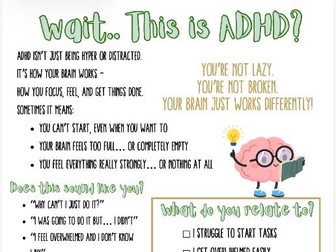
“Wait… This is ADHD?” – Student Reflection & Awareness WorksheetQuick View
NeuroClassroom

“Wait… This is ADHD?” – Student Reflection & Awareness Worksheet

(0)
A simple, relatable worksheet designed to help students recognise and reflect on common ADHD experiences in a non-clinical, student-friendly way. This resource focuses on how ADHD feels rather than just definitions, making it especially effective for: • students with a diagnosis • students awaiting assessment • students who are questioning or struggling with focus, motivation, or overwhelm The worksheet includes: • A checklist of common ADHD-related experiences • Relatable student thoughts (e.g. “Why can’t I just do it?”) • A short, accessible explanation of ADHD • A reflective “What do you relate to?” task • Space for students to add their own experiences Designed to reduce stigma and help students feel understood, this resource works well as: • a starter activity • a wellbeing check-in • part of PSHE / pastoral sessions • SEN support conversations The tone is intentionally supportive and non-judgemental, helping students understand that ADHD is about how the brain works—not laziness or lack of effort
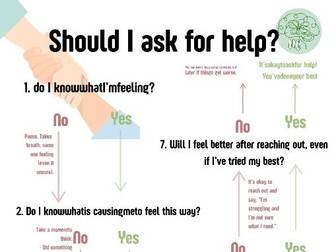
Should I Ask for Help? ADHD Support Flowchart | Emotional Regulation ToolQuick View
NeuroClassroom

Should I Ask for Help? ADHD Support Flowchart | Emotional Regulation Tool

(0)
A simple, student-friendly flowchart designed to help pupils decide when and how to ask for help. This resource supports students who struggle with identifying emotions, understanding what they need, knowing when to seek support, and feeling overwhelmed or stuck. Created with ADHD and neurodivergent learners in mind, this tool breaks down the process into clear, manageable steps to reduce overwhelm and encourage independence. What’s included: • 1x printable A4 flowchart • clear step-by-step decision making • supportive language and prompts • strategies to try before seeking help • guidance on when to reach out Perfect for: • ADHD / neurodivergent learners • SEN support • pastoral care • classrooms, interventions, or 1:1 support Why this works: Unlike generic resources, this has been designed from lived experience, focusing on what actually helps students in real situations — not just theory.