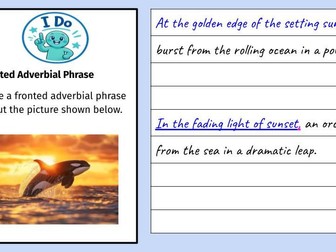
A clear and practical resource designed to support the explicit teaching model: I Do, We Do, You Do across both Maths and Writing. This pack helps teachers structure lessons effectively, model learning step-by-step, and gradually release responsibility to pupils.
Ideal for improving lesson clarity, pupil independence, and progress, this resource includes fully worked examples, guided practice scaffolds, and blank templates that can be easily adapted across year groups.
What’s included:
Teacher modelling examples (I Do) for both Maths and Writing
Guided practice examples with prompts (We Do)
Independent practice templates (You Do)
Sentence stems and scaffolds for pupil support
Clear step-by-step structure for modelling
Editable/transferable formats for classroom use
Perfect for:
Primary teachers (KS1 & KS2)
Early career teachers (ECTs)
SEND support and scaffolding learning
Whole-class explicit instruction
Improving pupil independence and confidence
Why use this resource?
This pack removes guesswork from lesson modelling by providing a consistent, structured approach to teaching. It supports pupils in moving from observation, to shared practice, to confident independent work.
This comprehensive 6-lesson Natural Disasters unit is designed to develop students’ understanding of the processes, impacts, and responses to some of the world’s most powerful natural hazards, including earthquakes, tsunamis, and tornadoes. The sequence combines strong geographical knowledge with practical skills, critical thinking, and real-world application.
Across the unit, students explore the physical processes behind each disaster, including tectonic movement, seismic waves, tsunami generation, and atmospheric conditions that lead to tornado formation. Each lesson builds progressively, linking cause and effect with human and environmental impacts, as well as short- and long-term responses.
Students develop key geographical and transferable skills, including compass reading and map interpretation, understanding physical geographical features, and working with data and graphs to analyse patterns such as magnitude, frequency, and impact distribution. Opportunities for numeracy are embedded throughout, particularly in interpreting hazard data and comparing global trends.
Every lesson includes a structured set of key vocabulary, supporting disciplinary literacy and ensuring students can confidently use terms such as epicentre, seismic, storm surge, magnitude, and richter scale. Vocabulary is revisited and applied in context through discussion and written tasks.
The unit incorporates a range of engaging practical activities and experiments, such as modelling tectonic plate movement, simulating tsunami waves, and investigating tornado formation using water demonstrations.
Students also examine real-life case studies from across the globe, including countries most affected by each hazard such as Thailand, Japan and the USA (Tornado Alley). These case studies help learners understand both the physical causes and the human vulnerability factors that influence disaster severity.
A strong focus is placed on land use change, vulnerability, and human response, exploring how urbanisation, deforestation, and coastal development can increase risk, and how engineering, planning, and disaster preparedness can reduce it. Links are made to both immediate emergency responses and long-term adaptation strategies.
Each lesson connects learning to safety guidance and disaster response, encouraging students to understand how individuals, communities, and governments prepare for and respond to natural hazards in real-world contexts.
By the end of the unit, students will have developed a secure understanding of natural hazard processes, improved their geographical skills, and gained insight into the complex relationship between physical environments and human activity.
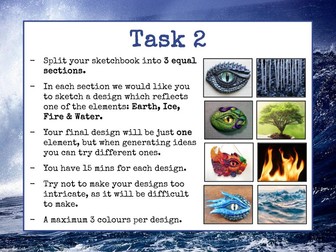
A step-by-step Art unit designed to guide pupils in Years 5–6 through the process of designing, sketching, and sculpting detailed clay dragon eyes.
This engaging unit supports teachers in delivering high-quality Art lessons with confidence, even if they do not specialise in the subject. It includes clear modelling, exemplar images, and a structured progression of skills that take pupils from initial design ideas through to a finished 3D clay sculpture.
Originally developed for an observed lesson graded as Outstanding, this resource has been carefully refined to ensure strong outcomes in pupil engagement, creativity, and technical skill development.
Everything needed is included: teaching slides, step-by-step instructions, visual examples, and process guidance that breaks down each stage of the making journey. Pupils are supported to explore texture, form, colour, and detail while developing their confidence in working with clay.
Ideal for non-specialist teachers or anyone looking to deliver a standout Art project with clear outcomes, high engagement, and impressive final pieces.


 Quick View