Vocabulary Worksheets Grades 3–5 | Context Clues, Synonyms, Antonyms & Word Work ActivitiesQuick View
qscience

Vocabulary Worksheets Grades 3–5 | Context Clues, Synonyms, Antonyms & Word Work Activities

(0)
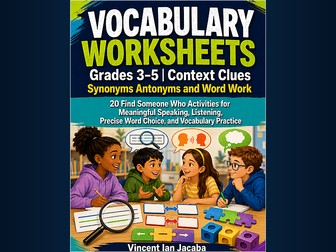
Build vocabulary, speaking, and listening skills with 20 interactive “Find Someone Who…” activities designed for Grades 3–5. Students move beyond simple definitions by discussing word meanings, listening to classmates, applying vocabulary in context, and explaining their thinking. Skills Covered Synonyms and antonyms Context clues Categories and word relationships Precise word choice and action words Compound words, prefixes, and suffixes Listening for key details Restating and follow-up questions Academic vocabulary Explaining and justifying word choices What’s Included 20 vocabulary activity worksheets 5 vocabulary anchor charts Teacher guidance and differentiation ideas Answer keys with explanations Vocabulary Challenge and reflection activities Classroom Uses Ideal for vocabulary lessons, literacy centres, partner work, small groups, intervention, review, early finishers, and formative assessment. Activities can be used individually to target specific skills or together for broader vocabulary practice. Support learners with word banks, oral rehearsal, reduced prompts, or strategic partners, while extending confident students through explanations, examples, and student-created questions. A practical, classroom-ready resource for teachers seeking Grades 3–5 vocabulary worksheets that combine context clues, word relationships, precise vocabulary, speaking, listening, and meaningful student interaction.
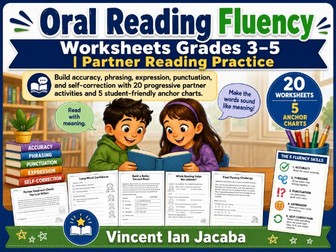
Oral Reading Fluency Worksheets Grades 3–5 | Partner Reading Activities & Anchor ChartsQuick View
qscience

Oral Reading Fluency Worksheets Grades 3–5 | Partner Reading Activities & Anchor Charts

(0)
Oral Reading Fluency Worksheets Grades 3–5 | Partner Reading Practice Build accurate, smooth, and meaningful oral reading with 20 progressive partner-reading activities and 5 student-friendly anchor charts for Grades 3–5. Skills Covered Accuracy, phrasing, punctuation, expression, and self-correction Partner feedback and purposeful rereading Fluency goal setting and self-monitoring What’s Included 20 partner-reading worksheets 5 fluency anchor charts Sentence, passage, dialogue, poetry, and longer-word practice Checklists, reflections, repeated reading, and a final fluency challenge Teacher guidance, differentiation, and assessment suggestions Ideal For Literacy centres, partner reading, small groups, intervention, ELA lessons, fluency practice, and formative assessment. Use the activities sequentially or select individual worksheets to meet student needs. Add this practical, classroom-ready oral reading fluency resource to your literacy toolkit for focused practice that helps students read with greater accuracy, expression, and meaning.
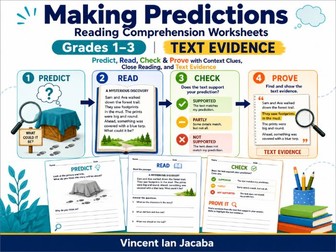
Making Predictions Worksheets Grades 1–3 | Reading Comprehension & Text EvidenceQuick View
qscience

Making Predictions Worksheets Grades 1–3 | Reading Comprehension & Text Evidence

(0)
Support young readers in making thoughtful, evidence-based predictions with this engaging Grades 1–3 reading comprehension resource. Students use picture clues, context clues, titles, and passage details to predict, read, check, and prove their thinking with text evidence. Included 20 reading comprehension worksheets 20 answer keys 5 instructional anchor charts Teacher’s guide with differentiation and assessment support Skills Covered Making predictions Close reading Context clues Checking and revising predictions Identifying text evidence Supporting conclusions Classroom Uses Ideal for whole-class teaching, guided reading, literacy centres, small groups, intervention, independent work, homework, review, or assessment. The consistent Predict → Read → Check → Prove routine helps students move beyond guessing and develop stronger comprehension and evidence-based thinking. Add this ready-to-use prediction and text evidence resource to your literacy lessons for focused, practical reading comprehension practice.
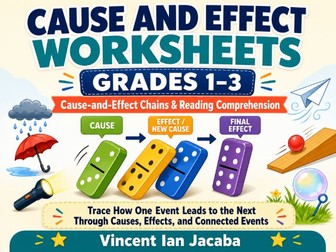
Cause and Effect Worksheets Grades 1–3 | Cause-and-Effect Chains & Reading ComprehensionQuick View
qscience

Cause and Effect Worksheets Grades 1–3 | Cause-and-Effect Chains & Reading Comprehension

(0)
Cause and Effect Worksheets for Grades 1–3 Build stronger reading comprehension and logical thinking with this structured cause-and-effect resource for Grades 1–3. Pupils practise identifying causes and effects, tracing multi-step event chains, recognising when an effect becomes a new cause, and explaining how events are connected. What’s Included 20 cause-and-effect worksheets 5 colourful anchor charts Short passages, visual activities, sequencing, matching, and chain-building tasks Complete answer keys with explanations Teacher guidance, differentiation ideas, and assessment support Skills Developed Cause and effect Reading comprehension Sequencing Logical reasoning Explaining relationships between events Ideal for whole-class teaching, guided reading, literacy centres, independent work, homework, intervention, revision, or assessment. The varied activities provide accessible support for developing learners while offering opportunities for more confident pupils to explain and create their own cause-and-effect chains. A practical, classroom-ready resource for helping pupils understand not just what happened, but why it happened and what happened next.
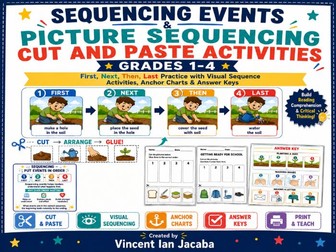
Sequencing Events Worksheets Grades 1–4 | Picture Sequencing Cut and Paste ActivitiesQuick View
qscience

Sequencing Events Worksheets Grades 1–4 | Picture Sequencing Cut and Paste Activities

(0)
Make sequencing practice engaging and hands-on with this picture sequencing and cut-and-paste resource for Grades 1–4. Students use visual clues to arrange familiar events and processes in logical order while practising First, Next, Then, and Last. Skills Covered Sequencing events in chronological order Identifying beginning, middle, and ending Using First, Next, Then, and Last Recognising before-and-after relationships Retelling events in sequence Using visual evidence to explain reasoning What’s Included Visual sequencing anchor charts Picture sequencing cut-and-paste worksheets Familiar everyday and procedural sequences Numbered and First–Next–Then–Last activities Teacher guidance and differentiation ideas Answer keys Perfect For Whole-class lessons, literacy centres, small groups, independent practice, intervention, review, homework, and assessment. Support reading comprehension, logical thinking, oral language, and sequencing vocabulary with clear, student-friendly activities that are easy to implement and differentiate. A useful classroom resource for teachers searching for sequencing events worksheets, picture sequencing activities, cut and paste sequencing, chronological order, and First Next Then Last worksheets for primary learners.
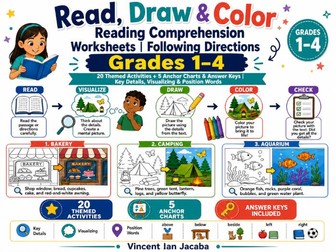
Reading Comprehension & Following Directions Worksheets Grades 1–4 | Read, Draw & ColorQuick View
qscience

Reading Comprehension & Following Directions Worksheets Grades 1–4 | Read, Draw & Color

(0)
Make reading comprehension interactive with these Read, Draw & Color Worksheets for Grades 1–4. Students read short passages or directions, identify key details, visualize the text, and complete pictures by drawing, coloring, counting, and placing objects correctly. What’s Included 20 themed reading comprehension activities 5 instructional anchor charts Answer keys Short passages and following-directions tasks Skills Practised Reading comprehension Following directions Visualization Key details Spatial and position words Numbers, colours, and descriptive vocabulary Self-checking and careful reading Classroom Uses Ideal for literacy centres, small groups, intervention, independent practice, early finishers, homework, review, and substitute plans. Activities can be supported through read-aloud directions for developing readers or completed independently by more confident readers. A practical, engaging literacy resource for helping young learners turn written information into accurate visual representations while strengthening comprehension and attention to detail.
Complete Sentences & Sentence Fragments Worksheets | Sentence Structure Grades 1–4Quick View
qscience

Complete Sentences & Sentence Fragments Worksheets | Sentence Structure Grades 1–4

(0)
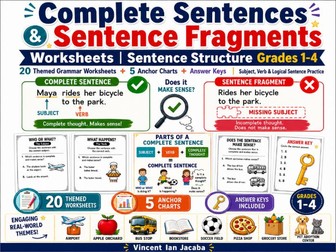
Build stronger sentence skills with this engaging Grades 1–4 grammar resource focused on complete sentences, sentence fragments, and logical sentence structure. Students practise identifying subjects and verbs, recognising complete thoughts, spotting missing sentence parts, and deciding whether sentences make sense. What’s Included 20 themed worksheets 5 instructional anchor charts Answer keys with explanations Familiar real-world contexts that make grammar practice meaningful Skills Covered Complete sentences vs sentence fragments Subjects and verbs Complete thoughts Missing subjects and verbs Logical vs illogical sentences Perfect For Whole-class teaching, literacy centres, morning work, homework, intervention, independent practice, review, and assessment. The resource also supports differentiation through subject-and-verb marking, explanation tasks, and sentence rewriting. A practical, ready-to-use sentence structure resource for helping young learners recognise and build complete, meaningful sentences with confidence.
Present & Past Tense Verb Worksheets | Cut & Paste Grammar Activities | Grades 1–4Quick View
qscience

Present & Past Tense Verb Worksheets | Cut & Paste Grammar Activities | Grades 1–4

(0)
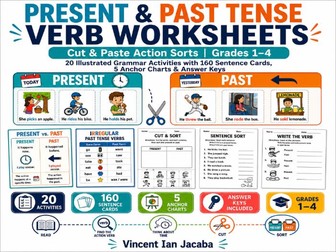
Help students master present and past tense verbs with this hands-on grammar resource for Grades 1–4. Learners read illustrated sentences, identify action verbs, decide when each action happens, then cut and sort the cards into PRESENT or PAST categories. Skills Covered Identifying action verbs Distinguishing present and past tense Recognising regular and irregular past-tense verbs Using sentence meaning and time clues Sorting sentences by verb tense What’s Included 20 illustrated grammar activities 160 sentence cards 5 anchor charts Answer keys Classroom Uses Ideal for whole-class teaching, literacy centres, small groups, independent practice, homework, intervention, review, and formative assessment. With visual support, meaningful sentences, and engaging cut-and-paste activities, this resource provides practical present and past tense practice while supporting differentiation and independent learning.
Problem and Solution Worksheets Grades 1–3 | Reading Comprehension ActivitiesQuick View
qscience

Problem and Solution Worksheets Grades 1–3 | Reading Comprehension Activities

(0)
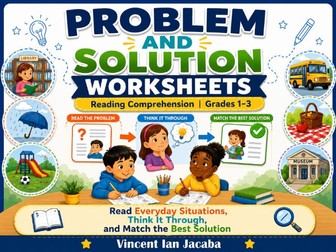
Problem and Solution Reading Comprehension Worksheets | Grades 1–3 Help young learners strengthen reading comprehension and logical reasoning with engaging problem-and-solution activities based on familiar everyday situations. Students identify problems, evaluate possible responses, and choose the most appropriate solution. Skills Practised Identifying problems and solutions Cause and effect Context clues and logical reasoning Making safe, helpful choices Explaining answers using text details What’s Included 20 themed worksheets 20 answer keys with explanations 5 instructional anchor charts Teacher’s guide and introduction Perfect for literacy centres, guided reading, independent work, intervention, homework, review, or assessment, with built-in opportunities for support and extension. A practical, ready-to-use Grades 1–3 resource for developing confident readers and thoughtful problem-solvers.
Reading Comprehension Worksheets Grades 1–3 | True, False or Fix It | Close ReadingQuick View
qscience

Reading Comprehension Worksheets Grades 1–3 | True, False or Fix It | Close Reading

(0)
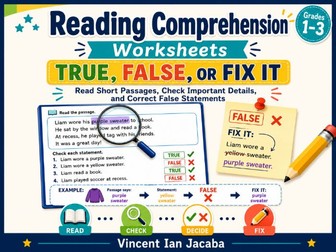
Build stronger reading comprehension and close-reading skills with this engaging True, False, or Fix It resource for Grades 1–3. Students read short passages, decide whether statements are true or false, and correct inaccurate details using evidence from the text. Skills Covered Reading comprehension and close reading Identifying key details Using text evidence Comparing information Correcting false statements accurately What’s Included 20 printable reading comprehension worksheets Short, age-appropriate passages True/False and correction activities 5 supporting anchor charts Teacher guidance and differentiation ideas Answer keys with corrections and explanations Perfect For Whole-class teaching, guided reading, literacy centres, independent work, intervention, homework, review, or assessment. A practical, low-prep resource for helping Grades 1–3 students read carefully, check important details, and support their answers with evidence.
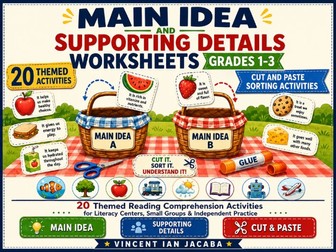
Main Idea & Supporting Details Worksheets Grades 1–3 | Cut-and-Paste Reading ComprehensionQuick View
qscience

Main Idea & Supporting Details Worksheets Grades 1–3 | Cut-and-Paste Reading Comprehension

(0)
Main Idea and Supporting Details Worksheets Grades 1–3 Build reading comprehension with 20 engaging cut-and-paste activities that help students identify main ideas and match relevant supporting details. Designed for Grades 1–3, this resource uses familiar themes and hands-on sorting to make comprehension practice clear and meaningful. Skills Practised Identifying main ideas Recognising supporting details Matching details to the correct main idea Making logical connections Explaining reasoning What’s Included 20 themed cut-and-paste worksheets Visual instructional anchor charts Answer keys with concise explanations Differentiation opportunities for support and challenge Ideal For Literacy centres, whole-class lessons, small groups, partner work, independent practice, intervention, review and informal assessment. Add this ready-to-use main idea and supporting details resource to your literacy toolkit for practical, engaging comprehension practice.
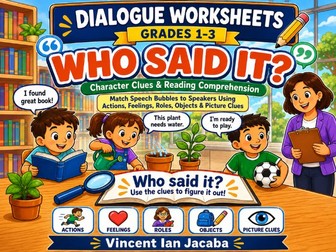
Dialogue Worksheets Grades 1–3 | Who Said It? Character Clues & Reading ComprehensionQuick View
qscience

Dialogue Worksheets Grades 1–3 | Who Said It? Character Clues & Reading Comprehension

(0)
Dialogue Worksheets Grades 1–3 | Who Said It? Build dialogue comprehension, inference, and character understanding with this engaging Grades 1–3 literacy resource. Students match speech bubbles to the correct characters using actions, feelings, roles, objects, and picture clues. What’s Included 20 illustrated dialogue worksheets 5 student-friendly anchor charts Complete answer keys Teacher guide with differentiation and assessment support Skills Covered Identifying who is speaking Using visual and contextual clues Understanding character actions and feelings Making logical inferences Explaining answers with evidence Ideal for guided reading, literacy centres, independent practice, intervention, morning work, homework, review, or assessment. A practical, low-prep way to strengthen reading comprehension and help young learners connect dialogue with character clues.
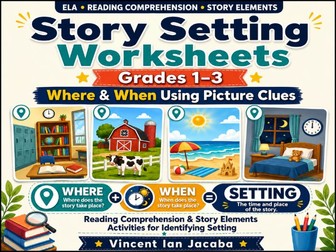
Story Setting Worksheets Grades 1–3 | Where & When Picture Clues & Story ElementsQuick View
qscience

Story Setting Worksheets Grades 1–3 | Where & When Picture Clues & Story Elements

(0)
Build reading comprehension and story-elements skills with these engaging Story Setting Worksheets for Grades 1–3. Students use picture clues to identify where and when a story takes place and explain the visual evidence supporting their answers. Skills Covered Identifying story setting Distinguishing where and when clues Using visual evidence Selecting strong setting clues Explaining reasoning in complete sentences What’s Included 20 illustrated worksheets 20 answer keys with explanations 5 student-friendly anchor charts Teacher guidance Familiar settings, clocks, calendars, seasons, weather, and time-of-day clues Perfect For Guided reading, literacy centres, whole-class teaching, independent work, intervention, homework, review, early finishers, and assessment. A practical, classroom-ready resource for helping young readers become confident “setting detectives” while strengthening observation, evidence-based reasoning, and reading comprehension.
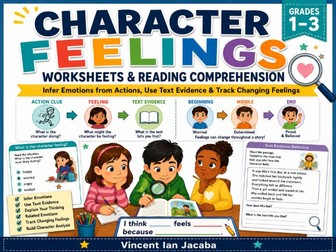
Character Feelings Worksheets Grades 1–3 | Reading Comprehension, Inference & Text EvidenceQuick View
qscience

Character Feelings Worksheets Grades 1–3 | Reading Comprehension, Inference & Text Evidence

(0)
Build stronger reading comprehension with this Character Feelings Worksheets pack for Grades 1–3. Students learn to infer emotions from actions, reactions, and story events, then support their thinking with text evidence. Skills Covered Inferring character feelings Identifying action and context clues Using text evidence Explaining reasoning Tracking changing emotions Developing early character analysis What’s Included 20 reading comprehension worksheets 5 visual teaching charts Short, age-appropriate passages and scenarios Written-response activities Complete answer keys Teacher guidance and differentiation support Classroom Uses Ideal for whole-class lessons, guided reading, literacy centres, independent work, homework, intervention, review, and formative assessment. A practical, classroom-ready resource for developing inference, character feelings, text evidence, and reading comprehension skills in young learners.
Beginning, Middle & End Story Structure Worksheets Grades 1–3 | Reading Comprehension & SequencingQuick View
qscience

Beginning, Middle & End Story Structure Worksheets Grades 1–3 | Reading Comprehension & Sequencing

(0)
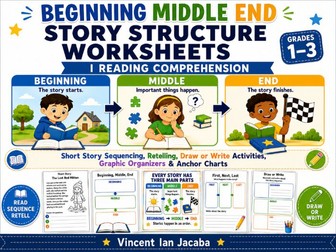
Beginning, Middle, End Story Structure Worksheets Grades 1–3 Build strong early reading comprehension and sequencing skills with this engaging Beginning, Middle, End resource for Grades 1–3. Students read short stories, identify key events, and retell what happened using drawing, writing, or both. Skills Practised Beginning, middle, and end Story sequencing Reading comprehension Identifying key events First, next, last retelling Written and illustrated responses Includes 20 story structure worksheets 20 answer keys with sample responses 5 colourful anchor charts Teacher guidance, differentiation, and assessment support Flexible response options make the resource suitable for beginning readers through more confident writers. Perfect For Whole-class lessons, guided reading, literacy centres, independent work, intervention, homework, review, and assessment. A practical, low-preparation resource for teaching story structure, sequencing, retelling, and reading comprehension in Grades 1–3.
Sentence Expansion Worksheets Grades 3–5 | Adding Details Writing & Grammar PracticeQuick View
qscience

Sentence Expansion Worksheets Grades 3–5 | Adding Details Writing & Grammar Practice

(0)
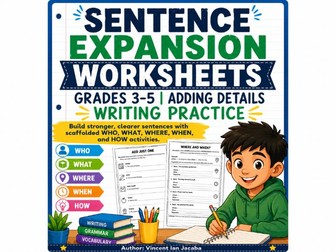
Sentence Expansion Worksheets for Grades 3–5 Help students build stronger, clearer sentences by adding purposeful WHO, WHAT, WHERE, WHEN, and HOW details. Designed for Grades 3–5, this scaffolded writing resource develops sentence fluency, precision, vocabulary, revision, and grammar skills while teaching students that effective sentence expansion is about adding useful information—not simply making sentences longer. Skills Covered Identifying WHO, WHAT, WHERE, WHEN, and HOW details Expanding basic sentences with relevant information Replacing vague words with precise language Choosing details that logically fit Organising details in a natural order Revising repetitive, irrelevant, unclear, or awkward details Checking sentence completeness, punctuation, spelling, and clarity What’s Included 20 progressive sentence expansion worksheets 5 full-colour anchor charts Teacher guidance and differentiation suggestions Answer keys with sample responses Activities progress from identifying and sorting detail types to using picture and context clues, selecting purposeful details, repairing weak sentences, and independently creating expanded sentences. Perfect For Whole-class writing lessons, guided practice, literacy centres, intervention, independent work, homework, revision, and formative assessment. Teachers can follow the sequence or select individual worksheets to target specific student needs. Add this ready-to-use sentence writing resource to your literacy toolkit for practical, differentiated practice that helps students write clearer, more detailed, and purposeful sentences.
Five-Finger Story Retell Worksheets Grades 1–2 | Reading ComprehensionQuick View
qscience

Five-Finger Story Retell Worksheets Grades 1–2 | Reading Comprehension

(0)
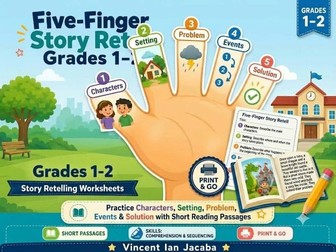
Five-Finger Story Retell Worksheets for Ages 5–7 | Reading Comprehension Help young learners strengthen reading comprehension and story-retelling skills with clear, structured Five-Finger Retell activities. Using short narrative passages and simple organisers, pupils identify the characters, setting, problem, key events and solution before retelling each story in sequence. What’s Included 5 instructional Five-Finger Retell anchor charts Short, age-appropriate narrative passages Five-finger story-retelling organisers Practice with characters, setting, problem, events and solution Sequencing prompts including First, Next and Then Printer-friendly black-and-white worksheets Answer keys with suggested responses Teacher guidance for instruction, differentiation and assessment Skills Covered Reading comprehension Story retelling Story elements Characters and setting Problem and solution Sequencing events Recalling key details Identifying important information Organising ideas logically Ideal for pupils aged 5–7 and suitable for whole-class teaching, guided reading, literacy centres, small groups, intervention, independent work, homework, revision and informal assessment. This ready-to-use resource gives pupils a memorable Five-Finger Retell strategy they can apply across narrative texts while helping teachers provide focused comprehension practice with minimal preparation.
Point of View Worksheets Gr. 3–5: Character Perspective Writing & Anchor ChartsQuick View
qscience

Point of View Worksheets Gr. 3–5: Character Perspective Writing & Anchor Charts

(0)
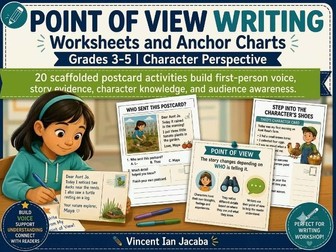
Make Point of View Meaningful Through Character Postcards Help learners aged approximately 8–11 develop a stronger understanding of point of view, character perspective and first-person writing through engaging postcard activities. This scaffolded English resource guides learners from identifying what a character can realistically know, notice, think and feel to independently writing from a consistent viewpoint. What’s Included 20 scaffolded point-of-view postcard activities 5 instructional anchor charts first-person writing practice character knowledge and text-evidence tasks perspective comparison and switching activities character voice, feelings, goals and audience practice planning and self-check tools independent writing task answer key with sample responses teacher guidance for differentiation and assessment Learners Will Practise maintaining a consistent first-person viewpoint selecting accurate story evidence distinguishing character knowledge from reader-only information expressing feelings, motivations and goals comparing different character perspectives adapting details for a specific audience writing authentic character postcards independently Ideal For Whole-class lessons, literacy centres, guided or independent practice, small groups, intervention, homework, revision and assessment. A practical upper-primary English resource combining reading comprehension, character perspective, text evidence and purposeful writing in one progressive set of activities.
Story Elements Worksheets Grades 1–2 | Story Map Cut & PasteQuick View
qscience

Story Elements Worksheets Grades 1–2 | Story Map Cut & Paste

(0)
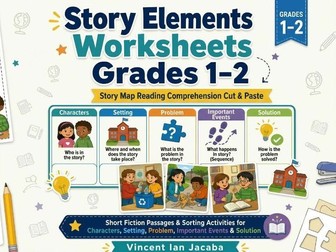
Story Elements Worksheets for Years 1–2 | Story Maps and Cut-and-Paste Activities Help young learners strengthen reading comprehension with 20 engaging short-fiction worksheets focused on five key story elements: characters, setting, problem, important events and solution. What’s Included 20 story elements worksheets Cut-and-paste sorting activities Story maps Relevant and extra-detail practice 5 full-colour anchor charts Answer keys with explanations Teacher guidance Skills Practised Identifying characters and setting Recognising problems and solutions Sequencing important events Distinguishing key details from unnecessary information Organising and retelling stories Ideal for whole-class lessons, guided reading, literacy centres, independent work, intervention, homework, revision and assessment. A ready-to-print resource that provides structured, hands-on practice with essential fiction comprehension skills.
Sensory Details Writing Worksheets Grades 3–5 | Five Senses Descriptive WritingQuick View
qscience

Sensory Details Writing Worksheets Grades 3–5 | Five Senses Descriptive Writing

(0)
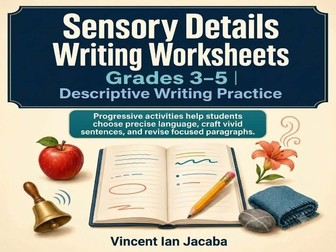
Bring Descriptive Writing to Life with Sensory Details Help pupils in Grades 3–5 develop vivid, precise descriptive writing using the five senses. This scaffolded resource moves from identifying sensory details to planning, revising and independently writing focused descriptive paragraphs. What’s Included 20 progressive sensory writing worksheets 5 full-colour anchor charts Teacher’s guide Answer keys and sample responses Independent descriptive writing task 50 printable PDF pages Skills Covered Using sight, sound, smell, taste and touch Replacing vague words with precise vocabulary Writing complete sensory sentences Selecting relevant descriptive details Distinguishing observations from inferences Organising details logically Using viewpoint and mood Planning, revising and improving descriptive paragraphs Ideal For Descriptive writing units Guided or independent writing Literacy centres Small-group support Homework and revision Formative assessment Home education A practical, structured resource that helps pupils build stronger vocabulary and create clear, vivid descriptions their readers can see, hear, smell, taste and feel.
Picture Writing Prompts Grades 1–5 | Narrative Story WorksheetsQuick View
qscience

Picture Writing Prompts Grades 1–5 | Narrative Story Worksheets

(0)
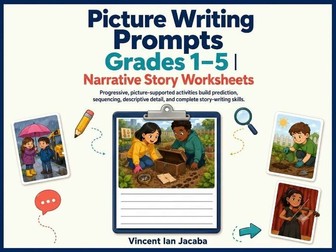
Picture Writing Prompts Grades 1–5 | Narrative Story Worksheets Help pupils develop confident narrative writing through engaging picture-based prompts and progressive storytelling activities. What’s Included 20 differentiated picture writing worksheets 5 full-colour narrative writing anchor charts Teacher guidance and differentiation suggestions Answer keys with sample responses 50-page printable PDF Printer-friendly black-and-white pupil pages Skills Covered Interpreting picture clues Predicting and sequencing events Cause and effect Problem and solution Character goals and setting Precise verbs and sensory details Dialogue and first-person point of view Show-not-tell writing Suspense, revision and editing Activities progress from supported writing in Grades 1–2 to more independent narrative composition in Grades 4–5, making the resource suitable for mixed-ability teaching. Ideal for narrative writing lessons, literacy centres, independent practice, intervention, assessment, homework, cover lessons and home education.