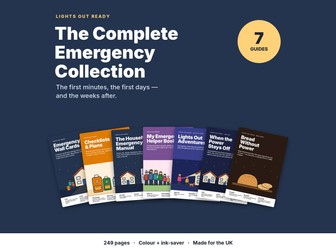
Every Lights Out Ready resource in one bundle: 7 resources and 249 pages for much less than buying them separately. Includes 21 first aid and emergency picture cards, an emergency planning pack, a 63-page household emergency manual, a long blackout food guide with 24 recipes, a no-oven bread guide, an illustrated children’s emergency story and activity book (ages 4 to 11), and a calm activity pack for ages 3 to 6. Suitable from EYFS to post-16 for PSHE, health education, food technology and life skills. Full colour and ink-saver versions included.
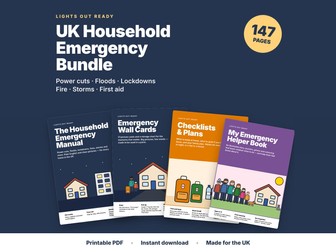
Four Lights Out Ready resources that work together, for less than buying them separately: 21 picture-first first aid and emergency cards for display, a planning pack with grab bag lists and a water and food calculator, a 63-page plain-English manual covering first aid and 15 UK emergencies, and an illustrated children’s story and activity book on fire safety and calling 999. Suitable for PSHE, health education, life skills and safety weeks, from KS1 to post-16. Full colour and ink-saver versions included.
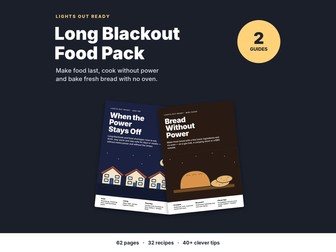
Two food resources for cooking with limited resources, for less than buying them separately. Living Without Power (50 pages) covers meal planning for 1 to 8 people, food safety without a fridge, safe outdoor cooking, saving fuel and 24 store-cupboard recipes. Bread Without an Oven (12 pages) covers raising agents and 8 pan and griddle breads, with a one-page cheat sheet. Full colour and ink-saver versions included.
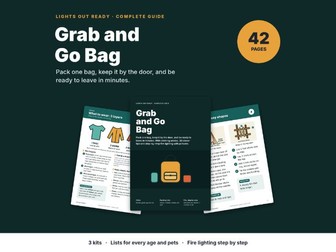
A 42-page plain-English guide to packing a grab bag and leaving home safely in an emergency, written for UK households.
What’s covered
• When to leave and when to stay put (go in, stay in, tune in)
• Three kits: pocket, grab bag and car
• Dressing for the weather with 3 layers, and a clothes checklist
• Packing lists for adults, children, babies and pets, plus papers, money, water, food and a small first-aid kit
• Medical needs, staying in touch, emergency alerts and planning a route out
• Leaving in 5 minutes, talking to children calmly, and what to do if a child gets lost
• 30 practical tips and waterproof packing
• Outdoor fire safety and fire lighting step by step with pictures, including putting a fire out properly
• Fill-in household plan pages, cut-out cards for children, English-language help cards, UK emergency numbers for all 4 nations and a one-page cheat sheet
How to use it
For PSHE and citizenship lessons on risk and resilience, outdoor education, Duke of Edinburgh and Scouts preparation, independent living units, or as a family resource to send home.
Format
2 PDFs (full colour and black and white ink-saver), A4.
General guidance only. Based on UK guidance from GOV.UK, the Environment Agency and the fire and rescue services. Made by Amy with the help of AI tools. Not endorsed by any organisation named.
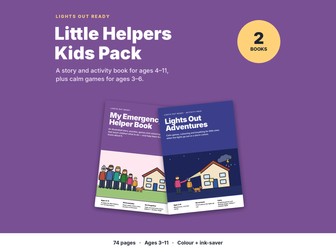
Both Lights Out Ready children’s resources in one bundle, for less than buying them separately. The Emergency Helper Book (34 pages, ages 4 to 11) teaches what to do: a power cut story, calling 999, fire safety, simple first aid and puzzles. The Calm Activity Pack (40 pages, ages 3 to 6) helps children stay settled: feelings pages, 8 breathing games, colouring, mazes and shadow puppets. Useful for safety weeks, PSHE and PSED, calm corners and storm days. Full colour and ink-saver versions included.
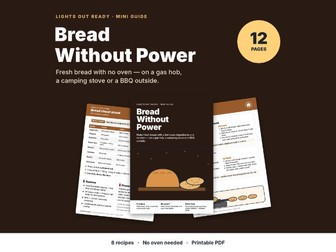
A 12-page guide to making bread with no oven, using a frying pan on a hob, a camping stove or a barbecue outdoors. Simple enough for beginners, with the science of raising agents explained.
What’s included
• Bread basics: the 4 ingredients and how bread works in 4 steps
• Flour, yeast and raising agents, with fizz tests and ingredient swaps
• Cooking without an oven, and how to tell bread is cooked
• 8 recipes: 2-ingredient flatbreads, chapatis, soda farls, potato farls, frying pan loaf, pan oatcakes, griddle scones and campfire stick bread
• Making a sourdough starter, step by step
• Troubleshooting, storing bread and flour, using leftovers
• A one-page cheat sheet with all 8 recipes
How to use it
Practical food lessons on raising agents, bread making and food safety (including raw flour), cooking club, or outdoor learning. The 2-ingredient flatbreads take 15 minutes.
Format
2 PDFs (full colour and black and white ink-saver), A4.
Based on UK guidance from the Food Standards Agency and the NHS. Made by Amy with the help of AI tools. Not endorsed by any organisation named.
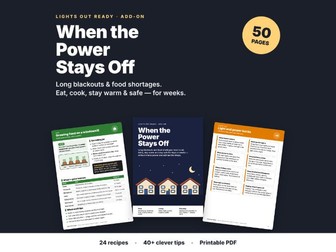
A 50-page practical guide to coping when the power is off for days: making food last, cooking safely without mains power, staying warm and keeping clean.
What’s included
• How much food a household needs, a 2-week store list for 1 to 8 people, and a 7-day no-cook meal plan
• Cooking safely outdoors, saving fuel, cooking rice, pasta, beans and lentils with little fuel, and keeping food safe without a fridge
• Growing food on a windowsill and in pots, with a UK planting calendar
• 24 store-cupboard recipes: no-cook, flask, one-pot and gas burner
• Water, light, warmth, hygiene, health, community and a daily routine
• 40+ tips, plus a page of viral “hacks” that are dangerous and why
• Food, fuel and power trackers and a 2-week menu planner
How to use it
Food preparation and nutrition lessons on planning, food safety and cooking with limited resources; PSHE and citizenship units on resilience and independent living; or geography links on energy and extreme weather.
Format
2 PDFs (full colour and black and white ink-saver), A4.
General guidance only. Based on UK guidance from the Food Standards Agency, the NHS and GOV.UK. Made by Amy with the help of AI tools. Not endorsed by any organisation named.
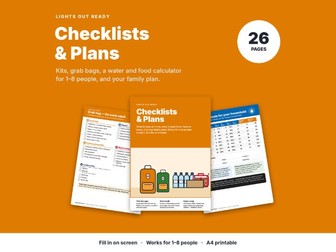
A practical life-skills pack that turns emergency preparedness into small, manageable tasks. Students plan for a real household: what to keep at home, what to pack in a grab bag, how much water and food is needed, and who to contact.
What’s included (26 pages)
• Get ready in 4 weeks: small steps spread over a month
• Water and meals table for 1 to 8 people over 3, 7 and 14 days
• Home emergency kit, 2 weeks at home, power cut kit and first-aid kit lists
• Grab bags for adults, children, babies, older people and pets
• Documents and cash, car kit, and flat versus house
• Household plan, health cards, pet records and a stock list
• Room-by-room safety check and a 12-month practice calendar
• 3-day no-cook meal plan with a shopping list for each household size
How to use it
PSHE or citizenship lessons on independent living, risk and personal safety; tutor time; maths in context with the water and food calculations; or a take-home family project. The fill-in pages can be completed on screen or on paper.
Format
2 PDFs (full colour and black and white ink-saver), A4.
Made by Amy with the help of AI tools, and based on UK guidance from GOV.UK and the NHS. Not endorsed by any organisation named.
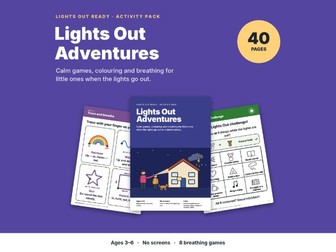
A 40-page calm activity pack for children aged 3 to 6, for storms, power cuts or any time little ones need to settle. Big pictures and very few words, designed to be read aloud.
What’s included
• Where electricity comes from, why the lights go off, and why storms are noisy
• How do I feel today, what’s the weather, and a weather matching game
• Feelings weather, what helps when I’m scared, and why slow breathing helps
• 8 breathing games: balloon belly, hot chocolate, snake, buzzy bee, and rainbow, waves, star and square tracing
• 7 colouring pages and 3 drawing pages
• 4 mazes from easy to harder, 4 counting pages (to 5 and to 10) and a dot-to-dot
• 4 shadow puppets to cut out, a torch hunt, the Lights Out challenge and how to build a den
• Helping pets feel safe, and a Storm Explorer certificate
• Tips for adults at the front
How to use it
Works for PSED and wellbeing sessions, calm corners, transition times, storm days and home learning. Print the pages you need. A black and white ink-saver version is included.
Format
2 PDFs (full colour and ink-saver), A4.
Made by Amy with the help of AI tools, and based on UK guidance from the NHS and GOV.UK. Not endorsed by any organisation named.
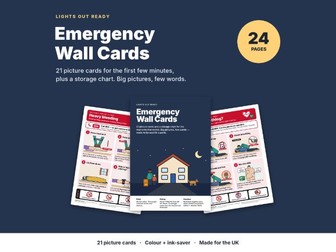
21 first aid and emergency picture cards for classrooms and staffrooms: CPR, choking, calling 999, bleeding, burns and fire safety. Easy to follow under pressure, plus a “How long does it keep?” storage chart. Each card shows 4 simple illustrated steps, close-ups of the details people get wrong, and a picture “don’t” box. Very little reading needed, so they work for all ages and reading levels.
Cards included
• Someone hurt: calling 999, adult CPR, baby and child CPR, choking, baby choking, heavy bleeding, recovery position, burns, stroke and heart attack, severe allergy, seizures
• Danger: fire, gas and carbon monoxide, Run Hide Tell, told to stay indoors
• Home: power cut, keeping warm, leaving home
• Water: flood, no water or toilet
• Pets in an emergency
How to use them
Display in classrooms, corridors, staffrooms or first-aid areas. Use them to teach how to make a clear 999 call and the basics of first aid in PSHE or health education, or as a quick reference during a first aid or safety week.
Format
2 PDFs (full colour and black and white ink-saver), A4.
General guidance only, not a substitute for first-aid training. Based on UK guidance from the NHS, Resuscitation Council UK and GOV.UK. Made by Amy with the help of AI tools. Not endorsed by any organisation named.
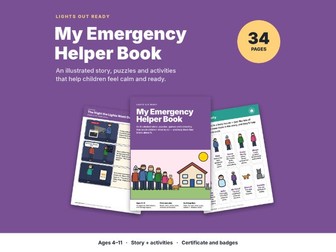
A 34-page illustrated story and activity booklet that teaches children what to do in an emergency, calmly and without scaring them. Made for UK children aged 4 to 11, with pages marked for ages 4 to 6 (one star) and 7 to 11 (two stars).
What’s included
• An illustrated 6-chapter story, “The Night the Lights Went Out”, following a family and their elderly neighbour through a power cut, with questions to talk about afterwards
• What is and isn’t an emergency, and how to call 999
• Fire safety: smoke alarms, get out and stay out, stop, drop and roll, and a fire escape map to draw
• Simple first aid for children, such as cuts and nosebleeds
• Feelings and calm breathing
• “Safe or not safe?” picture pairs and two “spot the dangers” scenes (kitchen and living room)
• Maze, word search, code breaker, spot the difference and a 6-question quiz
• Colouring pages, 9 helper badges, a certificate and a full answers page
How to use it
Works as a PSHE or safety unit, a story-time read with activities, a home learning pack, or a calm way to talk about storms and power cuts. Print the pages you need. A black and white ink-saver version is included to save on printing.
Format
2 PDFs (full colour and ink-saver), A4.
Made by Amy with the help of AI tools, and based on UK guidance from the NHS, the fire and rescue services and GOV.UK. Not endorsed by any organisation named.
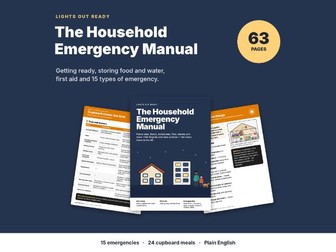
A 63-page plain-English guide to handling emergencies at home in the UK. Every page opens with an “in a hurry?” box saying what to do right now, followed by the detail.
What’s covered
• Getting ready: UK risks, making a plan, different households, stocking up, turning off water, gas and electricity, warnings and news
• Storage and food: where to keep supplies, best before and use by, how long things keep, fridges and freezers in a power cut, and 24 cupboard meals
• First aid: check and call, CPR and defibrillators, choking, bleeding, burns, stroke, allergies, head injuries, heat and cold
• 15 emergencies: power cuts, a national blackout, cold snaps, heatwaves, storms, floods, fire, gas, water supply, lockdown, no cash or phones, fuel shortages, attacks, chemical warnings and leaving home
• People and pets, recovery afterwards, looking after your mind, and useful UK numbers
How to use it
A reference text for PSHE and citizenship lessons on risk, resilience and first aid; independent living units for older students; or a staff and family resource.
Format
2 PDFs (full colour and black and white ink-saver), A4.
General guidance only, not a substitute for first-aid training. Based on UK guidance from the NHS, Resuscitation Council UK and GOV.UK. Made by Amy with the help of AI tools. Not endorsed by any organisation named.


 Quick View