Aphantasia Explained: Plain-English GuideQuick View
FrogLogic

Aphantasia Explained: Plain-English Guide

(0)
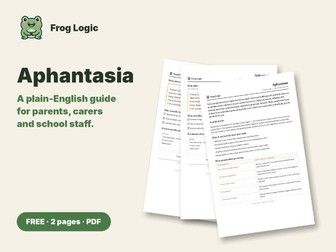
A free, two-page, plain-English guide to aphantasia, kind and jargon-free, to hand to parents, carers, grandparents and staff. Some people picture an apple and see an apple. Some see nothing at all, and only discover in adulthood that ‘picture it in your mind’ was never a figure of speech. Page one explains it in plain words, what it can feel like from the inside, and what people often get wrong, with a “the assumption / what’s actually going on” table. Page two covers the strengths that often come with it and what actually helps. Useful for SENCOs, pastoral teams and teachers who want something gentle to give a family, or for staff CPD. Written by a neurodivergent author. A friendly explainer, not a diagnostic tool or medical advice. Free to print, copy and share. This is one of 23 Pond Guides; all 23 in one file are also in my Tes shop.
Autism Explained: Guide for ParentsQuick View
FrogLogic

Autism Explained: Guide for Parents

(0)
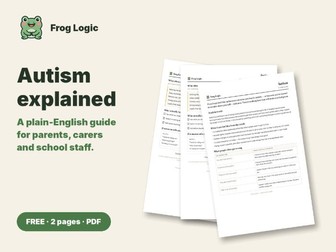
A free, two-page, plain-English guide to autism, kind and jargon-free, to hand to parents, carers, grandparents and staff. If you’ve picked this up because someone you love is autistic — or because you’ve started to wonder about yourself — welcome. There’s nothing here that will make you feel got at. Page one explains it in plain words, what it can feel like from the inside, and what people often get wrong, with a “the assumption / what’s actually going on” table. Page two covers the strengths that often come with it and what actually helps. Useful for SENCOs, pastoral teams and teachers who want something gentle to give a family, or for staff CPD. Written by a neurodivergent author. A friendly explainer, not a diagnostic tool or medical advice. Free to print, copy and share. This is one of 23 Pond Guides; all 23 in one file are also in my Tes shop.
AuDHD (Autism + ADHD) Explained: A GuideQuick View
FrogLogic

AuDHD (Autism + ADHD) Explained: A Guide

(0)
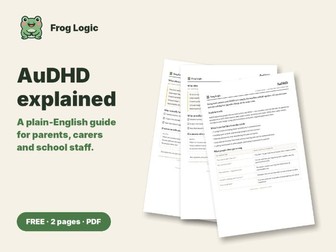
A free, two-page, plain-English guide to AuDHD (being both autistic and ADHD), kind and jargon-free, to hand to parents, carers, grandparents and staff. Being both autistic and ADHD isn’t simply the two lists added together. It’s two nervous systems asking for opposite things at the same time. Page one explains it in plain words, what it can feel like from the inside, and what people often get wrong, with a “the assumption / what’s actually going on” table. Page two covers the strengths that often come with it and what actually helps. Useful for SENCOs, pastoral teams and teachers who want something gentle to give a family, or for staff CPD. Written by a neurodivergent author. A friendly explainer, not a diagnostic tool or medical advice. Free to print, copy and share. This is one of 23 Pond Guides; all 23 in one file are also in my Tes shop.
Dyspraxia (DCD) Explained: Parent GuideQuick View
FrogLogic

Dyspraxia (DCD) Explained: Parent Guide

(0)
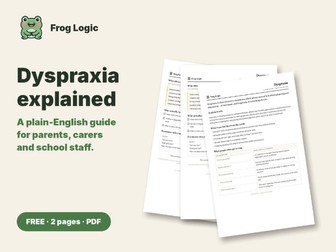
A free, two-page, plain-English guide to dyspraxia (DCD), kind and jargon-free, to hand to parents, carers, grandparents and staff. Dyspraxia is often reduced to clumsiness, which misses most of it. It affects planning and sequencing — of movement, and frequently of everything else too. Page one explains it in plain words, what it can feel like from the inside, and what people often get wrong, with a “the assumption / what’s actually going on” table. Page two covers the strengths that often come with it and what actually helps. Useful for SENCOs, pastoral teams and teachers who want something gentle to give a family, or for staff CPD. Written by a neurodivergent author. A friendly explainer, not a diagnostic tool or medical advice. Free to print, copy and share. This is one of 23 Pond Guides; all 23 in one file are also in my Tes shop.
PDA (Pathological Demand Avoidance) GuideQuick View
FrogLogic

PDA (Pathological Demand Avoidance) Guide

(0)
A free, two-page, plain-English guide to PDA (Pathological Demand Avoidance), kind and jargon-free, to hand to parents, carers, grandparents and staff. PDA describes a profile where everyday demands feel genuinely threatening — including demands the person actually wants to meet. It’s the one on this shelf where even the name is under active debate. Page one explains it in plain words, what it can feel like from the inside, and what people often get wrong, with a “the assumption / what’s actually going on” table. Page two covers the strengths that often come with it and what actually helps. Useful for SENCOs, pastoral teams and teachers who want something gentle to give a family, or for staff CPD. Written by a neurodivergent author. A friendly explainer, not a diagnostic tool or medical advice. Free to print, copy and share. This is one of 23 Pond Guides; all 23 in one file are also in my Tes shop.
Dyscalculia Explained: Guide for ParentsQuick View
FrogLogic

Dyscalculia Explained: Guide for Parents

(0)
A free, two-page, plain-English guide to dyscalculia, kind and jargon-free, to hand to parents, carers, grandparents and staff. Dyscalculia is dyslexia’s much less famous sibling, and it gets far less patience — because being bad at maths is treated as a personality quirk rather than a difference in wiring. Page one explains it in plain words, what it can feel like from the inside, and what people often get wrong, with a “the assumption / what’s actually going on” table. Page two covers the strengths that often come with it and what actually helps. Useful for SENCOs, pastoral teams and teachers who want something gentle to give a family, or for staff CPD. Written by a neurodivergent author. A friendly explainer, not a diagnostic tool or medical advice. Free to print, copy and share. This is one of 23 Pond Guides; all 23 in one file are also in my Tes shop.
Selective (Situational) Mutism GuideQuick View
FrogLogic

Selective (Situational) Mutism Guide

(0)
A free, two-page, plain-English guide to selective (situational) mutism, kind and jargon-free, to hand to parents, carers, grandparents and staff. Often still called selective mutism, which is unfortunate — nothing about it is selected. Page one explains it in plain words, what it can feel like from the inside, and what people often get wrong, with a “the assumption / what’s actually going on” table. Page two covers the strengths that often come with it and what actually helps. Useful for SENCOs, pastoral teams and teachers who want something gentle to give a family, or for staff CPD. Written by a neurodivergent author. A friendly explainer, not a diagnostic tool or medical advice. Free to print, copy and share. This is one of 23 Pond Guides; all 23 in one file are also in my Tes shop.
Anxiety in Neurodivergent People: A GuideQuick View
FrogLogic

Anxiety in Neurodivergent People: A Guide

(0)
A free, two-page, plain-English guide to anxiety in neurodivergent people, kind and jargon-free, to hand to parents, carers, grandparents and staff. Anxiety is often the result of being neurodivergent in a world that isn’t built for you, rather than a separate thing. Page one explains it in plain words, what it can feel like from the inside, and what people often get wrong, with a “the assumption / what’s actually going on” table. Page two covers the strengths that often come with it and what actually helps. Useful for SENCOs, pastoral teams and teachers who want something gentle to give a family, or for staff CPD. Written by a neurodivergent author. A friendly explainer, not a diagnostic tool or medical advice. Free to print, copy and share. This is one of 23 Pond Guides; all 23 in one file are also in my Tes shop.
Sensory Processing Differences: A GuideQuick View
FrogLogic

Sensory Processing Differences: A Guide

(0)
A free, two-page, plain-English guide to sensory processing differences, kind and jargon-free, to hand to parents, carers, grandparents and staff. Most people know about the five senses. Sensory processing differences involve eight — and any of them can arrive far too loud, far too quiet, or unpredictably both. Page one explains it in plain words, what it can feel like from the inside, and what people often get wrong, with a “the assumption / what’s actually going on” table. Page two covers the strengths that often come with it and what actually helps. Useful for SENCOs, pastoral teams and teachers who want something gentle to give a family, or for staff CPD. Written by a neurodivergent author. A friendly explainer, not a diagnostic tool or medical advice. Free to print, copy and share. This is one of 23 Pond Guides; all 23 in one file are also in my Tes shop.
Tourette's & Tics Explained: A GuideQuick View
FrogLogic

Tourette's & Tics Explained: A Guide

(0)
A free, two-page, plain-English guide to Tourette’s and tics, kind and jargon-free, to hand to parents, carers, grandparents and staff. Almost everything most people think they know about Tourette’s comes from one rare symptom being used as a punchline for forty years. Page one explains it in plain words, what it can feel like from the inside, and what people often get wrong, with a “the assumption / what’s actually going on” table. Page two covers the strengths that often come with it and what actually helps. Useful for SENCOs, pastoral teams and teachers who want something gentle to give a family, or for staff CPD. Written by a neurodivergent author. A friendly explainer, not a diagnostic tool or medical advice. Free to print, copy and share. This is one of 23 Pond Guides; all 23 in one file are also in my Tes shop.
OCD Explained: Guide for Parents & StaffQuick View
FrogLogic

OCD Explained: Guide for Parents & Staff

(0)
A free, two-page, plain-English guide to OCD, kind and jargon-free, to hand to parents, carers, grandparents and staff. OCD is probably the most misused word in this whole vocabulary. It isn’t about liking things tidy — it’s a distressing loop that the person desperately wants out of. Page one explains it in plain words, what it can feel like from the inside, and what people often get wrong, with a “the assumption / what’s actually going on” table. Page two covers the strengths that often come with it and what actually helps. Useful for SENCOs, pastoral teams and teachers who want something gentle to give a family, or for staff CPD. Written by a neurodivergent author. A friendly explainer, not a diagnostic tool or medical advice. Free to print, copy and share. This is one of 23 Pond Guides; all 23 in one file are also in my Tes shop.
Depression and Neurodivergence: A GuideQuick View
FrogLogic

Depression and Neurodivergence: A Guide

(0)
A free, two-page, plain-English guide to depression and neurodivergence, kind and jargon-free, to hand to parents, carers, grandparents and staff. Depression among neurodivergent people is very often the accumulated cost of years of masking and unmet needs, rather than something arriving out of nowhere. Page one explains it in plain words, what it can feel like from the inside, and what people often get wrong, with a “the assumption / what’s actually going on” table. Page two covers the strengths that often come with it and what actually helps. Useful for SENCOs, pastoral teams and teachers who want something gentle to give a family, or for staff CPD. Written by a neurodivergent author. A friendly explainer, not a diagnostic tool or medical advice. Free to print, copy and share. This is one of 23 Pond Guides; all 23 in one file are also in my Tes shop.
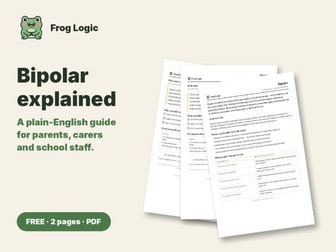
Bipolar Explained: Plain-English GuideQuick View
FrogLogic

Bipolar Explained: Plain-English Guide

(0)
A free, two-page, plain-English guide to bipolar, kind and jargon-free, to hand to parents, carers, grandparents and staff. Bipolar is a difference in how the brain regulates mood and energy — not moodiness, and not a personality flaw. Page one explains it in plain words, what it can feel like from the inside, and what people often get wrong, with a “the assumption / what’s actually going on” table. Page two covers the strengths that often come with it and what actually helps. Useful for SENCOs, pastoral teams and teachers who want something gentle to give a family, or for staff CPD. Written by a neurodivergent author. A friendly explainer, not a diagnostic tool or medical advice. Free to print, copy and share. This is one of 23 Pond Guides; all 23 in one file are also in my Tes shop.
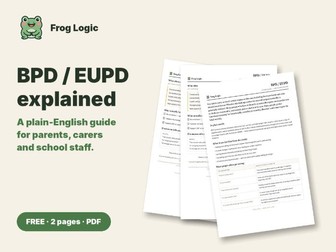
BPD / EUPD Explained: Plain-English GuideQuick View
FrogLogic

BPD / EUPD Explained: Plain-English Guide

(0)
A free, two-page, plain-English guide to BPD / EUPD, kind and jargon-free, to hand to parents, carers, grandparents and staff. Few labels carry as much unfair stigma as this one, including from professionals who should know better. Page one explains it in plain words, what it can feel like from the inside, and what people often get wrong, with a “the assumption / what’s actually going on” table. Page two covers the strengths that often come with it and what actually helps. Useful for SENCOs, pastoral teams and teachers who want something gentle to give a family, or for staff CPD. Written by a neurodivergent author. A friendly explainer, not a diagnostic tool or medical advice. Free to print, copy and share. This is one of 23 Pond Guides; all 23 in one file are also in my Tes shop.
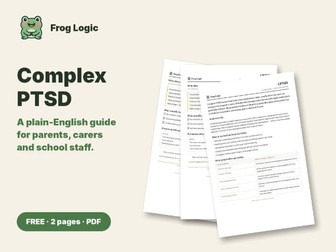
Complex PTSD (CPTSD) Explained: A GuideQuick View
FrogLogic

Complex PTSD (CPTSD) Explained: A Guide

(0)
A free, two-page, plain-English guide to complex PTSD (CPTSD), kind and jargon-free, to hand to parents, carers, grandparents and staff. Complex PTSD comes from harm that repeated over time, usually when you were too young or too trapped to leave. Page one explains it in plain words, what it can feel like from the inside, and what people often get wrong, with a “the assumption / what’s actually going on” table. Page two covers the strengths that often come with it and what actually helps. Useful for SENCOs, pastoral teams and teachers who want something gentle to give a family, or for staff CPD. Written by a neurodivergent author. A friendly explainer, not a diagnostic tool or medical advice. Free to print, copy and share. This is one of 23 Pond Guides; all 23 in one file are also in my Tes shop.
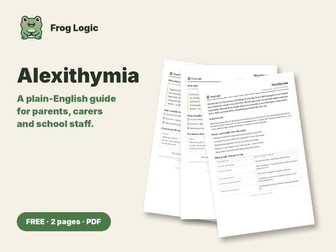
Alexithymia Explained: Plain-English GuideQuick View
FrogLogic

Alexithymia Explained: Plain-English Guide

(0)
A free, two-page, plain-English guide to alexithymia, kind and jargon-free, to hand to parents, carers, grandparents and staff. Alexithymia isn’t the absence of feelings. It’s having them at full strength with no reliable way to identify or name them. Page one explains it in plain words, what it can feel like from the inside, and what people often get wrong, with a “the assumption / what’s actually going on” table. Page two covers the strengths that often come with it and what actually helps. Useful for SENCOs, pastoral teams and teachers who want something gentle to give a family, or for staff CPD. Written by a neurodivergent author. A friendly explainer, not a diagnostic tool or medical advice. Free to print, copy and share. This is one of 23 Pond Guides; all 23 in one file are also in my Tes shop.
Misophonia Explained: Plain-English GuideQuick View
FrogLogic

Misophonia Explained: Plain-English Guide

(0)
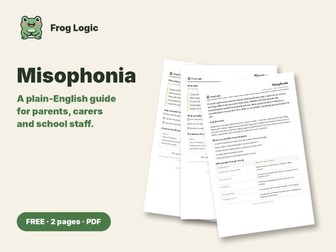
A free, two-page, plain-English guide to misophonia, kind and jargon-free, to hand to parents, carers, grandparents and staff. If certain small sounds provoke instant, disproportionate rage or panic in you, you are not being difficult and you are far from alone. Page one explains it in plain words, what it can feel like from the inside, and what people often get wrong, with a “the assumption / what’s actually going on” table. Page two covers the strengths that often come with it and what actually helps. Useful for SENCOs, pastoral teams and teachers who want something gentle to give a family, or for staff CPD. Written by a neurodivergent author. A friendly explainer, not a diagnostic tool or medical advice. Free to print, copy and share. This is one of 23 Pond Guides; all 23 in one file are also in my Tes shop.
Face Blindness (Prosopagnosia) ExplainedQuick View
FrogLogic

Face Blindness (Prosopagnosia) Explained

(0)
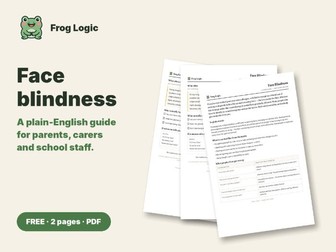
A free, two-page, plain-English guide to face blindness (prosopagnosia), kind and jargon-free, to hand to parents, carers, grandparents and staff. If you’ve ever walked past your own colleague, or failed to recognise a friend out of context, and quietly built a life around covering for it — there’s a name for that. Page one explains it in plain words, what it can feel like from the inside, and what people often get wrong, with a “the assumption / what’s actually going on” table. Page two covers the strengths that often come with it and what actually helps. Useful for SENCOs, pastoral teams and teachers who want something gentle to give a family, or for staff CPD. Written by a neurodivergent author. A friendly explainer, not a diagnostic tool or medical advice. Free to print, copy and share. This is one of 23 Pond Guides; all 23 in one file are also in my Tes shop.
ADHD Explained: Guide for Parents & StaffQuick View
FrogLogic

ADHD Explained: Guide for Parents & Staff

(0)
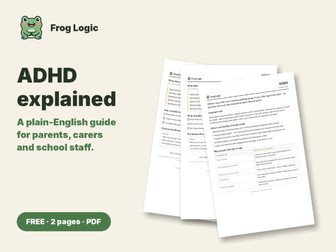
A free, two-page, plain-English guide to ADHD, kind and jargon-free, to hand to parents, carers, grandparents and staff. ADHD is one of the worst-named conditions going. It isn’t a shortage of attention — it’s attention that won’t take instructions about where to point. Page one explains it in plain words, what it can feel like from the inside, and what people often get wrong, with a “the assumption / what’s actually going on” table. Page two covers the strengths that often come with it and what actually helps. Useful for SENCOs, pastoral teams and teachers who want something gentle to give a family, or for staff CPD. Written by a neurodivergent author. A friendly explainer, not a diagnostic tool or medical advice. Free to print, copy and share. This is one of 23 Pond Guides; all 23 in one file are also in my Tes shop.
Dyslexia Explained: Guide for ParentsQuick View
FrogLogic

Dyslexia Explained: Guide for Parents

(0)
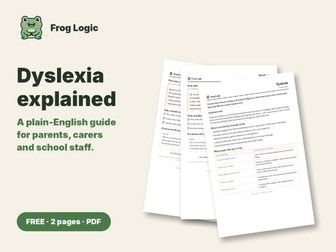
A free, two-page, plain-English guide to dyslexia, kind and jargon-free, to hand to parents, carers, grandparents and staff. Dyslexia has almost nothing to do with intelligence, and rather more to do with how the brain handles the sounds inside words. Page one explains it in plain words, what it can feel like from the inside, and what people often get wrong, with a “the assumption / what’s actually going on” table. Page two covers the strengths that often come with it and what actually helps. Useful for SENCOs, pastoral teams and teachers who want something gentle to give a family, or for staff CPD. Written by a neurodivergent author. A friendly explainer, not a diagnostic tool or medical advice. Free to print, copy and share. This is one of 23 Pond Guides; all 23 in one file are also in my Tes shop.
Dysgraphia Explained: Guide for ParentsQuick View
FrogLogic

Dysgraphia Explained: Guide for Parents

(0)
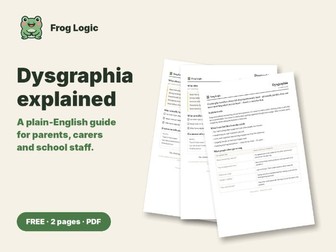
A free, two-page, plain-English guide to dysgraphia, kind and jargon-free, to hand to parents, carers, grandparents and staff. If writing by hand has always felt disproportionately hard — physically painful, slow, and never matching what’s in your head — there’s a name for that. Page one explains it in plain words, what it can feel like from the inside, and what people often get wrong, with a “the assumption / what’s actually going on” table. Page two covers the strengths that often come with it and what actually helps. Useful for SENCOs, pastoral teams and teachers who want something gentle to give a family, or for staff CPD. Written by a neurodivergent author. A friendly explainer, not a diagnostic tool or medical advice. Free to print, copy and share. This is one of 23 Pond Guides; all 23 in one file are also in my Tes shop.