Subscriptions, Direct Debits & Buy Now Pay Later | KS3 PSHE & Citizenship | Spot the Money LeaksQuick View
NickUKMoneyLessons

Subscriptions, Direct Debits & Buy Now Pay Later | KS3 PSHE & Citizenship | Spot the Money Leaks

(0)
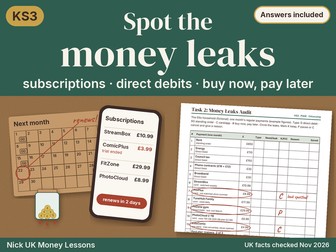
KS3 PSHE/Citizenship lesson: spot subscription, direct debit and buy now pay later “money leaks”, and keep, pause or cancel. Editable PPTX, worksheets, answers. One ready-to-teach KS3 lesson on the money that leaks out without anyone noticing: subscriptions and free trials, direct debits, and buy now, pay later. Fictional characters only, so nobody shares family money. What’s inside 15 editable PowerPoint slides with speaker notes 4-page B&W worksheet (PDF + DOCX), including a household “Money Leaks Audit” Full answer sheet 2-page teacher notes: timings, sensitivity guidance, curriculum map, fact-check box 50–60 minutes, with a 25-minute tutor-time cut marked Students will Explain the difference between a direct debit, a standing order and a recurring card or app payment See how free trials and small monthly subscriptions add up over a year Understand that buy now, pay later is borrowing, and why stacking several plans is risky Audit a fictional household statement and make a keep / pause / cancel plan UK facts, checked Nov 2026: the Direct Debit Guarantee; stopping a recurring card payment through your bank; buy now, pay later regulated by the FCA since 15 July 2026; new subscription rules from 1 January 2027 (reminders, cooling-off). Sources named in the teacher notes; all figures are labelled examples with fictional brands. Why teachers like it: non-specialist friendly · no brand names or logos · no tax · KS3-appropriate (students analyse adults’ and a household’s spending) · answers included. Curriculum: KS3 Citizenship: “the functions and uses of money, the importance and practice of budgeting, and managing risk”. PSHE Association Programme of Study 2026, KS3 Economic Wellbeing: attitudes to finance including debt; assessing and managing risk in financial decisions; managing influences on spending and what makes something good value for money. Also in this series: Budgeting on your first wage (KS4, free) · Bills when you leave home (KS4). Educational resource, not financial advice. Example figures, Nov 2026.
Bills When You Leave Home | Council Tax, Energy, Water & Broadband | KS4 Independent Living PSHEQuick View
NickUKMoneyLessons

Bills When You Leave Home | Council Tax, Energy, Water & Broadband | KS4 Independent Living PSHE

(0)
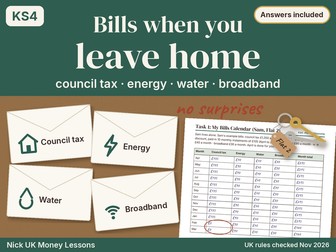
KS4 PSHE/Citizenship lesson on the 4 bills first-time renters forget: council tax, energy, water, broadband. Editable PPTX, worksheets, answers, teacher notes. UK 2026. One KS4–KS5 lesson on the four bills new renters forget: council tax, energy, water and broadband — with UK rules checked Nov 2026. What’s inside Editable PowerPoint Worksheets (PDF + DOCX) including My Bills Calendar Full answers Teacher notes with fact-check sources (gov.uk, Ofgem, Ofwat, Ofcom) Students will Identify the four main household bills when leaving home Plot bills across a year and spot the council-tax Feb/Mar gap (10 instalments) Compare living alone (25% single-person discount) vs a flat-share split Read energy standing charge + unit rate without supplier brand names UK rules covered (plain English): 25% single-person council tax discount; all-student households; 10 vs 12 instalments; standing charge + unit rate; water company choice in England; broadband contract price rises shown in £ and pence since Jan 2025. Scotland/Wales/NI notes in teacher notes. Pairs with our free lesson: Budgeting on your first wage — https://www.tes.com/teaching-resource/-13636468 Educational resource, not financial advice. Example figures, Nov 2026.
FREE Budgeting Lesson: Your First Wage | KS4 PSHE & Citizenship | UK MoneyQuick View
NickUKMoneyLessons

FREE Budgeting Lesson: Your First Wage | KS4 PSHE & Citizenship | UK Money

(0)
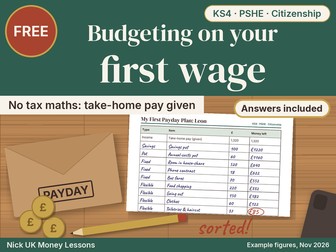
Free KS4 budgeting lesson: plan a first month’s wage in £ with a given take-home figure. Editable PowerPoint, worksheets, answers and teacher notes. No tax maths needed. Ready-to-teach KS4 budgeting lesson using a given take-home figure — no tax maths required. What’s inside Editable PowerPoint lesson slides Printable student worksheets (PDF + DOCX) Full answer sheet Teacher notes with curriculum map and timings Students will Plan a first month on a given take-home wage in £ Separate fixed costs, flexible spending and savings pots See why four-weekly pay (13 paydays) differs from a calendar month Leave with a simple, reusable payday plan Why teachers like it Non-specialist friendly (take-home pay is given) UK four-weekly pay and annual-cost pots ÷12 B&W-printable worksheets; fictional characters only Answers included Curriculum: KS4 PSHE / Citizenship — financial education / economic wellbeing (budgeting for different circumstances). Timed for 50–60 minutes (30-min tutor-time cut marked). Next in this series: Bills when you leave home (KS4) — link to be added once Pack 2 is live. Educational resource, not financial advice. Example figures, Nov 2026.
Spot the Scam: Phishing, Fake Shops & Money Fraud | KS3 PSHE & Citizenship LessonQuick View
NickUKMoneyLessons

Spot the Scam: Phishing, Fake Shops & Money Fraud | KS3 PSHE & Citizenship Lesson

(0)
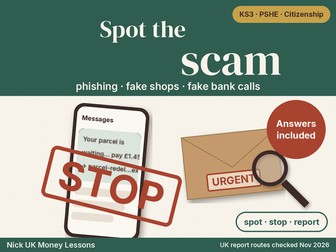
One ready-to-teach KS3 lesson on spotting common UK money scams (phishing emails, scam texts, fake shops and fake bank calls) and knowing exactly what to do: spot, stop, report. Students advise fictional adults, so nobody shares their own or their family’s experiences. What’s inside 14 editable PowerPoint slides with speaker notes 3-page B&W worksheet (PDF + DOCX): red-flag starter, Keep / Pause / Report card sort, “advise an adult” frame Full answer sheet 2-page teacher notes: timings, sensitivity guidance, curriculum map, UK fact-check box 50–60 minutes, with a 30-minute cut marked Students will Spot the red flags in phishing, smishing and fake-shop messages Explain why a bank will never ask for a code, PIN or a “safe account” transfer Use a spot → stop → report routine Know the UK places to report fraud and get help UK facts, checked Nov 2026: reporting to Report Fraud (formerly Action Fraud) / Police Scotland 101; calling your bank on 159; forwarding scam texts to 7726 and emails to report@phishing.gov.uk; 999 in an emergency. Why teachers like it: non-specialist friendly · fictional brands only · no tax · KS3-appropriate · answers included. Also in this series: Budgeting on your first wage (KS4, free) · Bills when you leave home (KS4) · Subscriptions, direct debits and BNPL: spot the money leaks (KS3). Add the Tes links once those listings are live. Educational resource, not financial advice. Example scenarios, Nov 2026.