KS3 Science: Developing the Atomic ModelQuick View
DKENNY1974

KS3 Science: Developing the Atomic Model

(0)
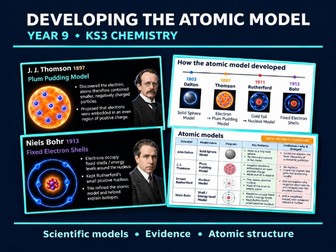
KS3 Science | Developing the Atomic Model | Chemistry A structured secondary science lesson exploring how our understanding of atomic structure has developed through scientific discoveries, experiments and changes to scientific models. Designed for KS3 Chemistry, with links to GCSE Chemistry, this lesson introduces the development of atomic theory and helps pupils understand how scientific evidence can challenge existing explanations. Learning objectives: Describe how the atomic model has developed over time. Identify the contributions of key scientists to our understanding of atomic structure. Explain how experimental evidence led to changes in scientific models. Key scientific content: Dalton’s solid sphere model. J. J. Thomson’s discovery of the electron and the plum pudding model. Rutherford’s alpha particle scattering experiment and the nuclear model. Bohr’s model of electrons in shells. The discovery of the neutron by James Chadwick. How scientific models are refined as new evidence becomes available. Teaching approach: The lesson is designed to build scientific understanding progressively, connecting historical discoveries with the development of modern atomic theory. Suitable for introducing atomic structure, developing scientific literacy and encouraging pupils to evaluate evidence and explanations. Ideal for: KS3 Chemistry lessons. Year 8 or Year 9 science classes. GCSE Chemistry foundation or revision. Specialist and non-specialist science teachers. Curriculum links: Atomic structure, scientific models, experimental evidence and the development of scientific understanding.
KS3 Science Year 7: Microscopes LessonQuick View
DKENNY1974

KS3 Science Year 7: Microscopes Lesson

(0)
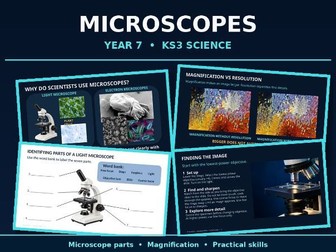
KS3 Science – Year 7 Microscopes | Complete Editable PowerPoint Lesson A comprehensive, classroom-ready Year 7 science lesson introducing microscopes, magnification, resolution and the practical skills needed to use a light microscope safely and effectively. This visually engaging KS3 Biology lesson combines high-quality scientific illustrations, clear explanations, structured activities and hands-on microscopy practice. Learning objectives: Explain why scientists use microscopes to observe structures too small to see clearly with the naked eye. Identify the main parts of a light microscope and describe their functions. Distinguish between magnification and resolution. Use a light microscope safely to observe a prepared specimen. Calculate total magnification and record scientific observations. Lesson content includes: Engaging ‘Microscope Mysteries’ image-identification starter. Comparison of light microscopes and electron microscopes. Historical development of microscopy. Introduction to the microscopic scale. Magnification versus resolution, supported by visual examples. Microscope labelling activity with answers. BBC Bitesize microscopy video link. Practical microscope-handling and safety instructions. Step-by-step guidance for focusing a light microscope. Paired practical activity using prepared slides. Guidance on producing accurate biological drawings. Magnification calculations. Knowledge-check questions with answers. Exit question comparing light microscopes with scanning electron microscopes (SEMs). Resource details: Fully editable 14-slide PowerPoint presentation. Designed for KS3 Year 7 Biology. Includes scientific illustrations, practical guidance, questions and answers. Suitable for specialist and non-specialist science teachers. Can be adapted to different lesson lengths and available equipment. Teaching approach: The lesson progresses from curiosity and visual observation to scientific understanding and practical application. Pupils explore why microscopes are important before learning the components, handling techniques and focusing procedures required to observe microscopic specimens. The practical activity encourages collaborative working, scientific observation and accurate recording of results. Ideal for: Year 7 Biology and introductory microscopy lessons. KS3 Cells and Organisation topics. Introducing scientific equipment and laboratory skills. Trainee teachers and non-specialists teaching secondary science. Please note: This lesson includes a practical activity requiring light microscopes and prepared slides. Follow your school’s laboratory safety procedures and risk assessments. An external BBC Bitesize video link is included.
GCSE Chemistry: Reaction Profiles LessonQuick View
DKENNY1974

GCSE Chemistry: Reaction Profiles Lesson

(0)
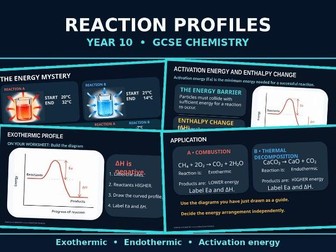
GCSE Chemistry – Year 10 Reaction Profiles | Complete Editable PowerPoint Lesson A comprehensive, classroom-ready GCSE Chemistry lesson covering reaction energy profiles, exothermic and endothermic reactions, bond breaking and making, activation energy (Ea) and overall energy change (ΔH). Designed for Year 10 Chemistry, this visually structured lesson combines clear scientific explanations, reaction profile diagrams, worked examples, scaffolded drawing activities, questioning and independent practice. Learning objectives: Explain why breaking chemical bonds requires energy and forming bonds releases energy. Describe activation energy and overall energy change. Interpret and draw exothermic and endothermic reaction profiles. Explain the relationship between the energy of reactants and products. Lesson content includes: Engaging temperature-change starter: The Energy Mystery. Exothermic versus endothermic reactions. Identifying and challenging common misconceptions about energy transfer. Chemical reactions and the rearrangement of atoms. BENDOMEXO memory aid: Breaking bonds takes in energy; making bonds releases energy. Bond energy comparisons using numerical examples. Introduction to activation energy (Ea) and enthalpy change (ΔH). Detailed exothermic and endothermic reaction profile diagrams. Scaffolded reaction profile drawing activities. Labelling activation energy and overall energy change. Application to combustion and thermal decomposition reactions. Interpreting unfamiliar reaction profiles. Discussion questions, knowledge checks and retrieval practice. Worked answers and model diagrams. Resource details: Editable PowerPoint presentation. Designed for GCSE Chemistry (Year 10). Includes scientific diagrams, worked examples and formative assessment questions. Builds from prior knowledge of energy transfers towards independent interpretation of reaction profiles. Suitable for specialist and non-specialist Chemistry teachers. Useful for introducing reaction profiles or revisiting the topic before assessments. Teaching approach: The lesson begins with familiar temperature changes before developing pupils’ understanding of energy transfers during chemical reactions. Pupils progress from identifying exothermic and endothermic processes to explaining bond energy transfers, interpreting activation energy and drawing accurate reaction profiles. The sequence uses clear modelling, scaffolded practice, independent application and retrieval questions to support understanding. Ideal for: Year 10 GCSE Chemistry. GCSE Energy Changes topics. Introducing reaction profiles and activation energy. Developing scientific graph interpretation and drawing skills. Revision and consolidation of exothermic and endothermic reactions. Curriculum links: GCSE Chemistry – Energy Changes, exothermic and endothermic reactions, activation energy, reaction profiles and bond energies
GCSE Chemistry: Reaction Profiles v6 WorkbookQuick View
DKENNY1974

GCSE Chemistry: Reaction Profiles v6 Workbook

(0)
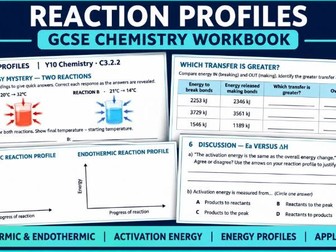
Designed to accompany the Reaction Profiles v6 PowerPoint lesson, available separately, this is a printable GCSE Chemistry workbook covering exothermic and endothermic reactions, bond energy transfers, activation energy and reaction-profile drawing. Includes both PDF and editable Word versions.
KS3 Science Year 8: Electric Current Lesson 1Quick View
DKENNY1974

KS3 Science Year 8: Electric Current Lesson 1

(0)
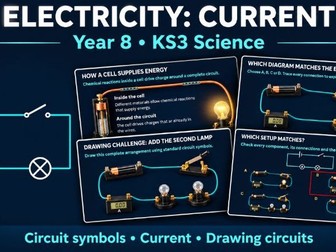
KS3 Science – Year 8 Electricity: Electric Current | Complete Editable PowerPoint Lesson A comprehensive, classroom-ready Year 8 science lesson introducing electric current, electrical components, circuit symbols and simple circuit diagrams. Designed for KS3 secondary science, this structured lesson combines clear scientific explanations, visual models, questioning and progressively challenging activities. Learning objectives: Recognise common electrical components and their circuit symbols. Explain what electric current is and when it flows. Interpret and draw simple circuit diagrams. Lesson content includes: Engaging starter: Why won’t the torch light? Introduction to cells, batteries, lamps and switches. Conductors and insulators. Complete and incomplete electrical circuits. Explanation of electric current and moving charge. Measuring current using an ammeter. Addressing the misconception that lamps use up current. Introduction to the internal structure of batteries and how cells supply energy. Circuit symbol recognition and diagram-matching exercises. Scaffolded circuit-drawing activities with increasing challenge. Answers, model diagrams and final knowledge-check questions. Resource details: Editable PowerPoint presentation. Designed for a 60-minute KS3 science lesson. Suitable for Year 8 and adaptable for other KS3 classes. Includes visual explanations, worked examples and opportunities for formative assessment. Useful for science specialists, trainee teachers and non-specialists delivering KS3 electricity. Teaching approach: The lesson progresses from familiar electrical equipment to abstract circuit representations, with opportunities for retrieval, explanation, modelling, independent practice and checking understanding. Particularly useful for developing pupils’ confidence with circuit symbols, understanding that current flows around a complete circuit and preparing for more advanced electricity topics. Please note: The presentation includes an external YouTube video link. Practical electrical activities should follow your school’s risk assessment and equipment guidance.