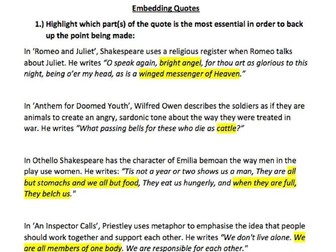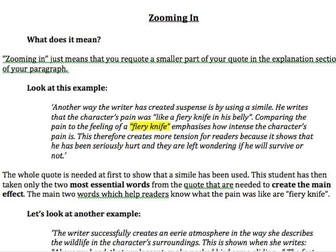
A resource to get students used to selecting the most relevant section of a quote and embedding it in a sentence in a way that makes grammatical sense. Suggested answers included.
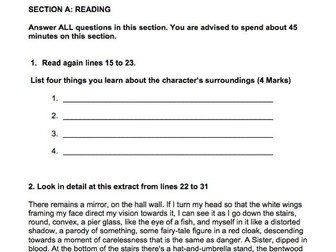
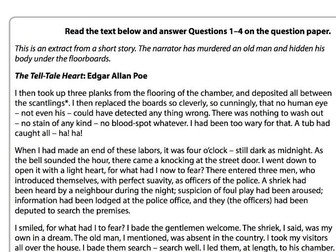
A full AQA-style Paper 1 with an extract from The Handmaid’s Tale. A separate mark scheme is included with suggested ideas for answer content. GCSE 9-1 English Language
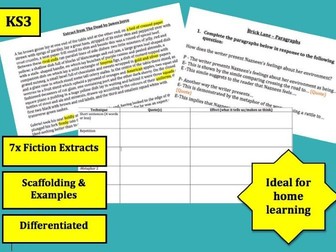
7 Extracts and questions for KS3 of all abilities to help develop skills of fiction analysis and paragraph writing.
Many of the extracts come with additional scaffolding tasks to aid lower ability students.
Some have comprehension style questions and others more essay-style.
Each can easily be made easier / more difficult by adding or removing the scaffolding activities.
This sheet goes into detail about each component of a PEER paragraph within a literature essay and what should be included. Each section includes an example and the examples are brought together at the end to show students how each component fits together to form a logical paragraph.
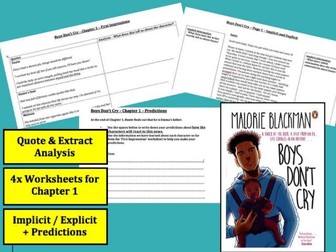
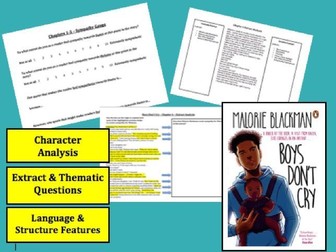
A set of 4 worksheets designed to support the teaching of Chapter 1 of Malorie Blackman’s ‘Boys Don’t Cry’.
Teaches:
Predictions
Summarising
Character Analysis
Quote Analysis
Extract Analysis
Implicit vs Explicit Information
GCSE 9-1 English Literature Boys Don’t Cry - Malorie Blackman
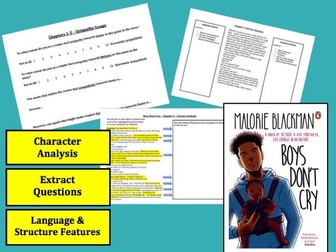
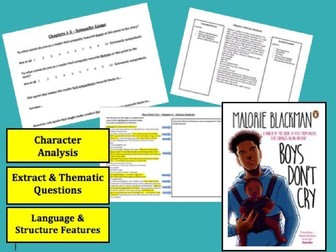
4x worksheets to support the study of chapters 3-6.
Includes:
Extract analysis
Analysis of character stereotypes
Analysis of reader response / sympathy
Language and structure features
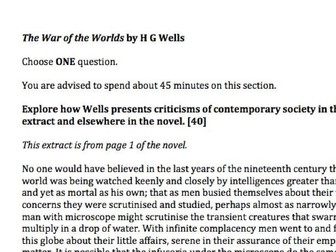
War of the Worlds OCR Style Questions + Indicative Content. An extract question plus a thematic question. Both with suggestions of indicative content, including context, in a separate document
GCSE 9-1 English literature
GCSE 9-1 English Literature Boys Don’t Cry - Malorie Blackman
5x worksheets to support the study of chapters 7-10.
Includes:
Extract analysis
Analysis of character and themes
Key quotes
Language and structure features
GCSE 9-1 English Literature Boys Don’t Cry - Malorie Blackman
5x worksheets to support the study of chapters 10-15
Includes:
Quote table
Character analysis task
Extract annotation task
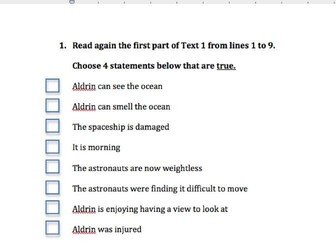
Comprehension-style questions
Creative & transactional writing tasks
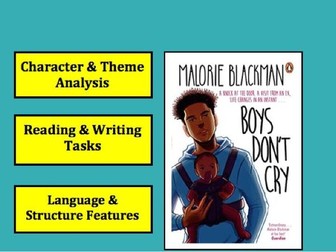
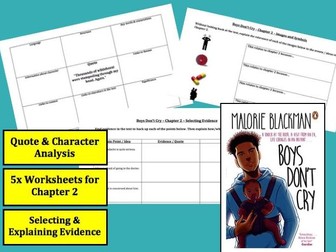
3 tasks (5x worksheets) to support the teaching of Boys Don’t Cry by Malorie Blackman.
Teaches:
Quote Analysis
Character Analysis
Selecting Evidence
Explaining Evidence
Relating symbols to themes
6 worksheets on GCSE 9-1 English Literature - Boys Don’t Cry by Malorie Blackman for chapters 16-25
Including:
Quote analysis
Dual coding
Extract analysis
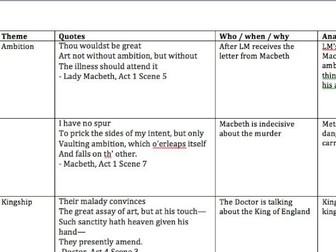
A table of quotes from Macbeth for students to place in context and then analyse. Quotes are organised by key themes in the play. A separate document contains a completed table with suggested answers in note form. GCSE 9-1 English Literature.
6x worksheets to support the teaching of GCSE 9-1 English Literature Boys Don’t Cry by Malorie Blackman - Chapters 25-30
Including:
Close textual analysis practice
Thematic analysis
Character development
Comparative task
Writing task
Quote analysis
Please check out our other resources and bundles for Boys Don’t Cry and let us know if you have any requests.
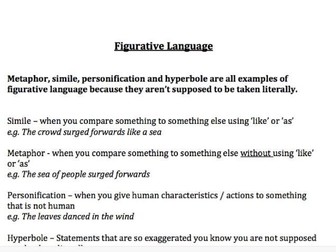
A worksheet showing the difference between the types of figurative language students might come across at GCSE and a task requiring them to identify which type a sentence is an example of, and to come up with their own.
A sheet explaining what it means to ‘zoom in’ on words within a quote. Includes examples, a breakdown of the process, and a short activity to check understanding.
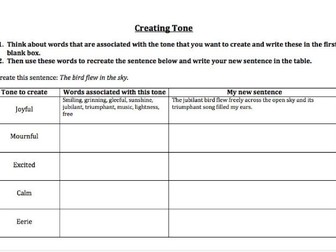
The first resource is a word bank for tone that students can use to avoid the more simplistic choices ‘good’ ‘negative’ ‘sad’ etc. when writing about a text.
The second resource is an activity to assist with creative writing where students think about words associated with the tone they want to create and then practice weaving them into a sentence.