EDUQAS A-level Biology Plant reproduction Whole topic PowerPoints & Q'sQuick View
Irondanimal

EDUQAS A-level Biology Plant reproduction Whole topic PowerPoints & Q's

(1)
A series of five PowerPoints with two sets of exam questions to cover the basics of the plant reproduction topic for A-level biology (EDUQAS exam board) also useful for WJEC. Key-words: Flower Structure Sepal Petal Stamen Anther Filament Carpel Stigma Style Ovary Ovule Receptacle Nectary Pollination Pollination Self-pollination Cross-pollination Insect-pollinated Wind-pollinated Pollinators Adaptations for pollination Fertilisation Double fertilisation Pollen tube Generative nucleus Tube nucleus Syngamy Zygote Endosperm nucleus Seed and Fruit Development Seed dispersal Fruit formation Pericarp Testa Cotyledon Plumule Radicle Dormancy Germination Asexual Reproduction Vegetative propagation Runners Tubers Bulbs Cloning Micropropagation Tissue culture Life Cycles and Alternation of Generations Sporophyte Gametophyte Meiosis Mitosis Spore Gamete Zygote Experimental Techniques Germination experiments Dissection of flowers Microscopy of pollen tubes Seed viability tests
EDUQAS A-level biology Digestion in RuminantsQuick View
Irondanimal

EDUQAS A-level biology Digestion in Ruminants

(1)
Contains details of Ruminant anatomy and the biochemistry of ruminant digestion. kEY-WORDS: Digestion in Ruminants – Key Terms Ruminant Anatomy Ruminant Herbivore Foregut fermenter Rumen Reticulum Omasum Abomasum Oesophageal groove Microbial Digestion Cellulose Cellulase Symbiotic bacteria Anaerobic fermentation Methanogens Volatile fatty acids (VFAs) Methane production Digestive Processes Mechanical digestion Chemical digestion Regurgitation Cud chewing (rumination) Absorption Peristalsis Enzymes and Substrates Amylase Protease Lipase Cellulase (from microbes) Substrate-specific digestion Nutrient Absorption Villi Capillaries Lacteals Diffusion Active transport Comparison with Non-Ruminants Monogastric digestion Hindgut fermenters (e.g., horses, rabbits) Efficiency of cellulose digestion Ecological and Evolutionary Aspects Adaptation to herbivory Co-evolution with gut microbiota Energy yield from plant material
AQA A-level biology 3.5.2 Respiration Whole topicQuick View
Irondanimal

AQA A-level biology 3.5.2 Respiration Whole topic

(0)
PowerPoint including everything you need to deliver the following topics, broken up into sections according to the specification including questions and answers tailored to the AQA A-level specification: 3.5.2 Respiration Key-words: Key Words and Phrases Respiration Aerobic respiration Anaerobic respiration Glycolysis Link reaction Krebs cycle (Citric acid cycle) Oxidative phosphorylation Electron transport chain (ETC) Chemiosmosis ATP (Adenosine triphosphate) ADP (Adenosine diphosphate) NAD / NADH FAD / FADH₂ Coenzyme A Acetyl-CoA Pyruvate Mitochondrion / Mitochondria Cristae Matrix Intermembrane space Substrate-level phosphorylation Proton gradient ATP synthase Lactate fermentation Ethanol fermentation Myoglobin Bomb calorimeter
AQA A-level biology 3.5.3 Energy and ecosystems & 3.5.4 Nutrient cyclesQuick View
Irondanimal

AQA A-level biology 3.5.3 Energy and ecosystems & 3.5.4 Nutrient cycles

(0)
PowerPoints including everything you need to deliver the following topics, broken up into sections according to the specification including questions and answers tailored to the AQA A-level specification: Key-words: 3.5.3 Energy and Ecosystems Ecosystem Biomass Trophic level Producer Consumer Primary consumer Secondary consumer Tertiary consumer Decomposer Food chain Food web Pyramid of biomass Pyramid of energy Gross primary productivity (GPP) Net primary productivity (NPP) Respiration Energy transfer Energy loss Efficiency Calorimetry Dry mass Productivity Photosynthesis Respiratory loss ® 3.5.4 Nutrient Cycles Nutrient Nutrient cycle Nitrogen cycle Ammonification Nitrification Nitrogen fixation Denitrification Decomposition Saprobionts Mycorrhizae Phosphorus cycle Phosphate ions Assimilation Leaching Eutrophication Natural fertilisers Artificial fertilisers Organic matter Run-off Algal bloom Oxygen depletion Soil fertility
AQA A-level biology 3.4.3 Genetic diversity 3.4.4 Genetic diversity & adaptation Whole topicQuick View
Irondanimal

AQA A-level biology 3.4.3 Genetic diversity 3.4.4 Genetic diversity & adaptation Whole topic

(0)
PowerPoint including everything you need to deliver the following topics, broken up into sections according to the specification including questions and answers tailored to the AQA A-level specification: 3.4.3 3.4.3 Genetic diversity can arise as a result of mutation or during meiosis 3.4.4 Genetic diversity & adaptation Genetic diversity Allele Gene pool Mutation Substitution mutation Deletion mutation Frameshift Base sequence Silent mutation Missense mutation Nonsense mutation Meiosis Crossing over Independent assortment Random fertilisation Gametes Zygote Diploid/Haploid Homologous chromosomes Chromatid Genotype/Phenotype Natural selection Variation Adaptation Selective pressure Survival of the fittest Reproductive success Allele frequency Directional selection Stabilising selection Disruptive selection Genetic bottleneck Founder effect Speciation Environmental change Evolution Phenotype Selection pressure Inherited characteristics
AQA A-level biology 3.3.4.2 Mass transport in plants Whole topicQuick View
Irondanimal

AQA A-level biology 3.3.4.2 Mass transport in plants Whole topic

(0)
PowerPoints including everything you need to deliver the following topics, broken up into sections according to the specification including questions and answers tailored to the AQA A-level specification: 3.3.4.2 Mass transport in plants Key Vocabulary: Mass Transport in Plants Phloem Transport (Translocation) Phloem Sieve tube elements Companion cells Plasmodesmata Translocation Source Sink Sucrose Mass flow hypothesis Hydrostatic pressure Phloem loading Phloem unloading Active transport Co-transport ATP Proton gradient (H⁺ gradient) Symplast pathway Apoplast pathway Xylem Transport Xylem Vessel elements Lignin Cohesion-tension theory Transpiration Water potential Adhesion Cohesion Root pressure Capillarity Experimental Evidence Ringing experiment Tracer experiment ¹⁴CO₂ / ¹⁴C-sucrose Autoradiography Aphid stylet technique Metabolic inhibitors Girdling
AQA A-level biology 3.7.4 Populations in ecosystems Whole TopicQuick View
Irondanimal

AQA A-level biology 3.7.4 Populations in ecosystems Whole Topic

(0)
PowerPoints including everything you need to deliver the following topics, broken up into sections according to the specification including questions and answers tailored to the AQA A-level specifcation. 3.7.4 Populations in ecosystems Key-words: Ecological Concepts Ecosystem Community Population Habitat Niche Abiotic factors Biotic factors Microhabitat Biodiversity Population Dynamics Population size Carrying capacity Limiting factors Predator-prey relationships Intraspecific competition Interspecific competition Lag phase Exponential (log) phase Stationary phase Death phase Sampling and Data Collection Quadrat Transect (line and belt) Random sampling Systematic sampling Mark-release-recapture Lincoln Index Index of diversity Species richness Species evenness Succession Primary succession Secondary succession Pioneer species Climax community Seral stages Plagioclimax Deflected succession Human Impact and Conservation Conservation Preservation Sustainable management Rewilding Habitat restoration Grazing Ploughing Reintroduction
AQA A-level biology 3.7.1 Inheritance Whole TopicQuick View
Irondanimal

AQA A-level biology 3.7.1 Inheritance Whole Topic

(0)
PowerPoints including everything you need to deliver the following topics, broken up into sections according to the specification including questions and answers tailored to the AQA A-level specifcation. 3.7.1 Inheritance Gene Allele Locus Genotype Phenotype Homozygous Heterozygous Dominant Recessive Codominance Incomplete dominance Genetic Crosses Monohybrid cross Dihybrid cross Punnett square Test cross F1 generation F2 generation Expected ratio Observed ratio Linkage & Recombination Autosomal linkage Sex linkage Recombination Crossing over Recombinant frequency Genetic map Chromosomes & Sex Determination Autosomes Sex chromosomes (X and Y) XX / XY system Sex-linked traits Variation & Mutation Mutation Point mutation Frameshift mutation Silent mutation Missense mutation Nonsense mutation Statistical Analysis Chi-squared test Null hypothesis Degrees of freedom p-value Significance level
AQA A-level biology 3.6.1 Stimuli and response Whole topicQuick View
Irondanimal

AQA A-level biology 3.6.1 Stimuli and response Whole topic

(0)
PowerPoints including everything you need to deliver the following topics, broken up into sections according to the specification including questions and answers tailored to the AQA A-level specification: 3.6.1 Stimuli, both internal and external, are detected and lead to a response (A-level only) 3.6.1.1 Survival and response (A-level only) 3.6.1.2 Receptors (A-level only) 3.6.1.3 Control of heart rate (A-level only) Key-words: Stimulus Receptor Effector Response Taxis (positive/negative) Kinesis Reflex arc Sensory neurone Relay neurone Motor neurone Synapse Coordinator Nervous system Innate behaviour Learned behaviour Simple reflex Survival advantage Receptor Generator potential Action potential Pacinian corpuscle Stretch-mediated sodium channels Sensory neurone Transduction Mechanoreceptor Stimulus detection Threshold All-or-nothing principle Frequency of impulses Adaptation Myogenic Sinoatrial node (SAN) Atrioventricular node (AVN) Bundle of His Purkyne fibres Medulla oblongata Sympathetic nervous system Parasympathetic nervous system Chemoreceptors Baroreceptors Acetylcholine Noradrenaline (norepinephrine) Heart rate regulation Autonomic nervous system Cardioacceleratory centre Cardioinhibitory centre
AQA A-level biology 3.4.5 Species and taxonomy 3.4.6 Biodiversity 3.4.7 Investigating diversityQuick View
Irondanimal

AQA A-level biology 3.4.5 Species and taxonomy 3.4.6 Biodiversity 3.4.7 Investigating diversity

(0)
PowerPoint including everything you need to deliver the following topics, broken up into sections according to the specification including questions and answers tailored to the AQA A-level specification: 3.4.5 Species and taxonomy 3.4.6 Biodiversity 3.4.7 Investigating diversity 3.4.5 Species and Taxonomy Species Binomial nomenclature Taxonomy Hierarchical classification Domain Kingdom Phylum Class Order Family Genus Phylogeny Phylogenetic tree Evolutionary relationships Courtship behaviour Reproductive isolation Artificial classification Natural classification Biodiversity Species richness Species evenness Genetic diversity Ecosystem diversity Index of diversity Habitat diversity Monoculture Agriculture and biodiversity Conservation Human impact on biodiversity Random sampling Quadrat Transect Mean Standard deviation Statistical test Species frequency Percentage cover DNA base sequences mRNA base sequences Amino acid sequences Genome sequencing Molecular evidence Variation Continuous variation Discontinuous variation
AQA A-level biology 3.4 Genetic information 3.4.1 DNA genes& chromosomes 3.4.2 DNA protein synthesisQuick View
Irondanimal

AQA A-level biology 3.4 Genetic information 3.4.1 DNA genes& chromosomes 3.4.2 DNA protein synthesis

(0)
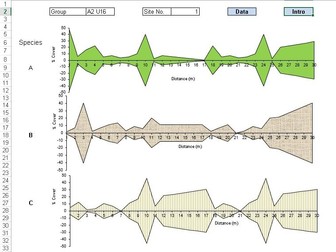
PowerPoints including everything you need to deliver the following topics, broken up into sections according to the specification including questions and answers tailored to the AQA A-level specification: 3.4 Genetic information, variation and relationships between organisms 3.4.1 DNA, genes and chromosomes 3.4.2 DNA and protein synthesis Key-words: DNA (Deoxyribonucleic acid) Gene Allele Locus Chromosome Histone Genome Genetic code Triplet code Universal code Degenerate code Non-overlapping code Eukaryotic DNA Prokaryotic DNA Plasmid Introns Exons Homologous chromosomes Diploid Haploid Transcription Translation RNA (Ribonucleic acid) mRNA (Messenger RNA) tRNA (Transfer RNA) rRNA (Ribosomal RNA) RNA polymerase Codon Anticodon Polypeptide Ribosome Start codon Stop codon Splicing Pre-mRNA Post-transcriptional modification Peptide bond Amino acid
AQA A-level biology 3.5.1 Photosynthesis Whole topicQuick View
Irondanimal

AQA A-level biology 3.5.1 Photosynthesis Whole topic

(0)
PowerPoint including everything you need to deliver the following topics, broken up into sections according to the specification including questions and answers tailored to the AQA A-level specification: 3.5.1 Photosynthesis Photosynthesis Autotroph Chloroplast Thylakoid Grana Stroma Chlorophyll Light-dependent reaction Light-independent reaction (Calvin cycle) Photolysis Photoactivation Electron transport chain (ETC) ATP synthase Chemiosmosis NADP⁺ / NADPH Photophosphorylation (cyclic and non-cyclic) Proton gradient Water splitting Carbon fixation RuBP (ribulose bisphosphate) RuBisCO (enzyme) GP (glycerate-3-phosphate) TP / G3P (triose phosphate / glyceraldehyde-3-phosphate) Regeneration of RuBP ATP and NADPH usage Light intensity Carbon dioxide concentration Temperature Limiting factor Compensation point Rate of photosynthesis Control variables
AQA A-level biology 3.2.4 Cell recognition and the immune system Whole topicQuick View
Irondanimal

AQA A-level biology 3.2.4 Cell recognition and the immune system Whole topic

(0)
A long PowerPoint including everything you need to deliver the subject content for the following topics, broken up into sections according to the specification. 3.2.4 Cell recognition and the immune system Key words: Antigen Pathogen Phagocytosis Phagocyte Lysosome Antigen-presenting cell (APC) T lymphocytes (T cells) Helper T cells (Th cells) Cytotoxic T cells (Tc cells) B lymphocytes (B cells) Plasma cells Memory cells Antibody Monoclonal antibodies Clonal selection Clonal expansion Primary immune response Secondary immune response Vaccination Herd immunity Active immunity Passive immunity Natural immunity Artificial immunity HIV AIDS ELISA
AQA A-level biology 3.6.2 Nervous coordination & 3.6.3 Skeletal musclesQuick View
Irondanimal

AQA A-level biology 3.6.2 Nervous coordination & 3.6.3 Skeletal muscles

(0)
PowerPoints including everything you need to deliver the following topics, broken up into sections according to the specification including questions and answers tailored to the AQA A-level specification: 3.6.2 Nervous coordination (A-level only) 3.6.2.1 Nerve impulses (A-level only 3.6.2.2 Synaptic transmission (A-level only 3.6.3 Skeletal muscles are stimulated to contract by nerves and act as effectors (A-level only) Key words: Neurone Resting potential Action potential Depolarisation Repolarisation Hyperpolarisation Refractory period Sodium-potassium pump Voltage-gated ion channels Threshold potential All-or-nothing principle Saltatory conduction Myelinated vs non-myelinated neurones Nodes of Ranvier Synapse Presynaptic neurone Postsynaptic neurone Synaptic cleft Synaptic vesicles Neurotransmitter (e.g. acetylcholine) Cholinergic synapse Acetylcholinesterase Receptor proteins Excitatory post-synaptic potential (EPSP) Inhibitory post-synaptic potential (IPSP) Summation (spatial and temporal) Unidirectional transmission Synaptic fatigue Habituation Skeletal muscle Muscle fibre Myofibril Sarcomere Actin Myosin Tropomyosin Troponin Sliding filament theory Cross-bridge ATP Calcium ions (Ca²⁺) Sarcoplasmic reticulum T-tubules Neuromuscular junction Motor unit Fast-twitch fibres Slow-twitch fibres Creatine phosphate Aerobic respiration Anaerobic respiration
OCR A-level biology 6.3.1 Ecosystems Whole topicQuick View
Irondanimal

OCR A-level biology 6.3.1 Ecosystems Whole topic

(0)
Includes everything you need to deliver this topic, numbered and in order: PowerPoint presentations covering the whole of the topic matched to the 2025 specification. A homework pack for the topic including key-word glossary for students to fill in, exam questions and self-assessment. Including mark-scheme Key words: Ecosystem Biotic factors Abiotic factors Biomass Trophic level Producer Consumer Decomposer Detritivore Food chain Food web Pyramid of biomass Pyramid of energy Productivity Gross primary productivity (GPP) Net primary productivity (NPP) Succession Primary succession Secondary succession Pioneer species Climax community Plagioclimax Seral stage Nitrogen cycle Nitrogen fixation Nitrification Denitrification Ammonification Carbon cycle Decomposition Respiration Photosynthesis Leaching Mycorrhizae Rhizobium Azotobacter Saprobiont
AQA A-level biology 3.3 Exchange pt2 3.3.3 Digestion and absorptionQuick View
Irondanimal

AQA A-level biology 3.3 Exchange pt2 3.3.3 Digestion and absorption

(0)
A long PowerPoint including everything you need to deliver the following topics, broken up into sections according to the specification. 3.3.3 Digestion and absorption Amylase Maltase Endopeptidase Exopeptidase Dipeptidase Lipase Bile Bile salts Micelles Triglyceride Monoglyceride Co-transport Sodium-potassium pump Facilitated diffusion Villus (villi) Microvilli Lumen Epithelial cells Hydrolysis Absorption
AQA A-level biology 3.3.4.1 Mass transport in animalsQuick View
Irondanimal

AQA A-level biology 3.3.4.1 Mass transport in animals

(0)
A long PowerPoint including everything you need to deliver the following topics, broken up into sections according to the specification. Includes questions and answers. 3.3.4.1 Mass transport in animals Key-words: Circulatory System & Heart Double circulatory system Pulmonary circulation Systemic circulation Atrium Ventricle Atrioventricular valve Semilunar valve Cardiac cycle Diastole Systole Myogenic stimulation Sinoatrial node (SAN) Atrioventricular node (AVN) Bundle of His Purkyne tissue Electrocardiogram (ECG) Transport Molecules Haemoglobin Oxyhaemoglobin Partial pressure of oxygen (pO₂) Partial pressure of carbon dioxide (pCO₂) Oxygen dissociation curve Bohr effect Affinity for oxygen Fetal haemoglobin Myoglobin Blood & Vessels Artery Vein Capillary Endothelium Lumen Tunica media Tunica externa Blood plasma Tissue fluid Lymph Lymphatic system Hydrostatic pressure Osmotic pressure Oncotic pressure Ultrafiltration Reabsorption
AQA A-level biology 3.7.2 Populations 3.7.3 evolution speciation Whole TopicQuick View
Irondanimal

AQA A-level biology 3.7.2 Populations 3.7.3 evolution speciation Whole Topic

(0)
PowerPoints including everything you need to deliver the following topics, broken up into sections according to the specification including questions and answers tailored to the AQA A-level specifcation. 3.7.2 Populations 3.7.3 Evolution may lead to speciation 3.7.2 – Populations Species Population Gene pool Allele frequency Hardy–Weinberg principle Hardy–Weinberg equation Genotype frequency Phenotype frequency Genetic equilibrium 3.7.3 Evolution May Lead to Speciation – Key Terms Gene pool Allele frequency Genetic variation Mutation Natural selection Directional selection Stabilising selection Disruptive selection Speciation Allopatric speciation Sympatric speciation Reproductive isolation Geographical isolation Behavioural isolation Temporal isolation Genetic drift Founder effect Bottleneck effect Adaptive radiation
AQA A-level biology 3.6.4 Homeostasis is the maintenance of a stable internal environmentQuick View
Irondanimal

AQA A-level biology 3.6.4 Homeostasis is the maintenance of a stable internal environment

(0)
PowerPoints including everything you need to deliver the following topics, broken up into sections according to the specification including questions and answers tailored to the AQA A-level specifcation: 3.6.4 Homeostasis is the maintenance of a stable internal environment- complete topic 3.6.4.1 Principles of homeostasis and negative feedback 3.6.4.2 Control of blood glucose concentration 3.6.4.3 Control of blood water potential Key-words: Homeostasis Negative feedback Set point Receptor Effector Control centre (coordinator) Stimulus Response Thermoregulation Osmoregulation Blood glucose regulation Endocrine system Nervous system Hormones Insulin Glucagon Pancreas Islets of Langerhans Liver Glycogenesis Glycogenolysis Gluconeogenesis ADH (antidiuretic hormone) Hypothalamus Posterior pituitary Osmoreceptors Collecting duct Aquaporins Loop of Henle Vasoconstriction Vasodilation Shivering Sweating Diabetes mellitus Type 1 diabetes Type 2 diabetes Insulin resistance Hyperglycaemia Hypoglycaemia
OCR A-level biology 6.3.2 Populations and sustainability Whole topicQuick View
Irondanimal

OCR A-level biology 6.3.2 Populations and sustainability Whole topic

(0)
includes everything you need to deliver this topic, numbered and in order: PowerPoint presentations covering the whole of the topic matched to the 2025 specification. A homework pack for the topic including key-word glossary for students to fill in, exam questions and self-assessment. Including mark-scheme Key words: Population Community Ecosystem Carrying capacity Limiting factors Density-dependent Density-independent Predator Prey Interspecific competition Intraspecific competition Conservation Preservation Sustainability Sustainable management Deforestation Overfishing Monoculture In situ conservation Ex situ conservation Myxomatosis Population growth Lag phase Log phase Stationary phase Cyclic fluctuations
AQA A-level biology 3.2.3 Transport across cell membranes whole topicQuick View
Irondanimal

AQA A-level biology 3.2.3 Transport across cell membranes whole topic

(0)
A long PowerPoint including everything you need to deliver the following topics, broken up into sections according to the specification. 3.2.3 Transport across cell membranes Structure of Cell Membranes Phospholipid bilayer Hydrophilic head Hydrophobic tail Fluid mosaic model Intrinsic proteins Extrinsic proteins Glycoproteins Glycolipids Cholesterol Transport Mechanisms Diffusion Facilitated diffusion Osmosis Water potential Isotonic Hypertonic Hypotonic Active transport Carrier proteins Channel proteins ATP (adenosine triphosphate) Bulk Transport Endocytosis Exocytosis Phagocytosis Pinocytosis Practical and Experimental Terms Serial dilution Control variables Dependent variable Independent variable Calibration curve Percentage change in mass