Como Agua Para Chocolate: Realismo MágicoQuick View
CarmenPC

Como Agua Para Chocolate: Realismo Mágico

(1)
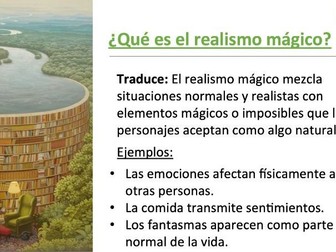
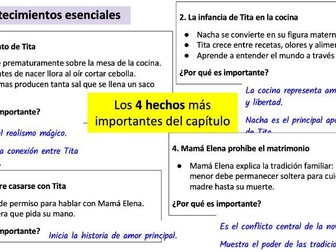
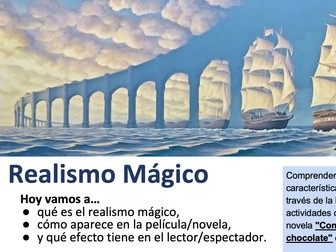
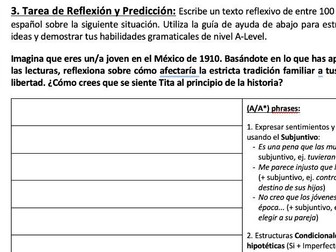
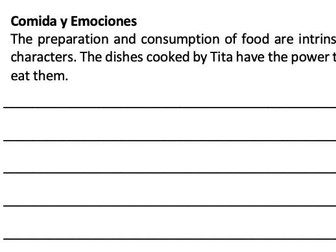
An engaging A-Level Spanish lesson exploring the concept of magical realism through Como agua para chocolate by Laura Esquivel. Students learn how realistic situations are combined with magical or impossible elements that characters accept as normal. The lesson develops reading, translation, discussion and creative writing skills through authentic literary-style texts and collaborative activities. Students will: understand the key features of magical realism compare realism, fantasy and magical realism practise translation between Spanish and English analyse how emotions and food symbolise deeper meaning identify magical realism in literary extracts discuss the effect of magical elements on characters and readers create their own magical realism scene using descriptive language The resource includes guided reading tasks, classification activities, comprehension questions, discussion prompts, scaffolded planning grids and a creative writing task based around emotions, food and everyday life. Ideal for A-Level Spanish literature, cultural studies or creative writing lessons.
Como agua para chocolate - Personajes / Like Water for Chocolate: CharactersQuick View
CarmenPC

Como agua para chocolate - Personajes / Like Water for Chocolate: Characters

(0)
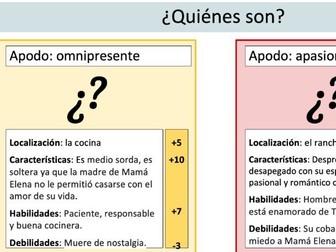
A-Level Spanish resource focused on the main characters of Like Water for Chocolate by Laura Esquivel. This lesson and accompanying worksheet help students develop a detailed understanding of characterisation, relationships, symbolism and literary analysis while building the advanced vocabulary required for examination success. Students explore the novel’s key characters, including Tita, Mamá Elena, Pedro, Rosaura, Gertrudis, Dr John Brown, Nacha and Chencha. Through a range of engaging activities, students analyse each character’s personality, motivations, strengths, weaknesses and symbolic role within the narrative. This resource includes: Advanced character vocabulary and literary terminology. Translation and vocabulary-building activities. Interactive character identification tasks and quizzes. Character relationship analysis using a family tree and visual prompts. Guided discussion and reflection questions. A research matrix designed to support AO4 contextual analysis and essay writing. Opportunities to explore themes such as authority, rebellion, gender expectations, family duty and personal freedom through character study. Students are encouraged to evaluate how Laura Esquivel uses different characters to represent wider social, political and cultural ideas, including the oppression of women, the Mexican Revolution, traditional family structures and the conflict between duty and desire. Ideal for classroom teaching, independent study, revision, homework or preparation for AQA A-Level Spanish Paper 2 literary essays. Suitable for Year 12 and Year 13 students studying Like Water for Chocolate.
Como agua para chocolate: Contexto histórico - Like Water for Chocolate: Historical ContextQuick View
CarmenPC

Como agua para chocolate: Contexto histórico - Like Water for Chocolate: Historical Context

(0)
Homework resource for A-Level Spanish based on Like Water for Chocolate by Laura Esquivel. This worksheet develops students’ understanding of the novel’s historical, social and cultural context through vocabulary activities, reading comprehension, critical analysis and written reflection. Students explore key aspects of early twentieth-century Mexican society, including: The Mexican Revolution and the role of women. Traditional family structures and parental authority. The influence of the Manual de Carreño and social etiquette. Courtship, marriage proposals and arranged marriages. The kitchen as a space of identity, power and resistance. This resource includes: Thematic vocabulary matching activities. Four contextual reading texts with comprehension questions in Spanish. A reflective writing task of approximately 100 words. High-level linguistic support for A/A* students, including subjunctive structures, hypothetical conditional sentences and advanced thematic vocabulary. Ideal for homework, independent learning, flipped learning, essay preparation, or consolidating students’ understanding of the novel’s context before studying key themes and characters in greater depth. Suitable for Year 12 and Year 13 students following the AQA A-Level Spanish specification.
Como agua para chocolate - Los Temas / Like Water for Chocolate: Key ThemesQuick View
CarmenPC

Como agua para chocolate - Los Temas / Like Water for Chocolate: Key Themes

(0)
A-Level Spanish independent worksheet resource focused on the major themes of Like Water for Chocolate by Laura Esquivel. This worksheet helps students develop the analytical language, cultural knowledge and literary understanding required for high-level discussion and essay writing. Students explore the key themes that underpin the novel, including: Love and passion Food and emotions Tradition and rebellion Gender roles Family and obligations Magic and magical realism Identity and self-discovery Pain and suffering This resource includes: Advanced thematic vocabulary translation activities. Literary terminology linked to A-Level analysis. Translation practice focusing on key thematic extracts from the novel. Opportunities to develop sophisticated written Spanish using topic-specific vocabulary and complex grammatical structures. Preparation for Paper 2 literary analysis and essay-writing tasks. The worksheet encourages students to analyse how Laura Esquivel presents emotions, family expectations, gender inequality, magical realism and personal freedom throughout the novel. It also supports students in building the specialist vocabulary needed to discuss literary themes confidently in both speaking and writing assessments. Ideal for homework, independent study, revision, flipped learning or as preparation for classroom discussion and essay writing. Suitable for Year 12 and Year 13 students following the AQA A-Level Spanish specification.
Como Agua Para Chocolate: Film Study GuideQuick View
CarmenPC

Como Agua Para Chocolate: Film Study Guide

(0)
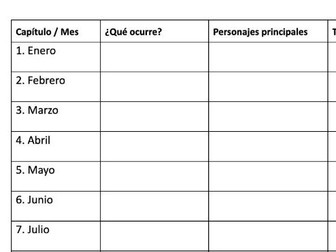
An A-Level Spanish film study lesson designed to help students understand Como agua para chocolate through the viewing of the 1992 film adaptation directed by Alfonso Arau. This resource supports students in analysing key characters, themes, symbolism and examples of magical realism while making connections between the film and Laura Esquivel’s novel. Students will: develop a deeper understanding of the novel through film analysis identify and explore major themes such as tradition, repression, gender roles, family obligations and forbidden love analyse the use of magical realism and symbolism in key scenes track character development and relationships throughout the story understand the historical and cultural context of the Mexican Revolution practise critical thinking and discussion skills in Spanish prepare for A-Level speaking and writing tasks linked to literature and film The lesson includes character relationship maps, guided viewing activities, thematic analysis tables, contextual questions, chapter-by-chapter film notes, and evaluative discussion questions. Students are encouraged to reflect on how cinematic techniques, emotions and food symbolism deepen their understanding of the novel and its central messages. Ideal for A-Level Spanish literature and film studies lessons, revision sessions or independent analysis activities.
Como agua para chocolate: Complete A-Level Spanish Teaching BundleQuick View
CarmenPC

Como agua para chocolate: Complete A-Level Spanish Teaching Bundle

7 Resources
A comprehensive teaching bundle for AQA A Level Spanish Paper 2, designed to support the study of Como agua para chocolate by Laura Esquivel. This collection provides everything needed to teach the novel with confidence, from introducing its historical and literary context to developing sophisticated essay-writing skills for the exam. Perfect for Year 12 and Year 13, the resources are fully editable, classroom-ready and designed to develop both AO3 (language accuracy) and AO4 (critical literary analysis). This bundle includes: Film Study Guide with guided viewing activities and film–novel comparisons. Magical Realism lesson exploring the conventions, symbolism and literary significance of the genre. Historical Context covering the Mexican Revolution, family traditions, gender roles and early twentieth-century Mexican society. Character Analysis of the novel’s main characters, relationships and development. Key Themes including love, passion, family, tradition, food, identity, freedom and rebellion. Chapters 1–4 Complete Lesson Pack featuring retrieval activities, translation, literary analysis, symbolism, speaking tasks and revision worksheets. Essay Writing Revision Lesson focused on developing A/A* analytical responses, sophisticated literary vocabulary, AO3 grammar and AO4 essay-writing techniques. Students will: Develop a secure understanding of the historical, social and cultural context of the novel. Analyse key characters, relationships and their symbolic significance. Explore major themes including forbidden love, family obligation, identity, freedom, passion and rebellion. Examine how food functions as a vehicle for emotion, communication and resistance. Identify and evaluate the role of magical realism throughout the novel. Compare literary and cinematic representations of key events and characters. Expand their range of sophisticated literary vocabulary and analytical language in Spanish. Improve translation, interpretation, discussion and essay-writing skills. Prepare confidently for AQA A Level Spanish Paper 2.
Spanish GCSE Revision: Writing Exam Practice - FREE TIME - EL TIEMPO LIBREQuick View
CarmenPC

Spanish GCSE Revision: Writing Exam Practice - FREE TIME - EL TIEMPO LIBRE

(0)
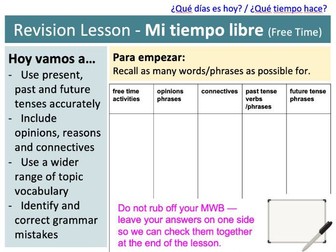
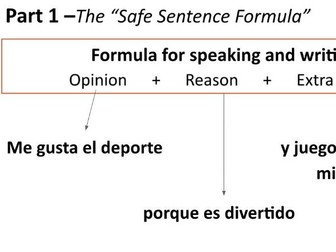
A complete GCSE Spanish revision lesson focused on preparing students for the writing exam through the topic of free time and hobbies. Students practise using present, past and future tenses accurately while developing opinions, reasons and complex sentences with connectives. Activities include vocabulary recall, matching exercises, grammar correction tasks, translation practice, sentence-building challenges and scaffolded speaking/writing prompts linked to sports, home activities and future plans.
KS3 Spanish - La músicaQuick View
CarmenPC

KS3 Spanish - La música

(1)
Engaging KS3 Spanish lesson on music and opinions using popular Spanish-speaking artists. Perfect for Year 7/8/) students learning or revising how to give opinions with reasons. This lesson introduces students to a range of Spanish and Latin artists through short, engaging activities. Students learn how to describe music, give opinions and justify their answers using simple sentence structures. Includes: Full PowerPoint lesson Vocabulary matching activity Structured opinion tasks Listening and discussion activities Mini whiteboard (MWB) tasks Cultural exposure to Spanish-speaking artists Artists featured: Shakira, Rosalía, Karol G, Enrique Iglesias, J Balvin, Bomba Estéreo, Luis Fonsi, Daddy Yankee and more. Skills covered: Giving opinions (me gusta / no me gusta) Justifying opinions (porque…) Describing music Speaking and listening Perfect for: KS3 Spanish (Year 7 / Year 8) Intro to GCSE-style opinion structures Cover lessons or end-of-term lessons
GCSE Spanish Foundation  - Theme 1 - New SpecQuick View
CarmenPC

GCSE Spanish Foundation - Theme 1 - New Spec

(0)
A complete GCSE Spanish Foundation exam support bundle for teachers and students. This resource includes 3 lesson presentations on sentence builders, exam writing and speaking structures, school and future plans, and photo card description practice using PALMA for Theme 1. It also includes a vocabulary list on school, opinions, time phrases, future plans and jobs, plus a homework worksheet with translation, tense recognition, reading comprehension, sentence-building and photo description tasks. Ideal for revision, cover lessons, homework, intervention, speaking preparation, writing practice, reading practice and exam skills lessons. Topics include describing yourself, free time, family, school, education, future plans and photo card strategies. Designed to help students build accurate, simple sentences in the present, past and future tenses for GCSE Spanish Foundation.
GCSE Spanish Speaking & Writing Booklet 2026Quick View
CarmenPC

GCSE Spanish Speaking & Writing Booklet 2026

(0)
GCSE Spanish booklet for speaking and writing exam prep – includes 71 key questions by topic, exam format guide, and student planning space. This student-friendly booklet supports both Speaking and Writing preparation for the AQA GCSE Spanish (2026 specification). Ideal for use throughout Years 10 and 11, it includes: What’s included: The full set of AQA GCSE questions (71 total) organised by theme and topic English translations to aid comprehension Clear instructions on how to structure answers with opinions, tenses, and justification Exam format breakdown: Role-play, Reading aloud, Photo card Lines for student planning and writing Suitable for independent revision, classroom prep, or homework Themes Covered: Theme 1: People and Lifestyle Theme 2: Popular Culture Theme 3: Communication & the World Around Us Ideal for Foundation and Higher tier students PDF version included for printing or digital use Perfect for speaking mock prep, writing tasks, and building exam confidence Suitable for: KS4 Spanish (14–16), both Higher and Foundation tiers. Lessons in a bundle that support this booklet: https://www.tes.com/teaching-resource/resource-13299673
GCSE Spanish 3.1G – ¿Cómo es un día típico en tu instituto? (AQA Theme 1)Quick View
CarmenPC

GCSE Spanish 3.1G – ¿Cómo es un día típico en tu instituto? (AQA Theme 1)

(0)
Complete GCSE Spanish lesson exploring school routines, timetables, subjects, teachers and uniform. Based on AQA Theme 1, Unit 3: Education and Work. This resource is fully aligned with the 2026 AQA GCSE Spanish specification and supports students in developing their speaking, writing, reading and grammar skills for A typical day at school. What’s included: Editable PowerPoint with vocabulary, sentence builders and cultural content Vocabulary list (subjects, routine, uniform, adjectives) Reading worksheet (opinions + translation + inference) Grammar game (subjects & teachers – match and classify) Tenses worksheet – present vs preterite contrast in school context Answer keys included for self-assessment or teacher modelling Skills developed: Talking about your school timetable and subjects Giving opinions and justifications using comparatives Using present and preterite tenses accurately Describing teachers, school uniform and facilities Cultural comparison: school life in Spain vs UK Perfect for: Year 10 or 11 GCSE Spanish students Revision, homework, cover lessons, or speaking intervention
GCSE Spanish 3.3G – ¿Qué vas a estudiar después de los 16 años? (AQA Theme 1)Quick View
CarmenPC

GCSE Spanish 3.3G – ¿Qué vas a estudiar después de los 16 años? (AQA Theme 1)

(0)
Complete GCSE Spanish lesson exploring post-16 education choices, future study plans and vocational training. Based on AQA Theme 1, Unit 3: Education and Work. This resource prepares students to talk and write about their post-16 study and career plans, using the near future and future tenses in context. What’s included: Editable PowerPoint: starter tasks, grammar input, sentence builders, listening, speaking and writing support Vocabulary list (education, professions, opinions, training and future plans) Grammar worksheet: forming and practising the future tense, including irregular verbs Reading worksheet: GCSE-style comprehension on Bachillerato, Formación Profesional and work Dice game (Trip Game): fun reinforcement of past events + translation support All answers included Skills developed: Describing post-16 options: Bachillerato, Formación Profesional, work Using future and near future tenses accurately Giving opinions and justifications Talking about personal goals and study plans Reading and listening comprehension with exam-style questions Suitable for: AQA GCSE Spanish Y10/Y11 classes preparing for speaking and writing exams Homework, revision, or intervention support Whole-class or independent work
GCSE Spanish 3.4F – ¿Cuál sería tu trabajo ideal? (AQA Theme 1)Quick View
CarmenPC

GCSE Spanish 3.4F – ¿Cuál sería tu trabajo ideal? (AQA Theme 1)

(0)
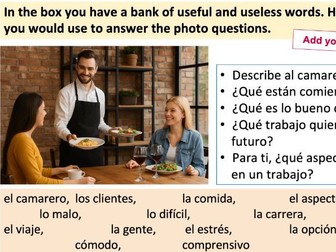
Complete GCSE Spanish lesson on ideal jobs and careers – based on AQA Theme 1, Unit 3: Education and Work (2026 specification). Includes full skills coverage and scaffolded grammar support. This resource supports students in describing their ideal job, using structured vocabulary, the conditional tense, and infinitive constructions such as para + infinitive and sin + infinitive. What’s included: Editable PowerPoint: vocab, sentence builders, grammar recap, photo card practice Vocabulary list: jobs, workplace, characteristics, goals and values Reading worksheet: comprehension and match-up tasks with job descriptions Writing scaffold: build extended responses using lo bueno / lo malo + infinitives All answers included Skills developed: Using the conditional tense: me gustaría / sería / tendría Building complex sentences with purpose and cause: para / porque / sin Describing career goals and work values Expanding GCSE responses for higher marks Speaking and writing fluency with scaffolded support ** Ideal for:** Year 10–11 students Preparation for photo card and long writing tasks Revision, homework or speaking intervention
GCSE Spanish 3.2F – ¿Qué opinas de las reglas de tu instituto? (AQA Theme 1)Quick View
CarmenPC

GCSE Spanish 3.2F – ¿Qué opinas de las reglas de tu instituto? (AQA Theme 1)

(0)
Complete GCSE Spanish lesson exploring school rules, obligations, permissions, uniform, and behaviour. Based on AQA Theme 1, Unit 3: Education and Work. This lesson supports students to develop key grammar and vocabulary to give opinions about school rules, express agreement/disagreement, and use modal verbs and structures like se debe / se puede / está prohibido. Includes 3 homework tasks to extend learning and exam-style support. What’s included: Editable PowerPoint: speaking prompts, grammar practice, PAL structure, sentence starters Homework #1: reading tasks with comprehension on routines, opinions, and behaviour Homework #2: writing and grammar consolidation task on likes/dislikes and school uniform Homework #3: decision-making task with a career-linked quiz on subject choices post-16 Sentence builder & translation activities Pronunciation focus: que and qui sounds Writing & speaking task aligned with Q18 in the AQA Speaking Booklet Answer key included Skills developed: Expressing rules, prohibitions and obligations Giving opinions and justifications Using negatives, modal verbs, and reflexive structures Preparing for written and oral assessments using speaking booklet prompts Perfect for: GCSE AQA Spanish (KS4) Year 10–11 students preparing for Theme 1 Speaking & writing scaffolding Revision, homework, or cover lesson
GCSE Spanish 1.6H – ¿Qué tipo de familia tienes? (AQA Theme 1 Higher)Quick View
CarmenPC

GCSE Spanish 1.6H – ¿Qué tipo de familia tienes? (AQA Theme 1 Higher)

(0)
GCSE Spanish lesson to explore family types and structures. Ideal for AQA Theme 1 – Identity and Relationships (Higher tier). In this lesson, students describe different family models using precise vocabulary, present tense verbs, and sentence-building techniques. Ideal to prepare answers to Question 6 from the 2026 AQA Speaking/Writing booklet. What’s included: Editable PowerPoint presentation Structured vocabulary list (types of families, key verbs, linking words) Grammar task: irregular present tense (yo forms + core verbs) Sentence-building support using que / donde / cuando Translation practice and scaffolded writing Linked to Speaking booklet Q6 Includes answer key Key Grammar & Skills: Irregular verbs in the present (salir, hacer, conocer, proteger…) Sentence extension with relative pronouns: que, donde, cuando Descriptions of complex family relationships Integration of listening, writing, translation and speaking tasks Suitable for GCSE AQA Spanish (KS4, Higher tier) Students preparing for long writing and speaking answers Homework, whole-class lesson or revision Also available as part of the full Topic 1 bundle on Identity and Relationships.
GCSE Spanish 1.3 – ¿Cómo te llevas con tu familia? (AQA Theme 1)Quick View
CarmenPC

GCSE Spanish 1.3 – ¿Cómo te llevas con tu familia? (AQA Theme 1)

(0)
Complete GCSE Spanish lesson on describing family relationships using irregular verbs and possessive adjectives. Based on AQA Theme 1 – Identity and Relationships. In this lesson, students learn to talk about how they get on with their family using common reflexive expressions and verbs like llevarse bien/mal, discutir, respetar, and more. What’s included: Editable PowerPoint presentation (with vocab, listening and grammar) Grammar worksheet (possessive adjectives + irregular verbs: ir, hacer, salir) Vocabulary list (well-structured with English) Answer keys included Grammar focus: Irregular verbs in the present: ir, salir, hacer Possessive adjectives: mi, tu, su, nuestro/a, vuestro/a Reflexive and pronominal structures for describing relationships Ideal for GCSE Spanish students (KS4 – 14 to 16 years old) AQA Theme 1 (Foundation and Higher) Exam prep: listening, writing, speaking, grammar in context Whole-class lessons or individual revision Also available as part of the Topic 1 bundle - Identity and Relationships.
GCSE Spanish 1.1 – ¿Cómo es? Physical & Personality Descriptions (AQA Theme 1)Quick View
CarmenPC

GCSE Spanish 1.1 – ¿Cómo es? Physical & Personality Descriptions (AQA Theme 1)

(0)
Complete GCSE Spanish lesson on “¿Cómo es?” to describe physical and personality traits. Ideal for AQA Theme 1 – Identity and Relationships. What’s included? Editable PowerPoint Student worksheet with grammar and vocabulary tasks Vocabulary list (structured and English-translated) Grammar recap: adjective agreement, ser and tener Speaking and writing practice (describing family) Mini-whiteboard activities & translation support Students learn to: Describe people using physical and personality adjectives Use ser, tener, and adjective/noun agreement Speak and write about their family with scaffolding Suitable for: KS4 Spanish (14–16), both Higher and Foundation tiers Part of a 6-lesson bundle on “Identity & Relationships”: https://www.tes.com/teaching-resource/resource-13299673
GCSE Spanish 1.2 – ¿Qué tipo de persona eres? (AQA Theme 1)Quick View
CarmenPC

GCSE Spanish 1.2 – ¿Qué tipo de persona eres? (AQA Theme 1)

(0)
Complete GCSE Spanish lesson on personality and character traits. Based on AQA Theme 1: Identity and Relationships. Includes grammar, reading, and speaking prep. In this lesson, students learn to describe what kind of person they are and others, using a wide range of adjectives, the verbs ser vs estar, and opinion phrases. What’s included: Editable PowerPoint presentation (with pronunciation and grammar tasks) Grammar worksheet (ser/estar + adjective agreement) Reading task (character descriptions and inference questions) Vocabulary list (structured and translated) Independent learning task Answer key included Ideal for: KS4 (14–16), AQA Higher/Foundation Links directly with the GCSE Speaking & Writing booklet Q2 Can be used as part of the full bundle on Topic 1: Identity and Relationships https://www.tes.com/teaching-resource/resource-13299673
GCSE Spanish 1.4 – ¿Cómo es tu amigo ideal? (AQA Theme 1)Quick View
CarmenPC

GCSE Spanish 1.4 – ¿Cómo es tu amigo ideal? (AQA Theme 1)

(0)
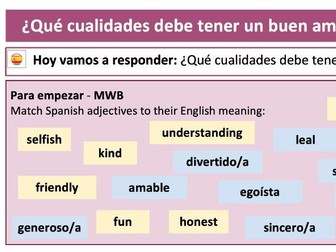
GCSE Spanish lesson on describing your ideal friend – includes grammar, vocabulary, reading, and speaking practice. Ideal for AQA Theme 1: Identity and Relationships. In this lesson, students learn to describe the qualities of a good friend, exploring vocabulary of character traits, possessive adjectives, and reflexive verbs in context. What’s included: Editable PowerPoint presentation Vocabulary list (Spanish-English, clearly grouped) Grammar worksheet (possessive adjectives + reflexive verbs) Reading worksheet (GCSE-style profile comprehension) Sentence building and linking words Writing and speaking prep linked to GCSE Speaking Booklet – Q4 Answer keys included Grammar covered: Possessive adjectives: mi, su, nuestro, vuestro Reflexive verbs: levantarse, maquillarse, llamarse, pelearse, llevarse bien Use of infinitives after verbs like querer, poder, deber Suitable for: KS4 Spanish (14–16) AQA GCSE Higher/Foundation Use in class, for homework or revision Part of the full Topic 1 bundle: Identity and Relationships
GCSE Spanish 1.5H – Un buen amigo + La semana pasada (AQA Higher)Quick View
CarmenPC

GCSE Spanish 1.5H – Un buen amigo + La semana pasada (AQA Higher)

(0)
GCSE Spanish double lesson for AQA Higher – focus on friendship qualities (opinions + present) and past tense family activities. Perfect for Theme 1 revision. This Higher-tier resource combines two speaking and writing questions from AQA Theme 1 – Identity and Relationships: ¿Qué cualidades debe tener un buen amigo y por qué? ¿Qué hiciste con tu familia la semana pasada? Students work on: Character descriptions and personal opinions High-frequency verbs in the preterite tense Listening and writing tasks with sentence builders and models Speaking prep linked to questions 5 and 7 in the 2026 specification booklet What’s included: Editable PowerPoint covering both questions Grammar worksheet: preterite tense practice + translation Dictation and listening-based tasks Sentence-building tables and models Students will practise: Opinion structures Reflexive and high-frequency irregular verbs Time expressions + connectives Justifications and expansion strategies Perfect for KS4 GCSE Spanish (14–16) - AQA Higher tier (but adaptable for Foundation) Can also be bundled with other Topic 1 lessons or used as a standalone revision pack.
GCSE Spanish – Theme 1: Identity and Relationships (AQA 2026)Quick View
CarmenPC

GCSE Spanish – Theme 1: Identity and Relationships (AQA 2026)

7 Resources
Complete GCSE Spanish bundle for Theme 1: Identity and Relationships with Others (AQA 2026 Spec). Includes 6 full lessons + Speaking & Writing booklet for Higher and Foundation tiers. This carefully structured bundle includes everything you need to teach, revise or assess Topic 1 of Theme 1 (People and Lifestyle) from the 2026 AQA GCSE Spanish specification. Each resource is editable, exam-aligned, and classroom-tested. What’s included: 1.1 ¿Cómo es? – Physical and personality descriptions 1.2 ¿Qué tipo de persona eres? – Character and identity 1.3 ¿Cómo te llevas con tu familia? – Family relationships + irregular verbs 1.4 ¿Cómo es tu amigo ideal? – Describing ideal friends + reflexive verbs 1.5H Un buen amigo + La semana pasada – Higher-tier double lesson (opinions + past tense) 1.6H ¿Qué tipo de familia tienes? – Describing family types + sentence extension GCSE Spanish Speaking & Writing Booklet 2026 – 71 exam-style questions, models and support Perfect for GCSE AQA (2024–2026 spec) - KS4 students (14–16) Speaking & writing practice Revision and intervention Mixed-ability classes: resources include support and challenge PowerPoints, worksheets, vocabulary lists and student support tasks provided