Emperor Trajan Slideshow PresentationQuick View
nikometh

Emperor Trajan Slideshow Presentation

(0)
In this presentation, students will examine the reign of the Roman emperor Trajan, focusing on his military campaigns in Dacia and against the Parthian Empire, his domestic welfare and building programmes, and his cooperative relationship with the Roman Senate. Learners will evaluate the evidence for Trajan’s reputation as the ‘Best Ruler’ of Rome and consider whether his achievements justify the title Optimus Princeps when compared with other prominent emperors such as Augustus and Marcus Aurelius. It has 15 slides covering the topic.
Ancient Roman Medicine Slideshow PresentationQuick View
nikometh

Ancient Roman Medicine Slideshow Presentation

(0)
In this presentation, students will examine the medical beliefs and diagnostic methods of ancient Rome, exploring how physicians drew on Greek and Egyptian knowledge and incorporated religious ritual into everyday treatment. They will also investigate the work of key Roman medical writers whose texts influenced how physicians across Europe understood and treated illness for centuries. It has 15 slides covering the topic.
Interwar Years Printable Student Activity WorkbookQuick View
nikometh

Interwar Years Printable Student Activity Workbook

(0)
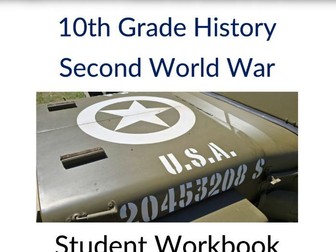
A downloadable and printable 248-page student workbook for a unit on the Second World War. It includes: Includes the following chapter topics: Causes of World War II The ‘Phoney War’ Fall of France in 1940 Battle of Britain North African Campaign Operation Barbarossa Attack on Pearl Harbor in 1941 Fall of Singapore Pacific Sea Battles Kokoda Track Campaign Victory in Europe Victory in the Pacific The Holocaust Roles of women in WWII Each chapter contains: Full reading sections Chapter comprehension questions Extracts and images of historical sources Source analysis and evaluation activities Paragraph question responses Key vocabulary lists Student-friendly features: Sufficient space for hand-written student answers Coloured illustrations and photos Links to additional website resources It is designed to be used in conjunction with other teaching resources if required, but can easily be a stand-alone resource for a unit of study.
Ancient Roman Burials and Funerals Slideshow PresentationQuick View
nikometh

Ancient Roman Burials and Funerals Slideshow Presentation

(0)
In this presentation, students will examine the funerary customs of ancient Rome, from the public display of the dead to the construction of grand tombs and necropolises. They will also explore the use of wax masks and the role of social status in determining the type of burial a Roman citizen received. It has 14 slides covering the topic.
Ancient Roman Laws and Legal System Slideshow PresentationQuick View
nikometh

Ancient Roman Laws and Legal System Slideshow Presentation

(0)
In this presentation, students will examine the development of the ancient Roman legal system, from the Twelve Tables of 450 BCE through to the imperial reforms of Hadrian and Caracalla. They will also explore how Roman legal principles influenced the Corpus Juris Civilis, the Napoleonic Code, and modern civil law traditions across Europe and Latin America. It has 14 slides covering the topic.
Slavery in Ancient Rome Slideshow PresentationQuick View
nikometh

Slavery in Ancient Rome Slideshow Presentation

(0)
In this presentation, students will examine the social and economic role of slavery in ancient Rome, exploring how enslaved people were obtained, the tasks they performed, and the conditions they faced under Roman law. They will also investigate how slaves could gain freedom through manumission and analyse the major slave revolts of the Servile Wars to understand the tensions that slavery created within Roman society. It has 15 slides covering the topic.
Ancient Roman Food Slideshow PresentationQuick View
nikometh

Ancient Roman Food Slideshow Presentation

(0)
In this presentation, students will examine the eating and drinking habits of ancient Romans across different social classes, from the basic daily meals of the poor to the extravagant banquets of the elite. They will also explore how food production and trade connected to wider questions of social status and imperial power. It has 15 slides covering the topic.
Ancient Roman Women Slideshow PresentationQuick View
nikometh

Ancient Roman Women Slideshow Presentation

(0)
In this presentation, students will examine the position of women in ancient Roman society, exploring how legal structures and social expectations defined their daily lives. They will investigate how women across different social classes found ways to exercise influence in domestic and public life, and assess the experiences of notable Roman women who made a significant impact on the Empire. It has 14 slides covering the topic.
Ancient Roman Religion Slideshow PresentationQuick View
nikometh

Ancient Roman Religion Slideshow Presentation

(0)
In this presentation, students will examine the religious beliefs and ritual activities of Ancient Rome, exploring how the concepts of pietas and syncretism influenced Roman society. They will investigate the roles of priests and temples to understand why religion occupied such a central position in Roman public and private life. It has 16 slides covering the topic.
Emperor Nero Slideshow PresentationQuick View
nikometh

Emperor Nero Slideshow Presentation

(0)
In this presentation, students will examine the rise and fall of Emperor Nero, exploring how his personal conduct and political decisions contributed to the collapse of his reign. They will also investigate the reliability of ancient historical sources by analysing competing accounts of events such as the Great Fire of Rome and the deaths of key figures around Nero. It has 15 slides covering the topic.
Emperor Titus Slideshow PresentationQuick View
nikometh

Emperor Titus Slideshow Presentation

(0)
In this presentation, students will examine how Titus rose from military commander to Roman emperor, and explore the crises he faced during his short reign. They will also investigate how his personal response to disasters like the eruption of Mount Vesuvius and the fire of Rome built his reputation as one of Rome’s most popular emperors. It has 15 slides covering the topic.
Year of the Four Emperors Slideshow PresentationQuick View
nikometh

Year of the Four Emperors Slideshow Presentation

(0)
In this presentation, students will examine the causes of the Roman civil war of AD 68–69 and explore why the first three emperors each failed to hold power. They will also investigate how Vespasian’s military strength and political strategy allowed him to end the conflict and establish the Flavian dynasty. It has 15 slides covering the topic.
First Punic War Slideshow PrsentationQuick View
nikometh

First Punic War Slideshow Prsentation

(0)
In this presentation, students will examine the causes, key military turning points, and final outcome of the First Punic War between Rome and Carthage. They will explore how Rome overcame its early naval disadvantage through innovation and persistence to defeat one of the most powerful states in the ancient Mediterranean world. It has 15 slides covering the topic.
Between the 1st and 2nd Punic Wars Slideshow PresentationQuick View
nikometh

Between the 1st and 2nd Punic Wars Slideshow Presentation

(0)
In this presentation, students will examine the aftermath of the First Punic War and investigate how Carthage attempted to recover its power through the Barcid conquest of Iberia. They will also explore the rise of Hamilcar Barca, the Mercenary War, and the conditions that led to the outbreak of the Second Punic War. It has 15 slides covering the topic.
Battle of Zama Slideshow PresentationQuick View
nikometh

Battle of Zama Slideshow Presentation

(0)
In this presentation, students will examine the military careers of Scipio Africanus and Hannibal, tracing how Scipio’s study of Carthaginian tactics gave Rome a clear advantage at the Battle of Zama in 202 BC. They will also explore the terms of the Treaty of Zama and consider how Rome’s victory ended Carthaginian power in the Mediterranean. It has 16 slides covering the topic.
Battles of Ticinus and Trebia Rivers Slideshow PresentationQuick View
nikometh

Battles of Ticinus and Trebia Rivers Slideshow Presentation

(0)
In this presentation, students will examine Hannibal’s invasion of Italy in 218 BC and the tactics he used to defeat the Romans at Ticinus River and Trebia River. They will explore how the outcomes of these two battles affected Rome’s response to the Carthaginian threat. It has 15 slides covering the topic.
Emperor Caligula Slideshow PresentationQuick View
nikometh

Emperor Caligula Slideshow Presentation

(0)
In this presentation, students will examine the life and reign of the Roman emperor Caligula, tracing how a promising start in power gave way to paranoia and political conflict. They will also explore the debate among ancient and modern historians over whether Caligula’s behaviour was the product of personal trauma or calculated political action. It has 15 slides covering the topic.
Roman Conquest of Italy Slideshow PresentationQuick View
nikometh

Roman Conquest of Italy Slideshow Presentation

(0)
In this presentation, students will examine how Rome expanded its control across Italy through military conflict and treaty-making over several centuries. They will explore key battles and turning points that allowed Rome to overcome opponents such as the Samnites and Gauls, and consider why this process of expansion took so long to complete. It has 15 slides covering the topic.
Alexander the Great's Siege of Tyre Slideshow PresentationQuick View
nikometh

Alexander the Great's Siege of Tyre Slideshow Presentation

(0)
In this presentation, students will examine Alexander the Great’s seven-month siege of Tyre in 332 BCE, exploring the engineering solutions and naval tactics he used to capture an island fortress that had resisted previous attackers. They will also investigate the consequences of Tyre’s fall for the wider conflict between Alexander and the Persian Empire. It has 15 slides covering the topic.
Death and Legacy of Alexander the Great Slideshow PresentationQuick View
nikometh

Death and Legacy of Alexander the Great Slideshow Presentation

(0)
In this presentation, students will examine the life and military campaigns of Alexander the Great, exploring the events surrounding his death in 323 BC and the competing theories historians have proposed to explain it. They will also investigate the political and cultural consequences of his death, tracing how the Wars of the Diadochi fragmented his empire and how the Hellenistic Period transformed the ancient world. It has 16 slides covering the topic.
Alexander the Great and the Battle of the Hydaspes River Slideshow PresentationQuick View
nikometh

Alexander the Great and the Battle of the Hydaspes River Slideshow Presentation

(0)
In this presentation, students will examine Alexander the Great’s military campaign in India, focusing on the tactics he used to cross the Hydaspes River and defeat King Porus in 326 BC. They will explore how the outcome of this battle forced Alexander to abandon his plans for further conquest and begin the long, costly journey home. It has 14 slides covering the topic.