This resource is a mid-length, fully guided teaching workbook for Trash (Part 2, Chapter 1) that helps students explore the novel’s key themes—survival, setting, values, and respect—while developing their reading, writing, and persuasive-language skills. It includes structured comprehension questions, thematic analysis tasks, grammar and vocabulary practice using chapter extracts, and creative rewriting activities from Rat’s perspective. The pack also introduces ARIPEFOREST persuasive techniques, Aristotle’s modes of persuasion (ethos, logos, pathos), and provides scaffolded support for writing a persuasive speech from Father Juilliard’s viewpoint. Additional tasks cover sensitive discussion prompts, news-report writing, debate preparation, mapping Raphael’s journey, and peer-feedback tools, making it a comprehensive classroom resource for deepening understanding of the novel and strengthening students’ analytical and communication skills.
This is an end of term revision quiz for Things Fall Apart, which is loosely linked to Christmas. It tests their recall of characters, events and key quotes with a section on differing cultural perspectives between the clan and the missionaries at the end.
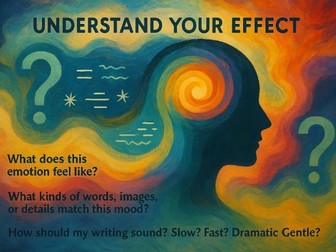
Putting Writers Effects into Action is an engaging writing activity that helps students understand how language creates emotional impact. Through image prompts and short scenarios, students identify different moods such as awe, tension, melancholy, or confusion before receiving a Writers Effect Card assigning them both an emotion and a scenario.
Students then write a full-page creative response that shows the emotion through vocabulary, imagery, pacing, and sentence structure. An optional annotation task encourages them to highlight and explain their key language choices.
The resource ends with a performance element where students read their work aloud, using vocal delivery to reinforce the intended effect, while peers listen and guess the mood.
This activity builds emotional awareness, strengthens descriptive writing, and deepens students understanding of how writers craft atmosphere.
This was based on a class discussion we’d had when half the group had said they thought being under constant surveillance was worth it to ensure a crime free society. I carried this idea over into a discussion based lesson with a descriptive writing task at the end. It also served as an intro to 1984 as they were unfamiliar with the text.
It’s initially a ‘Welcome to Year 10’ PPT but quickly goes into a structured descriptive writing activity based on images and descriptive techniques. Can be easily adapted for specific devices or used as a standalone creative writing lesson.
This is similar to a previous resource I have posted (welcome to Year 10) but the focus during this lesson is on word classes and using them in a structured creative writing exercise to explore the effect of different sentence structure/starters. Good as a one off creative lesson (have used it for cover before) or as a way to cement students understanding of parts of speech.
This resource was made for a whole school Dragon’s Den Style project and covers persuasive techniques that can be used for their pitches, brand/product name and taglines. It covers ARIPEFOREST techniques, the importance of establishing ethos, logos and pathos and how to use tone and rhythm to improve their delivery.
A lesson which explores the pressures of having to conform to traditional expectations of masculinity through analysis of Yungblud’s song The Boy In The Black Dress. Just as a warning, there is some explicit language in one of the videos but it isn’t essential to watch that for the lesson.
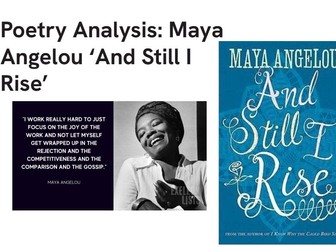
This resource pack offers detailed analytical support for the first 32 poems in Maya Angelou’s And Still I Rise, tailored to the CIE Cambridge AS Level Literature syllabus. Each poem is explored through focused paragraphs covering themes, tone, form, lineation, rhythm, rhyme, repetition, stanza progression, volta, contrast and juxtaposition, diction, figurative language, phonological features, and syntax. The analysis includes contextual insights into Angelou’s life, the Civil Rights Movement, and African-American literary traditions. Designed to develop close reading and critical skills, the resource also includes key quotations, PETALS paragraph tasks, and exam-style essay prompts—making it an essential companion for both teaching and independent study.