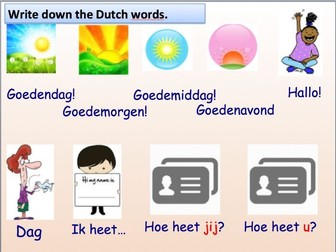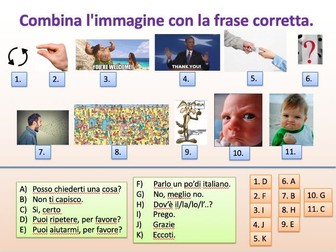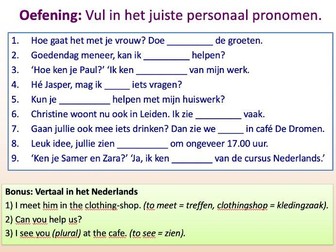
A powerpoint covering the auxiliary verbs willen, mogen, zullen in Dutch.
Answers are provided on the slides as well as extension activities (so-called ‘stretch it’). Suitable for A1/A2 learners.
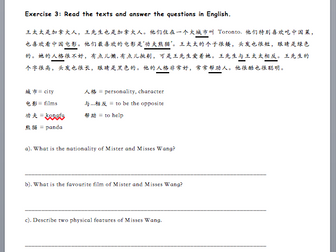
Worksheet with 4 reading exercises and 1 translation exercise about drinks in Mandarin.
Could be used as homework/a starter/revision. Answers are on the last page and a vocabulary bank is provided at the beginning.
Dutch for Absolute Beginners or Year 7.
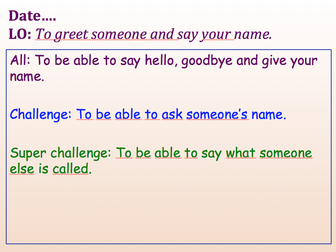
The lesson includes speaking activities and a few reading activities.
The following vocabulary is included:
- Goedendag - Hello/good day.
- Hallo - Hello.
- Ik heet - My name is
- Hoe heet jij/u? - What is your name (informal and formal)?
- Hoe gaat het? - How are you?
- Niet slecht - not bad.
- En met jou/u? - And you?
- Goed, dank je/u - Fine, thank you.
- Dag - Bye.
- Tot ziens - Goodbye.
Pictures have been taken from Clipart where possible.
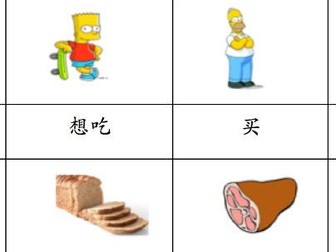
Worksheet with 3 reading exercises and 3 writing exercises about foods in Mandarin Chinese.
Could be used for homework/revision or a few exercises can be selected as a starter to a lesson. Answers are on the last page and a vocabulary bank is added at the beginning of the worksheet (but could be removed for students with higher prior attainment).
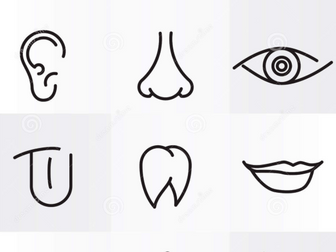
Worksheet with reading and writing exercises for body parts - Mandarin.
Answers are provided on the last page.
Could be used as a homework or revision sheet after students have learnt vocabulary related to body parts/health.
Worksheet with reading exercises for films and going out activities (theatre, opera, concert etc.). Answers are provided on the last page and there is a vocabulary bank at the beginning of the worksheet (which can be removed by the teacher).
Could be used as for homework/as a starter/revision.
Worksheet with 3 reading exercises about school subjects (specifically made for beginners/Year 7 students).
Worksheet includes a vocabulary bank which can be removed and answers are provided on the last page.
Can be used as a starter for a lesson/homework/revision.
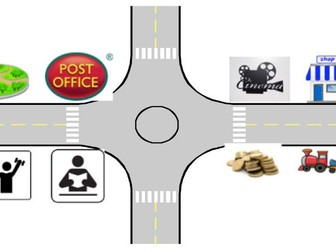
Worksheet with 3 reading exercises and 2 writing exercises for places in a town and relative place words/directions.
This worksheet is useful as an addition to Jin Bu 2 Chapter 3.1 and 3.2 and aimed at Year 8 students. There is a vocabulary bank which can be removed and answers are on the last page.
Can be used as a starter to a lesson/homework/revision.
German for Absolute Beginners or Year 7.
This Powerpoint show includes speaking activities and a few reading activities on the vocabulary listed below. It also includes the grammar point of the 1st, 2nd and 3rd person singular of the regular verbs ‘heißen’ and ‘wohnen’.
The following vocabulary is included:
- Guten Tag - Hello/good day.
- Hallo - Hello.
- Ich heiße - My name is
- Wie heißt du? - What is your name (informal)?
- Wie heißen Sie? - What is your name (formal)?
- Wie geht’s? - How are you?
- Nicht schlecht - not bad.
- Und dir? - And you? (informal)
- Und Ihnen? - And you? (formal)
- Gut, danke. - Fine, thank you.
- Tschüss - Bye.
- Auf Wiedersehen - Goodbye.
Pictures have been taken from Clipart where possible.
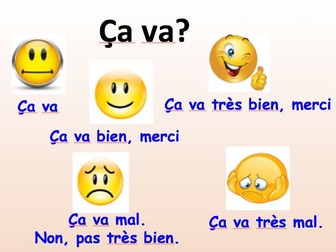
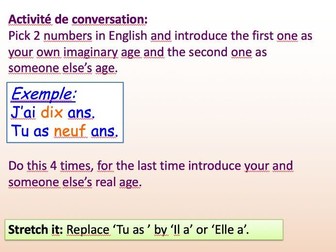
A powerpoint with vocabulary in French to say who one is doing and one’s age. Suitable for Year 7 or Beginner.
The following vocabulary is included:
Comment ça va?
Ça va très bien.
Ça va bien, merci.
Comme ci comme ça.
Ça va mal.
Non, pas très bien.
Quel âge as-tu?
J’ai onze/douze ans.
C’est combien?
Quel âge a-t’il/elle?
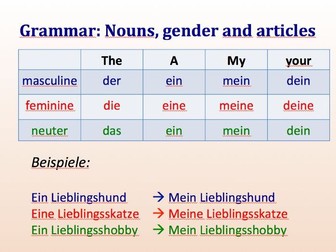
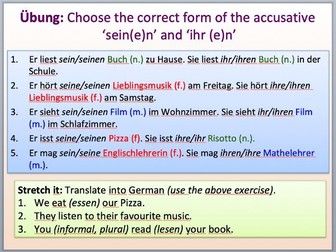
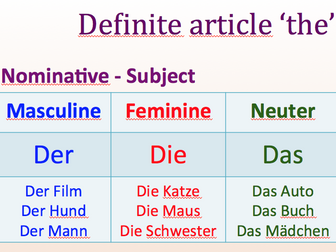
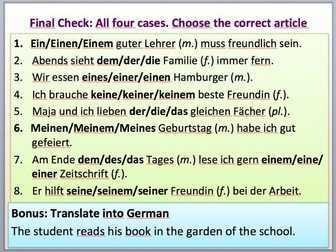
A PPT presentation about the definite article ‘the’ and indefinite article ‘a/an’ for the Nominativ and Akkusativ in German. Suitable for A1 learners.
Includes extension activities (stretch it) and answers on the slides.
A powerpoint with Dutch reading and writing exercises about superstition and fables.
Suitable for B2 learners. Answers are provided in the PPT.
Have a look at my free lesson of ‘Intermediate Dutch - Work and applying for a job - Suitable for B2 learners’ to get an idea how the PPT is build up.
A powerpoint with vocabulary in French to greet someone and say one’s name. Suitable for Year 7 or Beginner.
The following vocabulary is included:
Salut Madame
Bonjour Monsieur
Au revoir
Comment t’appelles-tu?
Je m’appelle…
Et toi?
Comment s’appelle-t-il/elle?
Il/elle s’appelle…
A powerpoint with Dutch reading and writing exercises related to work and applying for a job.
For learners of B2 of the Common European Framework of Reference for Languages. Answers are provided in the PPT.
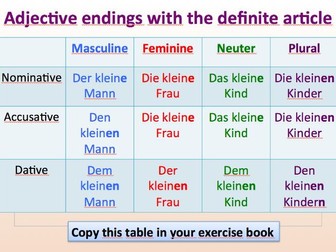
A PPT presentation about adjective endings for the Nominativ, Dativ and Akkusativ in German.
The adjectives presented follow:
- the definite article ‘der’+‘dieser/jener/jeder/welcher’.
- the indefinite article ‘ein’+‘mein/dein/sein/ihr/unser/euer/Ihr/ihr’.
- adjectives with no determiner in front of it.
Suitable for A1/A2 learners.
Includes extension activities (stretch it) and answers on the slides.
A powerpoint covering the following contents:
- numbers 1 to a billion
- ordinal numbers
- days of the week
- months of the year
- indications of time (last week, day before yesterday, yesterday, today, tomorrow, the day after tomorrow, next week).
- the date
- clock times and asking the time
Answers are provided on the slides. Suitable for A1/A2 learners.
A powerpoint with Dutch reading and writing exercises about cultural differences.
Suitable for B2 learners. Answers are provided in the PPT.
Have a look at my free lesson of ‘Intermediate Dutch - Work and applying for a job - Suitable for B2 learners’ to get an idea how the PPT is build up.
PPT with Dutch reading and writing exercises about sport.
Suitable for B2 learners. Answers are provided in the PPT.
Have a look at my free lesson of ‘Intermediate Dutch - Work and applying for a job - Suitable for B2 learners’ to get an idea how the PPT is build up.
PPT with Dutch speaking, reading and writing exercises about music.
Suitable for B2 learners. Answers are provided in the PPT.
Have a look at my free lesson of ‘Intermediate Dutch - Work and applying for a job - Suitable for B2 learners’ to get an idea how the PPT is build up.