Exploring the text through open questions, creative writing and a ladder debate.
Clear structure for the ladder debate with instructions and steps to help delivery in the classroom.
Final activity explores narrative structure with visuals for cyclical and multi-narrative structures etc.
A full and complete lesson pack to support teaching.
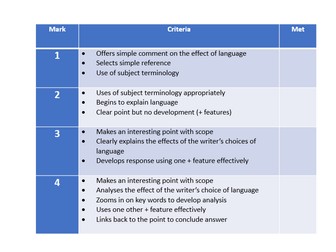
Marking criteria for PEA+, class model, instructions for constructing paragraph and methods to develop analysis.
This would work with a Y7 or Y8 class who are building confidence with analytical writing. Task has scaffolding and a model then asks the pupils to construct their own piece of analytical writing. This could take 1 - 2 lessons depending on lesson length and pupil ability.
This resource focuses on analysis of ‘Shoulders’ by Naomi Shihab Nye.
I walk them through how I would approach the question from planning, to the first paragraph. It is a scaffolded approach for mid to high ability. I give an AQA band 5 paragraph - thoughtful and considered - and ask them how this would be developed further.
The final slide is a totally unseen poem - ‘For Heidi With Blue Hair’ with a given question. This is designed for them to test out the skills without scaffolded support.
Good for Year 11 revision of unseen and tips before the exam. Also good in early stages of unseen work to build good habits.
This lesson explores how to interpret and physicalise the character of Tiresias in Antigone.
There is an essay question, the start of a model essay and help with planning.
This is designed to help A-level students studying the AQA course but would be useful for any Sixth Form student looking at Antigone.
A helpful resource for character and essay writing.
This resource is focused on Roald Dahl’s ‘Boy’ and is a creative adaptive teaching assessment.
The task asks them to design and pitch for a new sweet concept. There are clear instructions and roles for each member of the group.
There are additional tasks they can produce - jingles, adverts etc.
This gives the pupils autonomy and is a creative and persuasive task.
I have taught this for four years now and every year their work is often the highlight of my term! Some students even produce prototypes which is another benefit of this task.
This is aimed at Y7 but could also be a Y8 end of year project depending on ability of the group. This task could span over 3 or 4 lessons and produces minimal marking.
A fun and beneficial task that combines disciplines. Great for observations too…
This lesson is intended for the final stages of work on An Inspector Calls. It gives top tips, two essay questions (Inspector theme question and Mrs Birling character question), and a list of sophisticated AO3 terminology to include in essays.
This is a stretch and challenge lesson designed to push students from band 5 in the mark scheme to band 6 (26-30 marks).
Designed for AQA Literature specification but applicable to anyone studying An Inspector Calls for content and revision
This lesson works through the third stasimon on Antigone and is followed by a director question. There is an essay plan to help paragraph content.
The second part of the lesson explores the fourth episode and the Kommos betwene Antigone and Ismene. There is a slide on context for the reference to Niobe and a final performance task for Antigone’s final scene.
This could be two or perhaps three full lessons if you choose to write the full essay alongside this.
A helpful resource for all A-level students studying Antigone as a set text.
This PowerPoint focused on the final scene of the play.
Terminology, guided discussion about tragic heroes and thematic revision included. Exploration of the Exodus, Eurydice and final thoughts on the play.
A complete resource to aid A-Level work on Antigone. Designed for AQA specification but it is applicable to anyone studying Antigone.
A PowerPoint that works through the timing and advised structure for each question in AQA Language Paper 2
Some model responses in the PowerPoint
Question 4 uses venn diagram model to help pupils explore similarities and differences
Question 5 focuses on genre (or type), audience and purpose.
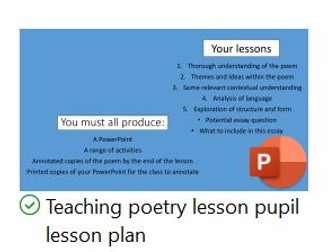
This is aimed at mid to high ability students and is designed for them to become an expert in a given poem from an anthology collection.
I usually do this in pairs and they co-deliver a 30-45 minute lesson where the teacher can act as a participant to challenge and push understanding/questioning.
This works when the PowerPoint is submitted to the teacher before the lesson. At this point the teacher can address misconceptions, develop tasks, propose alternative methods of delivery etc.
I have successfully taught poetry like this for four years and the pupils love becoming an expert on their given poem. They also realise that careful thought must go into a good lesson and it ensures they give their peers respect when delivering their lesson.
I have found it a great way to mix up poetry teaching and empower the pupils to lead.
First three lessons to aid study of ‘Boy’. I use this with Year 7.
Lessons explore:
Autobiographical writing
Creative writing and building imagery
Spelling tests
Range of activities and links to first four chapters in Roald Dahl’s ‘Boy’