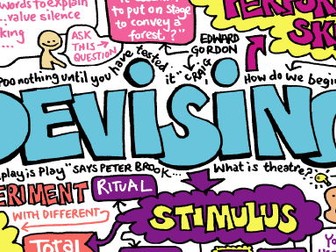
A PPT that guides through 5 lessons on devising at KS3 Drama.
Intended for y9 but could be easily adapted to any year.
Includes a range of stimuli: story, image, music, object.
Scheme of work document for the first scheme of performing (component 1) with weekly lessons for a full term. Includes:
14 lessons with lesson objectives and activities
Assessment feedback document
Clear rationale for scheme with key vocabulary and links to prior and future learning.
Aims for the full scheme:
• To practise to learn a solo performance
• To perform a piece of music at A level standard
• To select a suitable performance piece
• To learn to perform from sheet music
• To understand and develop the skills required for solo performance
Outcomes of scheme:
To perform a piece of music (grade 4-6 difficulty, 3:20-4:00) with accuracy, technical control and expression.
Designed for Eduqas A Level Music but suitable for any exam board (AQA, OCR, WJEC, Pearson Edexcel)
A thorough revision activity for students answering Area of Study E: Into the Twentieth Century for Eduqas/WJEC A Level Music.
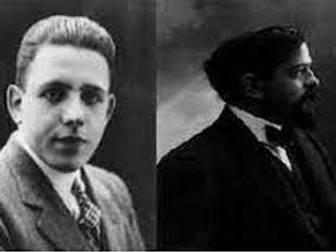
Questions covering all the elements of music, scaffolded for students in year 12 or 13. To support study of Debussy’s Nuages and Poulenc’s Trio for Oboe, Bassoon and Piano - as well as space for 3 extra studies required for Q8 of the listening exam.
Covers Expressionism (Serialism), Neo-Classicism and Impressionism.
A card sort of keyterms with their definitions, a glossary of terms and a table with a ‘find an example’ activity to improve score reading, introduce students to the set work or as revision. Could be used to fill a lesson, set as homework or over 2 or 3 lessons.
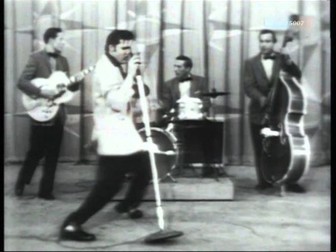
A lesson on the history of rock and roll - a classroom or cover lesson
Fun and interactive.
Involves listening skills, history and the twelve bar blues
PowerPoint presentation, lesson plan and video.
Suitable in preparation for GCSE popular music AoS or KS3.
A set of 8 independent and interactive tasks for communication in the music industry.
Designed to fulfil criteria for success criteria C1: Communication Skills in Level 3 BTEC Music Performance Unit 2: Professional Practice in the Music Industry.
Could be used for Music Industry study for any course at KS5 or KS4.
Free example:
Task G:
An intern has tweeted you asking for advice on how not to offend or annoy clients (music performers). In 140 characters or fewer, respond to their tweet.
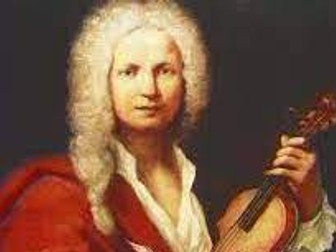
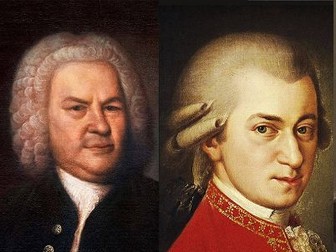
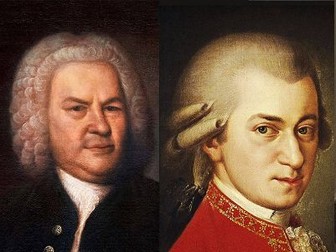
Two listening questions (with answers) for AS/A Level Music. One question is on a Vivaldi concerto and the other on a Mozart aria. I’ve used with AQA as it leads well into the Baroque concerto but could be used with any exam board. Links to tracks on YouTube. Clear formatting.
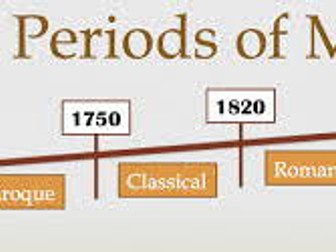
A card sort (or revision guide) to main characteristics of the Baroque period, Classical period and Romantic period.
Suitable for all the main exam boards at GCSE or as a refresher at A level.
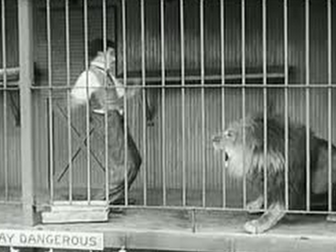
A full lesson plan with PowerPoint presentation to teach 1-2 drama lessons on Silent Films. Could be used as an introduction to the topic at KS3 (or KS2 if modelled effectively) or as an assessed piece of work.
Students will create a piece of silent work to fit success criteria. Tasks for small and large groups. Target-driven learning.
Introduces clip of Charlie Chaplin to evaluate. A fun lesson for all.
Lesson plan included in PPT notes for each slide. Students should perform their work at end and show to the class for evaluation or assessment.
A lesson on film music, matching film music to scenes in films. Great scaffolding for longer answer questions, identifying musical features and the mood they help create. How composers manipulate musical elements.
Sound clips, PowerPoint and worksheet.
Instructions for 4 homework tasks (or research for cover lessons) with differentiated success criteria/mark scheme for each.
Topics covered:
elements of music
instruments of the orchestra
reggae
A 10-mark long answer examination-style question for AS level or A level Music (AQA) with answers. It would also be suitable for other exam boards. It is based on a Mozart opera which is a required area of study in the AQA A level Music course.
PowerPoint lesson on dynamics and tempo for GCSE Music. Designed for Eduqas/WJEC but could be used with any exam board.
Listening activities and theory activities to teach the dynamics and tempo keywords.
A card sort of key features of Baroque and Classical Music. I’ve used it as a starter or revision for retrieval practice or to introduce set works in year 12. It could be used in years 10-13.
It also works as a match up/thinking quilt activity.
A lesson on PowerPoint introducing year 10 or 11 to Minimalist composing techniques. It outlines: addition, subtraction, metamorphosis, phase shifting and layering. Brief and success criteria included.
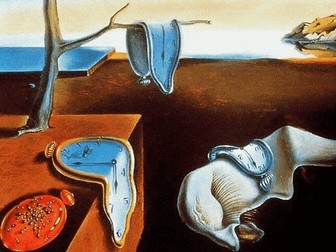
A lesson on surrealism in drama. Stimuli, automated writing, puppet sequence and success criteria included. Could be taught as part of a scheme of work on non-naturalistic theatre or as a practical cover lesson or for a non-specialist teacher.
A year 10 lesson on Baroque including a listening question (with mark scheme).
Designed for Eduqas or WJEC but could be used with OCR or AQA.
Introduces:
The Baroque orchestra
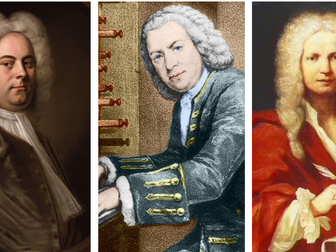
Key composers
The basso continuo
Organ and harpsichord
A leaflet (A4 folded) designed for parents and students considering studying music at GCSE KS4.
In full colour.
Written with Eduqas/WJEC examination board in mind, it is easily adaptable to other exam boards as the course structure, careers and FAQs remain the same.
Six lessons introducing music theory:
Powerpoints, lesson plans and activities included.
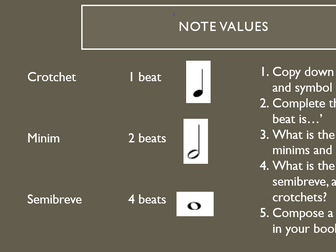
Crotchets, Minims and Semibreves
Bars and Time Signatures
Quavers and Semiquavers
Letter Names of Notes
Notes on the Treble Clef
Notes on the Bass Clef
A range of activities to be used as a couple of complete lessons or to be used as a series of exercises, homeworks, starters or revision for teaching the Western Classical Tradition (compulsory area of study) for AQA A Level Music.