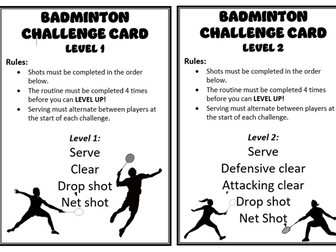
Badminton resource for students to collaborate and put together a sequence of shots shown on the card. Also comes with a shot guide to show length and trajectory of the shots.
Designed to be cut out and laminated.
Includes
Lesson presentation:
Push and pull movements in sport
Force, mass and acceleration
Types of force
Questions
Applications of force in sport
Types of levers
Levers in the body
Levers in sport
Includes:
**Lesson presentation **
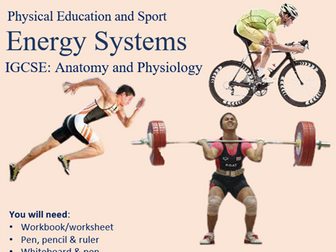
Aerobic vs anaerobic
Exercise and recovery
EPOC and oxygen debt
Recovery
Questions
Short and long term effects of exercise on the body
Questions
Includes:
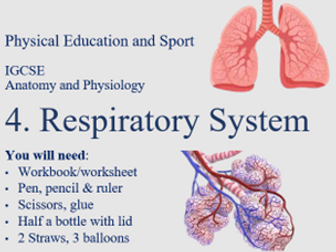
Lesson presentation respiration system and gas exchange.
Anatomy of respiratory system and labels
Anatomy of the lungs in detail
Instructions to make a lung model
Gas exchange ordering task (resource attached)
Mechanics of breathing
Breathing volumes
Questions
Resources:
Respiratory system anatomical model to label
Gas exchange order cards.
Contains the listed content in the specification. Includes resources
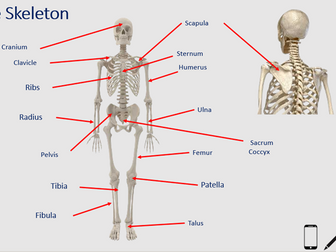
Articulating bones
Skeleton and bones exam questions
Skeleton diagram for labeling
Sporting movements at synovial joints task.
Includes:
3 stages of learning
Learning continuum
Feedback
Types of feedback
Appropriate feedback for different stages of learning
Importance of feedback
Feedback loop
Tasks and exam questions
Contains all the lessons and resources for all of the anatomy and physiology unit. Have been used and updated numerous times. Contains very simple notes and details required for the course.
Includes:
The heart lesson presentation
Blockbusters starter/revision/homework task
Structure of the heart
Blood flow through the heart
Blood flow card ordering activity (Resource included)
Questions
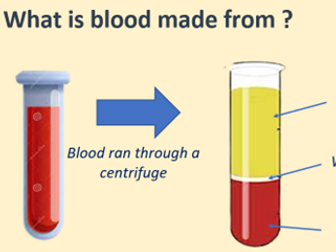
Components of blood lesson presentation
What is blood made from?
Blood vessels
Measurements of blood
Questions
Resources
Pathway of blood through the heart card activity
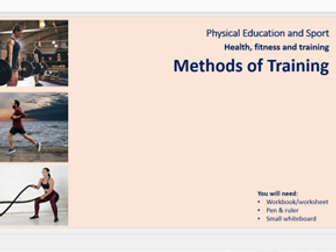
The reasons for using the following training methods, including a description of each type and how to achieve
the training aim.
Continuous training:
• advantages and disadvantages
• methods to use – run, swim, cycle, row
• calculating a suitable intensity for aerobic gains – 60–80% of maximal heart rate
• safety considerations, e.g. footwear.
Weight training:
• advantages and disadvantages
• methods to use (isotonically) – free weights, kettle bells, resistance machines
• use of one rep. max. to calculate suitable intensity
• safety considerations, e.g. spotter.
Fartlek training:
• advantages and disadvantages
• methods to use – running, cycling (variation of speed and terrain), etc.
• use of Borg scale to measure intensity
• safety considerations, e.g. equipment checks.
Plyometric training:
• advantages and disadvantages
• links to improvement in power
• methods to use, e.g. depth jumping, hurdle jumps
• safety considerations, e.g. injury prevention.
Circuit training:
• advantages and disadvantages
• stations can be assigned to improve different components of fitness
• periods of work and rest that can be manipulated for different gains
• safety considerations, e.g. equipment.
High-Intensity Interval Training (HIIT):
• advantages and disadvantages
• periods of work and rest that can be manipulated for different gains
• reasons for the period of rest – removal of waste products
• safety considerations, e.g. risk of overexertion.
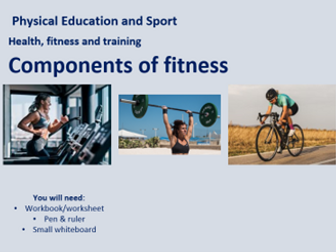
The recognised components of health-related and skill-related fitness, linking these to performance in physical
activities:
• agility
• balance: static and dynamic
• cardiovascular endurance / stamina
• coordination
• flexibility
• muscular endurance
• power
• reaction time
• speed
• strength.
Lesson 2:
Includes:
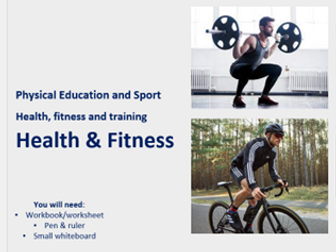
Health & Fitness - definitions, differences and applications.
Diet and nutrition
Calories and recommended amounts
Energy balance
Macro-nutrients and what we get from food
Diet of an athlete
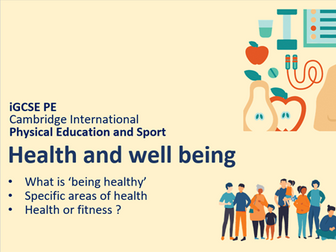
Physical health and well-being:
• all body systems working well
• free from illness / injury / disease
• able to carry out everyday tasks.
Mental health and well-being:
• able to cope with stress
• can control emotions
• feeling good / self-esteem.
Social health and well-being:
• essential human needs are met
• friendship and support
• having value within society
• ability to mix with other people.
The main reasons for carrying out fitness tests, linked to:
• suitability for different physical activities
• identifying strengths and weaknesses
• monitoring improvement
• comparison to others
• informing the design of a training programme
• motivation
Lesson for varying fitness tests to be conducted by the students. Also contains fitness testing score sheet for students to record scores and compare to normative data in a future lesson. Students will require mobile phone/tablet/device with camera to utilise QR codes to access instructional videos to conduct the tests.
This lesson includes the following areas:
Skill vs ability
Does skill affect ability?
Are skill and ability transferable?
Factors which affect skill level
in-class tasks and homework
Includes:
What is arousal?
Arousal in sport
Physiological and psychological changes to the body
Arousal task
Inverted U Theory
Case Study: New Zealand All Blacks and the Haka
Arousal Pyramid task (sheet attached)


 Quick View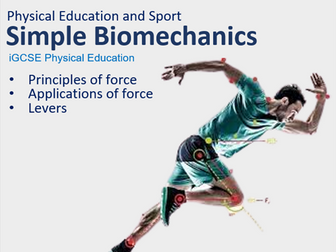
![IGCSE: Unit 3: Skilled performance [2]](https://l.imgt.es/resource-preview-imgs/9ef1ca23-61ff-4afc-8bb8-5d7e603ab68a%2F2lesson.crop_529x397_29%2C16.preview.png?profile=res-img-med-legacy-v2)
![IGCSE: Unit 3: Information Processing [3]](https://l.imgt.es/resource-preview-imgs/d4a9aae2-58a4-4f76-bee7-966b385c5d9e%2Flesson3.crop_511x383_44%2C6.preview.png?profile=res-img-med-legacy-v2)
![IGCSE: Unit 3: Stages of learning [4]](https://l.imgt.es/resource-preview-imgs/eb21cf29-c2e4-4304-86f9-68008225fab4%2Flesson4.crop_441x330_13%2C0.preview.png?profile=res-img-med-legacy-v2)
![IGCSE: Unit 3: Goal Setting [6]](https://l.imgt.es/resource-preview-imgs/45f05170-f7a7-4feb-a0d5-1fb835a14ceb%2FLesson6.crop_429x321_9%2C16.preview.png?profile=res-img-med-legacy-v2)
![IGCSE: Unit 3: Skill vs Ability [1]](https://l.imgt.es/resource-preview-imgs/31130a1b-fbce-48c8-836e-ccef678bc3f2%2F1lesson.crop_542x407_17%2C29.preview.png?profile=res-img-med-legacy-v2)
![IGCSE: Unit 3: Guidance [5]](https://l.imgt.es/resource-preview-imgs/24fb9a4d-24ac-4b8d-b6ff-41dba24359fc%2Flesson5.crop_532x399_16%2C0.preview.png?profile=res-img-med-legacy-v2)
![IGCSE: Unit 3: Arousal [8]](https://l.imgt.es/resource-preview-imgs/b04f265a-8f14-4e97-b83b-f8a44a5d77ef%2FLesson8.crop_609x457_22%2C0.preview.png?profile=res-img-med-legacy-v2)