The presentation is all about physical and chemical change with wide range of examples, time lapse videos and comparison. The class activity is added at the end of the slide
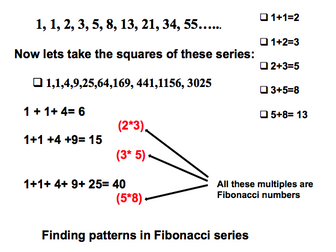
The presentation explains about different numbers like odd, even, prime, composite, perfect numbers, Fibonacci numbers and golden ratio. It also talks about finding patterns in nature.
The presentation talks about AC and DC current. It also explains the colour coding of wire and the safety measures. There are couple of activities for the class.
One of the presentation gives an overview about project based learning and explains its pros and cons. The other presentation talks about the implementation process with an example
The power point explains the digestive system in detail (chemical digestion). It gives a picture of how food particle is broken down stage by stage with the help of enzymes and the absorption process is laid down.
The unit explains circulatory system briefly, blood, its components (Plasma, RBC, WBC and Platelets), the process of blood clotting, blood transfusion, exchange of substances between capillaries and lymphatic system.
The process of removing waste and excess water from the body is called excretion (maintains homeostasis).
Kidneys are the main organs for excretion. Other organs like large intestine, liver, skin and lungs also remove waste from the body.
All these organs constitute the excretory system.
Hormones are specific chemical substances which regulate normal growth, development and functioning of the body.
Hormones:
Maintain internal environment of the body by their actions.
Regulated by the feedback mechanism.
Nervous and endocrine system are involved in hormone regulation.
Sex hormones play an important role in reproductive health.
Micro-organisms such as bacteria, virus and fungi can be grouped into:
Pathogenic: micro-organism that causes disease.
Non-pathogenic: micro-organism that are free living and harmless.
Disease caused by micro-organism can be classified into two types.
Communicable (infectious) disease
Caused by pathogens
Can be transmitted from one person to another
Ex: Tuberculosis, whooping cough and measles.
2. Non- communicable (non-infectious) disease
Self-inflicted or created by environmental conditions.
Ex: Coronary heart disease, lung disease due to smoking.
Disease like haemphila, albinism and hepatitis B are inherited from parents.
Micro-organism are tiny organisms.
Micro-organisms like bacteria and fungi have proper structures, while virus don’t have one.
Bacteria are usually Prokaryotes, while fungi can either be Prokaryotes or Eukaryotes.
Some of them are unicellular, while others live in colonies.
Digestive system is a process that features the breakdown of large and complex food molecules into simple and smaller molecules, which are easily absorbed by the body cells.
Mechanical digestion- involves the physical breakdown of large particle into smaller forms. (Eg: chewing of food).
Chemical digestion- Involves the further break down of complex molecules (Eg: Mouth) with the help of enzymes.
The power point explains the concept of photosynthesis (Definition and chemical equation). It also explains the concept of light and dark reactions. This is followed by factors affecting the rate of photosynthesis and the experiment to show the rate of photosynthesis.
The power point explains the following things
1. Properties of Muscles
2. Types of Muscle movements
3. Types of Muscles
4. Antagonist muscles
It would be useful for 11-14 years old students
The ppt. talks about the location, characteristics and components of DNA. It also touches the history (not in detail though) and has some videos to support the lesson
Defines what a cell is, explains about the cell theory, Prokaryotic and Eukaryotic cells, plant and animal cell. It also has an comparative activity to enhance understanding about the cell


 Quick View