70 Science Starter Activities KS3 KS4 GCSEQuick View
Laura313131

70 Science Starter Activities KS3 KS4 GCSE

(0)
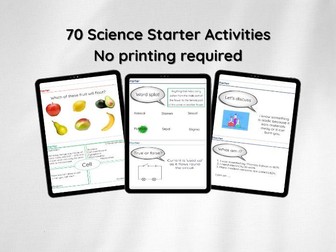
70 Science Starters – Engaging Warm-Ups for KS3-KS4 (Middle & High School) Science lessons. This resource includes ready-to-use science starter activities designed to spark curiosity, encourage discussion, and deepen understanding across a wide range of science topics. It includes: • 70 interactive starter activities covering Biology, Chemistry & Physics • Mix of discussion prompts, “true or false” questions, word games, and “what am I?” riddles • Real-world science scenarios (from space travel to pollution to everyday objects!) • Activities that encourage critical thinking, teamwork, and scientific literacy • No printing required – just open and teach! Format: Digital PowerPoint (instant download) – use on screen, share remotely, or adapt for your own teaching style. Make science lessons fun, interactive, and thought-provoking from the very first minute.
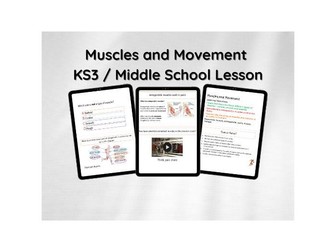
Muscles and Movement KS3 Science lessonQuick View
Laura313131

Muscles and Movement KS3 Science lesson

(0)
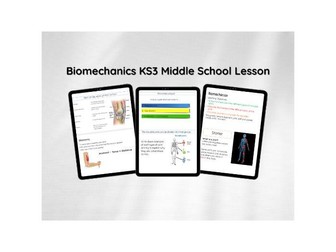
What Makes This Resource Special? This Muscles and Movement resource is designed to make tricky KS3 / Middle School science concepts simple, engaging, and memorable. It combines clear explanations and interactive activities (true or false, mini-quizzes, an experiment you can do at home or in school and a worksheet) so students don’t just learn the facts—they understand how to apply them. Teachers and home school parents love it because it: ✔ Saves planning time with ready-to-use worksheets and activities. ✔ Covers key curriculum points (antagonistic muscles, biceps and triceps, pairs of muscles in the body, key words). ✔ Includes fun, relatable examples and an experiment that sparks curiosity. ✔ Offers self-assessment and practical tasks to check understanding. It’s a complete learning experience that keeps students engaged while reinforcing essential science knowledge. It includes a Power point, worksheet, and experiment.
Biomechanics KS3 science lessonQuick View
Laura313131

Biomechanics KS3 science lesson

(0)
What Makes This Resource Special? This Biomechanics resource is designed to make tricky KS3 / Middle School science concepts simple, engaging, and memorable. It combines clear explanations and interactive activities (mini-quizzes, worked examples, bingo, word matching activity and a worksheet) so students don’t just learn the facts—they understand how to apply them. Teachers and home school parents love it because it: ✔ Saves planning time with ready-to-use worksheets and activities. ✔ Covers key curriculum points (the different types of joint, how joints work, moments and forces). ✔ Includes fun, relatable examples that spark curiosity. ✔ Offers self-assessment to check understanding. It’s a complete learning experience that keeps students engaged while reinforcing essential science knowledge. It includes a Power point, worksheet, and word matching activity.
AQA GCSE Chemistry: Energy Changes - exothermic and endothermic reactionsQuick View
Laura313131

AQA GCSE Chemistry: Energy Changes - exothermic and endothermic reactions

(0)
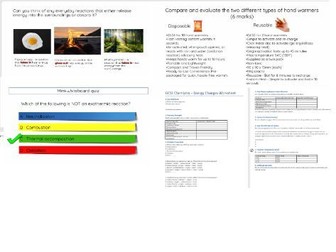
Resource for teaching exothermic and endothermic reactions for AQA GCSE level. Lesson objectives are: To describe the difference between endothermic and exothermic processes To identify examples of exothermic and endothermic reactions To explain real-life applications of energy changes in reactions Includes power point with plenty of different activities, including a starter, mini-whiteboard quizzes, lots of examples, 3 exam-style questions, a worksheet, homework task and practical activity.
AQA GCSE Biology Cells: Eukaryotes and ProkaryotesQuick View
Laura313131

AQA GCSE Biology Cells: Eukaryotes and Prokaryotes

(0)
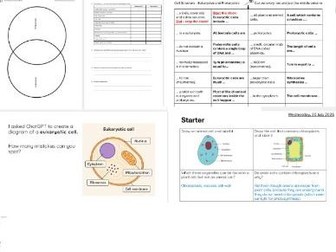
This is a GCSE AQA Biology lesson based on Eukaryotes and Prokaryotes. It includes: 1 x Power point 1x student worksheet comparing the two types of cells 1x card sort 1x printable pictures of prokaryotic cells for student books 1x Finish the Sentence game (and instructions) I have made this resource as engaging and interactive as possible for students. I hope you enjoy teaching it.
AQA GCSE Biology Adaptation, Interdependence and Competition literacy and oracy activitiesQuick View
Laura313131

AQA GCSE Biology Adaptation, Interdependence and Competition literacy and oracy activities

(0)
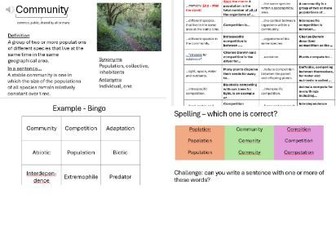
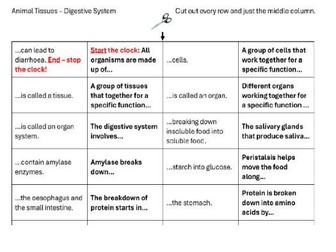
Multiple resources focusing on literacy and oracy of the topic: 4.7.1.1 – 4.7.1.4: Adaptations, interdependence and competition Includes a power point with literacy activities on key terms (community, abiotic, biotic, adaptation, competition), spelling of key terms, bingo and worksheet. I have also included a “Finish the sentence!” game. Cut out every row and the just middle column. Mix up the order and hand each student a slip of paper (they will have two halves of a statement in their hand. If you have a smaller class, hand out every piece of paper anyway). Whoever has the first one (it will say ‘Start the clock’) is the person who starts and reads the sentence out loud first. The person who has the next half of the correct sentence reads out theirs. This will always be on the left-hand-side of their bit of paper. If correct they can then read out the starting statement next to it (always on the right-hand-side of the paper). The game continues until you reach the end (the person who started the game will also be the person who finishes it). Stop the clock! Repeat to get a better time. Classes can get really competitive! The statements are in order so you can keep track of correct answers and get them on track again. Students will need to be encouraged to talk up so others can hear them. Great for confidence building in student subject knowledge, literacy and oracy skills. Alternative uses: Questions and answers for Bingo. Homework – give students one or two slips of paper – they have to write down an answer for the given question and come up with a question for the given answer. Use for flipcards or flashcards. Peer-to-peer revision – students can test each other in pairs using the whole set of questions and answers. Can students improve the answer to add more detail? Spelling test – highlight key words and test their spelling.
AQA Biology GCSE - Digestion and AbsorptionQuick View
Laura313131

AQA Biology GCSE - Digestion and Absorption

(0)
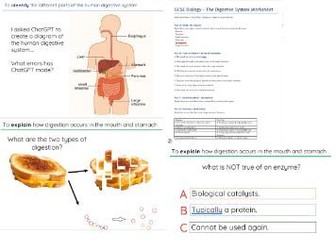
Resource for teaching digestion for AQA GCSE level. Lesson objectives are: To identify the different parts of the human digestive system To explain how digestion occurs in the mouth and stomach To explain how digestion occurs in the small and large intestines Includes power point with plenty of different activities, a worksheet and a diagram which can be used as a starter.
AQA Biology GCSE - Resource cards: 'Finish the sentence' activityQuick View
Laura313131

AQA Biology GCSE - Resource cards: 'Finish the sentence' activity

(0)
Game – “Finish the sentence!” Activty for GCSE Biology topics (Animal Tissues - Digestive System and Enzymes, Cell Division, Cell Structure - Eukaryotes, Prokaryotes and Specialised Cells, and Transport in Cells). Cut out every row and the just middle column. Mix up the order and hand each student a slip of paper (they will have two halves of a statement in their hand. If you have a smaller class, hand out every piece of paper anyway. Whoever has the first one (it will say ‘Start the clock’) is the person who starts and reads the sentence out loud first. E.g. “Eukaroyic cells include…” The person who has the next half of the correct sentence reads out theirs, (e.g. “… all plant and animal cells.”). This will always be on the left-hand-side of their bit of paper. If correct they can then read out the starting statement next to it (always on the right-hand-side of the paper). The game continues until you reach the end (the person who started the game will also be the person who finishes it). Stop the clock! Repeat to get a better time. Classes can get really competitive! The statements are in order so you can keep track of correct answers and get them on track again. Students will need to be encouraged to talk up so others can hear them. Great for confidence building in student subject knowledge, literacy and oracy skills. Alternative uses: Questions and answers for Bingo. Homework – give students one or two slips of paper – they have to write down an answer for the given question and come up with a question for the given answer. Use for flipcards or flashcards. Peer-to-peer revision – students can test each other in pairs using the whole set of questions and answers. Can students improve the answer to add more detail? Spelling test – highlight key words and test their spelling.
Culturing Micro-organisms KS4 entire lesson Biology GCSEQuick View
Laura313131

Culturing Micro-organisms KS4 entire lesson Biology GCSE

(0)
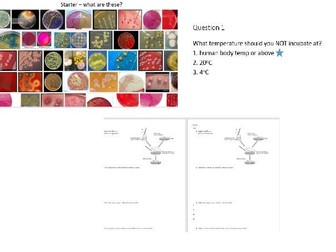
An entire lesson on the culturing of micro-organisms including worksheet and quiz. Objectives Describe how microorganisms can be safely grown on agar plates. Explain the safety precautions you must take when growing microorganisms. Explain why cultures are incubated at a maximum temperature of 25ºC in schools.
GCSE Physics required practical activity: Electricity topicQuick View
Laura313131

GCSE Physics required practical activity: Electricity topic

(0)
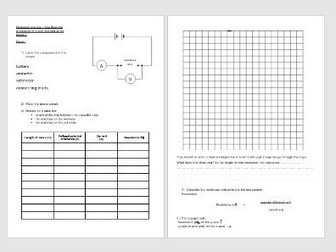
Three of the Required Practical handouts on the topic of Electricity. Includes worksheet students can use for the entire lesson/practical on the: Resistance of a wire Required practical I-V Resistor AND Filament Lamp Useful for all students and especially students who struggle to write quickly and draw graphs. This ensures everything they need is together on a few pages. It has been made so that you can print two pages back to back for A5 size.
Ionic Structures Full Lesson GCSE ChemistryQuick View
Laura313131

Ionic Structures Full Lesson GCSE Chemistry

(0)
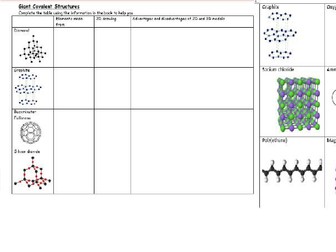
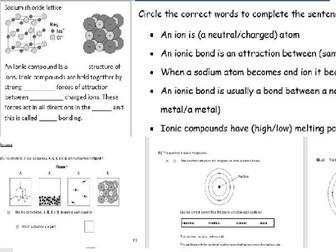
This is a full lesson for GCSE Chemistry on Ionic Structures. It includes: Power point presentation Crossword starter Stick-in sheet for students (diagram of a sodium chloride lattice and missing words to fill in) Homework sheet of GCSE exam questions Answers to exam questions Plenary sheet - circling the correct answer in a sentence
Cells and Particles Revision Quick View
Laura313131

Cells and Particles Revision

(0)
10 stations around the room - need to be visited by students in order to complete the worksheet. Revision for cells and particles topics in Year 7.