MACBETH FULL SOW WITH MARKING RUBRIC  FOR SEND STUDENTSQuick View
katterby

MACBETH FULL SOW WITH MARKING RUBRIC FOR SEND STUDENTS

(0)
Teaching Macbeth through a trauma‑informed lens transforms the play from something students fear into a powerful tool for emotional literacy, metacognition and inclusive learning. This Scheme of Work is built around The CORE approach, offering predictable structure, dual‑coded resources and low‑load activities that support SEND and neurodiverse learners. Each lesson breaks Shakespeare’s intense themes into safe, manageable chunks, using drama‑based exploration, relational scaffolding and metacognitive reflection to help students understand not just what Macbeth does, but why he does it. The result is a calm, accessible and meaningful journey through the play’s key ideas, ambition, guilt, morality, power and psychological decline designed for teachers who want Shakespeare to feel safe, engaging and genuinely transformative.
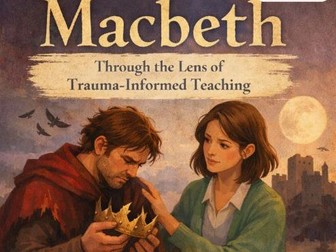
MACBETH THROUGH TRAUMA INFORMED TEACHING PRACTICEQuick View
katterby

MACBETH THROUGH TRAUMA INFORMED TEACHING PRACTICE

(0)
For neurodiverse and SEND learners, who may experience sensory overload, anxiety, masking, past school based trauma or difficulty with abstract emotional content, this approach is essential. When teaching a text like Macbeth, trauma informed practice provides the emotional scaffolding students need to explore themes such as violence, guilt, ambition and moral conflict without becoming dysregulated. It allows us to break down intense scenes into manageable, predictable chunks; to use co regulation and relational safety when discussing fear or betrayal; and to help students understand characters’ behaviour through a lens of nervous system responses rather than shame or judgement.
YEAR 9 PSHE/RSE SAFE SEX, CONTRACEPTION AND STI'sQuick View
katterby

YEAR 9 PSHE/RSE SAFE SEX, CONTRACEPTION AND STI's

(0)
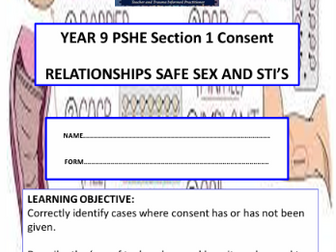
This section of the Year 9 PSHE booklet introduces students to the foundations of healthy, respectful relationships and the importance of clear, consent. It explains what safe sex means, including contraception and ways to protect against sexually transmitted infections (STIs), using simple, factual language. The booklet also helps students understand how pornography can give unrealistic or unhealthy messages about sex and relationships, encouraging them to think critically about what they see online. Throughout the section, the focus is on safety, respect, personal boundaries, and making informed choices that support wellbeing.
British ValuesQuick View
katterby

British Values

(0)
This lesson introduces students to the concept of British Values in a clear, accessible and engaging way, guiding them from personal reflection to national principles. The PPT begins by helping learners identify their own values before exploring the five core British Values through simple definitions and relatable examples. It then moves into a series of interactive ranking and discussion tasks that encourage critical thinking about what these values look like in everyday life, both in school and in wider society. The resource also includes self‑reflection slides that prompt students to consider how well they embody these values themselves, making it ideal for PSHE, tutor time or citizenship. The lesson is designed to be thought‑provoking, inclusive and discussion‑rich, supporting students to understand not just what British Values are, but why they matter
FULL RESOURCE FOR PSHE 'I CAN STATEMENTS'  FOR KS3-4Quick View
katterby

FULL RESOURCE FOR PSHE 'I CAN STATEMENTS' FOR KS3-4

(0)
SAVE TIME AND EFFORT WRITING LEARNING OBJECTIVES. This PSHE “I Can Statements” document provides a comprehensive assessment framework for Key Stage 3 and 4, supporting teachers to measure progress in a subject where learning is personal, developmental and often non‑linear. Rooted in the PSHE Association’s recommended ipsative model, it outlines how to use baseline assessment, AfL strategies and end‑point tasks to evidence growth in knowledge, skills, attitudes and understanding. The booklet includes detailed guidance on effective assessment activities, alongside a full set of adaptable “I Can” statements across the three PSHE strands: Health and Wellbeing, Relationships, and Living in the Wider World. These statements help teachers track emerging, developing and secure progress, support learning conversations, and ensure PSHE is delivered with the same rigour and clarity expected across the wider curriculum.
PSHE DRUGS BOOKLETQuick View
katterby

PSHE DRUGS BOOKLET

(0)
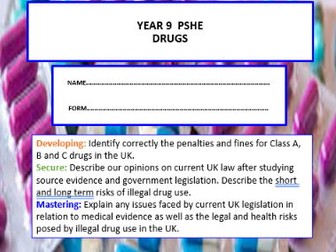
This comprehensive Year 9 PSHE booklet introduces students to drugs education through a clear, structured and age‑appropriate sequence of learning. It covers legal and illegal drugs, UK drug classifications, risks and consequences, myths and misconceptions, and the short‑ and long‑term effects of substances such as alcohol, tobacco, cannabis and prescription medications. Students engage with visual literacy tasks, scenario‑based decision‑making, myth‑busting, quizzes, mind‑mapping, and a mock trial exploring arguments for and against legalisation. The booklet also embeds statutory RSHE outcomes, British Values, and trauma‑informed classroom principles, supporting pupils to think critically, challenge social norms, and develop safe, informed strategies for managing peer influence and risk.