Using an atlas or an online mapping software, the pupils have to identify the names of the rivers highlighted on the map of the British Isles. On the second page of the pdf are the answers and on the third page, there are notes to the teacher which I found to be really useful. A great activity which combines atlas skills with the topic of rivers.
To introduce this activity, we talked about what deserts are like and why they are expanding. Then for the main part of the lesson, the pupils had to locate the world's major deserts on their blank map of the world. It was a good way of combining geographical skills with content. And for an extension activity, there is a &'Cause or effect&'; sheet which asks the pupils to classify words according to whether they cause deforestation or the effects of deforestation.
This is a slightly different take on learning about wind speed and recording the weather. This activity has lift up flaps which the pupils complete the information on. The attached photo helped my class understand what they had to do. We did this activity in our exercise books but I can see that larger A3 versions could make a good display. You need to be able to print back to back.
Introducing “Come and See - Year 5 Unit 7 - Transformation”, a complete, classroom-tested teaching resource designed to help pupils explore the theme of change through stories, reflection and meaningful discussion. Aligned with the Come and See curriculum, this comprehensive unit includes nine fully resourced lessons, detailed lesson plans, differentiated activity sheets and model examples to support effective teaching and assessment.
This unit focuses on Transformation - a universal theme that encourages pupils to consider how people grow, change, and are inspired to act. Through key Gospel stories, the message of Pentecost, and the life of St Paul, pupils reflect on how values such as courage, hope, forgiveness and purpose can influence lives today. Opportunities for writing, drama, group work and creative expression ensure lessons are engaging, inclusive and thought-provoking.
Developed by a school that got the top rating in its most recent Catholic schools inspection, this resource is designed to support high-quality RE provision in both faith-based and community settings. It offers a respectful and inclusive approach to exploring Christian teaching, while building critical thinking, empathy and spiritual awareness.
Whether you are following the Come and See program or simply seeking a values-led resource to support personal development and religious literacy, “Come and See - Year 5 Unit 7 - Transformation” is ready to bring powerful learning into your classroom.
Introducing “Come and See - Year 5 Unit 5 - Sacrifice”, a complete, classroom-tested teaching resource that explores the meaning of sacrifice through the lens of memory, ritual, and faith. Aligned with the Come and See curriculum, this comprehensive unit includes eleven fully resourced lessons, detailed lesson plans, differentiated activity sheets, model examples and engaging assessment opportunities.
This unit focuses on Memorial Sacrifice, a powerful theme that invites pupils to reflect on why memories matter, how rituals help keep them alive, and how the example of Jesus continues to inspire acts of love and service today. Through scripture, symbolism, drama, writing, group work and visual analysis, pupils develop a deep understanding of the Jewish Passover, the Last Supper, and the Catholic celebration of the Eucharist - making meaningful links across faith, history and personal values.
Each lesson is carefully crafted to support spiritual growth and critical thinking. Pupils explore challenging questions such as:
Why do Christians call the Eucharist a memorial?
How does remembering shape our choices?
Why did Jesus offer himself in sacrifice?
What do these events tell us about hope and redemption?
Created by a school that scored the top rating in its most recent Catholic School Inspection, this unit supports high-quality RE provision in faith-based and values-led primary settings. With a variety of learning styles, creative tasks, and structured teacher guidance throughout, the resource is equally suited to confident RE specialists and generalist classroom teachers.
Whether you are following the Come and See program or looking for a thoughtful, values-rich resource to support personal development and religious literacy, “Come and See - Year 5 Unit 5 - Sacrifice” is ready to bring meaningful learning and deep reflection into your classroom.
This activity teaches the pupils first to read a climate graph and then to make one. It concentrates on climate data for the UK and for an extension activity, the pupils have to compare the climates of London and Edinburgh.
This map quiz is fun and colourful and my class enjoyed trying to find the countries in their atlas. Whilst easy for most pupils, there were some pupils that struggled a bit so working in pairs on this activity would be good.
This fun activity was ideal for my early finishers as something fun to do and relevant to the topic. I teach Year 4 this year and this activity took them 5-10 minutes. A good back up activity that I will keep for next year.
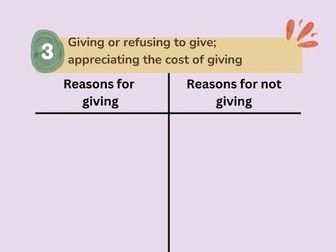
Introducing “Come and See - Year 5 Unit 6 - Giving”, a comprehensive and in-depth teaching resource for educators looking to inspire and engage their students. This unit of lesson plans comes complete with activity sheets and suggested answers, providing teachers with all the tools they need to bring this important topic to life in the classroom.
With a focus on the theme of Giving, this teaching resource is designed for Year 5 students and is packed with ideas for differentiation, ensuring that each student can learn and grow at their own pace. From group activities to individual tasks, these lesson plans provide a variety of engaging learning experiences that will keep students motivated and excited to learn.
But what sets this teaching resource apart is the school that developed it. With the top score in the Catholic School Inspection during the last academic year, you can trust that “Come and See - Year 5 Unit 6 - Giving” has been rigorously tested and proven effective in the classroom.
So if you’re looking for a comprehensive teaching resource that will inspire your students and help them develop a deeper understanding of the theme of Giving, look no further than “Come and See - Year 5 Unit 6 - Giving”.
This set of three ‘no-prep’ lessons comes complete with activity worksheets and PowerPoints ready to use straight away.
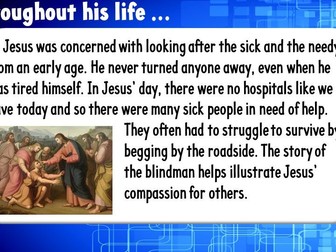
Lesson 1 – Jesus cares for the sick
Examines the parable of the blind man and what it tells us about Jesus. The pupils record their learning in the style of a newspaper article.
Lesson 2 – How do we care for the sick
Examines what we do when we are unwell and then goes on to conduct an internet search into the sacrament of anointing the sick with oil.
Lesson 3 – Caring for others.
Examines the link between what values and beliefs we hold to be important ourselves and how our beliefs influence our actions.
These lessons are aimed at Grade 4-5 (Year 5-6).
This lesson is aimed at Years 5/6 and focuses on the events that lead up to the death of Jesus. Known as the stations of the cross, this comes in handy when teaching about the events of Easter.
This lesson is aimed at Y5/6 in Catholic schools and examines what it is to be a Christian whilst also being cross-curricular by covering what modal verbs are in English.
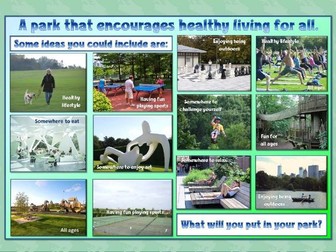
In this activity, pupils look at a wide range of activities that can be found in a park and then are set the task to design a park that:
(i) benefits all ages
(ii) promotes healthy living
(iii) safe for all
(iv) prevents vandalism
Comes complete with PowerPoint and worksheet. It is a fairly open ended task that can be undertaken by a wide range of ages. It encourages pupils to think about healthy living in the local area.
When studying the topic of Kenya, I wanted to include the teaching of map skills and I found this activity which looks at using 4 figure grid references. The lesson went really well so I'll keep this for next year.
This activity introduces the skill of alpha-numeric grid references to year 2 pupils. It gives the pupils a list of cities and grid references of Mexican cities and a blank map of Mexico for them to mark them on. Nice child-friendly design.
This activity asks the pupils to cut up the face of Big Ben and measure the angles between the different hands on the clock. It is less abstract than measuring the angles between two lines in a textbook and in the plenary, the class could work out that there are 30 degrees between each hand on a clock face.
The worksheet is A3 in size.
This helps stretch the more able in that they make a map that they haven't come across yet and is also good for learning more about rainfall patterns and India at the same time. There is a finished example to help the lower ability. This also has the added advantage of helping the pupils understand that maps show more than just where places are.
We used this activity as a homework activity close to the start of the topic and it helped the pupils gain a good understanding of the general knowledge about India. This then allowed us to concentrate on more of the skills in the lessons. The worksheet is nice and colourful and child friendly.
This activity can be used in a topic on weather and climate as it introduces the skill of understanding climate graphs. It compares the climate of Nairobi in Kenya with London in England and we used this activity when teaching our topic of Kenya.