Classifcation keys (Biology, ecology)Quick View
hole_tim

Classifcation keys (Biology, ecology)

(1)
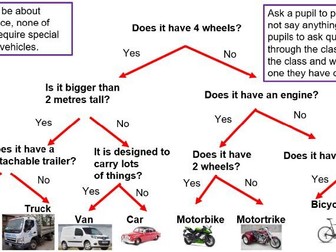
Main Powerpoint goes through the basics of a classification key. A classification key is provided and class-based task where they work through the questions (this is non-biology related to purely teach the theory) Bad questions are modelled (conflict learning) Sheet of animals to work from is provided. Option to do it in book or can be done digitally: a Powerpoint template is provided. There are other websites and apps that are good for this task too: e.g. Poplet or Padlet. This was written for a fairly high-ability Y5 class but can easily be used a year or 2 above or below
Adaptation of Polar Bear (biology, science)Quick View
hole_tim

Adaptation of Polar Bear (biology, science)

(1)
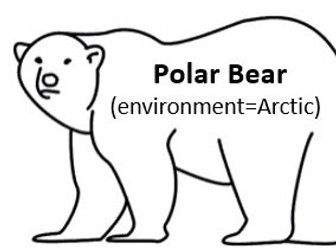
15 slide lesson - produced for a high ability Y5 group. deals with how polar bears are adapted to their environment. From obvious things like white fur, to some really obscure bits like their 3 pairs of eyelids! Main task is to label a simple polar bear image with lots of adaptation; their knowledge of which is developed from classroom discussion and 2 videos (links inside) Separate PPT of polar bear images to print out Optional extra: Can print polar bear skulls separately for more able pupils: Can be used to label the streamlined skull, the huge carnines and the large diastema (gap between canines and molars)
Human Body - Internal organs and their locations (heart, brain, liver, kidneys, intestine, etc.)Quick View
hole_tim

Human Body - Internal organs and their locations (heart, brain, liver, kidneys, intestine, etc.)

(0)
Powerpoint presentation and print out for task. Main task is for the boys to have a go at locating and drawing the position of key internal organs. After this, they go through it on a second sheet with the teacher; focusing on the size and position of the organs. Once both are complete, they compare and reflect on at least three things that they have learnt from comparing their first effort with the one we have drawn together.
Human Body- the heart and its structureQuick View
hole_tim

Human Body- the heart and its structure

(0)
Powerpoint presentation and print out. The print out is a blank diagram and the students work together to work out which labels go where, based on a slide of the Powerpoint, that you can leave on the whiteboard. Works best if they discuss it together and reason it out. Children can mark it themslves - solutions are on a slide towards the end. Key vocab: venticles, atria/atrium, pumps, muscular walls
Forces - box diagrams (free body diagrams) PhysicsQuick View
hole_tim

Forces - box diagrams (free body diagrams) Physics

(0)
A presentation and worksheet introducing and explaining box diagrams (or free body diagrams). This is part of a module on forces. The presentation introduces it and has several examples for you to talk through and then some for the boys to try verbally or in pairs. There is then a worksheet I have made. 4 diagrams to do and then 4 spaces for the students to try writing their own - and for partners to have a go at. Little bit of metacognition…tick!
Forces-15 lessons+plans+test+answersQuick View
hole_tim

Forces-15 lessons+plans+test+answers

(0)
A module on FORCES. 9 core lessons, involving several practical activities. Several optional extras and revision materials. Some differtiated resouces e.g. graph templates. Scheme of Work included. Test included and answers. I work in a very selective school and, although this was taught in year 5, I suspect it would be fine for older students. Please note- my school subscribes to Twig videos - a great resource but not cheap - these links wont work if not subscribed so you would have to come up with equivalents on YouTube. Once downloaded, put in a file and sort by file name. This will put them in order. Anything that starts with ‘99’ is essentially something I have made as an optional extra. This is my first time trying to sell stuff on TES - so I will start with a bargain price!!