KS3 Activate Biology – Retrieval Practice: Reproduction with answersQuick View
aries81

KS3 Activate Biology – Retrieval Practice: Reproduction with answers

(0)
This KS3 Biology retrieval practice worksheet is designed to help students consolidate their understanding of reproduction through a range of engaging recall activities. Students revisit key concepts including puberty, fertilisation, sperm and egg cells, and adaptations of reproductive cells. The resource includes fill-in-the-gap tasks, matching activities, spot-the-mistake questions, table completion, and short written responses to strengthen long-term memory and improve retention. Ideal for: Starter activities Retrieval practice Homework Revision lessons Intervention sessions End-of-topic review Includes: 10 retrieval practice questions Variety of task styles Student answer space Teacher answer sheet included Suitable for Years 7–9 KS3 Science Aligned with the KS3 Activate Biology curriculum
KS3 Activate Biology – Retrieval Practice: Plant Reproduction with answersQuick View
aries81

KS3 Activate Biology – Retrieval Practice: Plant Reproduction with answers

(0)
This KS3 Biology retrieval practice worksheet is designed to introduce and consolidate students’ understanding of plant reproduction. Students revisit key concepts including sexual and asexual reproduction in plants, pollination, fertilisation, seed and fruit formation, and the roles of flowers such as anthers, stigma, and ovules. The resource includes fill-in-the-gap tasks, matching activities, spot-the-mistake questions, table completion, and short written responses to strengthen long-term memory and improve retention of key plant reproduction concepts.
KS3 Activate Biology – Retrieval Practice worksheet: Cells and OrganisationQuick View
aries81

KS3 Activate Biology – Retrieval Practice worksheet: Cells and Organisation

(0)
This retrieval practice worksheet is designed to help students revisit and strengthen their understanding of Cells and Organisation. Through a range of short retrieval tasks, students will recall key knowledge, identify misconceptions, and apply their understanding of cell structure, specialised cells, tissues, and organs. The activities are suitable for Years 7–9 and can be used as a starter, homework task, revision activity, intervention resource, or end-of-topic review. Answers are included to support self-assessment and teacher marking. Learning Objectives Recall the functions of key cell structures. Describe the differences between plant and animal cells. Understand specialised cells and their adaptations. Explain the organisation of cells, tissues, and organs. Apply knowledge through retrieval and challenge activities.
KS3 Activate Science – Full MCQ (20 per topic) Revision Bundle (with answers)Quick View
aries81

KS3 Activate Science – Full MCQ (20 per topic) Revision Bundle (with answers)

(0)
A complete KS3 Activate Science revision bundle covering the full Key Stage 3 curriculum in Biology, Chemistry, and Physics. This resource includes 20 multiple-choice questions per topic, designed to match GCSE-style question structure and prepare students for end-of-year assessments and progression to GCSE Science. Each topic set includes: 20 carefully structured MCQs per KS3 Activate topic Mix of Foundation and Higher-style questions Balanced A–D answer distribution for exam practice Full answer key provided for every topic Designed to build recall, application, and exam confidence Perfect for: KS3 Science revision lessons Homework booklets Intervention sessions End-of-topic assessments GCSE bridging practice Topics included cover: Biology: Cells, Organisation, Digestion, Respiration, Photosynthesis, Ecology, Inheritance & Evolution, Variation & Classification Chemistry: Particles, Atoms & Elements, Chemical Reactions, Acids & Alkalis, Metals & Materials, Earth & Atmosphere Physics: Energy, Forces, Motion & Pressure, Electricity, Magnetism, Waves (Sound & Light), Energy Resources, Space This resource is ideal for teachers looking for ready-to-use, exam-style KS3 assessment materials that closely mirror GCSE question styles and improve student performance.
AQA GCSE Biology Topic 7: Ecology – 20 Multiple Choice Questions and AnswersQuick View
aries81

AQA GCSE Biology Topic 7: Ecology – 20 Multiple Choice Questions and Answers

(0)
A set of 20 AQA GCSE Biology multiple-choice questions covering Topic 7: Ecology. Includes Foundation and Higher Tier content on ecosystems, food chains, trophic levels, energy transfer, carbon cycle, water cycle, biodiversity, decomposers, and human impacts on the environment such as deforestation and eutrophication. Designed for exam revision, retrieval practice, homework, starters, plenaries, or end-of-topic assessment. Answers included.
AQA GCSE Biology Multiple Choice Questions  – Topic 1: Cell Biology with answersQuick View
aries81

AQA GCSE Biology Multiple Choice Questions – Topic 1: Cell Biology with answers

(0)
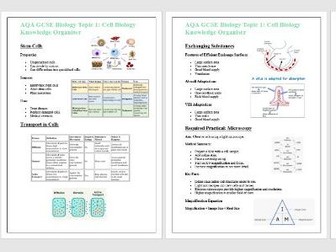
AQA GCSE Biology Topic 1: Cell Biology – Multiple Choice Questions and Answers A set of 20 AQA GCSE Biology multiple-choice questions covering the Cell Biology topic. Includes a mix of Foundation and Higher Tier content, covering cell structure, microscopy, specialised cells, transport in cells, stem cells, and exchange surfaces. Ideal for revision, starter activities, homework, retrieval practice, or end-of-topic assessment.
AQA GCSE Biology Topic 2: Organisation – 20 Multiple Choice Questions and AnswersQuick View
aries81

AQA GCSE Biology Topic 2: Organisation – 20 Multiple Choice Questions and Answers

(0)
A set of 20 AQA GCSE Biology multiple-choice questions covering Topic 2: Organisation. Questions include Foundation and Higher Tier content on the digestive system, enzymes, the heart, blood vessels, blood components, coronary heart disease, and plant tissues. Ideal for revision, retrieval practice, homework, starters, plenaries, or end-of-topic assessment. Includes a separate answer sheet and follows the AQA GCSE Biology specification.
AQA GCSE Biology Topic 3: Infection and Response – 20 Multiple Choice Questions and AnswersQuick View
aries81

AQA GCSE Biology Topic 3: Infection and Response – 20 Multiple Choice Questions and Answers

(0)
A set of 20 AQA GCSE Biology multiple-choice questions covering Topic 3: Infection and Response. Includes Foundation and Higher Tier content on communicable diseases, pathogens, viral, bacterial and fungal infections, human defence systems, vaccination, antibiotics, painkillers, drug discovery, and monoclonal antibodies. Suitable for revision, retrieval practice, homework, starters, plenaries, or end-of-topic assessment. Includes a answers and follows the AQA GCSE Biology specification.
AQA GCSE Biology Topic 4: Bioenergetics – 20 Multiple Choice Questions and AnswersQuick View
aries81

AQA GCSE Biology Topic 4: Bioenergetics – 20 Multiple Choice Questions and Answers

(0)
A set of 20 AQA GCSE Biology multiple-choice questions covering Topic 4: Bioenergetics. Includes Foundation and Higher Tier content on photosynthesis, respiration (aerobic and anaerobic), limiting factors, energy transfer, and ATP. Designed for revision, retrieval practice, homework, starters, plenaries, or end-of-topic assessment. Answers included.
AQA GCSE Biology Topic 5: Homeostasis and Response – 20 Multiple Choice Questions and AnswersQuick View
aries81

AQA GCSE Biology Topic 5: Homeostasis and Response – 20 Multiple Choice Questions and Answers

(0)
A set of 20 AQA GCSE Biology multiple-choice questions covering Topic 5: Homeostasis and Response. Includes Foundation and Higher Tier content on homeostasis, the nervous system, hormones (insulin and glucagon), the brain, reflex actions, the eye, synapses, and common eye defects. Suitable for revision, retrieval practice, homework, starters, plenaries, or end-of-topic assessment. Answers included
AQA GCSE Biology Topic 6: Inheritance, Variation and Evol – 20 Multiple Choice Questions and AnswersQuick View
aries81

AQA GCSE Biology Topic 6: Inheritance, Variation and Evol – 20 Multiple Choice Questions and Answers

(0)
A set of 20 AQA GCSE Biology multiple-choice questions covering Topic 6: Inheritance, Variation and Evolution. Includes Foundation and Higher Tier content on DNA, genes, chromosomes, inheritance, alleles, variation, natural selection, selective breeding, mutation, and evolution. Designed for exam revision, retrieval practice, homework, starters, plenaries, or end-of-topic assessment. Answers included
KS3 Cells Keyword Match with answersQuick View
aries81

KS3 Cells Keyword Match with answers

(0)
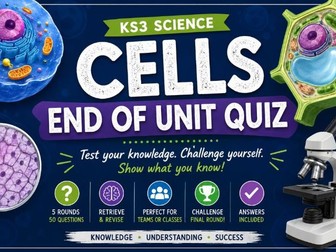
This KS3 Science word sorting activity helps students consolidate and recall key terminology related to cells and organisation. Students match scientific terms to clear, accessible definitions, supporting understanding of cell structure and biological hierarchy from cells through to organ systems. Ideal for independent work, revision, or as a starter/plenary activity.
Topic 4 - Bioenergetics AQA GCSE Crossword with answersQuick View
aries81

Topic 4 - Bioenergetics AQA GCSE Crossword with answers

(0)
Support students in mastering key vocabulary from the AQA GCSE Biology Bioenergetics topic with this engaging crossword activity. Designed for Foundation and mixed-attainment learners, the clues use Bloom’s Taxonomy question stems to encourage students to recall, apply and deepen their understanding of how living organisms obtain and use energy. This resource covers essential bioenergetics content including photosynthesis, respiration, aerobic and anaerobic processes, limiting factors, plant growth and energy transfer. The carefully structured clues help students develop confidence with scientific terminology while reinforcing core biological concepts required for GCSE success. Included vocabulary: Photosynthesis Respiration Aerobic and anaerobic respiration Glucose and energy transfer Chlorophyll and light absorption Limiting factors Biomass Plant growth and productivity Suitable for: AQA GCSE Biology (8461) AQA Combined Science: Trilogy Foundation and mixed-attainment classes KS4 revision and retrieval practice Ideal for lesson starters, plenaries, revision sessions, homework activities, cover lessons or independent learning. This resource provides an enjoyable way for students to consolidate knowledge while improving their understanding of key scientific terms and processes.
Infection and Response - AQA GCSE Crossword with answersQuick View
aries81

Infection and Response - AQA GCSE Crossword with answers

(0)
Consolidate students’ understanding of key vocabulary from the AQA GCSE Biology Infection and Response topic with this engaging crossword activity. Designed for Foundation and mixed-attainment learners, the clues use a range of Bloom’s Taxonomy question stems to encourage recall, application and deeper understanding of how the body defends itself against disease. This resource covers essential content including pathogens, bacterial, viral and fungal diseases, the body’s defence systems, white blood cells, antibiotics, vaccinations and plant diseases. It provides an effective way to reinforce scientific terminology while developing students’ confidence in applying their knowledge to unfamiliar contexts. Included vocabulary: Pathogens and disease Bacterial, viral and fungal infections White blood cells and immunity Antibiotics and vaccines Human infectious diseases Plant diseases Disease prevention and control Suitable for: AQA GCSE Biology AQA Combined Science Trilogy Foundation and mixed-attainment classes KS4 revision and retrieval practice Ideal for lesson starters, plenaries, revision sessions, homework activities, cover lessons or independent learning.
Topic 5 Homeostasis and Response AQA GCSE Crossword with answersQuick View
aries81

Topic 5 Homeostasis and Response AQA GCSE Crossword with answers

(0)
Help students strengthen their understanding of key vocabulary from the AQA GCSE Biology Homeostasis and Response topic with this engaging crossword activity. Designed for Foundation and mixed-attainment learners, the clues use Bloom’s Taxonomy question stems to encourage students to recall, apply and develop their understanding of how the body detects and responds to changes in both the internal and external environment. This resource covers essential homeostasis content including the nervous system, hormones, blood glucose regulation, reflex actions, the brain, kidneys and temperature control. The carefully structured clues support students in building confidence with scientific terminology while reinforcing the core concepts required for GCSE success. Included vocabulary: Homeostasis The nervous system Receptors and reflexes Hormones Blood glucose regulation Insulin and glucagon Diabetes The kidneys Water balance Thermoregulation Suitable for: AQA GCSE Biology (8461) AQA Combined Science: Trilogy Foundation and mixed-attainment classes KS4 revision and retrieval practice Ideal for lesson starters, plenaries, revision sessions, homework activities, cover lessons or independent learning. This resource provides an enjoyable and effective way for students to consolidate knowledge, improve scientific literacy and develop confidence with key biological terminology.
Cells GCSE crossword AQA with answersQuick View
aries81

Cells GCSE crossword AQA with answers

(0)
Cell Biology is the study of cells, the basic building blocks of all living organisms. In this topic, you will learn about the structures found inside animal and plant cells, how substances move into and out of cells, and how cells divide and become specialised for different functions. Use the clues to test your understanding of key vocabulary from the AQA GCSE Biology Cell Biology topic. Read each clue carefully and use your knowledge to identify the correct scientific term. NOW with ANSWERS
Organisation in Humans Crossword - AQA Biology GCSE with answersQuick View
aries81

Organisation in Humans Crossword - AQA Biology GCSE with answers

(0)
Reinforce key vocabulary from the AQA GCSE Biology Organisation topic with this engaging crossword activity. Designed for Foundation and mixed-attainment learners, the clues use a range of Bloom’s Taxonomy question stems to encourage students to recall, apply and develop their understanding of biological concepts rather than simply memorising definitions. This resource covers essential Organisation content including tissues, organs, organ systems, digestion, enzymes, the circulatory system, blood vessels and gas exchange. It is ideal for lesson starters, plenaries, revision sessions, homework tasks, cover lessons or independent learning. Included vocabulary: Cells, tissues and organs Organ systems The digestive system Enzymes The circulatory system Blood vessels The heart The lungs and gas exchange Suitable for: AQA GCSE Biology AQA Combined Science Trilogy Foundation and mixed-attainment classes KS4 revision and retrieval practice Students are encouraged to apply their knowledge through carefully designed clues, making this resource an effective and engaging way to consolidate learning while developing scientific literacy.
Cells 6 mark exam style questions workbookQuick View
aries81

Cells 6 mark exam style questions workbook

(0)
This revision workbook contains 5 original 6-mark questions designed specifically for AQA GCSE Combined Science Biology Foundation Tier students studying the Cell Biology topic. The resource includes: • 5 exam-style 6-mark questions written in the style of AQA assessments • Mark scheme bullet points for every question • Low-level model responses to demonstrate basic exam technique • High-level model responses showing how to achieve top marks • Student answer space for independent practice • Printable workbook format suitable for classroom use, homework, intervention sessions and revision Topics covered include: • Animal cell structure and function • Osmosis and plant wilting • Diffusion and gas exchange • Photosynthesis and plant growth • Active transport in root hair cells This resource is ideal for GCSE Biology teachers looking to develop students’ extended writing skills and improve performance on 6-mark questions. It can be used as a revision booklet, homework task, classroom worksheet or intervention resource. Exam Board: AQA Qualification: GCSE Combined Science Trilogy Tier: Foundation Topic: Cell Biology
FREE KS3 Science MCQ Sample Pack – Cells & ForcesQuick View
aries81

FREE KS3 Science MCQ Sample Pack – Cells & Forces

(0)
FREE KS3 Science MCQ Sample Pack – Cells & Forces Try before you buy with this free sample from the KS3 Science MCQ Revision Bundle. This resource includes 20 multiple-choice questions on Cells and 20 multiple-choice questions on Forces, written in a GCSE-style format to help students develop retrieval skills, build confidence, and prepare for end-of-topic assessments. Included: 20 Cells MCQs 20 Forces MCQs Separate answer sheets Clear, student-friendly layout Suitable for Years 7–9 Based on common KS3 Activate Science content Ideal for: Starter activities Homework tasks Revision sessions Low-stakes quizzes End-of-topic assessment practice A great way to sample the full KS3 Science MCQ Bundle covering Biology, Chemistry and Physics topics.
KS3 Activate Biology – Retrieval Practice: Breathing and Respiration (Answers Included)Quick View
aries81

KS3 Activate Biology – Retrieval Practice: Breathing and Respiration (Answers Included)

(0)
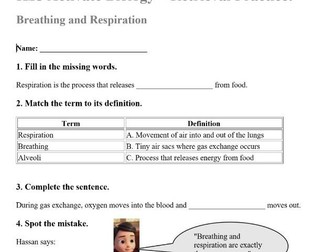
This KS3 Biology retrieval practice worksheet is designed to help students consolidate their understanding of breathing and respiration. Students revisit key concepts including gas exchange, the lungs, alveoli, aerobic respiration, and the effects of exercise on breathing rate. The resource includes fill-in-the-gap tasks, matching activities, spot-the-mistake questions, sequencing exercises, and short written responses to strengthen long-term memory and improve retention of key scientific vocabulary. Full answers and mark schemes are included.
KS3 Activate Biology – Retrieval Practice: Photosynthesis (Answers Included)Quick View
aries81

KS3 Activate Biology – Retrieval Practice: Photosynthesis (Answers Included)

(0)
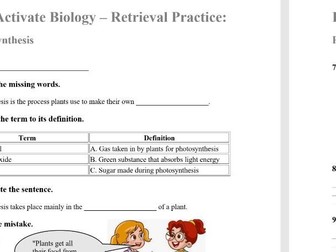
This KS3 Biology retrieval practice worksheet is designed to help students consolidate their understanding of photosynthesis and plant nutrition. Students revisit key concepts including the role of chlorophyll, the substances needed for photosynthesis, the products of the process, and how leaves are adapted for photosynthesis. The resource includes fill-in-the-gap tasks, matching activities, spot-the-mistake questions, sequencing exercises, leaf structure recall, and short written responses to strengthen long-term memory and improve retention of key scientific vocabulary. Full answers and mark schemes are included to support self-assessment, peer assessment, and teacher feedback.